Modular WPC Decking: A Complete Buyer’s Guide to Interlocking Composite Tiles
Modular WPC decking is a floating outdoor floor system made from interlocking wood-plastic composite tiles. It installs without screws, joists, or professional tools, which makes it one of the fastest ways to create a low-maintenance deck over concrete, tiles, compacted ground, or existing surfaces.
But speed is only part of the story. In 2026, contractors, property developers, and wholesale buyers are choosing modular WPC decking because it cuts labor costs, shortens project timelines, and still delivers the wood look customers want. The global WPC decking market is projected to grow from roughly $6.84 billion in 2025 to $15.84 billion by 2035, according to Custom Market Insights, and modular tile systems are one of the fastest-growing segments within that market.
In this guide, we’ll explain exactly what modular WPC decking is, how it compares to traditional decking, where it works best, what it costs, and how to choose a reliable supplier. Whether you’re sourcing for a single project or planning a container order, you’ll leave with a clear decision framework.
Key Takeaways
- Modular WPC decking uses interlocking tiles that float over existing surfaces, which cuts installation time and labor.
- Co-extrusion / capped tiles offer better UV, stain, and moisture resistance than conventional WPC tiles.
- FOB China prices range from about $10/m² for budget tiles to $45+/m² for premium capped systems.
- Best applications include balconies, rooftops, patios, poolside areas, hospitality spaces, and temporary event flooring.
- Buyers should verify cap quality, density, certifications, warranty terms, and production capacity before placing large orders.
- Yuheng WPC supplies customizable modular WPC decking with global shipping and competitive bulk pricing.
What Is Modular WPC Decking?
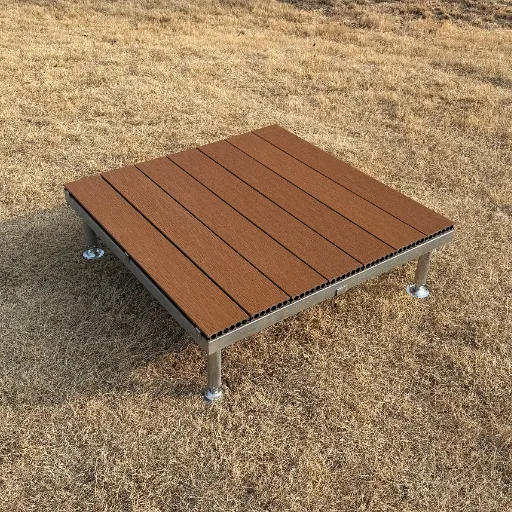
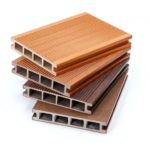
Modular WPC decking combines wood fibers, recycled plastic polymers, and stabilizing additives into rigid tiles that connect through an interlocking edge system. The most common size is 300 × 300 mm with a thickness of 22 mm, though larger formats exist for commercial projects.
Each tile sits on a built-in base grid or pedestal feet. This raises the surface slightly above the subfloor and allows water to drain underneath. Because the tiles are not mechanically fixed to the ground, they are often called a “floating” floor.
The WPC material itself resists moisture, rot, insects, warping, and UV fading far better than natural wood. Cleaning usually requires nothing more than soap and water. For buyers who want a deeper explanation of the material basics, our guide on what is modular WPC decking covers composition and manufacturing in more detail.
Modular Decking System vs Traditional Decking
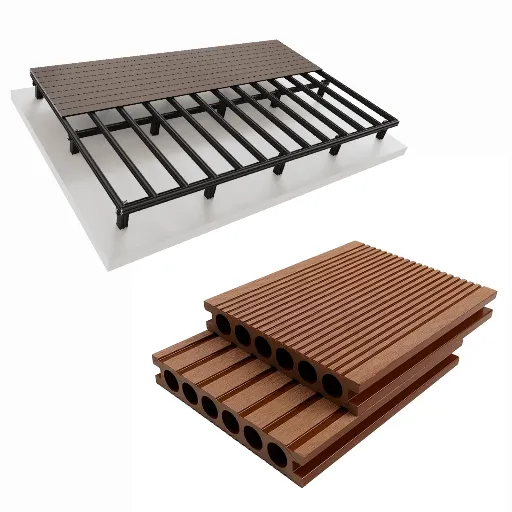
A traditional deck is a permanent structure. It needs footings, joists, fasteners, and skilled carpentry. A modular decking system vs traditional decking comparison comes down to four practical differences.
Installation speed. Modular tiles can cover a small balcony in under an hour. A traditional wood deck of the same size might take a full day or more.
Portability. You can lift, rearrange, or remove WPC tiles. This matters for renters, event planners, and commercial spaces that may reconfigure layouts.
Tools and labor. Most modular systems need only a rubber mallet, a straightedge, and basic cutting tools. Traditional decking demands saws, drills, levels, and often a licensed contractor.
Best-fit scenarios. Modular decking wins on speed, flexibility, and rooftop or balcony weight limits. Traditional decking is still the better choice for elevated structures, large spans, and projects that need a seamless custom shape.
For a side-by-side breakdown, read our full comparison of modular decking system vs traditional decking.
Types of Modular WPC Deck Tiles
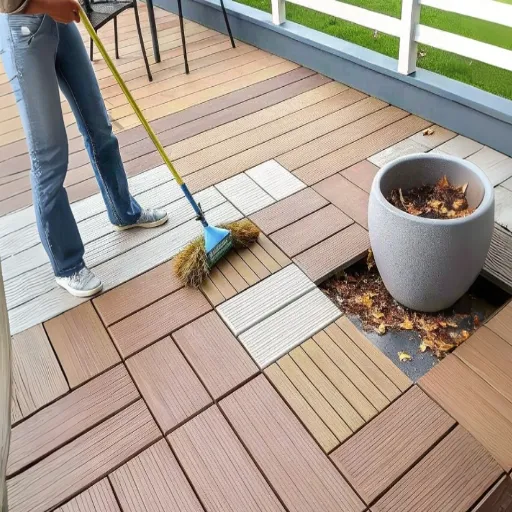
Not all modular WPC tiles are the same. The right choice depends on climate, foot traffic, exposure to water, and budget.
Conventional WPC DIY Tiles
Conventional tiles use a single-extrusion WPC core. They offer a natural wood appearance, basic moisture resistance, and lower cost. These work well for covered balconies, patios, and garden paths with moderate foot traffic.
Co-Extrusion / Capped WPC DIY Tiles
Co-extrusion tiles add a protective polymer cap around the WPC core. This outer shell improves resistance to UV rays, stains, scratches, and moisture. If you’re specifying tiles for a rooftop, pool deck, or hospitality project, capped products are usually the smarter investment.
Hollow vs. Solid Core Considerations
Hollow cores reduce weight and cost, which makes them popular for balconies and DIY projects. Solid cores add strength and sound dampening, which helps in high-traffic commercial spaces. The choice depends on load requirements and budget.
For a detailed comparison of tile and board formats, see WPC deck tiles vs WPC decking boards.
Key Benefits of Modular WPC Decking
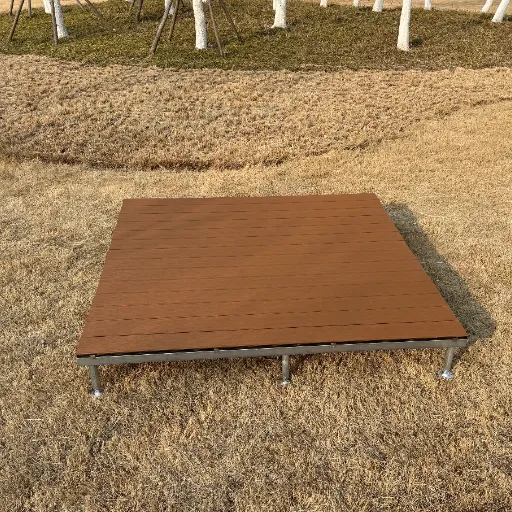
Modular WPC decking has moved from a niche DIY product to a serious option for commercial and residential projects. Here is why.
- Fast installation. Tiles click or interlock together without a substructure. A two-person crew can install hundreds of square feet in a day.
- Use over existing surfaces. You can lay tiles over concrete, ceramic pavers, asphalt, or compacted gravel. Demolition is rarely needed.
- Low maintenance. No staining, sealing, or sanding. A simple wash keeps the surface looking clean.
- Weather resistance. WPC resists rot, insects, warping, splintering, and moisture absorption.
- Lightweight. Typical tiles weigh less than wood or concrete alternatives, which makes them suitable for rooftops and balconies with load limits.
- Design flexibility. Mix colors, create borders, or lay patterns such as checkerboard and herringbone.
- Sustainable materials. Many WPC tiles use recycled wood fiber and recycled plastics, reducing dependence on virgin timber.
When Li Wei, a landscape contractor in Hangzhou, needed to refresh a hotel courtyard in March 2026, he chose modular WPC tiles. The existing concrete slab was sound but unattractive. His team laid 450 m² of co-extrusion tiles in two days, and the hotel reopened on schedule. The project manager later told him that using traditional decking would have added at least five days and required a full substructure.
Best Applications for Modular WPC Decking
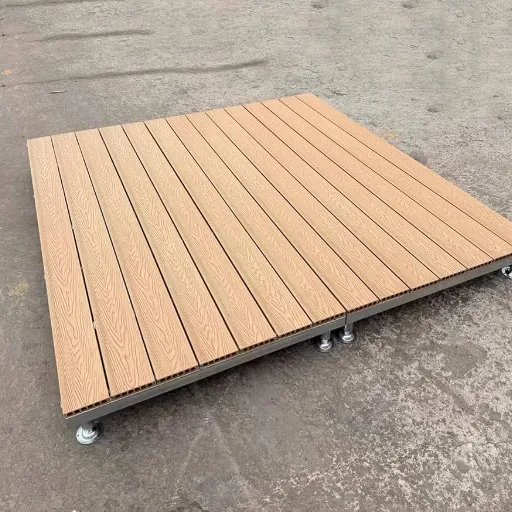
Modular WPC decking works almost anywhere you need a quick, attractive, and durable outdoor surface.
Residential Balconies and Terraces
Apartment owners and landlords use balcony WPC deck tiles to upgrade outdoor space without altering the building structure. The tiles hide cracked concrete, improve drainage, and can be removed when tenants move out.
Rooftop Decks and Podiums
Rooftop projects demand lightweight materials and proper drainage. Modular WPC tiles meet both requirements when paired with pedestal systems or drainage mats. Always confirm load limits with the structural engineer before specifying materials.
Patios, Gardens, and Pathways
Homeowners can create garden paths or patio seating areas without pouring concrete. Because the tiles are removable, seasonal redesigns are simple.
Poolside and Hospitality Spaces
For wet areas, waterproof WPC deck tiles with a co-extrusion cap perform best. The cap layer resists chlorine, salt, and constant moisture better than conventional WPC.
Temporary / Event Flooring
Event companies value modular tiles because they install and pack away quickly. A wedding venue in Shenzhen reported cutting floor setup time by 70% after switching from rented plywood platforms to interlocking WPC tiles.
Modular WPC Decking Cost Guide (2026)
Pricing depends on material grade, tile size, cap layer, order volume, and shipping terms. The figures below reflect FOB China pricing commonly seen in 2026.
| Product Grade | FOB China (USD/m²) | Typical MOQ |
|---|---|---|
| Budget hollow WPC tiles | $10 – $16 | 1,000 pieces |
| Mid-range WPC tiles | $18–$40 | 400 m² |
| Premium co-extrusion / capped tiles | $25–$45+ | 300 m² |
Container-level imports can reduce material costs by 25–40%, but buyers must add freight, duties, VAT, and inland delivery to reach a true landed cost. Regional retail prices are usually much higher: North America commonly sees $60–$160/m² installed, while Western Europe ranges from €55–€150/m².
Over a 10-year lifecycle, WPC often saves money compared with natural wood. Wood maintenance can reach $1,500–$3,000 over a decade, while WPC maintenance runs closer to $500–$1,000.
For a deeper pricing analysis, visit our dedicated guide on modular WPC decking cost.
Ready to compare quotes? Contact Yuheng WPC for FOB pricing and container-load options tailored to your project.
How to Install Interlocking WPC Deck Tiles
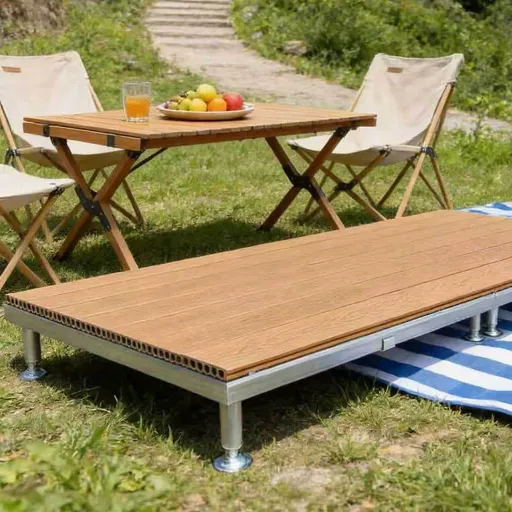
One of the biggest selling points of modular WPC decking is simple installation. For a full walkthrough, see how to install WPC deck tiles. The summary below covers the essential steps.
- Prepare the surface. Clean the subfloor, remove debris, and repair cracks or large bumps. The surface should be firm, level, and free-draining.
- Check slope and drainage. Water should flow away from buildings. If the surface is flat or sunken, add a drainage mat or slope correction layer.
- Lay the first tile. Start in a corner and work outward. Most systems use a click or interlocking edge.
- Tap tiles together. Use a rubber mallet and a straightedge to keep rows aligned.
- Cut edge pieces. Measure and cut tiles to fit around walls, drains, or columns.
- Finish borders. Install edge trim or transition strips where the tiles meet another surface.
Always leave a small expansion gap around fixed edges. WPC expands and contracts with temperature changes, and trapped edges can cause buckling.
How to Choose a Quality Modular WPC Decking Supplier
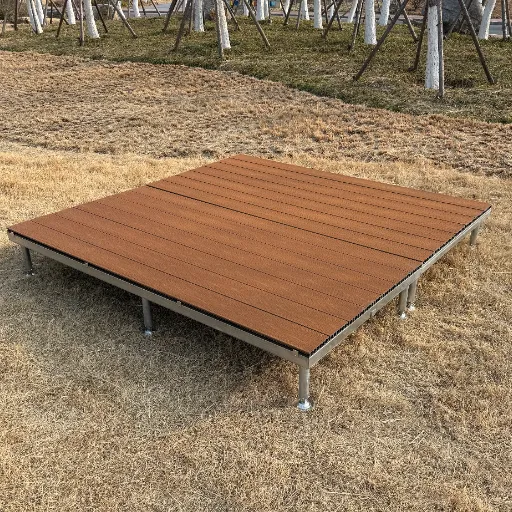
Buying from the right supplier protects your investment and your reputation. Here are the factors we recommend evaluating before placing a large order.
Material grade and cap quality. Request samples and compare the cap-layer thickness, color consistency, and surface texture. A thin or uneven cap is a warning sign.
Density and core structure. Higher density usually means better durability and lower water absorption. Ask for technical data sheets showing density and absorption rates.
Certifications. Look for CE, ISO, SGS, Intertek, or FSC certifications relevant to your market. These documents matter for customs clearance and buyer confidence.
Warranty terms. A reliable supplier should offer a warranty covering color fastness, structural integrity, and moisture resistance. Read the exclusions carefully.
Production capacity and lead time. Confirm that the factory can meet your volume and delivery schedule. For container orders, ask about production time, loading schedules, and shipping options.
Sample and order process. Start with samples, then place a small trial order before committing to a full container.
Our guide on how to choose WPC deck tiles expands on each point. If you’re sourcing from China, our article on WPC deck tile manufacturers China explains factory verification, audits, and import logistics.
WPC Deck Tile Design Ideas
Modular tiles are not limited to a basic grid. With the right layout, you can create visual interest without adding cost.
- Parallel layout. The simplest and most popular pattern. It emphasizes clean lines and works in narrow spaces.
- Checkerboard. Alternate two colors for a classic courtyard look.
- Framed border. Use a darker tone around the perimeter to define the space.
- Multi-zone. Combine different colors or textures to separate dining, lounge, and walkway areas.
- Diagonal. Rotate tiles 45 degrees for a more dynamic appearance.
For photos and project inspiration, explore our gallery of WPC deck tile design ideas.
WPC Deck Tiles Disadvantages
No material is perfect. Being transparent about limitations helps buyers make informed decisions and avoids costly surprises.
- Thermal expansion. WPC expands in heat and contracts in cold. Proper gaps and installation methods are essential.
- Surface temperature. Dark-colored tiles in direct sun can become hot underfoot. Lighter colors and shaded areas reduce this issue.
- Sub-surface requirements. Uneven or soft ground can cause tiles to rock or separate. Preparation matters.
- Higher upfront cost than basic wood. While lifecycle costs are often lower, the initial purchase price can exceed pressure-treated lumber.
- Quality variance. Low-cost imports may use poor-quality fillers or thin caps. Verify samples before ordering.
We cover these points in more detail in our article on WPC deck tiles disadvantages.
Sustainability and Recycled Content
Sustainability is no longer optional for many architects and developers. WPC decking supports green building goals in several ways.
Most WPC tiles incorporate recycled wood fiber from sawmill waste and recycled plastics from post-consumer or post-industrial sources. Some premium lines exceed 90% recycled content. By using these materials, WPC reduces landfill waste and lowers demand for virgin timber.
The long lifespan also matters. A WPC deck that lasts 25–30 years avoids the repeated replacement, staining, and sealing cycles associated with wood. Over time, that reduces material consumption and chemical use.
However, end-of-life recycling depends on local facilities and the specific WPC formulation. Buyers who prioritize circularity should ask suppliers about recyclability and take-back programs.
FAQ
Can WPC deck tiles be installed over concrete?
Yes. A firm, level concrete slab is one of the best sub-surfaces for modular WPC tiles. Clean the surface, ensure drainage, and lay the tiles directly on top.
How long do modular WPC deck tiles last?
Quality WPC tiles can last 25–30 years with basic maintenance. Capped or co-extrusion products typically last longer than conventional tiles in harsh climates.
Are WPC deck tiles waterproof?
WPC is highly water-resistant, but “waterproof” depends on the product and installation. Waterproof WPC deck tiles with co-extrusion caps perform best in wet areas.
What is the minimum order quantity for wholesale WPC deck tiles?
MOQs vary by supplier and product. Common ranges are 300–1,000 pieces or 300–400 m² for factory-direct orders from China.
Can I use WPC deck tiles on a rooftop?
Yes, if the roof structure can support the load. Use lightweight hollow-core tiles and install them over a drainage mat or pedestal system.
How do I clean WPC deck tiles?
Sweep regularly and wash with mild soap and water. Avoid harsh chemicals or pressure washers that can damage the cap layer.
Conclusion
Modular WPC decking offers a practical balance of speed, durability, and design flexibility. It works especially well for balconies, rooftops, patios, poolside areas, and commercial spaces where fast installation and low maintenance matter.
For buyers, the key decision factors are material grade, cap quality, installation conditions, and supplier reliability. Budget tiles may suit light residential use, while co-extrusion systems are worth the investment for high-traffic or wet environments.
At Yuheng WPC, we supply modular WPC decking in a range of grades, colors, and finishes. We support custom orders, container shipments, and sample requests for buyers worldwide. Contact us today to request a quote or order samples for your next project.
Categories:
Blog
Related Articles