Waterproof WPC Deck Tiles: A Buyer’s Guide for Wet Outdoor Spaces
High-quality waterproof WPC deck tiles are water-resistant enough for balconies, poolside areas, and patios, but only when they’re capped or co-extruded and installed with proper drainage. The word “waterproof” on a sales page doesn’t guarantee performance; the real test is how much water the tile absorbs and how quickly that water drains away.
Imagine a hotel contractor named Marcus who installed “waterproof” WPC deck tiles around a resort pool in Phuket. The tiles looked great on day one. Six months later, the surface was slick with algae, the cut edges were swelling, and several interlocks had separated. Marcus had chosen uncapped tiles, skipped the expansion gaps, and laid them flat against concrete without slope. The material wasn’t the failure. The specification and installation were.
In this guide, you’ll learn how to evaluate waterproof claims, compare WPC deck tiles to PVC and wood alternatives, install them so water drains rather than pools, and source reliable tiles from a supplier who can back up the numbers.
Key Takeaways
- Quality capped or co-extruded WPC deck tiles absorb less than 0.5% water after 24 hours of immersion, while uncapped grades can absorb 3-8%.
- For wet areas, choose tiles with DIN 51130 R11 slip resistance or higher and a 360-degree cap layer.
- Proper drainage, slope, and expansion gaps matter as much as the material itself.
- WPC deck tiles install 5-10 times faster than traditional decking boards but typically last 8-15 years versus 25-30 years for boards.
- Always request ASTM D7031 or EN 15534-4 test reports before placing a bulk order.
What Are Waterproof WPC Deck Tiles?
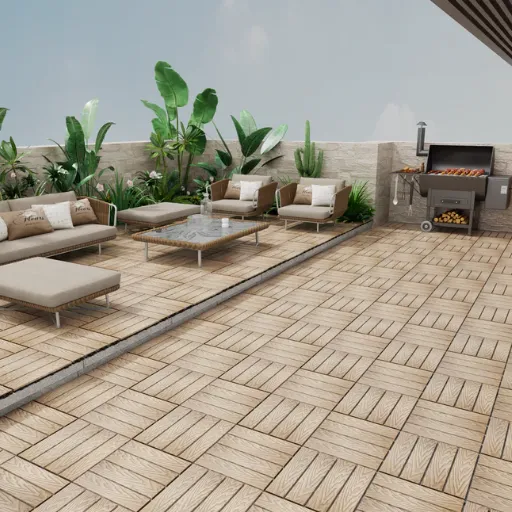
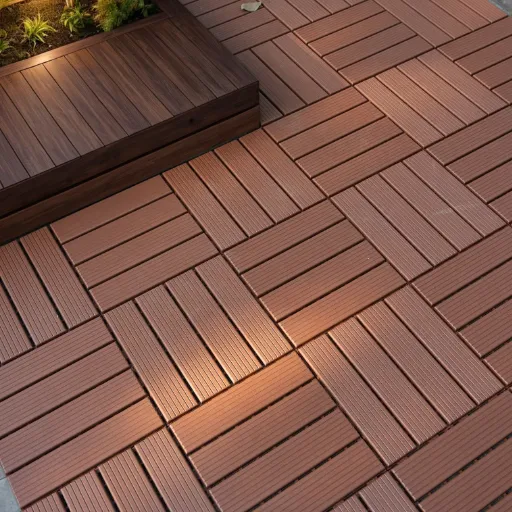
WPC stands for wood-plastic composite. WPC deck tiles are modular, interlocking panels made from a blend of recycled wood fibers, high-density polyethylene (HDPE) plastic, and stabilizers such as UV inhibitors and anti-fungal additives. The most common size is 300 x 300 mm with a thickness of 20-22 mm, though larger formats exist.
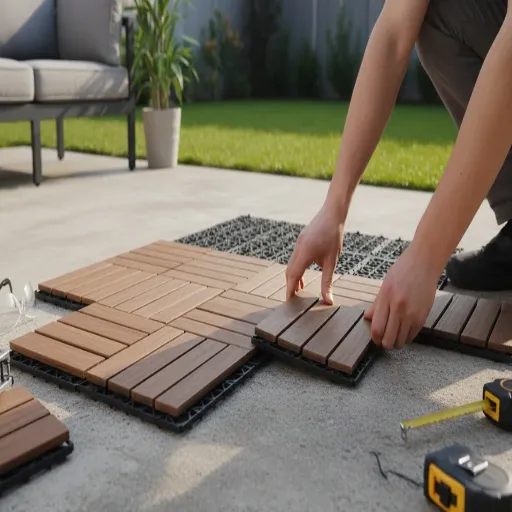
The interlocking system uses male-female or dovetail connectors built into the tile edges. This allows the tiles to snap together into a floating floor. On a hard, flat substrate, you can install them without glue, screws, or nails. If one tile is damaged, lift it out and replace it without tearing up the whole surface.
Surface finishes vary. Some tiles are embossed with a wood-grain texture. Others are brushed or have a co-extruded polymer cap that seals the composite core. That cap layer is what separates a tile that performs well in wet areas from one that will eventually absorb moisture.
If you want a broader overview of how modular systems work, see our modular WPC decking buyer’s guide.
Are WPC Deck Tiles Really Waterproof?
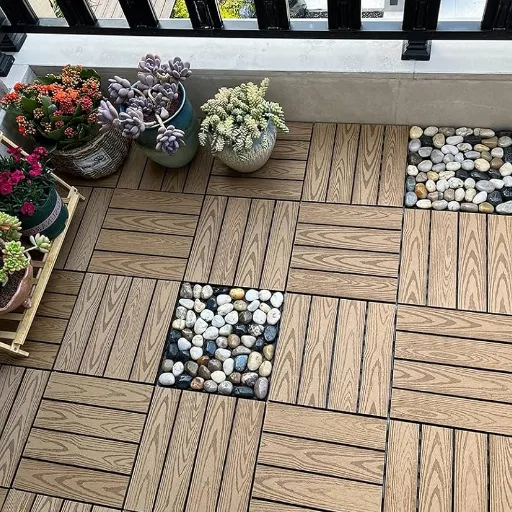
The honest answer is water-resistant, not waterproof in the absolute sense. Because WPC contains wood fibers, it can absorb small amounts of water, especially at cut edges or where the cap layer is damaged or absent.
Marketing language often calls these tiles “waterproof,” “all-weather,” or “moisture-proof.” Those terms describe real advantages over natural wood, but they can oversell the product. A better question is: how much water does the tile absorb, and under what conditions?
What the Lab Numbers Mean
Two test standards are commonly cited for WPC deck tiles:
- ASTM D7031 / D570 / D1037: 24-hour water immersion test. Premium capped WPC typically absorbs less than 0.5% water. Standard uncapped WPC absorbs 3-8%. Natural timber can absorb 20-30% in the same period.
- EN 15534-4: The European standard for decking profiles and tiles. It allows mean water absorption up to 7% and maximum up to 9%.
A tile that absorbs less than 1% is generally suitable for wet areas. Below 0.5% is excellent. Higher absorption increases the risk of swelling, warping, mold, and algae. The numbers also explain why drainage matters. Even a low-absorption tile will fail if water sits underneath it for weeks without airflow.
Capped vs. Uncapped Makes the Difference
A 360-degree co-extruded cap wraps the entire tile in a protective polymer shell. This is the most water-resistant construction. Some tiles are only capped on the top and sides, leaving the bottom and edges exposed. For balconies, rooftops, and poolside areas, full-cap or co-extruded tiles are the safer choice.
Best Applications for Waterproof WPC Deck Tiles

Waterproof WPC deck tiles work well in many outdoor settings, but each application has its own requirements.
Balconies and Terraces
WPC deck tiles are popular for apartment balconies because they’re lightweight, easy to remove, and don’t damage the underlying surface. They’re also one of the fastest ways to upgrade a concrete terrace without major construction. For balconies specifically, see our guide to balcony WPC deck tiles.
Poolside and Spa Decks
Pool decks need tiles that resist chlorine, UV, and standing water. Look for R11 slip resistance or higher. Light colors also stay cooler underfoot. Avoid uncapped tiles near pools. The combination of water, heat, and chemicals accelerates absorption.
Rooftop Decks
Weight matters on rooftops. WPC deck tiles weigh roughly 8-15 kg per square meter. Stone pavers can weigh 40-60 kg per square meter. That load advantage makes WPC tiles ideal for rooftop terraces where structural limits apply. Still, you need slope and drainage to protect the waterproof membrane below.
Patios, Gardens, and Commercial Walkways
For residential patios and garden paths, WPC deck tiles offer a quick DIY upgrade. In commercial walkways, pay attention to load ratings and anti-slip surfaces. High-traffic areas may need thicker tiles or a more robust interlock system.
Key Performance Criteria for Wet Areas
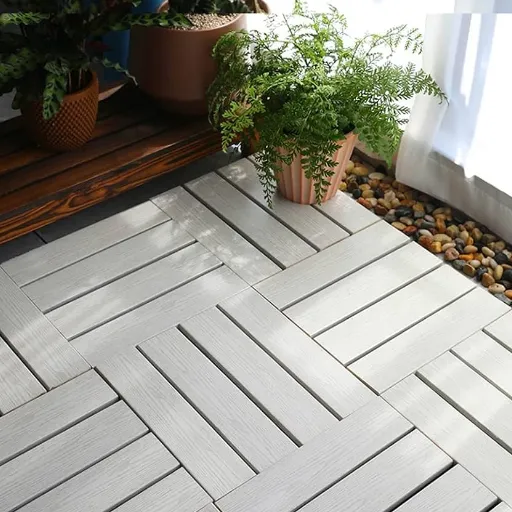
Choosing the right tile means looking beyond the marketing photos. Here are the specifications that matter for waterproof performance.
Water Absorption Rate
For wet environments, target less than 1% water absorption after 24 hours, ideally less than 0.5%. Ask the supplier for an ASTM D7031 or EN 15534-4 test report. Check that the report applies to the exact product you’re buying, not just a similar grade.
Slip Resistance
Slip resistance is critical around water. Two standards are commonly used:
- DIN 51130: R10 is the minimum for residential wet areas. R11 or R12 is better for poolside and commercial use.
- EN 16165 / BS 7976 pendulum test: A pendulum test value (PTV) of 36 or higher on a wet surface is considered low slip risk.
Surface texture matters. Deep embossing or a brushed finish usually performs better than a smooth cap in wet conditions.
Cap Layer Quality
Not all caps are equal. A 360-degree co-extruded cap provides the best moisture protection. Top-only caps leave the underside and edges exposed. Cap materials also differ:
- HDPE cap: Good water resistance and cost-effective.
- ASA cap: Better UV and chlorine resistance, often used for premium marine or pool applications.
- PP cap: Stiffer but slightly less water-resistant than HDPE in some formulations.
Thickness and Load Capacity
Most WPC deck tiles are 20-22 mm thick. Thicker tiles generally handle heavier loads and feel more solid underfoot. For commercial walkways or rooftop decks with furniture, confirm the load rating with the supplier.
Expansion Gaps
WPC expands and contracts with temperature changes. Leave at least 5 mm of expansion space around the perimeter and any fixed structures. Without this gap, tiles can buckle in hot weather or pull apart in cold weather.
Installation Tips for Long-Lasting Waterproof Performance
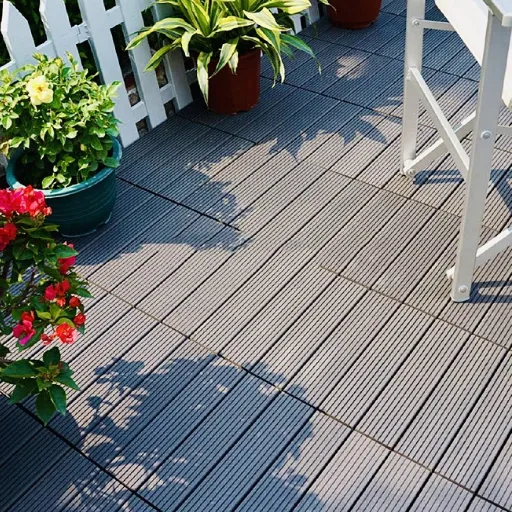
Even the best tile will fail if water cannot escape. Installation details determine whether your deck lasts 15 years or needs replacement in three.
Start with the Right Surface
WPC deck tiles should be installed on a hard, flat, level surface. Suitable bases include concrete, pavers, existing decking, and compacted stone. Don’t install them directly on soil, grass, or gravel. The substrate will shift, and water will pool underneath.
Create Drainage and Slope
A minimum slope of 1-2 degrees helps water run off rather than pool. Keep expansion gaps open, and avoid boxing in the edges with solid trim that blocks airflow. On rooftops and balconies, consider a raised pedestal or sleeper system that lets water drain beneath the tiles.
Seal Cut Ends
Every time you cut a tile to fit around a post or wall, you expose the composite core. Seal those cut edges with a compatible edge sealer. Alternatively, use edge trim to reduce moisture ingress. This step is often skipped on DIY installs, and it’s one of the main reasons tiles swell at the edges.
Use Edge Trim and Ramps
Perimeter trim and transition ramps give the deck a finished look and reduce trip hazards. They also protect the exposed edges of the outer tiles from impact and moisture.
For a step-by-step comparison with traditional decking installation, read our WPC decking installation guide.
WPC Deck Tiles vs. Other Outdoor Flooring
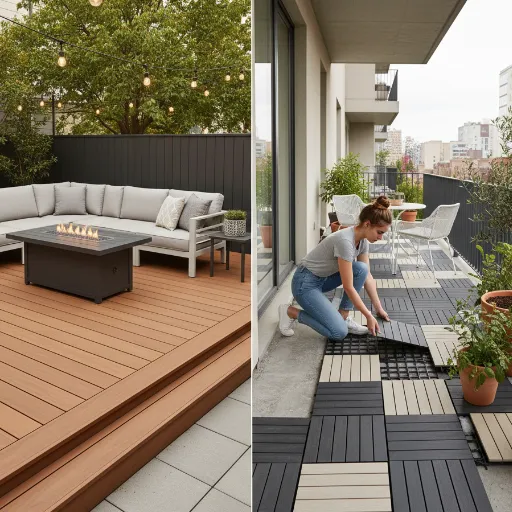
Buyers often compare WPC deck tiles to PVC tiles, wood tiles, stone pavers, and traditional WPC decking boards. Each has its place.
WPC vs. PVC Deck Tiles
PVC deck tiles contain no wood fibers, so they are fully waterproof and generally lighter than WPC. They are a strong choice for very humid climates or areas with constant water exposure. WPC tiles usually offer a more natural wood appearance and feel slightly warmer underfoot. For a deeper comparison, see our article on WPC vs. PVC decking.
WPC vs. Wood Deck Tiles
Wood deck tiles, such as acacia or teak, look beautiful but need regular oiling or sealing. Without maintenance, they gray, crack, and rot. WPC tiles require far less upkeep and resist rot, splinters, and insects.
WPC vs. Stone Pavers
Stone pavers are extremely durable but heavy. At 40-60 kg per square meter, they are not suitable for every balcony or rooftop. WPC tiles are much lighter and easier to install, though they do not last as long as high-quality stone.
WPC Deck Tiles vs. Traditional WPC Decking Boards
Traditional WPC decking boards are installed on a joist substructure and typically last 25-30 years. Interlocking WPC deck tiles are faster to install, usually 5-10 times faster, and easier to remove. However, their typical lifespan is 8-15 years. The choice depends on whether you value speed and modularity or long-term durability.
Maintenance and Cleaning
WPC deck tiles are low maintenance, but they are not no-maintenance. A simple cleaning routine keeps them safe and attractive.
- Sweep or rinse the surface weekly to remove leaves and dirt.
- Wash with mild soap and a soft brush every few months, or more often in humid climates.
- Rinse pool chemical spills promptly to avoid surface staining.
- Inspect interlocks and drainage seasonally. Lift a corner tile once a year to check for trapped debris or standing water underneath.
- Avoid pressure washing too close to the surface; high pressure can damage the cap layer.
For a full maintenance schedule, see our WPC decking maintenance guide.
Common Mistakes That Ruin Waterproof Performance
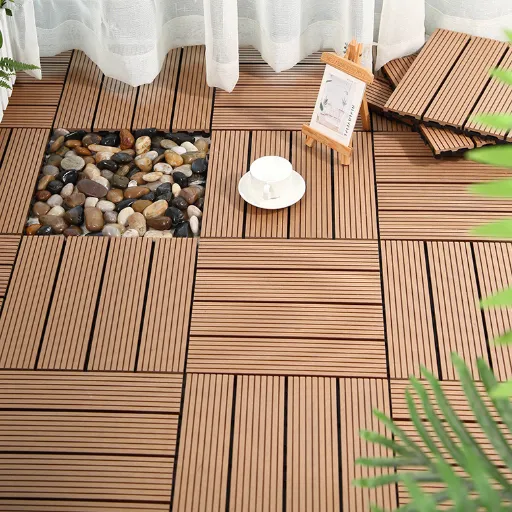
Some failures happen because buyers choose the wrong product. Others happen because installation shortcuts create water traps.
Buying Uncapped Tiles for Wet Areas
Uncapped WPC absorbs far more water than capped or co-extruded products. It may be fine for a covered porch, but it is the wrong choice for poolside, rooftop, or exposed balcony use.
Installing on Soft or Unlevel Ground
WPC deck tiles need a firm, level base. Soil, grass, and loose gravel will shift, causing the interlocks to separate and water to pool.
Ignoring Slope and Drainage
Flat installs without slope are the most common cause of algae and mold. Water needs somewhere to go.
Skipping Expansion Gaps
Without expansion gaps, thermal movement can buckle the surface or break interlocks. Always follow the manufacturer’s spacing recommendations.
To learn more about what can go wrong and how to avoid it, read our article on WPC deck tiles disadvantages.
How to Source Quality Waterproof WPC Deck Tiles
If you are buying WPC deck tiles in bulk, especially from overseas suppliers, verification matters more than catalog photos.
Ask for Test Reports
Request the following before placing an order:
- ASTM D7031 or EN 15534-4 water absorption report
- DIN 51130 or EN 16165 slip resistance certificate
- Cap-layer specification, including material and thickness
- Warranty terms and conditions
Check that the report matches the exact product name, color, and production batch you are ordering.
Test Samples Yourself
Order cut samples from two or three suppliers. Immerse the cut ends in water for 48 hours, then measure swelling and compare surface texture. This simple test often reveals more than a polished sales brochure.
Verify the Factory
Look for suppliers with ISO 9001 quality certification, export experience, and a clear production process. If you are sourcing from China, our guide to WPC deck tile manufacturers in China walks through the regional manufacturing landscape and what to look for during factory verification.
Why Linyi Matters
Linyi, in Shandong Province, is one of China’s major WPC production and export hubs. The region has a complete supply chain for raw materials, extrusion equipment, and logistics. That density supports competitive pricing, fast sampling, and flexible customization for international buyers.
When Waterproof WPC Deck Tiles Are the Right Choice
WPC deck tiles are a strong solution when you need:
- A fast, floating installation over an existing hard surface
- Lighter weight than stone or concrete pavers
- Lower maintenance than natural wood
- A modular surface that can be replaced tile by tile
- A water-resistant surface for balconies, patios, rooftops, or poolside areas
They are not the best choice when you need a permanent, ultra-long-life deck or a surface that will sit directly on soil or grass. In those cases, traditional WPC decking boards or a poured surface may be better.
Conclusion
Waterproof WPC deck tiles can perform excellently in wet outdoor spaces, but only when you choose the right grade and install them correctly. Focus on capped or co-extruded tiles with verified low water absorption, R11 or higher slip resistance, and a drainage-friendly installation with proper slope and expansion gaps.
Remember Marcus and his pool deck. The tiles were not the problem. The specification and installation were. Avoid that mistake by requesting test reports, sealing cut ends, and designing for drainage from the start.
If you are sourcing WPC deck tiles for a balcony, rooftop, pool, or patio project, we can help you choose the right grade and get samples for verification. Request waterproof WPC deck tile samples or a quote from Linyi Yuheng today.
Categories:
Blog
Related Articles