Acoustic Panels for Office Cubicles: Privacy and Noise Solutions
Acoustic panels for office cubicles reduce noise by absorbing sound within the workstation and blocking direct sound transmission between adjacent desks. Desk dividers, wall-mounted panels, and small ceiling clouds each address different cubicle noise problems, with combined treatment reducing perceived noise by 8-12 dB in typical office environments.
When Sarah started her new job at a customer support center in Phoenix, she sat in a cubicle surrounded by forty other agents. Every phone call, keyboard click, and side conversation reached her ears. She could repeat the credit card numbers her neighbor read aloud without trying. The partition walls were fabric-covered hardboard, thinner than her apartment door, and they did nothing to stop sound. After three months, Sarah began looking for another job. Then management installed acoustic desk dividers and wall panels on every cubicle. Within a week, she could hear her own calls clearly without her neighbor’s conversations bleeding through. She stayed.
This guide explains why cubicles are uniquely noisy, what types of acoustic panels work best for cubicle environments, and how to install them without disrupting your office layout. You will learn the difference between desk dividers and wall panels, how much coverage you need per workstation, and what privacy improvements to expect.
For a complete overview of office acoustic solutions, see our office acoustic panels buyer’s guide. For open plan environments without cubicles, see our guide to the best acoustic panels for open plan offices.
Key Takeaways
- Cubicle noise comes from two sources: sound passing through thin partitions and echo within the workstation itself
- Three solution types work best: desk dividers for front-of-desk blocking, wall panels for echo absorption, and ceiling clouds for overhead ambient noise
- Standard cubicle partitions have STC ratings of only 15-25, meaning they block almost no sound
- Desk dividers 500-600mm high create effective seated privacy between facing workers
- Combined treatment addressing front, side, and overhead surfaces reduces cubicle noise by 8-12 dB
Why Cubicles Are Noisy: The Partition Problem
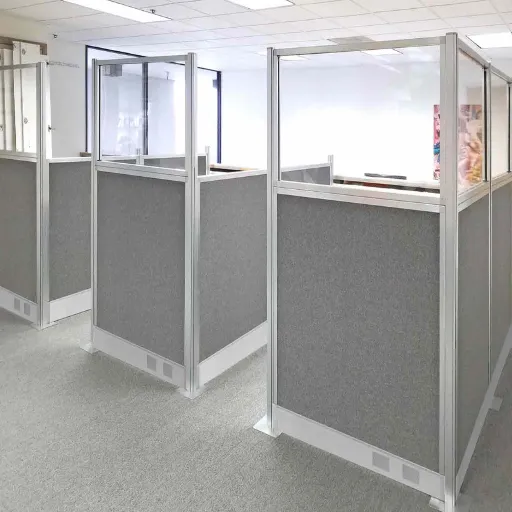
Cubicles create a specific acoustic problem that open benches and private offices do not. The combination of thin partition walls, hard desk surfaces, and proximity produces both sound transmission and echo issues simultaneously.
Sound Transmission Through Partitions
Standard cubicle partitions are 25-50mm thick with fabric stretched over a hardboard or metal frame. These partitions have STC (Sound Transmission Class) ratings of 15-25. For comparison, a standard interior drywall wall achieves STC 35-40. A cubicle partition blocks virtually no sound. Conversations, phone calls, and keyboard sounds pass through to adjacent workstations with minimal reduction.
Echo Within the Workstation
The cubicle itself is a small box with multiple hard surfaces. Desk tops, monitor backs, file cabinets, and partition walls all reflect sound. When an employee speaks on the phone, their voice bounces between these surfaces before escaping. This creates a localized echo that makes the cubicle feel louder than the surrounding space.
The Privacy Problem
Cubicles promise visual privacy but deliver almost no acoustic privacy. A confidential phone conversation travels two to three workstations away in a quiet office. Employees lower their voices instinctively, which causes vocal strain over time, or they avoid sensitive calls altogether.
When an HR manager at a financial services firm moved into a cubicle farm, she discovered she could not conduct reference checks without half the floor hearing the conversation. She rescheduled sensitive calls for her car in the parking garage. After the company installed acoustic wall panels and desk dividers, she returned to taking calls at her desk. The panels absorbed enough sound that only her immediate neighbor could hear snippets, not the entire row.
Types of Cubicle Acoustic Solutions
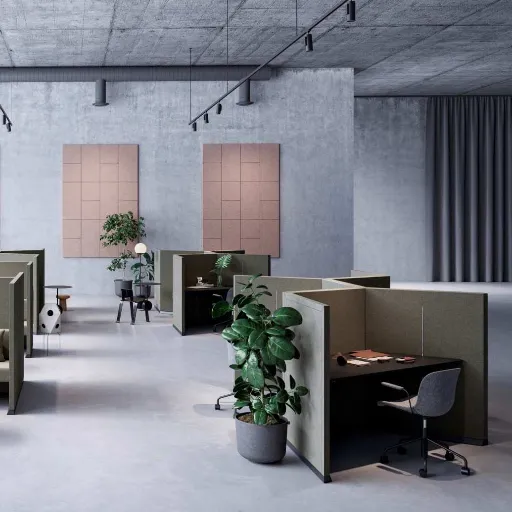
Not every acoustic panel works in a cubicle. The confined space, existing partition walls, and need for both noise reduction and privacy require specific product types.
Acoustic Desk Dividers
Desk dividers mount to the front or sides of desks to create a partial barrier between facing workstations. They absorb sound that travels directly across the aisle while providing visual privacy.
- Heights: 300mm (monitor height), 500mm (seated privacy), 600mm (standing privacy)
- Materials: Fabric-wrapped fiberglass, PET felt, foam core with rigid backing
- Best for: Blocking direct sound between workers who face each other across a desk or aisle
- NRC range: 0.70-0.90
The height matters more than the material. A 300mm divider blocks sight lines between seated workers but does little for sound. A 500mm divider absorbs sound at mouth level when seated. A 600mm divider provides coverage even when one worker stands.
Cubicle Wall Panels
Wall panels attach to the existing partition walls inside the cubicle. They reduce echo within the workstation and absorb sound before it passes through to the neighbor.
- Sizes: 600x600mm, 600x1200mm, or custom sizes matching partition height
- Mounting: Hook-over the partition top, magnetic attachment, adhesive, or Velcro
- Best for: Reducing echo within the cubicle and absorbing neighbor sound on shared walls
- NRC range: 0.65-0.85
Wall panels are the most cost-effective cubicle treatment because they use existing partition surfaces. One panel on each shared wall addresses the main sound paths.
Ceiling Clouds for Cubicles
Small ceiling clouds or baffles suspended above cubicle clusters treat overhead sound. They absorb ambient noise that rises above the partitions and reflects off the ceiling.
- Best for: Overhead sound from foot traffic, HVAC systems, and cross-cubicle conversations
- Coverage: One cloud per two to four cubicles
- NRC range: 0.70-0.90
Freestanding Acoustic Screens
Portable screens sit on the floor between cubicles or behind desks. They require no mounting and work in rental spaces where permanent installation is not allowed.
- Best for: Temporary solutions, flexible layouts, and hot-desking environments
- NRC range: 0.65-0.80
- Trade-off: Lower NRC and higher cost per square foot than mounted panels
| Solution Type | Best For | NRC | Coverage | Cost/Panel |
|---|---|---|---|---|
| Desk dividers | Front-of-desk sound blocking | 0.70-0.90 | 1 per desk | $80-250 |
| Wall panels | Side/rear echo reduction | 0.65-0.85 | 2-4 per cubicle | $50-180 |
| Ceiling clouds | Overhead ambient noise | 0.70-0.90 | 1 per 2-4 cubicles | $120-400 |
| Freestanding screens | Flexible/temporary | 0.65-0.80 | 1 per gap | $150-350 |
How Cubicle Acoustic Panels Work
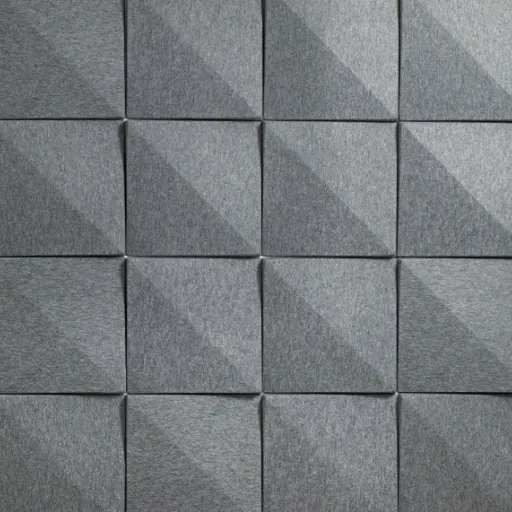
Understanding how acoustic panels function in a cubicle helps you choose the right combination of products.
Absorption vs Blocking in Cubicles
Acoustic panels primarily absorb sound, not block it. When sound hits an absorbent panel, the porous material converts sound energy into heat through friction. This reduces the amount of sound that reflects into the space or passes through to the next cubicle.
Blocking requires mass and decoupling. A cubicle partition with mass-loaded vinyl backing blocks sound. Standard acoustic panels do not. For cubicle environments, the practical approach is absorption: capture sound energy before it travels.
NRC and Cubicle Performance
NRC measures how much sound a material absorbs across the speech frequency range. ASTM C423 testing standards determine NRC ratings. In cubicle applications:
- Desk dividers with NRC 0.80 absorb 80% of the sound that hits them
- Wall panels reduce RT60 (reverberation time) within the cubicle by 50% or more
- Combined treatment on three surfaces creates a measurable improvement in speech intelligibility
The 3-Surface Rule
Effective cubicle treatment addresses three surfaces: front (desk divider), sides (wall panels on shared partitions), and above (ceiling cloud or baffle). Treating only one surface leaves major sound paths open. A desk divider without wall panels still lets sound pass through the side walls. Wall panels without a desk divider leave the front open to direct sound from across the aisle.
Installation Methods for Cubicles
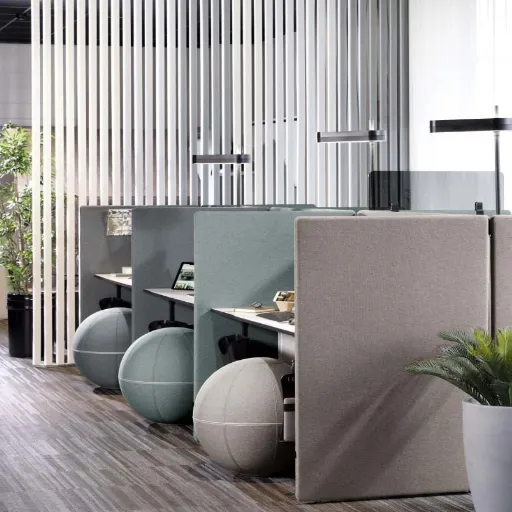
Cubicle acoustic panels must be installed without damaging existing furniture or violating office policies.
Desk Divider Mounting
- Clamp-on: Metal clamps attach to the desk edge. No drilling required. Works on desks 18-35mm thick.
- Freestanding: Divider sits on the desk surface with a weighted base. Easy to move but takes desk space.
- Monitor-mounted: Attaches to the monitor arm or stand. Saves desk space but is limited to monitor-adjacent positions.
Wall Panel Attachment
- Hook-over: Panel hangs on the top edge of the partition wall. No adhesive needed. Works on partitions up to 50mm thick.
- Magnetic: Magnetic strips attach to metal partition frames. Strong hold, easy repositioning.
- Adhesive: Foam tape or Velcro strips on fabric partitions. Permanent but secure.
- Tackable: Lightweight panels push into fabric partitions with pins. Least secure but easiest to reposition.
Ceiling Installation Above Cubicles
Ceiling clouds are suspended from the structural ceiling using cables or rods. Typical drop is 300-500mm above the cubicle wall height. Installation requires anchor points in the structural ceiling, which may need facilities approval.
Installation Height Guidelines
- Desk dividers: 500-600mm above the desk surface for seated privacy
- Wall panels: Full partition height coverage for maximum absorption
- Ceiling clouds: 300-500mm above cubicle walls for optimal coverage without blocking light
Ready to install acoustic panels in your cubicle area? Request a free installation guide with step-by-step instructions for desk dividers, wall panels, and ceiling clouds.
Cubicle Applications by Environment
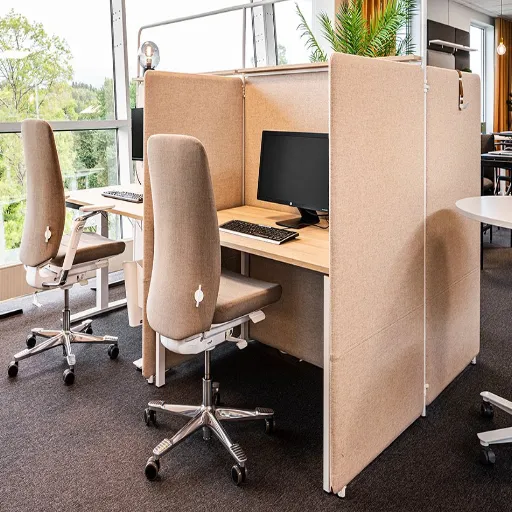
Different cubicle environments need different treatment levels.
Call Centers and Phone Rooms
Call centers are the most acoustically challenging cubicle environments. Forty to sixty agents per floor take simultaneous calls. Without treatment, every conversation becomes audible to multiple neighbors.
- Treatment level: Maximum. Desk dividers on every desk. Wall panels on all exposed surfaces. Ceiling clouds above clusters.
- Why it matters: Customer data privacy regulations may require acoustic separation for sensitive conversations.
- Expected result: 10-12 dB reduction in cross-cubicle sound transmission.
General Office Cubicles
Standard office cubicles with mixed phone and computer work need moderate treatment.
- Treatment level: Desk dividers for facing workstations. Wall panels on shared partitions.
- Coverage: 25-40% of the partition wall area.
- Expected result: 6-8 dB noise reduction and noticeable privacy improvement.
Hot Desking and Flexible Workspaces
Hot desking areas have no assigned seats, which makes permanent installation impractical.
- Treatment level: Freestanding screens between desk banks. Portable desk dividers that move with users.
- Advantage: Flexibility for changing layouts without construction.
- Trade-off: Lower NRC than permanently mounted panels.
Focus Pods and Quiet Zones
Designated quiet areas within cubicle farms need maximum coverage.
- Treatment level: Full-height desk dividers. Wall panels on all surfaces. Ceiling treatment for complete enclosure.
- Expected result: Near-private acoustic environment within a shared floor plan.
Privacy vs Noise: Dual Benefits
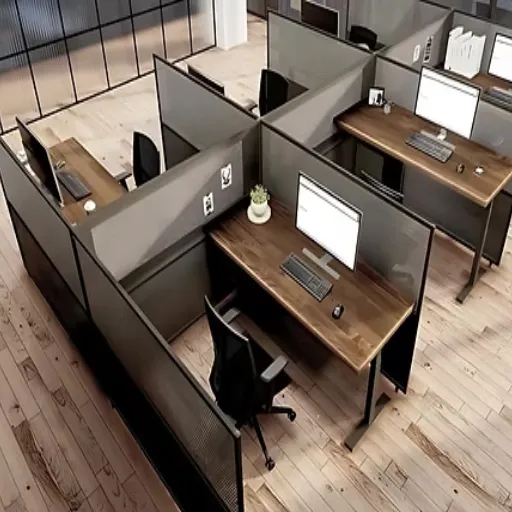
Cubicle acoustic panels deliver two distinct benefits that matter to different people in the organization.
Acoustic Privacy
Desk dividers create a psychological and physical barrier that reduces speaking volume. When workers see a panel between themselves and their neighbor, they instinctively moderate their voice. Wall panels absorb sound before it reaches adjacent cubicles, reducing the intelligibility of overheard conversations.
Visual Privacy
Higher desk dividers block sight lines. This matters for:
- Confidential documents on desks
- Video calls where screen content might be visible
- Personal space and comfort
Frosted or opaque desk dividers provide visual separation without creating a closed-box feeling.
The Privacy-Neighbor Balance
Too much enclosure creates isolation. Workers in fully enclosed cubicles report feeling disconnected from colleagues. The optimal balance uses partial-height dividers (500-600mm) that provide acoustic and visual privacy while maintaining connection to the team.
An insurance company in Dallas installed 600mm desk dividers and wall panels in its claims processing department. Agents reported they could focus on complex claims without distraction. Managers noted that team collaboration actually improved because agents stopped whispering to avoid disturbing neighbors. Normal conversation volume returned because the panels absorbed the excess sound.
Cost Analysis by Cubicle Solution
Cubicle acoustic treatment costs vary by solution type and coverage level.
| Cost Factor | Desk Dividers | Wall Panels | Ceiling Clouds | Freestanding |
|---|---|---|---|---|
| Material | $80-250/panel | $50-180/panel | $120-400/cloud | $150-350/screen |
| Installation | Self or $20/panel | Self or $15/panel | $30-50/cloud | None |
| Per Cubicle (full) | $80-250 | $100-360 | $60-200 | $150-350 |
| Total per cubicle | $80-250 | $100-360 | $60-200 | $150-350 |
Budget Planning
- Minimum: Wall panels on shared partitions only. $100-200 per cubicle. Addresses echo and neighbor sound.
- Standard: Desk divider plus wall panels. $200-500 per cubicle. Covers front and side sound paths.
- Premium: Full 3-surface treatment. $350-800 per cubicle. Desk divider, wall panels, and ceiling cloud for maximum privacy and noise reduction.
For a 50-cubicle call center, standard treatment runs $10,000-25,000. The alternative is losing productive employees to noise-related turnover. The cost of replacing one call center agent typically exceeds $4,000. If acoustic treatment prevents three agents from leaving, it pays for itself.
Frequently Asked Questions
Do acoustic panels work for cubicles?
Yes, but cubicles need specific solutions. Standard wall panels help, but desk dividers and partition-mounted panels work better for the confined cubicle environment. Combined treatment reduces cubicle noise by 6-12 dB, depending on coverage.
How do I soundproof my cubicle cheaply?
The most cost-effective approach is wall panels on shared partition walls. Self-install panels with hook-over or adhesive mounting cost $50-100 per panel. Two panels per cubicle address the main sound paths. Fabric-wrapped fiberglass or PET felt panels work best.
What height should cubicle desk dividers be?
500-600mm above the desk surface provides effective seated privacy. 300mm dividers block sight lines but do little for sound. 600mm dividers cover standing conversations. Most office installations use 500mm as the best balance.
Can I install acoustic panels on fabric cubicle walls?
Yes. Hook-over panels hang on the partition top without adhesive. Lightweight panels attach with Velcro or push pins. Avoid heavy panels on thin fabric partitions. Check the partition frame strength before installing.
Do cubicle acoustic panels really provide privacy?
They provide acoustic privacy reduction, not complete sound blocking. Desk dividers and wall panels reduce sound transmission enough that conversations two cubicles away become unintelligible. They do not block loud sounds or shouting.
What’s the best material for cubicle acoustic panels?
Fabric-wrapped fiberglass offers the highest NRC (0.80-0.90) but costs more. PET felt is eco-friendly, lightweight, and achieves NRC 0.70-0.80. Foam core panels are the least expensive but have lower durability and NRC 0.60-0.70.
How many acoustic panels do I need per cubicle?
For basic treatment: one wall panel on each shared partition (2-3 panels). For standard treatment: add one desk divider. For maximum treatment, add a small ceiling cloud.
Can I use foam panels for my cubicle?
Open-cell acoustic foam works for temporary or personal use but has limitations. Foam has a lower NRC than fiberglass or PET felt. It degrades over time and may not meet office fire codes. For commercial installations, specify Class A fire-rated panels.
Conclusion
Cubicle noise is not a character flaw of open offices. It is a solvable acoustic problem created by thin partition walls and hard surfaces. The solution is targeted treatment on the three surfaces that matter: the desk front, the shared walls, and the space above.
Start by identifying your biggest noise source. If neighbors facing you across the aisle are the problem, install desk dividers first. If the echo within your cubicle makes phone calls hard to hear, add wall panels. If overhead ambient noise is the issue, consider ceiling clouds above your cluster.
Measure your partition heights and desk dimensions before ordering. Then request cubicle-specific acoustic panels sized for your workstation layout. We manufacture desk dividers, wall panels, and ceiling clouds for commercial office projects worldwide.
For a complete overview of all office acoustic solutions, see our office acoustic panels buyer’s guide.
Categories:
Blog
Related Articles