Acoustic Panel Guide: Choosing the Right Acoustic Material for Sound Absorption
Choosing an acoustic panel starts with the sound problem and the space available for installation. PET felt, mineral wool, fiberglass, acoustic foam and wood-slat systems can all appear on a shortlist, but a material name alone does not tell you how an installed panel will perform.
This acoustic panel materials comparison explains what each construction contains, how to read its absorption data, and what to check before ordering. Compare the complete panel, including its facing, backing and mounting, against your room’s needs. That gives you a more useful basis for selection than a universal “best material” ranking.
Start with reflections inside the room
Acoustic absorption reduces sound reflected back into a room. It can help control echo and reverberation, the lingering sound after a source stops. Sound isolation concerns transmission between spaces. Rockfon’s explanation of room acoustics distinguishes these two tasks.
If conversation sounds harsh or a room rings after speech, absorption may be part of the answer. If the problem is a neighbour’s television through a shared wall, assess the separating construction and sound paths. Adding surface panels does not establish an isolation result.
NRC, or Noise Reduction Coefficient, summarizes absorption measurements. STC, or Sound Transmission Class, addresses transmission through a tested barrier assembly. A high NRC does not establish privacy between rooms. Absorptive materials can also form part of an isolation assembly, but these remain separate performance questions.
Acoustic panel materials comparison at a glance
Use this table to decide which constructions deserve a closer look. It is a selection checklist, not a ranking of laboratory performance.
| Material or system | What you are comparing | Main selection question |
|---|---|---|
| PET felt | A polyester-fibre panel, with product-specific thickness and finish | Does the tested panel and mounting fit your available depth and design? |
| Mineral wool | A porous mineral-fibre core, such as stone wool, incorporated into a panel construction | Are the core, enclosure and exposed finish specified together? |
| Fiberglass | A glass-wool core, often with a fabric facing and treated edges | Does the report cover the finished panel you intend to install? |
| Acoustic foam | A purpose-made porous foam product with a defined thickness and profile | Do its frequency data address the reflections you want to treat? |
| Wood-slat or perforated system | A visible wood-based face combined with the specified backing, cavity and mounting | Is the complete proposed assembly documented, rather than only its decorative face? |
PET felt: compare thickness, finish and mounting
PET felt acoustic panels use polyester fibres. The Autex Cube datasheet, for example, describes a polyester panel with thickness-specific absorption data and several mounting configurations. Those results belong to that named product; they are not ratings for every PET panel.
For a shortlist, check the exact thickness, edge detail, fixing method and finish. Confirm cleaning instructions and environmental limits rather than assuming any PET panel is waterproof or suitable for every interior.
Polyester composition and recycled content are different declarations. A panel described as “100% polyester” is not necessarily made from 100% recycled material. Ask for the declared recycled percentage and its supporting documentation if this affects your purchase. You can explore our PET acoustic panels when considering this construction.
Mineral wool and fiberglass: specify the finished panel
Stone wool and glass wool are distinct core materials. The ROCKWOOL Rockboard 60 datasheet, issued April 2026, identifies a stone-wool board. The Primacoustic Broadway engineering sheet identifies a glass-wool core with a facing, backing and edge treatment.
“Fabric-wrapped” describes a panel’s construction or finish, not a separate core family. Find out what sits behind the fabric, how its edges are enclosed, and whether the tested finish matches the proposed one. A core-board datasheet alone does not document every finished panel made from it.
Follow the exact product’s handling and installation instructions. Neither the core name nor an absorption result establishes the fire classification, emissions performance or handling requirements of the finished assembly.
Acoustic foam: look beyond the surface pattern
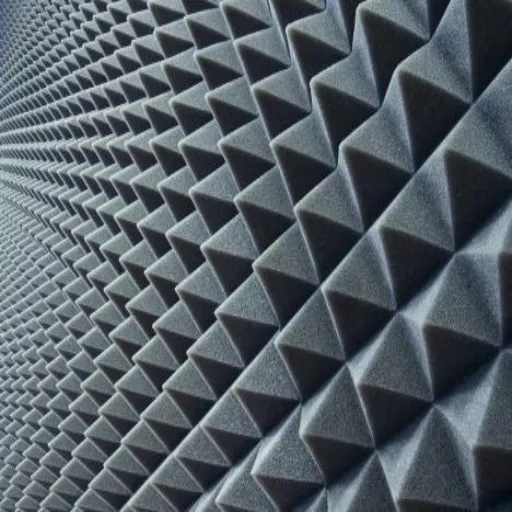
Compare purpose-made acoustic foam by its model, thickness, profile and installation. Auralex’s performance tables present separate results for named foam products and configurations. A wedge or pyramid shape alone does not establish a particular rating.
Ask for the absorption data of the actual product being quoted. Avoid substituting packaging foam or assuming that all foams have equivalent performance. For bass concerns, inspect low-frequency measurements rather than choosing by appearance or NRC alone.
Wood-slat and perforated systems: check behind the face
Treat slats or perforations as parts of an assembly. Request a section drawing identifying the visible face, openings, backing, cavity and any additional absorbent layer. Check that these match the configuration in the supporting report.
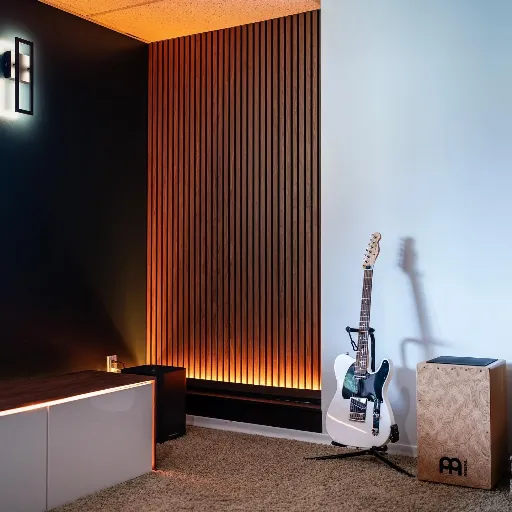
Do not infer an absorption value from the appearance of decorative wood cladding. When considering our acoustic slat panels, ask which construction and installation details apply to the option you are considering. Keep a wood finish preference separate from the evidence needed for an acoustic specification.
Read absorption data before comparing materials
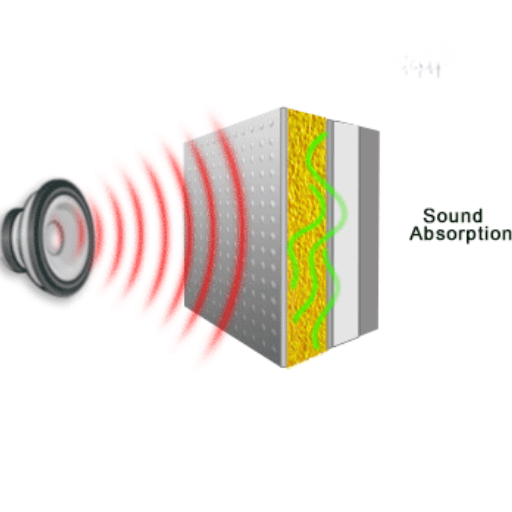
The ASTM C423 catalogue scope describes reverberation-room sound-absorption measurements. When a supplier gives you an absorption rating, identify the test method, specimen and mounting before comparing it with another offer.
NRC is a single-number summary, so it cannot show every frequency-dependent difference. It also does not mean that the same percentage of all noise will disappear from your room. Published laboratory tables can contain absorption coefficients above 1; reading these results as a literal percentage of room noise is misleading.
A named-product example: thickness and frequency matter
The Primacoustic Broadway engineering data sheet, February 2023, lists the following results for its panel depths:
| Listed panel depth | NRC | Absorption coefficient at 125 Hz |
|---|---|---|
| 25 mm | 0.80 | 0.17 |
| 51 mm | 1.00 | 0.45 |
| 76 mm | 1.00 | 0.92 |
The two deeper examples have the same NRC but different listed absorption at 125 Hz. This shows why a single rating can hide a difference relevant to low-frequency selection.
These are historical manufacturer data for Broadway, not Yuheng ratings, material-wide values or predicted room results. Consult the underlying report for the full specimen and mounting details before using the figures in a specification. The table does not establish equivalence with another brand or construction.
Match the tested installation to your available depth
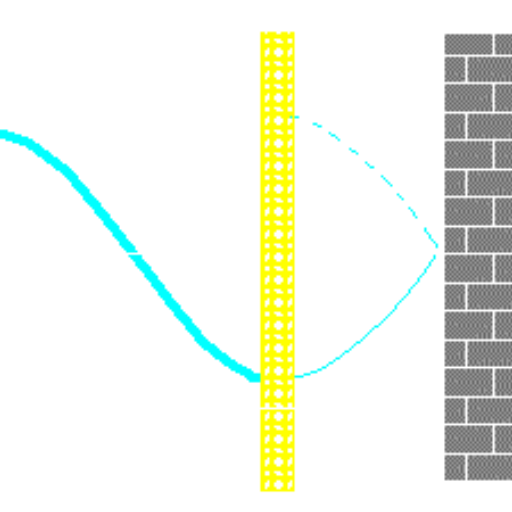
Measure the total depth you can accommodate, including the panel, mounting supports and any required air space. A proposal may fit as a flat decorative finish yet need more space to reproduce its documented acoustic configuration.
Compare these details before accepting a substitution:
- Panel thickness: match the tested product and thickness, not just its material family.
- Air space and backing: establish whether the quoted rating uses direct mounting, a cavity or another arrangement.
- Facing and finish: check that the selected fabric, coating or decorative layer is included in the documented construction.
- Mounting and exposed edges: ask whether the proposed fixing layout matches the test setup and installation instructions.
The Autex sheet separates mounting configurations, while the Broadway sheet separates panel depths. Both illustrate why a rating should travel with its construction details. Density by itself is not a reliable rule for ranking unlike panels.
Panel area and position also belong to the room plan. Room dimensions, existing surfaces and intended use affect that plan; there is no universal wall-coverage percentage that guarantees a result. For a bass problem or critical listening space, take the room information and frequency data to an acoustic designer before deciding quantities.
Choose a construction for your room and priorities
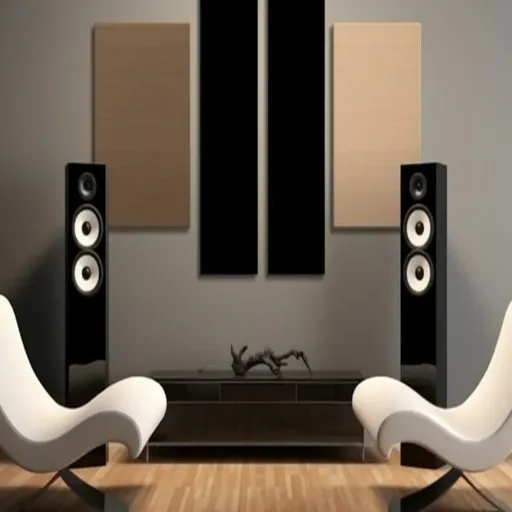
The following are illustrative selection scenarios, not customer cases or measured outcomes.
Office meeting room: compare speech treatment and appearance
Suppose a fit-out buyer wants less lingering speech sound while retaining a clean wall finish. PET felt, fabric-faced panels and a slat system could all enter the shortlist. The next step is to compare documented constructions that fit the room, alongside finish, cleaning and installation requirements. No material name guarantees a particular improvement in intelligibility or productivity.
Listening room: examine the bands below the headline rating
Suppose a listener is concerned about uneven bass. Two panels with the same NRC should not automatically be treated as substitutes. Request low-frequency data and the mounting details, then assess them with the room’s acoustic needs. A high headline rating alone does not establish a solution to the bass problem.
Shallow decorative fit-out: work within the actual build-up
Suppose a designer has very little space beyond the existing wall finish. Start by excluding configurations whose required cavity cannot fit. Compare data for the remaining installations and adjust the acoustic expectations to the documented construction. A concealed air gap shown in a test report still occupies space in the finished room.
For each shortlist, request an installed quotation with separate allowances for panels, backing or infill, supports, fixings, trims, cutting, labour and delivery. Compare the same scope across offers. A panel-only price does not establish the cost of the complete installed system.
Check the documentation before ordering
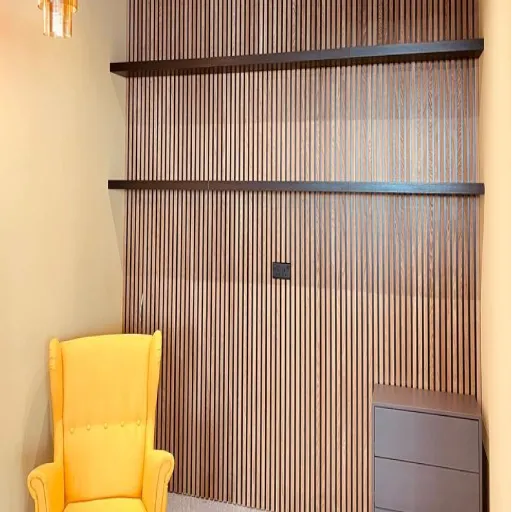
Use an acoustic panel specification template to record what you are buying and which evidence supports it. Request:
- The exact model, thickness, finish and intended application.
- A drawing or description of the full installed assembly.
- The absorption report identity, laboratory, date and test method.
- Frequency-band data alongside any single-number rating.
- Installation, handling, cleaning and environmental-limit instructions.
- Relevant fire and emissions documentation for the proposed construction and destination.
- Product-specific support for any recycled-content or environmental declaration used in the purchase decision.
Our overview of how ISO 354 absorption testing works provides further background on reading test information. Keep the reported method and rating system explicit. NRC and weighted absorption coefficients are not interchangeable labels, and an acoustic absorption class is separate from a reaction-to-fire classification. If a document says “Class A,” establish which property and classification system it refers to.
There is also a useful recent procurement reminder from another product sector. On 19 October 2026, the European Commission reported performance and documentation shortcomings in a thermal-insulation testing campaign. That campaign did not test acoustic panels; the relevant lesson here is to match documentation to the product and installation being specified.
For your acoustic panel materials comparison, shortlist constructions that fit the room, then check the evidence for each proposed installation. To discuss your panel requirements, share the room use, available depth, preferred finish and project documentation requirements with Yuheng.
Material-selection questions
Which acoustic panel material is best?
Choose from tested constructions that meet your acoustic needs, space limits and specification. There is no universal winner across PET felt, mineral wool, fiberglass, foam and wood-slat systems. Compare like-for-like installations and frequency data.
Does a higher NRC solve bass problems?
NRC alone cannot establish low-frequency suitability. The Broadway example above shows that panels with the same NRC can have different listed results at 125 Hz. Check the relevant bands and seek room-specific advice for bass control.
Do wood slats absorb sound without backing?
Do not assign an absorption rating to slats alone based on a result for a complete system. Request evidence for the actual construction, including its backing, cavity and mounting. A decorative face is insufficient evidence of the assembly’s performance.
Is PET automatically recycled and fire rated?
PET identifies the material, not its recycled percentage or a finished panel’s fire classification. Check each declaration for the exact product and construction. An absorption test does not establish fire performance.
Will these panels block noise from neighbours?
Surface absorption is intended to control reflections within a room. Neighbour noise requires an assessment of transmission paths and the separating building assembly. Do not use an NRC value as evidence of sound isolation.
Categories:
Blog
Related Articles