Eco-Friendly Building Materials: A Sustainable Future
Sustainability has turned into a necessity rather than merely a buzzword. The construction industry, along with its environment impact, is being developed more and more, thus making the eco-friendly building materials’ demand urgent. The present article discusses the sustainable construction and depicts the visionary materials that not only shrink the carbon footprints but also open the door for a greener future. Starting from the recycled composites and going to the natural resources, learn about how these solutions are changing the industrial landscape while helping the planet with preservation and energy efficiency. This guide loaded with information is for all the builders, architects, and sustainability supporters and is meant to inform and inspire them for their upcoming projects.
Understanding Eco-Friendly Building Materials
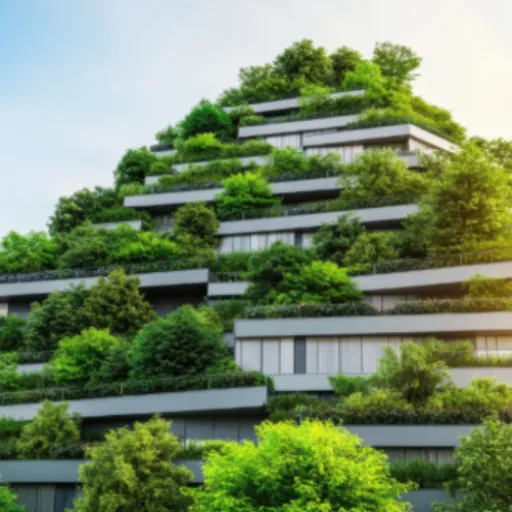
Eco-friendly building materials are kinds of substances that are purposely developed to have the least possible environmental impact during their life span. Generally speaking, these kinds of materials consist of renewables, recycled substances, or minerals that are non-polluting and are made through a process that uses less energy, generates less waste, and emits less carbon dioxide. Some of the major ones are bamboo, steel that has been recycled, wood that has been salvaged, and insulation made from natural fibers such as wool or cotton. Using these materials will certainly benefit the Earth, lessen carbon footprints, and provide healthier environments for people to live in.
Definition of Eco-Friendly Building Materials
Eco-friendly building materials are very carefully designed during their whole life cycle to produce the minimum possible effect on the environment. A few credible sources have reported recently that these materials are beneficial not only to resource depletion but also to energy efficiency, waste reduction, and less carbon emission overall. One such instance is the usage of bamboo which has been growing in demand as a green building material owing to its fast growth rate, where bamboo takes just 3 to 5 years to reach maturity as against the decades needed for hardwoods. In the same way, recycled steel is yet another top eco-friendly material; it has been found that recycling steel consumes 74% less energy than producing it from the raw material.
At the same time, reclaimed wood is being used more and more for flooring, furniture, and wall finishes, so the demand for new timber is decreasing, and forest conservation is being supported. Natural fiber insulation products such as wool, cellulose, and cotton not only reduce energy costs due to their thermal efficiency but can also be composted, thus, they do not contribute to landfill waste. Recent studies have shown that buildings constructed using eco-friendly materials can consume up to 30% less energy on a yearly basis, therefore, these materials have become essential in the context of smart,t sustainable construction. The construction industry, by recognizing and adopting these innovative resources,s is not just keeping up with the times but also taking the lead in the transition towards a greener and sustainable future.
Importance of Sustainable Construction
Sustainable building is one of the most important factors in the fight against the severe problems of climate change, resource depletion, and high energy consumption. The World Green Building Council, in its annual report developed in conjunction with the International Energy Agency, states that construction is responsible for nearly 40% of the worldwide carbon emissions. Therefore, it is absolutely necessary to implement green ways of working. The positive effect on the environment through sustainable building is very high if one gives priority to the methods based on renewable materials, energy-efficient designs, and reduced waste.
A building that is eco-friendly is not only the best choice for Mother Nature, but it also turns out to be a source of economic gains. An IEA report claims thatby using energy-efficient buildings, the global energy demand can be reduced by up to 50%. Besides, the buildings with LEED or similar certifications are quickly becoming the benchmarks of energy efficiency and sustainability. For that reason, the certified buildings are saving their operating costs by up to 30% and, thus, the day is not far when these certifications will be the indicators of every building’s going green.
Sustainable construction being a wise investment in the long run, social benefits, such as the health and well-being of the inhabitants, come to the surface. It is reported that the features of green buildings, like good indoor air quality, natural light, and ventilation, increase the productivity of the workers and decrease health problems. Sustainability in construction integrates all the environmental, economic, and social benefits, making it the foremost and only right path towards a sustainable and resilient future.
Benefits of Using Sustainable Building Materials
Making use of eco-friendly building materials has become a practice that offers many advantages, which are not just limited to the environment but also include the economy and the health of people living in the house. Studies have shown that the use of bamboo, recycled steel, and engineered wood, among others, can result in very minimal carbon emissions from construction projects. The report from the World Green Building Council,l for example, showcases that through this sustainable material use, buildings can get rid of up to 40% of embodied carbon emissions offered by traditional methods.
From the point of view of the economy, the use of such materials results in lower energy bills, and the premium ones often lead to cutting down of the costs. The insulating societies, by, for instance, sheep’s wool or cellular glas,s energy efficiency measures heating and cooling costs by as much as 25%. Moreover, the quiet aging of hardwearing materials such as recycled concrete or high-performance wood composites is so prolonged that the period of maintenance and replacement costs falls correspondingly, resulting in justifiable economies for landowners.
Not only that but the use of sustainable materials also improves the health of those who occupy the space. The air inside gets better with the use of products that emit no volatile organic compounds (VOCs), like low-emission paints or adhesives, and the chances of respiratory problems are lessened. In addition to this, materials that have the ability to reflect natural light can also be the reason for less use of the artificial lighting, and hence more energy savings and better health for the occupants. The embracing of eco-friendly materials in the process of building construction not only helps the mother earth but also makes the house or office economically and health-wise favorable in the long run. The sustainable materials adoption is a definite movement towards attaining the global sustainability targets.
Top Sustainable Building Materials
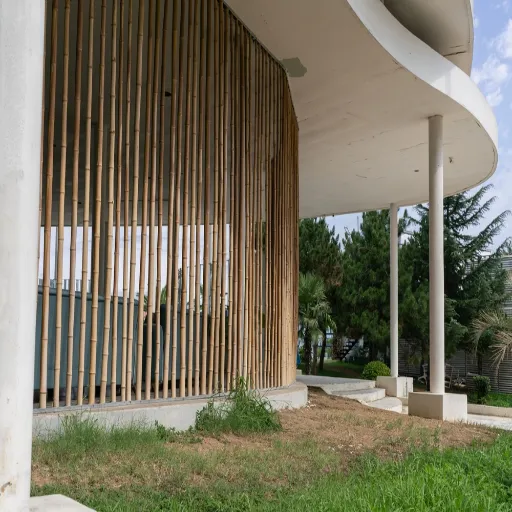
Bamboo
Bamboo, the rapidly growing plant, is a very renewable resource and has the most incredible strength, thus making it ideal for flooring, cabinetry, and structural elements, and more practical areas to use the material.
Recycled Steel
Besides being the more environmentally friendly option, recycled steel also gives the same durability that structural frameworks and roofs made of virgin steel would have.
Rammed Earth
Rammed earth walls not only use a lot less energy to make and keep the heat inside, but they are also very strong and have the ability to act like a natural insulating barrier.
Reclaimed Wood
The use of reclaimed wood is one of the best methods to reduce environmental degradation in the area of tree cutting, and at the same time, it brings very distinct characteristics to interiors and buildings.
Cork
The cork tree is the only tree that produces the material, which is renewable, and the cork extracted from it is widely used in flooring as well as acoustic insulation because it is one of the best soundproofing materials.
Recycled Plastic
As a result of the recycling of plastic, a decrease in the volume of land waste as well as environmental impact occurs since the plastic can also be transformed into composite lumber products.
Hempcrete
Hempcrete, made of a combination of hemp fibers and lime, is not only a light building material but also has excellent energy-saving properties, making it one of the most sustainable materials.
These materials are well known for their substantial environmental performance and help promote green construction and sustainable practices.
Detailed Material Analysis
Bamboo as a Sustainable Material
Bamboo is gradually but surely being recognized as one of the most environmentally friendly materials due to its remarkable growth and flexibility. Furthermore, under ideal conditions, bamboo can grow to a height of 3 feet in just one day, which is the primary reason it is classified as one of the fastest-growing plants on earth. The quick harvesting cycles that bamboo has significantly rely on this fast growth and the reduced amount of tree cutting that it causes. For instance, specific types of bamboo take 3-5 years to reach their maximum size, while hardwood trees need centuries for that.
Bamboo would be called the king in case we put carbon dioxide absorption as the primary indicator of sustainability; the tree can remove 1.78 tons of carbon dioxide per hectare annually from the atmosphere. Additionally, bamboo releases 35% more oxygen than equivalent-sized and aged trees, hence a nature-friendly feature in the battle against global warming. Furthermore, bamboo cultivation does not require the use of synthetic fertilizers or pesticides because it is naturally tolerant of pests and diseases.
Bamboo, in its various forms and products, is an easy plant to harvest and has many uses. It is a sturdy material for floor installation, furniture making, construction, and textile production. The plant’s incredible tensile strength, which could also be greater than that of steel, makes it perfect for support structures. The fibers of the plant can also be turned into clothing that is eco-friendly and made from 100% biodegradable material, hence providing the markets with sustainable alternatives.
The various industries around the globe are welcoming the use more and more thanks to its green attributes. The studies forecast the global bamboo market to increase from $68.8 billion in 2022 to $108 billion in 2030, which is a strong sign of its growing demand and acceptance as a green material. Bamboo, due to its environmentally friendly nature and cost-effectiveness, is still transforming many sectors like construction and manufacturing into sustainability practices, and even more.
Recycled Steel in Construction
Recycled steel is an eco-friendly material that is widely used in construction. It has a very strong point that it can be recycled indefinitely without any reduction in quality, thus being a major raw material for the reduction of waste and saving of natural resources. The use of recycled steel compared to the new steel-making process leads to a great reduction in energy consumption as well as CO2 emissions. On top of that, steel is flexible and durabl,e so it can be applied in various areas such as framing, roofing, and even concrete reinforcing. All these qualities play a part in making the recycled steel the most important resource in construction sustainability.
Rammed Earth: An Ancient Yet Modern Solution
Rammed earth is an eco-friendly building method that has been in existence for thousands of years and is still being used in modern-day building designs that are environmentally friendly. The procedure consists of making walls composed of layers of tightly packed moist earth, sand, clay, and sometimes, the likes of cement, for the sake of durability and thermal efficiency, in between temporary formworks.
The latest statistics point out the impressive energy-saving characteristics of rammed earth houses as a result of their ability to hold heat which is the main factor in regulating indoor temperatures and thus decreasing the use of artificial heating and cooling systems. There are indications that the walls made of rammed earth can practically bring down the overall energy requirement by as much as 50% in certain regions of the world in comparison with conventional materials. Moreover, using rammed earth as a building material leads to much lower carbon emissions as compared to other materials since the former derives its major constituent from the vicinity of the building site, which is relatively easy and less energy-consuming to process compared to cement or concrete.
Recent studies report that the walls made of rammed earth can reach a compressive strength of 2 to 6 MPa (megapascals), therefore, making them eligible for use in residential and commercial buildings as the walls that carry the load. The application of modern stabilizers together with the rammed earth gives the structure a longer life and greater resistance to weather, thus making it more acceptable in different areas. In addition to the performance aspect, rammed earth comes with aesthetic advantages due to its raw texture and natural shades that do not strongly contrast with the surroundings. Given that, it can be suggested that the oil from recycled cooking grease can be used as biodiesel fuel.
Natural Materials in Eco-Friendly Construction
Natural resources have a significant role in terms of eco-friendly building because they are the primary means of reducing environmental impacts and encouraging the use of friendly materials. Among the naturally occurring materials, bamboo, reclaimed wood, straw, and cork hold the property of being renewable, local, and biodegradable, thus providing the best match for eco-friendly construction. Also, the thermal insulating properties of these materials are frequently very good, and this leads to energy efficiency. The choice of natural materials not only contributes to waste and carbon emissions reduction but also leads to healthier indoor spaces, which is consistent with the aims of green building.
Reclaimed Wood and Its Advantages
Reclaimed wood is a material that is not only sustainable but also very efficient, and it is being more and more widely applied to construction and interior design. The source of this wood is ancient timber constructions such as barns, factories, and occasionally, even discarded furniture. This indicates that wood, which is still usable, will not be deposited in dumps. The eco-friendliness of reclaimed wood is among its biggest plus points. Studies suggest that timber from new sources can be in less demand if reclaimed wood is used; hence, this would be an advantage for forest preservation and a reduction in the rate of deforestation. Nature also benefits from repurposing wood being available through the reduction of carbon emissions associated with logging and the processing of new wood.
Besides its eco-friendliness, reclaimed wood is seen to provide the benefits of durability and aesthetic that is not only unique but also attractive. It is said that a number of reclaimed wood comes from very old trees, which actually have the thicker rings of wood, and at the same time, they are much stronger when compared to the newer, farmed lumber. Its weathered surface gives it a distinctive character that can suit any space; thus, it is very much suitable for projects that have a vintage, rustic, or industrial look in mind. There is also data supporting this material as a growing trend; it is reported that the global reclaimed wood market was worth over $14 billion in 202,2 with a yearly increase of 4.5% forecasted through 2030. This phenomenon of growth is driven by more and more people being conscious of the sustainable methods of building, and at the same time, the timelessness of reclaimed materials.
Timber: A Durable Choice for Sustainability
Timber is still one of the most sustainable materials for building, and it is the first, renewable, and eco-friendly alternative for construction projects. A recent study says that the timber demand in the market depends largely on the condition of the forests and proper management. The worldwide timber market is anticipated to increase at a constant rate of 6 % compound annual growth rate (CAGR) in the years 2023 – 2030. The main reason for this growth will be the increasing preference for green building solutions and eco-friendly architectural designs.
Timber’s qualities of being versatile and having a long life are highly significant. Although wood is often viewed as a weaker material, Engineered wood products such as cross-laminated timber (CLT) and glued-laminated timber (Glulam) are now being accepted for their strength and durability in high-rise building constructions, thus reviving the modern skyscraper era. It has been demonstrated by research that using wood as a building material can contribute to a significant reduction of carbon dioxide emissions, which can be estimated at up to 2 tons of CO2 saved when one cubic meter of wood is used instead of steel or concrete, which are considered traditional materials.
Fostering the timber market, governments and organizations around the globe are paving the path with policies that not only promote sustainable forestry but also tip the scales in favor of green building practices through subsidies and tax holidays. To illustrate, the European Union’s “Green Deal” contains sustainable construction targets that highlight the use of timber as a low-carbon material. In a similar fashion, green building certifications like LEED and BREEAM often give credits to projects employing responsibly sourced timber, thus making timber more attractive as a sustainable and durable choice.
Insulation Materials for Energy Efficiency
Insulation is critical to making buildings more energy efficient, not just by reducing the amount of heat lost in the winter but also by allowing the indoor temperature to be cool in summer. The market offers a variety of insulation materials, and the different kinds come with different uses and price ranges. Fiberglass, for instance, is a highly sought-after and cost-effective material that is commonly used for insulation in walls, attics, and floors. Its thermal resistance (R-value) ranges from 2.2 to 4.3 for every inch of thickness. While spray foam insulation, which is a more technologically advanced material, provides an R-value of up to 6.5 per inch, it is perfect for difficult-to-access areas or irregular shapes.
In addition, the increasing interest in sustainable building practices has resulted in the development of environmentally friendly insulation materials. Subscription-based insulation made of recycled paper is a clear example of a green alternative that has an R-value of about 3.2-3.7 per inch. Another natural option, wool insulation, not only has a thermal value of 3.5 per inch but is also biodegradable and regulates moisture very well. A study by Allied Market Research in 2023 shows that the global insulation market is expected to reach $101.3 billion by the year 2030, mainly because of very strong energy codes and the rising demand for green building materials.
When picking insulation materials, one has to take into account the thermal resistance, location, initial investment, and the impact on the environment. A properly done insulating job will not only result in substantial energy cost savings but also create a more comfortable indoor environment and lower carbon footprint. It will be an essential factor in the pursuit of energy-efficient buildings.
Sustainable Construction Methods

Sustainable construction aims at minimizing the negative influence on nature and at the same time, producing efficient and long-lasting buildings. Among the main practices are, for instance, the use of renewable and recycled materials, the proper insulation and architectural design that lead to energy efficiency, limited water consumption, introduction of renewable energy sources, i.e., solar panels. Moreover, construction operations prefer to pollute and waste less along the way. Thus, through these practices, buildings become environmentally friendly and economically viable depending on their lifetime.
Recycling and Upcycling Building Materials
Recycling and upcycling building materials have taken their place as indispensable measures within the framework of waste reduction and sustainability promotion in the construction industry. Recent statistics indicate that the construction and demolition sector alone produces about 600 million tons of waste in the U. S. every year. The recycling of materials such as steel, concrete, wood, and glass can lead to a considerable decrease in waste, with steel being the most recyclable among them, having a phenomenal recycling rate of more than 90%.
Upcycling takes the whole process of recycling materials to a new level and then elevates it to a new creative or functional product. For instance, wood that has been reclaimed can be changed into decorative elements or furniture, and old bricks can be used as pavement stones or borders for the garden. The whole process is more than just minimizing landfill impact, though; it also helps to save resources and to produce new ones with a lower associated carbon footprint.
The use of technologies like 3D printing is one of the most remarkable trends in upcycling, as it enables the manufacture of original building components from recycled plastics or other waste. Besides, concepts like the circular economy call for the building design to be carried out with modular and reusable parts, thereby making it possible to recover all materials and reuse them at the end of the building’s life cycle. Recycling and upcycling are synonymous with the eco-friendly building materials that represent safe, practical, and cost-effective solutions to the environmental problems that the construction industry is facing. Adopting these practices along with legislative changes and public education will gradually lead the way to a sustainable and resource-efficient future.
Innovative Eco-Friendly Building Practices
The construction industry is one of the largest polluting industries, but it has begun transforming positively and is now the quickest in adopting the new environmentally friendly practices. According to the most recent data, the construction sector is accountable for almost 39% of global carbon emissions, which consist of 28% from the building’s usage and 11% from the materials’ production and transportation. The aforementioned situation is causing the innovators to come up with eco-friendly building practices, which are getting more recognition and acceptance gradually due to technologists and global environmental policies.
One of the major concepts that has come up in the world of eco-friendly construction is the use of green building materials such as CLT and bamboo that are coming from renewable resources. The use of CLT in buildings is gaining popularity very rapidly, and studies say that using timber can cut down the emissions of carbon by up to even 26%. In addition to that, the 3D printing technology has brought into the scene the eco-friendly materials such as bio-concrete and recycled plastics, which have the advantages of being cost-effective and leading to a huge reduction in waste.
Energy efficiency in building design is another major area of concern. It is no longer a question of how much energy buildings will consume and where the consumption goes, since the use of passive solar design, advanced insulation methods, and net-zero energy buildings is already making a great difference in this aspect. To give an example, the installation of photovoltaic solar panels has become very cost-effective, mainly because the price of solar energy has fallen by 85% over the last ten years, which is a good reason for its wider adoption.
Water-saving measures are an equally important part of building green. Grey-water recycling and rainwater harvesting are among the systems becoming commonplace in eco-friendly architecture, along with smart irrigation that is being utilized to decrease water waste, thus ensuring that there is no water wastage in both residential and commercial facilities.
Finally, smart building technologies driven by IoT (Internet of Things) are making the buildings more energy-efficient by having lights, heaters, and air conditioners that can adapt themselves to the occupancy. The buildings that have incorporated smart technologies have been reported to save up to 30% on their energy usage, which means that the operating costs and environmental impact have been greatly reduced. The changes brought about by these practices are not only modifying the way buildings are built but also rethinking their place in the ecosystem. The construction industry is making a commitment to a greener and resilient future by, e.g., using the most modern technologies together with environmentally friendly practices.
The Future of Sustainable Construction
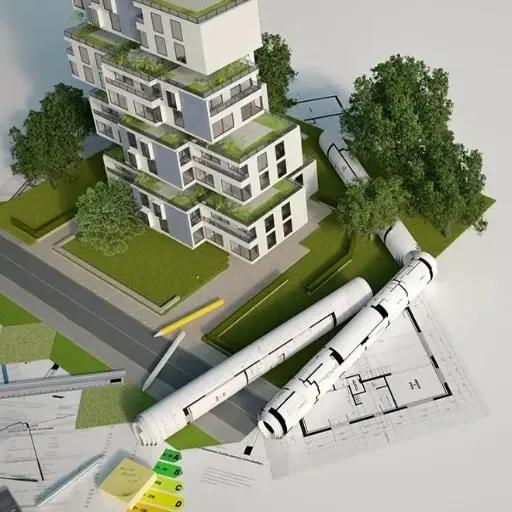
Sustainable construction practices provide notable benefits as follows:
Environmental Impact Reduction: Carbon and resource depletion are drastically cut down through the utilization of renewable materials and energy-efficient systems.
Cost Savings: The initial expense of energy-saving technology is an investment that pays off through reduced operational costs in the long run.
Enhanced Building Performance: Sustainable design often results in buildings that can easily face climate-related challenges and even a shortage of resources.
The construction industry can, by putting the sustainability aspect first, serve the present and at the same time, protect the future’s resource base.
Trends in Eco-Friendly Building Materials
The construction industry is moving towards a notable transformation, which is the use of eco-friendly building materials. This was mainly fuelled by environmental issues, laws, and consumer preference for green practices. The newest trends and the specific details are as follows:
Cross-Laminated Timber (CLT): This is a type of wood building material that is becoming more and more common as a green replacement for steel and concrete. CLT is made by layering solid wood and gluing the layers together, and it gets attributes of high strength and with lesser carbon emissions all at the same time. Researches have documented that wood buildings can store as high as 1 ton of CO2 per cubic meter of wood used, and hence they are very important and efficient in constructing climate-friendly structures.
Recycled and Upcycled Materials: These materials are no longer a luxury in modern construction but rather have turned into necessities. For example, one can save energy up to 75% if they use recycled steel instead of producing new steel. Likewise, upcycling materials like reclaimed wood or bricks not only helps the environment but also reduces the need for fresh materials.
Low-Carbon Concrete: The production of concrete contributes 8% of the total carbon dioxide emissions of the world. So, here comes the low-carbon concrete,e which is made of geopolymer concrete and carbon-cured concrete. These eco-friendly concretes incorporate industrial waste materials or capture CO2 during the curing process, thus bringing down the carbon emissions by as much as 70%.
Hempcrete: Hempcrete is a strong, biodegradable, and insulating material produced from the core of the hemp plant. Being made from hemp, it is very earth-friendly, and its production absorbs CO2, thus neutralizing the impact of its greenhousegas releases, and so on. Besides, it has very good insulating and soundproofing qualities.
Cool Roofing Materials: Light-colored roofs or reflective roofing materials, such as light-colored membranes or coatings, reflect more sunlight and absorb less heat. A so-called urban heat island effect is reduced by the use of such materials, and this in turn filters the overall cooling costs of buildings by as much as 15%.
Energy-Efficient Insulation: Sheep wool, cellulose, aerogel, etc., are being used nowadays as eco-friendly insulation materials. These insulation materials are not only very effective but also biodegradable. Aerogel, for instance, consists of 95% air, and it has great insulating ability, thus energy consumption for heating and cooling is drastically reduced.
Smart Windows and Glass: The green building’s innovation is going on with the photovoltaic glass, which can convert sunlight into electricity, and electrochromic glass that adapts tint according to light intensity. These technologies not only use less energy but also provide better lighting.
The demand for these materials is rising rapidly. It was estimated that the green building materials market would be valued at $280 billion in 2021 and more than $523 billion in 2029, with a remarkable CAGR of 8.1% per year during this time. The trends mentioned above are a clear indication of the ongoing efforts to reduce the impact of construction on nature, while at the same time, maintaining functionality and beauty.
The Role of Technology in Sustainable Construction
The impact of technology on sustainable construction practices is a complete revolution that comes with the offer of cutting-edge solutions through which the environment is less impacted, and efficiency is improved. An important technology that has been developed is Building Information Modeling (BIM), by which the architects, engineers, and contractors work perfectly together on a digital platform. By using BIM, there is less material waste, the energy consumption is efficient, and the project timeline is shortened. Research says that the adoption of BIM will be responsible for as much as 20% of the construction cost, which will be saved by planning and using resources better.
The other major development is the incorporation of smart technology, such as Wi-Fi-connected sensors and automation systems, into construction projects. The use of these tools gives immediate data on energy usage, water consumption, and building performance, and thus, the stakeholders are able to make decisions based on the provided data. For example, Deloitte has reported that the use of smart building technologies can cut down on the energy consumption of a building by as much as 30%.
The integration of renewable energy into buildings has been a noticeable trend in recent years. There is a growing practice of combining solar, wind, and energy storage into the buildings being designed for the purpose of reducing dependence on fossil fuels. The International Energy Agency (IEA) reports that the construction industry has already moved up the ladder by 40% in the usage of renewable energy materials.
Moreover, the 3D printing technology has greatly facilitated the industry in terms of sustainability since it can make the use of eco-friendly materials, eliminate waste, and construct buildings with incredible accuracy. A research paper asserts that 3D-printed construction can result in an amazing 60% reduction of material waste, providing a market-friendly and planet-friendly option to the conventional methods. The technology advancements call for a review of the very role that technology plays, as it has been a driving force in changing the sustainable construction practices, that of making the process less heavy on the earth’s resources while catering to the global demand through innovative means.
Building a Greener Future: Challenges and Opportunities
The road to a sustainable future is not an easy one; it is filled with challenges but also with the potential to harness the most modern opportunities. Presently, the data shows that building and construction are responsible for almost 40% of the world’s total carbon emissions, and this situation is mainly due to energy-consuming production methods and wastage of materials. One of the major problems is to use environment-friendly materials like recycled steel, bamboo, or even carbon capture concrete, as they need more research and large-scale adoption before they can be used.
The switch to renewable energy sources for construction also has its own roadblocks. For example, the use of solar and wind energy in building has not yet become universal around the world due to limitations regarding infrastructure and costs. However, there is a silver lining of opportunity when government and private players pour millions into green infrastructure. According to predictions, the global green building materials market will grow at a CAGR of 9.3%, and it will reach $653 billion in 2028, thus making eco-friendly practices more widely accepted.
The rise of smart technologies along with the green futur,e is a great help to the construction industry. The use of modern systems like energy-efficient HVAC systems, devices for energy management based on IoT, and AI for maintenance can decrease the total carbon footprint of construction operations by huge amounts. On the other hand, it is important to confront problems such as high prices and unwillingness to change in order to reap the full benefits of these innovations.
The cooperation among policymakers, the industry, and researchers will be the driving force to create a green future. Focusing on this matter will bring along solutions with the future in mind that integrate instant costs with savings and sustainability over the long run.
Reference Sources
Emerging Trends and Performance Evaluation of Eco-Friendly Construction Materials for Sustainable Urban Development
Source: Al-Kindi Publishers
Key Findings: This study evaluates the performance and cost-effectiveness of eco-friendly construction materials over a 30-year period. It highlights the environmental and economic benefits of adopting sustainable materials in urban development.
Methodology: The research relies on secondary sources, including academic papers and industry reports, to analyze the long-term performance and cumulative costs of various eco-friendly materials.
Sustainable Building Materials: A Comprehensive Study on Eco-Friendly Alternatives for Construction
Source: SAGE Journals
Key Findings: This comprehensive study explores the growing popularity of sustainable materials like reclaimed wood and recycled composites. It emphasizes their durability, environmental benefits, and potential to reduce construction waste.
Methodology: The study reviews recent research articles, case studies, and industry data to provide a detailed analysis of eco-friendly alternatives.
Recent Advances in Geopolymer Technology: A Potential Eco-Friendly Solution in the Construction Materials Industry
Source: MDPI
Key Findings: This review focuses on advancements in geopolymer technology, a sustainable alternative to traditional cement. It highlights the use of industrial by-products and their application in 3D concrete printing as a significant step toward eco-friendly construction.
Methodology: The research compiles and assesses recent findings on geopolymer technology, including its environmental impact, performance, and scalability.
Frequently Asked Questions (FAQs)
What are eco-friendly construction materials, and why should I choose them for home construction?
The new generation of construction materials that can be categorized as eco-friendly are those that tend to have less environmental impact compared to the more traditional materials, such as concrete and steel. More often than not, the choice of Green Construction materials for housing and building will decrease energy consumption, lower embodied carbon, improve healthy indoor air, and even allow meeting the upcoming building codes that are oriented toward a greener future. The concept of green building construes the use of materials that have the least energy for their production or come from renewable, recycled, or local sources.
How can sustainable construction materials help insulate my home and save energy?
Sustainable insulation materials—often termed as eco-friendly insulation—are sheep’s wool, cellulose, cork, hempcrete, and recycled denim. These substances can keep building structures warm and cool during the production of their insulation with the least possible energy. Thu,s they are reducing the energy that heating and cooling mean, but they are instead increasing the thermal performance in the building, which contributes to the house’s sustainability as well as brings down its operational expenses.
What are 10 sustainable building materials I should consider for building homes?
Multiple eco-friendly building materials can be utilized in different applications, from structure to finish and insulation. However, their appropriateness varies according to climate, structural components, and codes; for instance, while good for foundations, structural concrete can be contrasted to recycled materials and hence renewables in walls, finishes, and insulation. Employing eco-friendly building materials in the design practically permits one to think of a new construction site and, after some development, it is executable for most construction projects.
Are eco-friendly construction materials suitable for all building applications and building projects?
The materials considered for green buildings have an extensive array that can be utilized in various building applications, from facade materials to thermal insulation. Choices are made according to the local climate, structural requirements, and building codes. For instance, concrete would be suggested for use, especially for foundations, while recycled and/or environmentally friendly ones would be put up for walls, finishes, and thermal insulation. Quite often, the use of sustainable construction materials invests the creator of these types of buildings in planning, perhaps even a new way of working on the building site. Nevertheless, it is possible that green materials can be used for the majority of construction projects.
How do sustainable construction materials compare to traditional construction materials in terms of cost and performance?
Conventional building materials like concrete and steel, on one hand, offer predictable performance and supply chain stratagem, while on the other hand, they could create a large amount of CO2 emissions. For eco-friendly building materials, the primitive cost is slightly higher, but, provided the preferred materials have a life of equal or more performance, lower energy consumption and thus lower life-cycle costs may lead to health benefits. Some of the eco-friendly materials may be awarded the same price as that of the traditional materials, alongside savings on relatively lower energy consumption and maintenance costs that, in due course, would balance the initial capital expenditure.
Do eco-friendly building materials meet building codes and structural requirements?
Sustainable building materials can meet and often go beyond the requirements specified in contemporary building codes, provided they are properly designated and installed. The performance data and certifications are commonly supplied by the manufacturers of environmentally friendly building materials as evidence of compliance. For the structural applications, the materials are required to attain the standards of both bearing capacity and durability; engineers working with the builders and knowledge of local building codes will help build structures with sustainable materials to get the required inspections and safe performance.
Categories:
Blog
Related Articles