What Is Modular Wpc Decking? Definition, Materials & How It Works
Modular WPC decking is an outdoor flooring system made of interlocking wood-plastic composite (WPC) tiles that snap together to form a floating surface over concrete, tiles, or compacted ground, with no screws, joists, or glue required. If you have seen square deck tiles sold as DIY patio or balcony flooring, you have already met modular WPC decking.
The category is full of overlapping labels. One supplier calls it modular WPC decking. Another calls it interlocking deck tiles. A third advertises composite deck tiles. It is easy to assume these are different products when they are usually the same thing in slightly different packaging. For a first-time buyer, that confusion can lead to ordering the wrong material, the wrong size, or the wrong grade.
We supply WPC decking from Linyi, one of China’s largest WPC manufacturing clusters, and we answer questions like this every week. This guide explains what modular WPC decking is, what it is made of, how it installs, and when it makes sense for your project. By the end, you will know whether interlocking WPC tiles are right for your space, and you will understand the quality checks that separate a smart purchase from a costly one.
Key Takeaways
- Modular WPC decking uses interlocking wood-plastic composite tiles that float over existing surfaces, so installation needs no screws, joists, or professional tools.
- A typical tile is 300 x 300 mm, about 20 to 22 mm thick, and made from roughly 60% wood fiber, 30% HDPE plastic, and 10% additives.
- Co-extrusion (capped) tiles resist UV, stains, and moisture better than conventional single-extrusion tiles, and they last longer.
- Modular tiles suit balconies, rooftops, patios, poolside areas, and temporary event flooring, but they need a flat, solid, well-drained base.
- Quality varies widely among low-cost imports, so buyers should check cap coverage, test reports, and certifications before ordering.
What Is Modular WPC Decking?
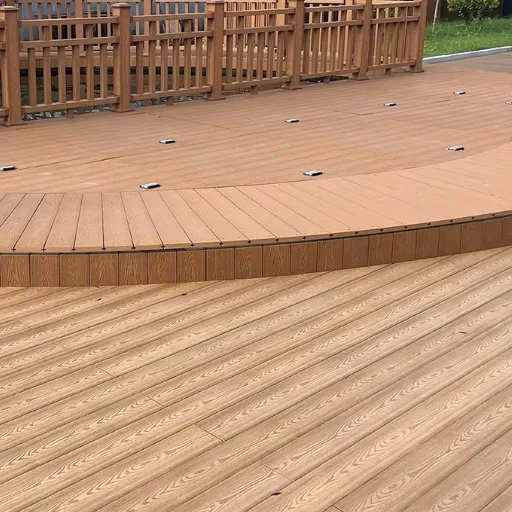
Modular WPC decking is a floating outdoor floor made from individual tiles that connect through an interlocking edge system. Each tile combines a wood-plastic composite surface with a plastic base grid, and the tiles click together without fasteners to cover a floor area that can be lifted, moved, or expanded later.
Two words matter here. “Modular” means the floor is built from repeating units rather than a single continuous board. “WPC” stands for wood-plastic composite, the material the tile surface is made from. Put them together, and you get a floor that installs quickly, rearranges easily, and brings the look of timber without the upkeep of real wood.
The most common tile size is 300 x 300 mm, or about 12 x 12 inches. Most products run 20 to 22 mm thick including the base, and you need about 11 tiles to cover one square meter. Larger formats, such as 600 x 300 mm panels, exist for commercial projects. Because the tiles sit on a raised grid, they are not fixed to the ground. That is why installers call the result a “floating” floor.
How Modular WPC Decking Works
The genius of modular WPC decking is the base. Each tile has a rigid plastic grid underneath, usually made from polypropylene, with connectors built into the edges. To install, you place tiles side by side and press the connectors together until they snap or click into place. No screws, no adhesive, and no nails are involved.
That grid does more than hold tiles together. It raises the walking surface slightly above the subfloor, which creates an air gap underneath. Water drains through the gaps between the slats and flows away beneath the tiles, and airflow under the deck helps prevent moisture build-up and mold. This is a key advantage in poolside areas, rainy climates, and rooftop installations.
Because the tiles are not mechanically fixed, they are fully removable. You can lift a single damaged tile and replace it without tearing out the floor. You can take up the whole deck and reinstall it in a new location. Landlords and event planners especially value this portability, since it means an investment in flooring is not permanently tied to one property.
When you want to change the layout, you simply unclip, shift, and re-snap. A straight pattern can become a checkerboard in an afternoon.
What Is Modular WPC Decking Made Of?
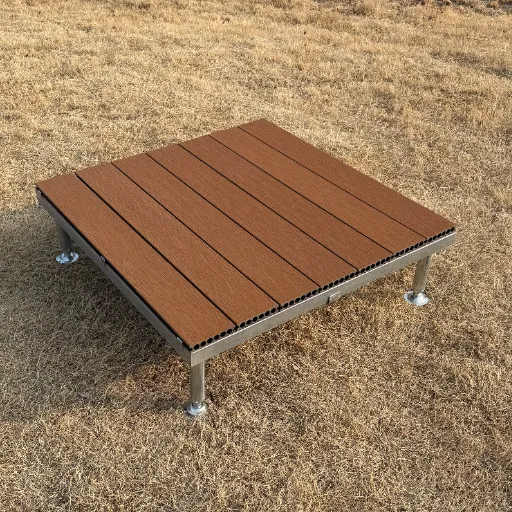
Understanding the materials helps you judge quality, because not all WPC tiles are equal under the surface.
Wood Fibers and Wood Flour
The wood portion gives WPC its natural appearance and rigidity. Manufacturers blend in sawdust, wood chips, wood flour, or bamboo powder, and much of it can come from recycled sources. A common recipe uses about 40 to 60% wood fiber by weight. Some eco-friendly products push recycled content much higher, with certain tiles made from up to 95% recycled materials.
Thermoplastic Polymers
The plastic portion binds the wood fibers together and protects them from moisture. The most common polymers are HDPE (high-density polyethylene), polypropylene (PP), and PVC. HDPE is the standard choice for deck tiles because it resists water and recycles well. A typical formulation is around 30% HDPE, which is why you will often see “60% wood fiber, 30% HDPE, 10% additives” listed on product sheets.
Additives
Additives do the fine-tuning. UV stabilizers slow color fading in direct sun. Pigments create wood-grain and solid-color finishes. Coupling agents improve the bond between wood and plastic. Anti-fungal agents reduce mold in damp, shaded areas. The quality and quantity of these additives largely determine how the tile looks after a few seasons outdoors.
Capped vs Uncapped
There is one more distinction worth knowing. Conventional WPC tiles are a single material throughout. Co-extrusion tiles add a thin protective polymer cap around the surface. That cap dramatically improves resistance to UV rays, stains, scratching, and moisture. Capped tiles cost more, but they hold their color and structure longer, which makes them the better choice for sunny rooftops, pool decks, and commercial spaces.
For more on the underlying material, our article on what is WPC decking explains wood-plastic composite boards in detail.
Modular WPC Decking vs Traditional Decking Boards
The quickest way to understand modular WPC decking is to set it beside traditional decking boards. The two formats solve the same problem, but they suit different projects.
| Feature | Modular WPC Deck Tiles | Traditional WPC Boards |
|---|---|---|
| Installation | Snap together on the surface | Screwed to joists and a substructure |
| Tools needed | None, or a rubber mallet and saw | Drills, levels, saws, fasteners |
| Substructure | None required | Footings, joists, and framing |
| Portability | Removable and reusable | Permanent once installed |
| DIY friendliness | High | Moderate to low |
| Best for | Balconies, patios, rooftops, rentals | Ground-level decks, large spans, elevated structures |
| Cost profile | Low labor, moderate material | Lower material, higher labor |
The trade-off is straightforward. Modular tiles win on speed, flexibility, and weight. Traditional boards win on structural permanence and seamless, large-scale coverage. For a full breakdown, our guide on WPC deck tiles vs WPC decking boards walks through the decision in detail.
Types of Modular WPC Deck Tiles
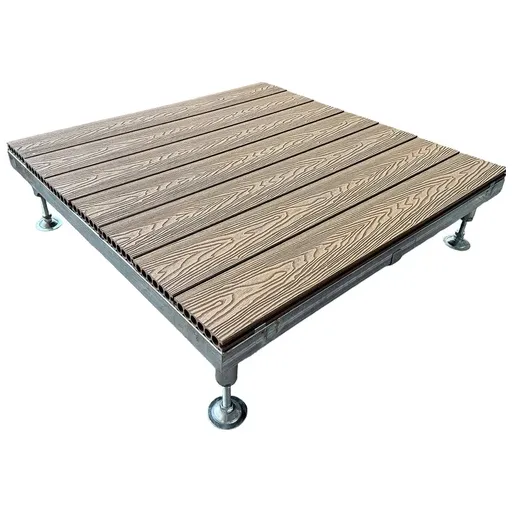
Not all modular tiles are created equal. Knowing the three main types helps you match the product to the project.
Conventional WPC Tiles
These are single-extrusion tiles, meaning the wood-plastic mix is the same throughout. They are the most affordable option, they look natural, and they handle moderate use well. Conventional tiles work fine for covered balconies, garden paths, and low-traffic patios.
Co-Extrusion (Capped) Tiles
Co-extrusion tiles add a protective shell around the core during manufacturing. The cap layer resists fading, stains, scratches, and moisture far better than an uncapped surface. If the deck will face intense sun, heavy rain, pool chemicals, or constant foot traffic, capped tiles are usually the smarter long-term investment.
Hollow vs Solid Core
Some tiles are hollow inside to reduce weight and cost, which makes them popular for balconies and DIY projects. Others are solid, which adds strength and durability under heavy loads. A solid-core tile is a better choice for commercial spaces and areas with heavy furniture or equipment.
Key Benefits of Modular WPC Decking
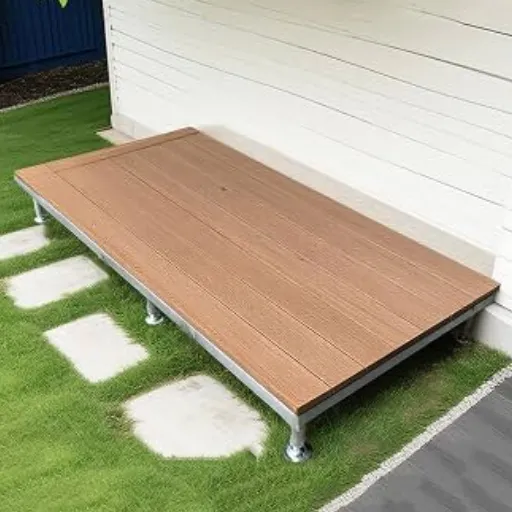
Why do buyers keep choosing modular WPC decking? The benefits go beyond the wood look.
- Fast installation. A small balcony can often be floored in under an hour, with no contractor required.
- Works over existing surfaces. Lay tiles over cracked concrete, old tiles, or compacted gravel without demolition.
- Low maintenance. No staining, sealing, or sanding. A broom and a hose handle most cleaning.
- Weather resistance. WPC resists moisture, rot, insects, warping, and splintering.
- Lightweight. Typical tiles weigh 1 to 2.5 kg each, which matters for rooftops and balconies with load limits.
- Portable and reusable. Lift the floor, move it, or take it with you.
- Design flexibility. Mix colors, add borders, and create patterns like checkerboard or herringbone.
- Eco-friendly materials. Most tiles use recycled wood fiber and recycled plastic, reducing demand for virgin timber.
A homeowner in Melbourne named Priya wanted a usable balcony without altering her rental apartment. In March 2026, she laid 14 square meters of 300 x 300 mm tiles over the existing cracked concrete in a single afternoon. When she moved three months later, she took the tiles with her and installed them on her new patio. The total cost was a fraction of a traditional deck, and nothing was wasted.
Common Uses and Applications
Modular WPC decking works almost anywhere you need a quick, durable outdoor surface.
- Balconies and terraces. Apartment owners use balcony WPC deck tiles to hide old concrete and create a warm outdoor floor.
- Rooftops and podiums. Lightweight tiles paired with drainage mats meet the weight and drainage demands of elevated spaces.
- Patios, courtyards, and garden paths. Homeowners create seating areas and walkways without pouring concrete.
- Poolside and wet areas. Capped waterproof WPC deck tiles handle chlorine, salt, and constant moisture.
- Temporary and event flooring. Event companies value tiles that install and pack away in hours.
Advantages and Disadvantages
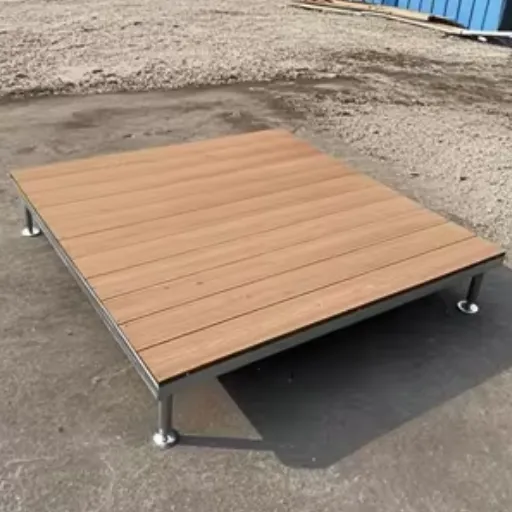
No flooring product is perfect, and honest buyers want the full picture.
Advantages
The strengths are the ones listed above: speed, flexibility, low maintenance, durability, and portability. For renters, landlords, event planners, and anyone covering an ugly existing surface, few options compare.
Disadvantages
- Heat retention. Dark tiles can get warm under direct sun, so lighter colors perform better in hot climates.
- Base requirements. Tiles need a flat, solid, well-drained base. They are not meant for soft soil, loose sand, or lawns.
- Visible seams. The interlocking edges create a grid pattern that some homeowners find less seamless than plank decking.
- Connector wear. In very heavy commercial use, base grids and connectors can wear faster than the tile surface.
- Quality variance. Low-cost imports vary widely in density, cap quality, and color fastness.
How to Judge Quality in Modular WPC Decking
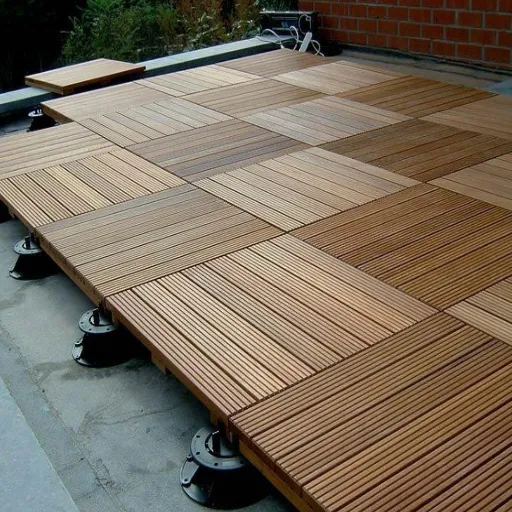
If you are buying in volume, the price gap between a good tile and a bad tile can be large. Here are the checks that matter.
Inspect the cap layer. If a product is co-extruded, confirm the cap covers the top and sides, not just the visible surface. Partial capping leaves edges exposed to moisture and swelling.
Ask for test reports. Request the 24-hour water absorption test and UV fade test results. Capped tiles should absorb well under 2% water after immersion.
Verify certifications. Depending on your market, look for CE marking, ASTM D7032, ISO 9001, and fire ratings. These documents signal a manufacturer with real quality controls.
Order production samples. Photos hide color inconsistency and surface defects. Expose samples to sun and water for a few days before you approve a large order.
Check the base grid. The polypropylene grid should feel rigid, not flimsy. Connectors should click cleanly and hold firm under pressure.
A distributor in Rotterdam learned this the hard way. He approved a container of budget tiles based on a glossy sample, only to find the delivered tiles had thin, brittle base grids that cracked during installation. His customer rejected the shipment, and the reorder cost him both time and margin. Now he requests a sample from every production run, plus a third-party inspection report, before anything ships. When sourcing at scale, working with a supplier who can share test data and factory records is worth more than a low unit price. If you are planning a wholesale or container order, contact our team and we will help you verify the products you are considering.
FAQ
What is modular WPC decking?
Modular WPC decking is an outdoor flooring system made of interlocking wood-plastic composite tiles that snap together to form a floating surface. It installs without screws, joists, or glue and can be removed and reused.
What is modular WPC decking made of?
Most modular WPC decking is made from roughly 60% wood fiber, 30% HDPE plastic, and 10% additives like UV stabilizers and colorants. The tile surface sits on a polypropylene base grid with interlocking connectors.
Is modular WPC decking the same as composite decking?
Composite decking is the broader category. Modular WPC decking is a specific type: composite material formed into interlocking tiles. Other composite products use different fillers or come in traditional board form.
Can modular WPC deck tiles be installed over concrete?
Yes. Concrete is one of the best bases for modular WPC deck tiles, provided it is flat, solid, and well-drained. The tiles float on top, so they can cover cracked or aging concrete without removal.
How long do WPC deck tiles last?
Lifespan depends on grade. Budget conventional tiles may last 10 to 15 years, while premium capped co-extrusion tiles are typically rated for 20 to 30 years with basic maintenance.
Are WPC deck tiles waterproof?
WPC is water-resistant, not fully waterproof. The plastic portion repels moisture, but the wood fibers can absorb water over time, especially in uncapped tiles. Capped tiles and a good drainage base give the best performance in wet areas.
How many WPC deck tiles are in a square meter?
For the standard 300 x 300 mm tile, you need about 11 tiles per square meter. Always add 5 to 8% extra to account for cutting and waste.
Conclusion
Modular WPC decking gives you the look of timber with the durability of plastic, delivered as interlocking tiles you can install in hours and reuse for years. It combines a wood-plastic composite surface with a polypropylene base grid, floats over existing surfaces, and removes the need for joists, screws, or professional labor.
The key takeaways: standard tiles are about 300 x 300 mm and made from roughly 60% wood fiber, 30% HDPE, and 10% additives; capped co-extrusion tiles last longer and resist weather better; and the system suits balconies, rooftops, patios, poolside areas, and temporary events. Before you buy, verify cap coverage, test reports, and certifications, and always order production samples.
If you are comparing suppliers or planning a project, start with our complete modular WPC decking buyer’s guide for costs, installation, and sourcing guidance. When you are ready to move forward, request a quote or a sample through our contact page, and our team will help you find the right tiles for the job.
Categories:
Blog
Related Articles