How to Choose WPC Decking: A Buyer’s Checklist for Quality and Value
The best way to choose WPC decking is to match the board type to your project, verify certifications and test reports, request samples, audit the supplier, and calculate the total cost of ownership before you order. Color and price are easy to compare, but they reveal almost nothing about how the boards will perform after two summers of sun, rain, and foot traffic.
A contractor in Spain learned this the hard way. He selected a budget hollow board based on a polished Alibaba listing. The boards arrived with the right color and thickness, but after eight months, the cut ends absorbed water, and the surface faded from walnut to gray. His client refused the final payment. The contractor replaced the entire deck and lost both margin and reputation. A simple checklist would have caught the problem before the first container left China.
The global WPC decking market reached approximately USD 7.48 billion in 2026, according to Custom Market Insights, and is forecast to grow to USD 15.84 billion by 2035. That growth attracts suppliers at every quality level, so a disciplined WPC decking buyer’s checklist protects both your budget and your reputation.
We are based in Linyi, one of China’s largest WPC manufacturing clusters, and we see the same decision points every day. This guide gives you a practical framework for choosing WPC decking that performs. It covers board construction, material composition, certifications, warranties, sample testing, supplier verification, and total cost of ownership. For a broader overview of WPC decking types and applications, start with our complete WPC decking buyer’s guide.
Key Takeaways
- Match board type to the project: hollow for light residential, solid for high-traffic or commercial, capped for wet or sunny climates.
- Verify ASTM D7032, CE/EN 15534, FSC, and ISO 9001 certifications against the issuing bodies.
- Request samples from multiple suppliers and test water absorption, scratch resistance, and load deflection.
- Audit the supplier through business license checks, factory tours, production capacity, and export references.
- Calculate 20-year total cost of ownership, not just FOB price, before making a final decision.
What Quality Means in WPC Decking
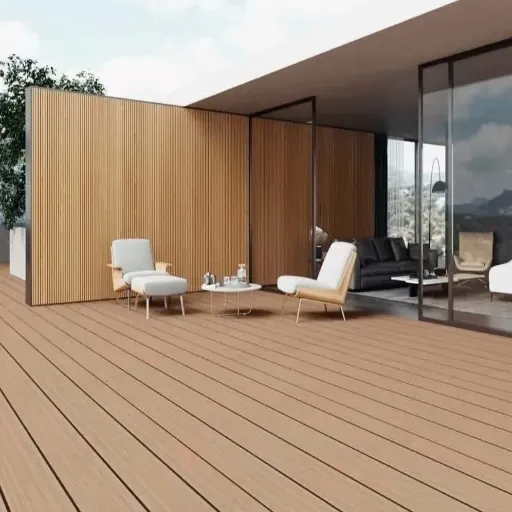
WPC decking stands for wood-plastic composite decking. It combines wood fibers or flour with thermoplastic polymers and additives, then extrudes the mixture into boards. For a plain-language introduction to the material itself, read our article on what WPC decking is.
Quality in WPC decking is not one thing. It is the combination of the right raw materials, the right board construction, the right cap layer, and the right quality control process for your specific application. Two boards can look identical in a showroom yet perform very differently outdoors.
Understanding these WPC decking selection criteria before you buy helps you judge samples, compare quotes, and avoid surprises after delivery. The main quality drivers are:
- Wood-plastic ratio: A typical range is 50-70% wood fiber and 30-50% plastic. Higher wood content can feel more natural but may absorb more moisture if uncapped.
- Plastic type: HDPE is preferred for durability and moisture resistance. Lower-grade suppliers use mixed recycled plastics with inconsistent quality.
- Additives: UV stabilizers, coupling agents, and anti-fungal compounds protect the board after installation.
- Cap layer: Capped or co-extruded boards have a polymer shell that improves fade, stain, scratch, and moisture resistance.
- Profile design: Hollow boards are lighter and cheaper. Solid boards carry more load and fastener stability.
- Factory control: Consistent extrusion temperature, raw-material inspection, and pre-shipment testing separate reliable suppliers from risky ones.
When you choose WPC decking, you are really choosing a production system, not just a product photo. The best WPC decking quality comes from factories that control every input, not just the final appearance.
Step 1: Match the Board Type to Your Project
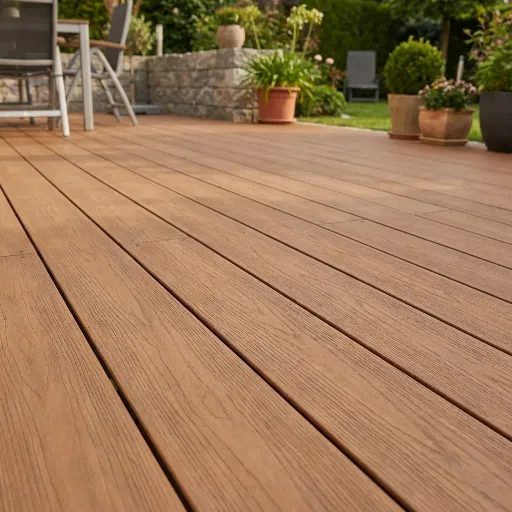
This is where most selection mistakes begin. Buyers focus on color and price before they ask whether the board can handle the load, climate, and traffic of the installation site.
Hollow vs Solid WPC Decking
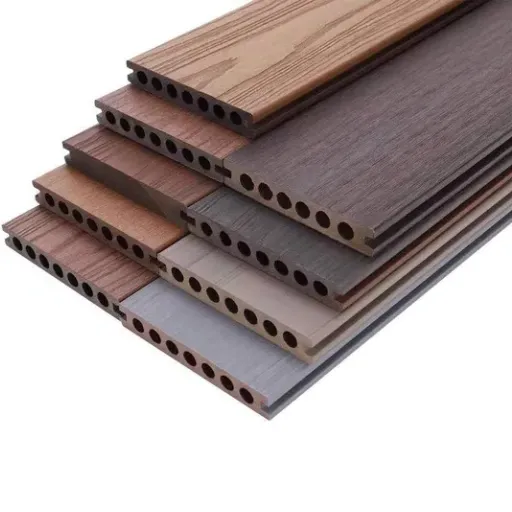
Hollow WPC decking has internal chambers that reduce weight and material use. It is the most cost-effective option and works well for residential patios, balconies, and light foot-traffic areas.
Solid WPC decking is heavier, stronger, and better suited to commercial walkways, high-traffic residential decks, and areas with heavy furniture or equipment. It also holds fasteners more securely.
For a detailed technical comparison of load capacity, weight, and applications, see our guide on solid vs hollow WPC decking.
Capped vs Uncapped WPC Decking
Uncapped WPC decking is the first-generation product. The wood-plastic core is exposed, making it more vulnerable to moisture, staining, fading, and mold. It costs less upfront but requires more maintenance and usually has a shorter lifespan.
Capped or co-extruded WPC decking has a protective polymer shell bonded during extrusion. This shell improves resistance to UV, moisture, scratches, and stains. Capped boards are now the standard for poolside, coastal, and high-traffic installations.
Thickness and Joist Spacing
Common residential boards range from 20mm to 25mm thick. As a general rule:
- 20mm boards: light residential use, joist spacing around 300-350mm
- 23mm boards: standard residential use, joist spacing up to 400mm
- 25mm boards: heavier residential or light commercial use, better load distribution
Always confirm joist spacing with the manufacturer’s specifications. Hollow boards may need closer spacing than solid boards of the same thickness.
Step 2: Check Material Composition and Additives
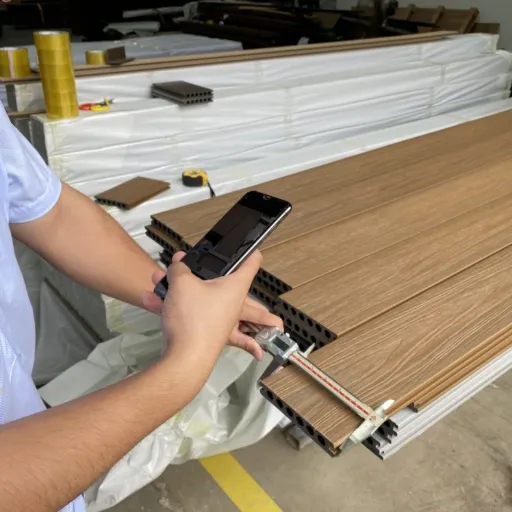
Once you know the board type, look at what is inside it.
A quality WPC board contains a controlled ratio of wood fiber, plastic, and additives. Suppliers who cut costs often increase filler content or use inconsistent recycled plastic. The result is a board that looks fine when new but absorbs water, fades quickly, or becomes brittle.
Ask your supplier for the material breakdown. Wood fiber content of 50-70% is typical. Higher is not always better if the board is uncapped. HDPE offers the best moisture resistance. PVC-based products fall outside traditional WPC and behave differently. UV stabilizers prevent fading. Coupling agents improve bonding between wood and plastic. Anti-fungal compounds reduce mold risk. Excessive calcium carbonate or other fillers reduce strength and increase water absorption.
If a supplier cannot explain the formulation clearly, treat that as a red flag. A reliable manufacturer knows exactly what goes into every batch.
Step 3: Verify WPC Decking Certifications and Test Reports
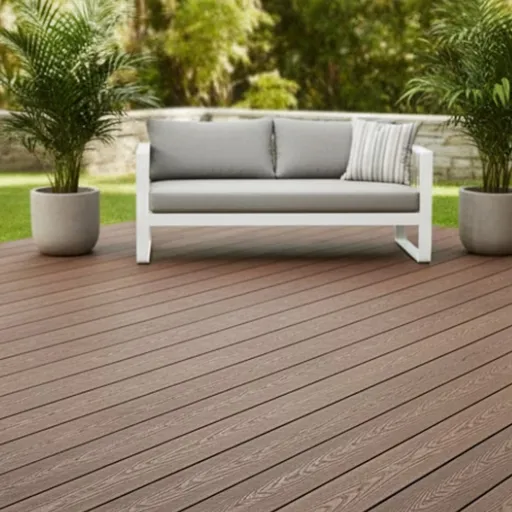
Certifications are the most reliable way to verify that a board meets recognized performance standards. They also tell you which markets the supplier is serious about serving.
| Certification / Standard | What It Covers | Why It Matters |
|---|---|---|
| ASTM D7032 | Structural performance of WPC deck boards and guardrails | Required for US and Canada building code compliance |
| ASTM D7031 | Physical and mechanical property evaluation | Broader testing framework for strength and durability |
| ASTM D6662 | Accelerated weathering resistance | Predicts fade, cracking, and degradation under UV and moisture |
| CE Marking / EN 15534 | European standard for wood-plastic composites | Mandatory for selling WPC decking in the European Economic Area |
| EN 13501-1 | European fire classification | Important for commercial and multi-story projects |
| FSC Certification | Responsibly sourced wood fibers | Sustainability credential for eco-conscious projects |
| ISO 9001 / ISO 14001 | Quality and environmental management systems | Indicates consistent, documented production processes |
| SGS / Intertek / TÜV Reports | Third-party testing for UV, slip, fire, and water absorption | Independent verification beyond manufacturer claims |
Do not accept a certificate image at face value. Verify the certificate number directly with the issuing body. ASTM International, the Forest Stewardship Council, and ISO all provide ways to confirm valid certifications.
For wet areas such as poolside decks, also request slip-resistance test results. DIN 51130 or EN 16165 ratings like R11 indicate safer traction underfoot.
Step 4: Check WPC Decking Warranty Coverage
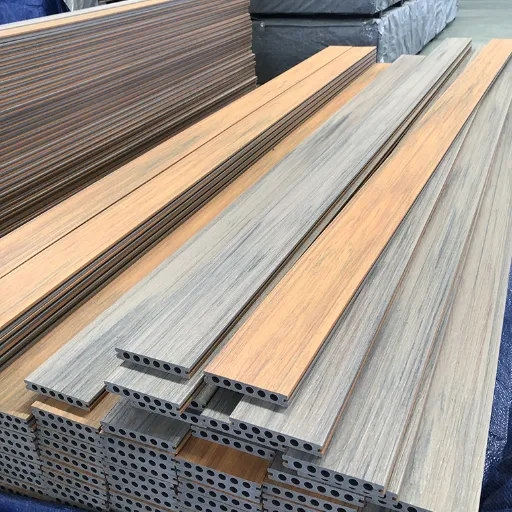
Warranty length is one of the quickest indicators of manufacturer confidence. Standard WPC decking warranties range from 10 to 25 years, with premium capped products sometimes reaching 25 to 30 years.
However, the fine print matters more than the headline number. A 25-year warranty that excludes fading, staining, and labor is not the same as a 20-year warranty that covers structural integrity, fade resistance, and surface performance.
Check the warranty for:
- Coverage: structural integrity, fading, staining, splintering, rot, termite damage
- Exclusions: improper installation, color variation, vandalism, unauthorized repairs, acts of nature
- Proration: Some warranties decrease in value over time
- Transferability: Can the warranty transfer to a new property owner?
- Claim process: who pays for removal, replacement, and shipping?
If the warranty requires professional installation by an approved contractor, confirm that requirement before you buy. Many disputes arise because the buyer did not realize the warranty had installation conditions.
Step 5: Request and Test WPC Decking Samples
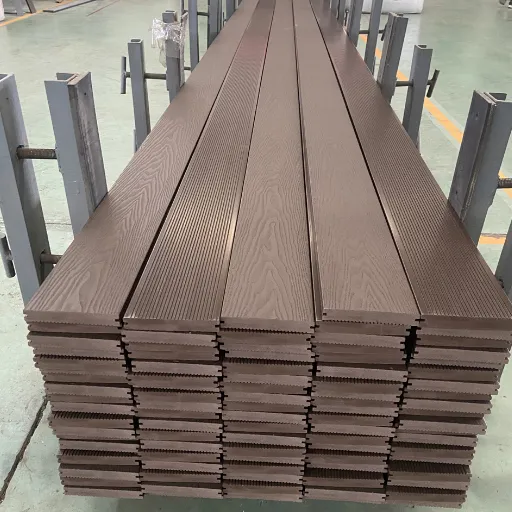
Never place a full order based on photos, brochures, or video calls alone. Request physical samples from at least three suppliers and evaluate them under the same conditions.
A distributor in Germany once told us that samples saved him from a costly mistake. Three suppliers sent boards that looked nearly identical. After two weeks of outdoor exposure, one board faded noticeably, another absorbed water at the cut end, and the third held its color and shape. He placed his container order with the third supplier and avoided the warranty claims he would have faced otherwise.
Use this sample evaluation checklist:
- Color consistency: Compare the sample to the master color swatch and to samples from other suppliers.
- Dimensional accuracy: Measure thickness, width, and edge profile tolerance.
- Surface hardness: Test scratch resistance with a coin or key.
- Weight and density: A board that feels unusually light may contain excessive filler or voids.
- Water absorption: Place a cut end in water for 24-48 hours and check for swelling.
- Load deflection: Support the sample across two points and apply weight to see how much it bends.
- UV exposure: Leave samples outdoors for several weeks if your market has strong sun.
The differences usually reveal more than any sales presentation.
Step 6: Verify the Manufacturer or Supplier
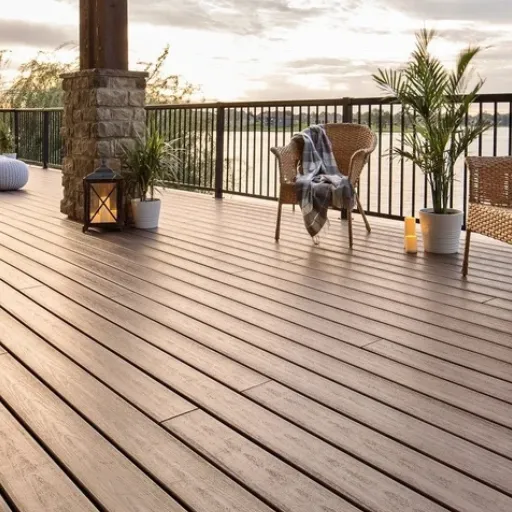
Choosing the right board and choosing the right supplier are inseparable. A great product from a disorganized factory can still arrive late, off-spec, or damaged.
For buyers sourcing from China, our WPC decking suppliers China guide covers region selection, factory audits, and import logistics in detail. The checklist below focuses on the WPC decking factory audit steps most relevant to product selection.
Business and Export Credentials
Request the business license, export license, and tax registration certificate. Verify the company name matches across all documents and on the Alibaba or company website. Check the registration through official channels such as China’s State Administration for Market Regulation.
Ask for a real-time video tour of the production floor. You should see extrusion lines, cooling tanks, cutting stations, raw material storage, and QC areas. Polished marketing videos are not enough. A supplier who refuses a live tour is a supplier to avoid.
Ask specific questions about capacity and quality control. How many extrusion lines do they operate? What is their monthly output? Do they have an in-house lab for density, flexural strength, water absorption, and UV testing? What is their pre-shipment inspection process? What is their typical lead time for a container order?
Request two or three buyer references in your region. Ask those buyers about product consistency, communication, packaging, and how the supplier handled any problems.
Typical payment terms are 30% deposit with 70% against the bill of lading copy. Be cautious of suppliers who demand 100% upfront payment or push unusual payment channels.
Step 7: Calculate Total Cost of Ownership
The FOB price per square meter is only the starting point. A board that costs 15% less upfront can cost 50% more over its life if it requires early replacement or triggers warranty disputes.
According to Sunshine Coast Decking, a 20m² composite deck can cost roughly $11,000-$14,000 over 20 years, compared with $18,000-$22,000 for timber over the same period. The savings come from lower maintenance, fewer repairs, and longer lifespan.
For WPC decking specifically, factor in:
- Board cost: China FOB typically ranges from $9-$13/m² for hollow uncapped, $13-$19/m² for solid uncapped, and $18-$28/m² for capped co-extrusion.
- Substructure and fasteners: $8-$15/m² depending on the system.
- Installation labor: $12-$30/m² depending on region and complexity.
- Freight, duties, and inland delivery: vary by destination and Incoterm.
- Maintenance over 10-20 years: minimal for capped boards, higher for uncapped boards.
- Replacement and warranty risk: a low-quality batch can erase any upfront savings.
For a detailed cost breakdown by product tier and region, see our WPC decking cost guide.
Common Mistakes to Avoid
Even experienced buyers make these errors when choosing WPC decking:
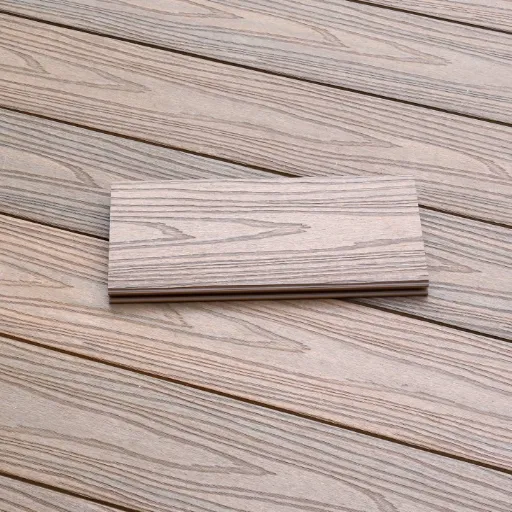
- Choosing by color alone: Color samples under indoor lighting look different from installed boards in outdoor sunlight.
- Ignoring regional certification requirements: A board sold well in one market may not meet the building code in another.
- Skipping samples: Photos and datasheets cannot reveal water absorption, surface hardness, or UV stability.
- Selecting the lowest price: Ultra-low prices often signal lower-grade plastic, less UV stabilizer, or weaker QC.
- Overlooking the cap layer: Uncapped boards are cheaper but perform poorly in wet, sunny, or high-traffic environments.
- Forgetting expansion gaps: WPC expands and contracts with temperature changes. Proper spacing is essential regardless of board quality.
If your project involves pools, marinas, or other wet environments, choose boards specifically designed for those conditions. Our guide on waterproof WPC decking explains what to look for.
Final Checklist: 10 Questions Before You Order
Use these questions as a final filter before signing a purchase order:
- Is the board type matched to the project’s load, traffic, and climate?
- Does the supplier provide verified ASTM, CE, or EN test reports for your target market?
- Is the warranty clear on coverage, exclusions, and claim process?
- Have you tested samples for water absorption, scratch resistance, and UV stability?
- Did you verify the supplier’s business license and export credentials?
- Have you seen a live factory tour or conducted a third-party audit?
- Does the supplier have export references in your region?
- Are payment terms reasonable and documented in the contract?
- Have you calculated the total cost of ownership, including freight, duties, installation, and maintenance?
- Does the contract clearly specify product specs, color codes, packaging, delivery time, and penalties?
If you can answer yes to all ten, you are in a strong position to place an order.
Conclusion
Knowing how to choose WPC decking — or how to select WPC decking for a specific project — comes down to matching the product to the project and verifying that the supplier can deliver what they promise. The right board is not always the cheapest or the most attractive in a sample photo. It is the board with the right profile, cap layer, certifications, warranty, and verified test data for your specific application.
Start with the project requirements, then work through material composition, certifications, sample testing, supplier verification, and total cost of ownership. Each step reduces risk and increases the chance that the deck you install today will still look and perform well in 15 or 20 years.
If you are comparing WPC against natural timber, our composite decking vs wood guide covers lifespan, maintenance, and long-term ROI.
Ready to move forward? Contact our team to request samples, review your project specs, or get a competitive quote for your next WPC decking order.
Categories:
Blog
Related Articles