WPC Decking Suppliers China: How to Source Quality Manufacturers and Products
The most reliable WPC decking suppliers in China are concentrated in four manufacturing clusters: Linyi and Shandong Province for cost-competitive volume, Anhui for R&D-focused and bamboo-plastic composites, Zhejiang for export-oriented quality, and Guangdong for premium co-extrusion and mature supply chains. Choosing the right supplier depends on your product grade, order volume, certification needs, and whether you need factory-direct pricing or trading-company flexibility.
Most supplier lists give you names. They don’t give you confidence. A procurement manager in Hamburg once told us that his first Alibaba order looked perfect on paper. The boards arrived warped, the color faded unevenly, and the supplier stopped replying after the deposit cleared. That experience cost him €12,000 and a residential client.
This guide is different. We work from Linyi, one of China’s largest WPC production hubs, and we see the sourcing process from the inside. You’ll get a region-by-region supplier map, a verification checklist you can use immediately, and a complete import roadmap from first RFQ to final delivery. If you want a broader foundation first, read our complete WPC decking guide before diving into supplier selection.
Key Takeaways
- China’s four main WPC decking clusters each serve different buyer needs, from budget hollow boards in Linyi to premium capped boards in Guangdong.
- A reliable supplier verification checklist covers business license, factory audit, certifications, production capacity, QC process, and sample testing.
- Factory-direct ordering suits large MOQs and custom specs; trading companies add value for smaller orders, mixed containers, and multilingual support.
- Typical China FOB pricing runs $9–$13/m² for hollow, $13–$19/m² for solid, and $18–$28/m² for capped co-extrusion decking.
- Common red flags include prices far below market rate, refusal to provide samples, pressure for 100% upfront payment, and no verifiable factory address.
Why Source from WPC Decking Suppliers in China?
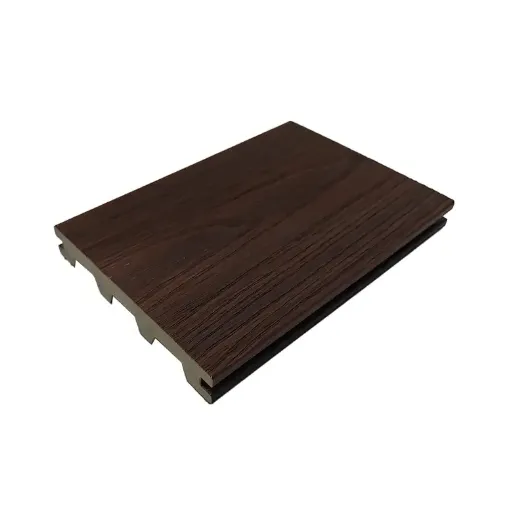
China dominates global WPC decking manufacturing for four reasons: scale, concentration, range, and export experience.
Scale and cost structure. Chinese manufacturers produce at volumes that keep unit costs low. LvsenWood, one of the largest producers, reports capacity exceeding 50,000 tons per year across 60-plus production lines. That scale translates into lower raw-material purchasing costs, automated extrusion efficiency, and competitive export pricing.
Concentrated clusters. WPC factories aren’t scattered randomly. They cluster in regions with access to wood-flour supply, plastic resin logistics, and skilled machine operators. This clustering shortens lead times and makes factory audits easier because you can visit multiple suppliers in a single trip.
Wide product range. Chinese suppliers offer hollow, solid, capped co-extrusion, 3D embossed, and custom-color profiles. Whether you need budget decking for a large commercial project or premium boards for a high-end residential install, you’ll find a matching supplier.
Export maturity. Leading manufacturers have been exporting to North America, Europe, Australia, and Southeast Asia for 10 to 20 years. They understand CE, ASTM, FSC, and ISO requirements, and many have in-house labs for quality testing.
For buyers who want transparent pricing from WPC decking suppliers in China, our WPC decking cost guide breaks down FOB prices, landed costs, and project budgets by region.
Major WPC Decking Manufacturing Regions in China
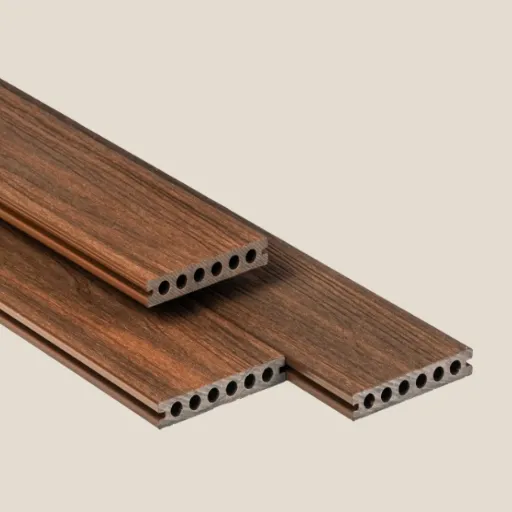
Understanding where WPC decking suppliers in China are located helps you match a factory to your product requirements. Each region has built a different reputation.
Linyi and Shandong Province: Volume and Value
Linyi is one of China’s largest wood-processing centers and home to many WPC decking suppliers in Linyi. The city sits close to plywood, MDF, and wood-flour supply chains, which makes it a natural home for WPC extrusion. Suppliers here specialize in cost-competitive hollow and solid boards, often with shorter lead times and flexible MOQs.
Best for: Distributors, contractors, and developers who need reliable mid-range products at competitive FOB prices.
Typical strengths: Fast sampling, flexible order sizes, strong logistics to Qingdao port.
Watch out for: Quality variation between factories. Some smaller workshops use lower-grade recycled PE or inconsistent wood-flour ratios. Verification matters here more than in premium regions.
Anhui Province: R&D and Bamboo-Plastic Composites
Anhui has developed a reputation for research-driven production and bamboo-plastic composite (BPC) innovation. Manufacturers here often invest in patents, in-house labs, and CNAS-certified testing.
Best for: Buyers who want differentiated products, sustainable bamboo content, or stronger technical documentation.
Typical strengths: Higher R&D investment, patented formulations, better test-report availability.
Watch out for: Higher minimum order quantities and longer sampling timelines for custom formulations.
Zhejiang Province: Export Quality and Service
Zhejiang suppliers are highly export-oriented. Many have built their business around long-term relationships with European, Australian, and North American distributors. Expect cleaner documentation, better English-language sales support, and stricter QC protocols.
Best for: Buyers who prioritize consistent quality, communication, and documentation over the lowest possible price.
Typical strengths: Strong export experience, reliable QC, good English support.
Watch out for: Pricing can be 10–20% higher than Shandong equivalents for similar specs.
Guangdong Province: Premium Co-Extrusion and Design
Guangdong is home to some of China’s most advanced co-extrusion and capped-board manufacturers. Factories here often lead in surface finish innovation, color-matching, and premium warranties.
Best for: High-end residential, hospitality, and marina projects where appearance and warranty length matter.
Typical strengths: Advanced cap-layer technology, premium finishes, longer warranties.
Watch out for: Highest price tier and often longer lead times for complex custom orders.
| Region | Best For | Typical Product Focus | Price Tier | Lead Time |
|---|---|---|---|---|
| Linyi/Shandong | Volume, value, fast sampling | Hollow, solid, standard capped | $ | 15–30 days |
| Anhui | R&D, bamboo-plastic, patents | BPC, technical grades | $$ | 20–35 days |
| Zhejiang | Export quality, documentation | Mid-to-premium, co-extrusion | $$–$$$ | 20–35 days |
| Guangdong | Premium finish, warranty | Capped, 3D embossed, custom | $$$ | 25–45 days |
Top WPC Decking Manufacturers and Suppliers in China
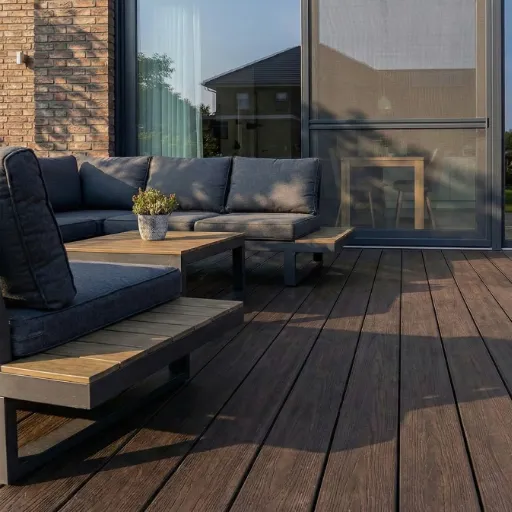
The following manufacturers are frequently referenced in industry rankings and export directories. Rankings vary by product type, so use this list as a starting point for RFQ outreach rather than a definitive hierarchy.
- LvsenWood. Reported capacity over 50,000 tons/year across 60-plus production lines, with 30-plus patents. Strong presence in hollow and solid WPC.
- Sentai WPC. 15-plus years of experience, 50-plus invention patents, and a CNAS-certified lab. Known for technical consistency.
- NewTechWood. Long-established export brand with strong international distribution and co-extrusion product lines.
- Unifloor. 8,000 m² factory with 63 extrusion machines and a 15-year warranty on select products.
- Guofeng. Large-scale producer with a broad profile range and export experience across multiple continents.
- Hosung / Feelingwood. Focus on co-extrusion and premium finishes for residential and commercial projects.
- LESCO. 30 automated lines and approximately 15,000 tons/year capacity.
- Hanming. Known for WPC decking, cladding, and fencing with flexible customization.
- COOWIN. Export-focused manufacturer with a wide catalog of decking and outdoor products.
- Sanjin. Mid-sized supplier serving European and Middle Eastern markets with competitive hollow and solid boards.
The right manufacturer for you depends on more than brand recognition. A 500 m² contractor order has different requirements than a 10,000 m² distributor contract. For help matching product specs to your project, see our guide on how to choose WPC decking.
Factory vs. Trading Company: Which Should You Choose?
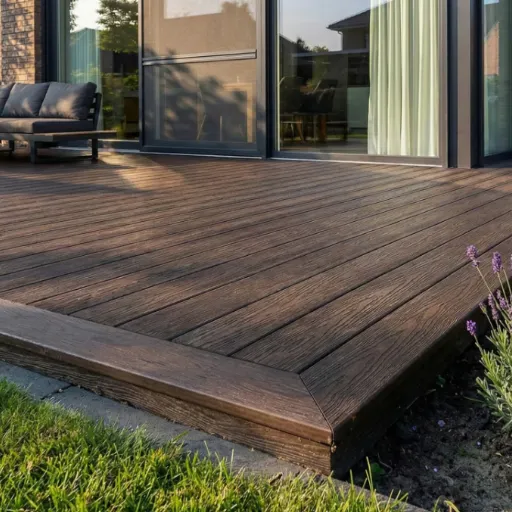
Buyers often assume they should always work directly with a China WPC decking factory. That assumption can cost them money, time, or flexibility. Both models have valid roles.
Factory Direct Advantages
- Lower unit pricing on large orders because there’s no intermediary margin.
- Customization control for color, profile, cap layer, and packaging.
- Production visibility if you want to monitor extrusion, cooling, and QC lines.
- Stronger warranty terms when negotiated directly with the manufacturer.
Factory Direct Drawbacks
- Higher MOQs, often 500–1,000 m² per color or profile.
- Slower communication if the sales team has limited English support.
- Less flexibility for mixed-container orders or small sample batches.
Trading Company Advantages
- Lower effective MOQs by consolidating products from multiple factories.
- Mixed containers combining decking, cladding, fencing, and accessories.
- Multilingual support and faster response times across time zones.
- Pre-shipment coordination, including inspection, consolidation, and documentation.
When Linyi Yuheng Adds Value
As a Linyi-based trading company, we bridge the gap. We source from vetted regional factories, coordinate samples and inspections, and handle export documentation. If your order is too small for a top-tier factory’s MOQ, or if you want one point of contact for multiple product categories, a trading model often saves more than it costs.
A distributor in Poland learned this the hard way. He placed a 300 m² order directly with a factory that advertised a 200 m² MOQ. After production delays, the factory mixed his boards into another customer’s shipment and sent the wrong color. He switched to a trading partner who consolidated his orders, inspected each batch, and delivered correct colors on schedule. His administrative time dropped by roughly 60%.
How to Find Reliable WPC Decking Suppliers in China
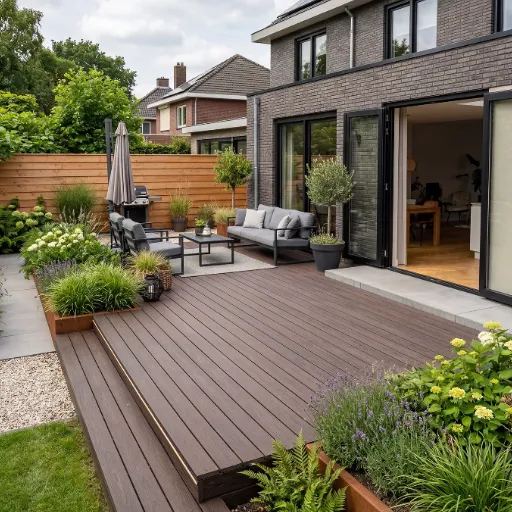
Sourcing channels fall into four categories. Most successful buyers use more than one.
B2B Platforms
Alibaba.com is the largest directory. Use filters for “Verified Supplier,” “Trade Assurance,” and years in business. Request samples from at least five suppliers before shortlisting.
Made-in-China.com tends to attract more factory-direct suppliers and provides detailed company profiles.
Global Sources focuses on verified manufacturers and is useful for larger-volume buyers.
Industry Exhibitions
- Canton Fair (Guangzhou). Broad building materials section with WPC exhibitors.
- DOMOTEX Asia / CHINAFLOOR (Shanghai). Flooring and outdoor materials focus.
- Linyi Wood Expo. Regional show where you can meet Shandong-based suppliers in one venue.
Customs and Export Data
Tools like Volza and Panjiva show which Chinese companies are actively shipping WPC decking to your target country. This data is valuable because it proves real export experience and shipping volume.
Factory Directories and Referrals
Industry rankings from sources like LvsenGarden, Hoyeah, and Goosun WPC provide starting names. Combine these with referrals from other importers in your market for stronger confidence.
Supplier Verification Checklist for China WPC Decking Factories
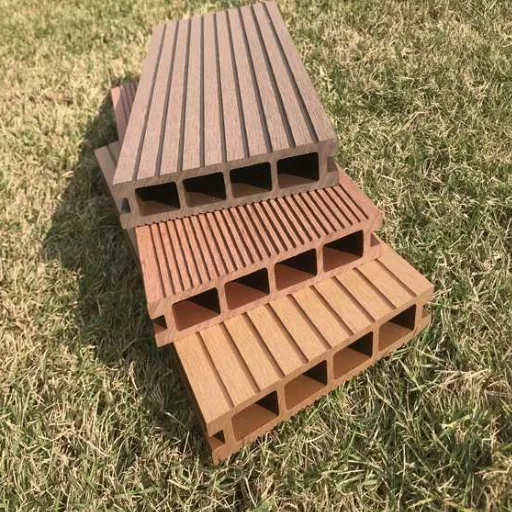
Never transfer a deposit until you have verified at least the following items. Print this checklist and use it for every supplier.
- Business license and export license. Ask for the business license number and verify it through official Chinese records if possible. Confirm the company has an export license or works through a licensed export agent.
- Factory audit or video tour. Request a live video call from the production floor, not just a polished marketing video. Look for extrusion lines, cooling tanks, cutting stations, and QC areas.
- Certifications. Ask for CE, ASTM D7032, FSC, ISO 9001, SGS test reports, REACH, or CNAS lab accreditation, depending on your market. Verify certificate numbers with the issuing body.
- Production capacity and lead time. Confirm machine count, shift patterns, and realistic lead times for your order size.
- Quality control process. Ask how they inspect raw materials, monitor extrusion temperature, test dimensional stability, and check surface finish.
- Export experience and references. Request contact details for two to three buyers in your region. If the supplier refuses, treat it as a warning sign.
- Sample quality testing. Order full-length sample boards and test them for color consistency, water absorption at cut ends, surface scratch resistance, and load deflection.
For buyers focused on product performance, our composite decking vs wood comparison explains which material properties matter most when you evaluate samples.
Want a sourcing partner who’s already done this verification work? Contact our team, and we’ll share our vetted factory network in Linyi and the surrounding regions.
How to Request a Quote and Compare Offers
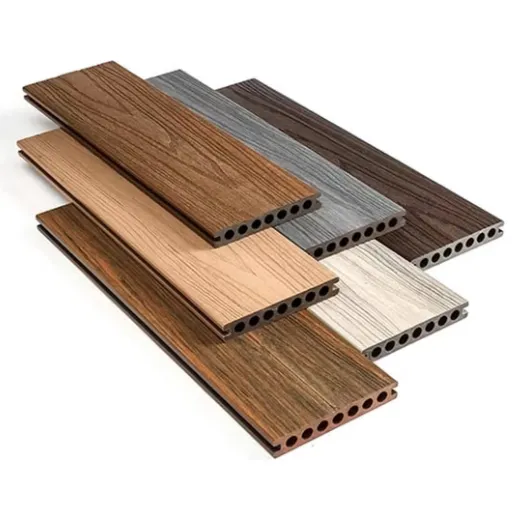
A good RFQ reduces back-and-forth and protects you from hidden costs. Include the following information in your first message.
Information to Include in Your RFQ
- Project area or estimated order volume in square meters
- Board profile: hollow, solid, or capped co-extrusion
- Dimensions: width, thickness, length
- Surface finish: smooth, brushed, embossed, 3D wood grain
- Color and whether color matching is required
- Destination port and Incoterm preference (FOB, CIF, DAP)
- Target delivery date and whether samples are needed first
- Certification requirements for your market
What a Complete Quote Should Cover
- Unit price per square meter or per meter
- MOQ per color and per profile
- Sample cost including international shipping
- Tooling or mold fees for custom profiles
- Packaging: pallets, cartons, or bulk
- Payment terms: typically 30% deposit, 70% before shipment
- Lead time from deposit to ex-factory
- Warranty terms in writing
Price vs. Value Comparison
The cheapest quote is rarely the best value. A board priced at $8/m² that absorbs water, fades, or cracks will cost more in replacements and reputation than a $13/m² board that performs for 20 years. Compare quotes on the total cost of ownership, not just the upfront price.
Hidden Costs to Watch
- Mold fees for custom colors or profiles
- Special palletization or labeling
- Third-party inspection fees ($300–$800 per visit)
- Bank transfer fees and currency conversion
- Import duties, VAT, and customs clearance in your country
- Inland delivery from the port to your warehouse
How to Import WPC Decking from China: Step by Step
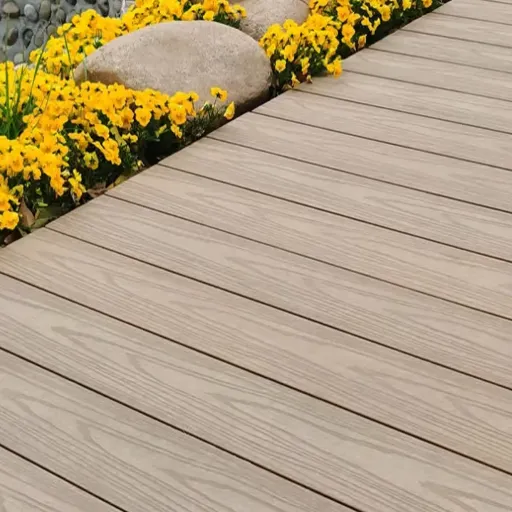
A typical WPC decking import follows eight stages. Skipping any of them increases risk.
- Samples and testing. Order samples from three to five shortlisted suppliers. Test boards for color, dimensional accuracy, surface finish, and water absorption at cut ends.
- Proforma invoice and deposit. Once you select a supplier, request a proforma invoice with exact specs, quantities, prices, and payment terms. Pay the deposit only after verifying the supplier.
- Production monitoring. For large orders, ask for production photos or videos at 30%, 60%, and 90% completion.
- Third-party inspection. Hire SGS, Bureau Veritas, or a local inspector to check quality, quantity, and packaging before the balance payment.
- Balance payment. Pay the remaining balance after inspection passes. Use secure payment methods and keep records.
- Shipping and customs clearance. The supplier or freight forwarder books the container. You or your broker handles customs clearance at the destination.
- Inland delivery. Arrange transport from the destination port to your project site or warehouse.
- Receipt and final check. Inspect the container on arrival. Document any damage immediately for insurance claims.
An Australian contractor followed this process for a 400 m² pool deck. He ordered samples from five suppliers, found that one hollow board absorbed water at the cut ends, and selected a capped co-extrusion supplier with full ASTM D7032 test reports. The project was completed without callbacks, and he reordered two containers the following year.
Common Red Flags and How to Avoid Scams
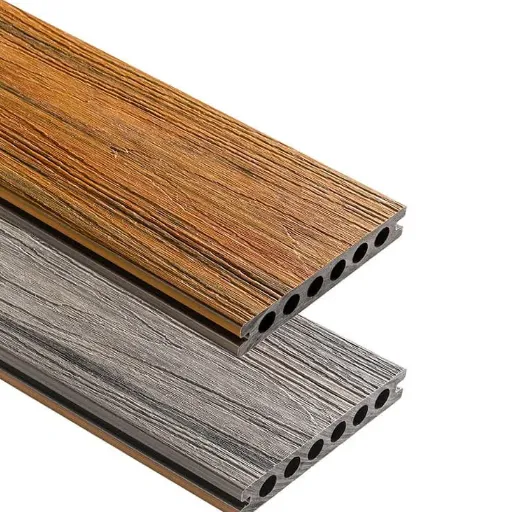
Scams and low-quality WPC decking suppliers in China share similar signals. Watch for these warning signs.
- Prices far below market rate. If a quote is 30% cheaper than comparable offers, investigate why. It often means recycled content, thinner walls, or hidden fees.
- No verifiable factory address. Search the address on Baidu Maps or ask for a live video tour. A trading office posing as a factory is a common issue.
- Refusal to provide samples. Legitimate suppliers want you to test their product. Resistance here is a major red flag.
- Pressure for 100% upfront payment. Standard terms are 30% deposit and 70% before shipment. Full prepayment removes your use.
- Inconsistent communication. Sudden changes in contact person, vague answers about production, or evasive replies about certifications suggest disorganization or dishonesty.
- Fake certificates. Verify CE, ASTM, FSC, and ISO certificate numbers directly with the issuing organization. Links to official sites are available at ASTM, FSC, and ISO.
FAQ
How do I find the best WPC decking suppliers in China?
Start with B2B platforms, industry exhibitions, and customs data. Shortlist five to ten suppliers, request samples, verify certifications, and conduct a factory audit or video tour before placing a deposit.
What is the minimum order quantity for WPC decking from China?
Common MOQs range from 200 m² for trading companies and smaller factories to 500–1,000 m² for large manufacturers. Custom colors or profiles usually require higher volumes.
How much does it cost to import WPC decking from China?
China FOB pricing typically runs $9–$13/m² for hollow boards, $13–$19/m² for solid boards, and $18–$28/m² for capped co-extrusion. Add freight, duties, VAT, inland delivery, and inspection costs for the true landed price.
What certifications should I ask for?
Request CE for Europe, ASTM D7032 for North America, FSC for sustainability claims, ISO 9001 for quality management, and SGS or CNAS test reports for physical performance. Always verify certificate numbers independently.
How do I verify a Chinese WPC factory is real?
Request a live video tour of the production floor, verify the business license and export license, check the address on maps, ask for references in your region, and confirm certifications with issuing bodies.
Should I work with a factory or a trading company?
Choose a factory for large MOQs, custom specs, and direct pricing. Choose a trading company for smaller orders, mixed containers, multilingual support, and consolidated quality control.
How long does it take to receive an order from China?
Production lead times range from 15 to 45 days, depending on order size and complexity. Sea freight adds roughly 20 to 40 days, depending on the destination port.
Conclusion
Finding reliable WPC decking suppliers in China is not about finding the cheapest name on a list. It is about finding a supplier whose product, capacity, certifications, and communication match your project. The four manufacturing clusters each offer a different balance of price, quality, and specialization. A structured verification process protects you from scams and quality failures. And the right partner, whether factory or trading company, can turn a risky overseas purchase into a repeatable supply chain.
At Linyi Yuheng, we help international buyers source WPC decking from vetted factories across Shandong and neighboring regions. If you are ready to compare samples, request a factory tour, or get a transparent FOB quote, get a transparent FOB quote today. We will help you move from supplier search to successful delivery with less risk and clearer communication.
Categories:
Blog
Related Articles