WPC Decking: The Complete Buyer’s Guide for 2026
WPC decking is a wood-plastic composite outdoor flooring material made from wood fibers, thermoplastic polymers, and additives. It offers the look of natural wood with lower maintenance, but quality varies widely by manufacturer, cap layer, and installation method. For buyers, contractors, and distributors, choosing the right boards means understanding material science, regional pricing, and supplier reliability, not just comparing color samples.
You may also see WPC decking called wood plastic composite decking or WPC composite decking. These terms refer to the same material: boards made from wood fibers bonded with plastic and shaped for outdoor use.
The global WPC decking market reached approximately USD 7.48 billion in 2026, according to Custom Market Insights, and is forecast to grow to USD 15.84 billion by 2035. That growth signals strong demand, but it also attracts suppliers who cut corners on wood-plastic ratios, UV stabilizers, and quality control. We have seen buyers lose money on batches that looked identical in photos yet performed differently after one season of sun and rain.
In this guide, we cover everything you need to evaluate WPC decking: what it is, how it compares to wood and PVC, which type fits your project, how much it costs, how to install it, and how to source it from China without unnecessary risk. Whether you are a homeowner planning a backyard deck, a contractor writing specifications, or a distributor ordering a full container, this guide will help you make a confident decision.
Key Takeaways
- WPC decking combines wood fibers with plastic (typically HDPE, PP, or PVC) and additives for UV, moisture, and color stability.
- Capped or co-extruded WPC decking outperforms uncapped boards in wet, sunny, or high-traffic environments.
- China factory FOB prices typically range from $9-$32/m², while retail prices in North America and Europe can reach $60-$220+/m² installed.
- Common problems, heat retention, fading, scratching, and mold, are usually preventable with proper product selection and installation.
- Verify certifications (CE, ASTM, FSC, ISO 9001) and request production samples before placing large orders.
What Is WPC Decking?
Definition and Composition
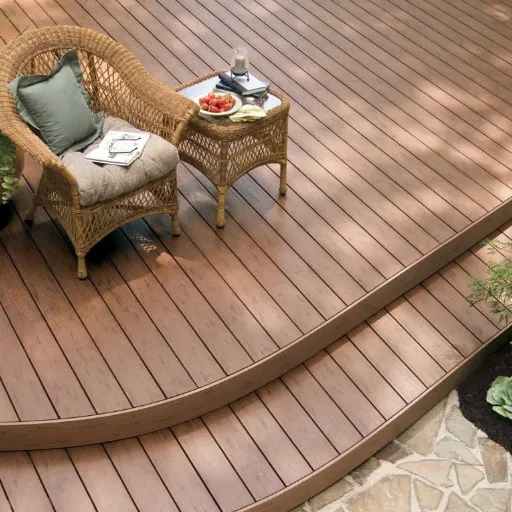
WPC decking stands for wood-plastic composite decking. It is manufactured by combining wood fibers or wood flour with thermoplastic polymers and additives, then extruding the mixture into board shapes. A typical formulation contains:
- Wood fibers or flour (50-70%): Usually recycled sawdust, wood chips, or bamboo powder.
- Thermoplastic polymers (30-50%): Most commonly HDPE, polypropylene, or PVC.
- Additives (5-10%): UV stabilizers, colorants, coupling agents, lubricants, and sometimes anti-fungal or fire-retardant compounds.
The result is a board that looks and feels closer to wood than pure plastic decking, while resisting rot, insects, and moisture better than solid timber. The manufacturing process involves mixing raw materials at high temperature, extruding them through a die, cooling, and then embossing a wood-grain texture onto the surface. For a plain-language introduction, read our beginner’s guide on what WPC decking is.
Mini-story: When a resort developer in Southeast Asia replaced tropical hardwood with first-generation WPC decking in 2023, the boards absorbed water through uncapped ends and swelled within eight months. The supplier had offered a low price but no cap layer. After switching to co-extruded boards with sealed edges, the same property saw no swelling after two monsoon seasons.
The lesson: not all WPC decking handles water the same way.
WPC Decking vs Composite Decking
Technically, WPC decking is a type of composite decking because it combines two or more materials. In practice, the term “composite decking” is broader and can include capped composites, PVC decking, and mineral-based composites. When someone searches for “WPC decking,” they usually mean boards with a wood-fiber core. When they search for “composite decking,” they may be comparing multiple synthetic options.
For this article, we use “WPC decking” to refer to wood-plastic composite boards specifically, and we distinguish them from capped composites and PVC, where the performance difference matters.
Generations of WPC Decking
- First-generation (uncapped) WPC: A single-extrusion board with exposed wood fibers. More affordable but prone to fading, staining, and moisture absorption.
- Second-generation (capped/co-extruded) WPC: A protective polymer shell surrounds the core. Better UV, scratch, stain, and moisture resistance. Higher price, longer lifespan.
If your project involves pools, coastal air, heavy foot traffic, or intense sun, co-extruded WPC decking is usually the better investment.
Types of WPC Decking
Solid vs Hollow WPC Decking
The internal structure of WPC boards affects weight, load capacity, cost, and installation.
| Feature | Solid WPC Decking | Hollow WPC Decking |
|---|---|---|
| Weight | Heavier, 7-10 kg/m | Lighter, 5-7 kg/m |
| Load capacity | Higher, better for commercial use | Lower, suited for residential use |
| Span between joists | Up to 40 cm | 30-35 cm typical |
| Cost | Higher | Lower |
| Best for | High-traffic, elevated, or heavy-load areas | Patios, balconies, budget projects |
| Fastening | Standard clips or screws | Often requires specific hidden clips |
Solid boards are stronger and more impact-resistant, making them a good choice for public walkways, commercial terraces, and projects where heavy furniture or equipment will sit on the surface. Hollow boards are lighter, easier to handle, and cost less, but they require closer joist spacing and careful fastening to avoid flexing. See our detailed comparison of solid vs hollow WPC decking.
Capped vs Uncapped WPC Decking
The cap layer is the most important quality decision after profile type.
- Uncapped WPC: The wood-plastic core is exposed across the entire surface. Water, UV rays, and stains can penetrate more easily. Budget-friendly but higher maintenance.
- Capped/co-extruded WPC: A protective polymer shell is fused to the core during manufacturing. The cap shields against moisture, fading, scratches, and mold. Some caps cover only the top and sides; premium products cover all four sides.
For wet climates, poolside decks, or projects where appearance matters long-term, capped boards are usually worth the extra cost.
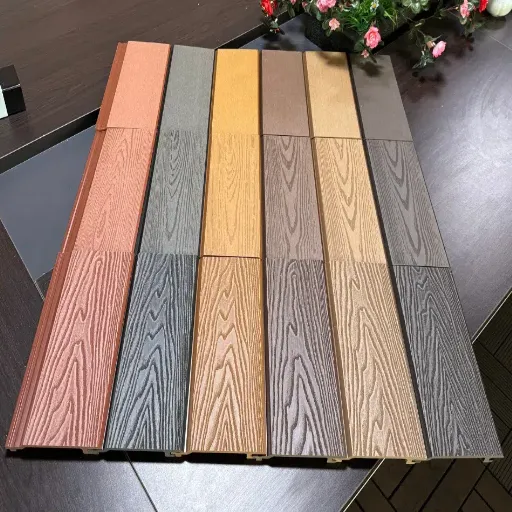
Surface Finishes and Profiles
WPC decking comes in several surface treatments:
- Smooth: Clean, modern look; can be slippery when wet.
- Embossed wood grain: Mimics natural timber; better slip resistance.
- 3D embossed/deep grain: More realistic texture; hides minor scratches.
- Brushed: Soft, matte appearance; comfortable underfoot.
Profiles vary by manufacturer but commonly include square-edged, grooved (for hidden fasteners), and tongue-and-groove designs. Grooved boards work with hidden clip systems that create a cleaner surface but require compatible fasteners.
Which Type Is Right for Your Project?
Choose solid, capped WPC decking for commercial spaces, heavy loads, or wet climates. Choose hollow, capped WPC decking for residential patios and balconies where weight and cost matter. Choose uncapped WPC decking only for covered areas, mild climates, or tight budgets where you accept higher maintenance.
Benefits of WPC Decking for Outdoor Projects
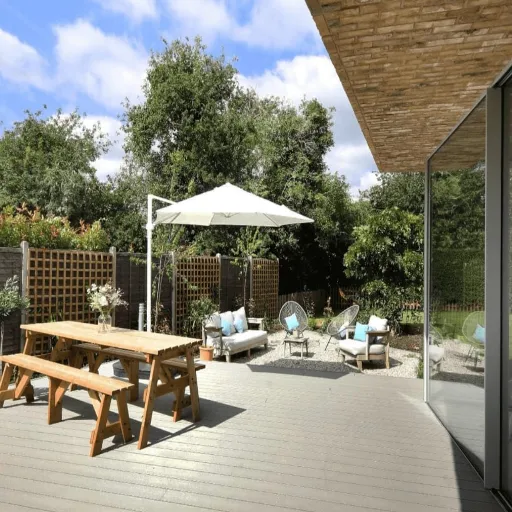
WPC decking has become popular for good reason. The main advantages include:
Durability and Longevity
Quality WPC decking lasts 25-30 years with proper installation. It doesn’t rot, splinter, or attract termites, and it resists warping better than untreated wood. Capped products with strong UV stabilizers maintain their appearance longer than uncapped alternatives.
Low Maintenance
Unlike wood, WPC decking doesn’t require annual staining, sealing, or sanding. Routine cleaning with soap and water is usually enough. This saves both time and long-term maintenance costs, especially for large commercial projects.
Moisture, Rot, and Insect Resistance
The plastic content in WPC boards makes them highly resistant to moisture, rot, and insects. This makes them ideal for poolside decks, marinas, gardens, and humid climates where natural wood would deteriorate quickly. For areas with constant water exposure, specify waterproof WPC decking with a full cap on all four sides.
Aesthetic Versatility
Modern WPC decking is available in dozens of colors and wood-grain patterns. Some manufacturers offer custom colors for bulk orders, which helps distributors and developers match branding or architectural schemes.
Sustainability Credentials
Many WPC products use 50-95% recycled wood and plastic. For buyers with sustainability goals, WPC decking can reduce reliance on tropical hardwoods and divert waste from landfills. Look for FSC, ISO 14001, or GREENGUARD certifications if environmental claims matter to your project.
CTA: Want to explore WPC decking options for your next project? Contact our team for product recommendations and a tailored quote.
WPC Decking vs Other Materials
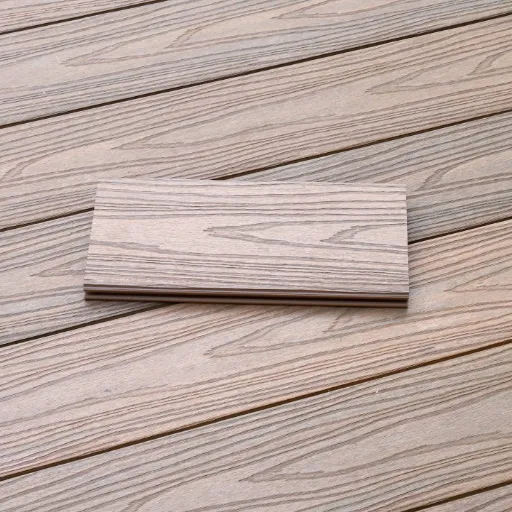
WPC Decking vs Wood Decking
Natural wood offers authentic grain variation and can be refinished, but it requires regular staining, sealing, and pest treatment. Over 20 years, the total cost of wood decking often exceeds that of WPC decking because of maintenance labor and materials. For a full breakdown, see our comparison of composite decking vs wood decking.
| Factor | WPC Decking | Wood Decking |
|---|---|---|
| Upfront cost | Higher | Lower |
| Maintenance | Low | High (annual staining/sealing) |
| Lifespan | 25-30+ years | 10-15 years without treatment |
| Moisture resistance | Excellent | Poor without treatment |
| Slip resistance | Varies by finish | Varies by species and finish |
| Appearance | Consistent, manufactured | Natural, variable |
WPC Decking vs PVC Decking
PVC decking contains no wood fibers. It is fully synthetic, extremely water-resistant, and often lighter than WPC. However, it usually costs more and can look and feel less like natural wood. Read our detailed guide on WPC decking vs PVC decking for a side-by-side comparison.
- Choose WPC if you want a wood-like appearance, lower material cost, and good all-around performance.
- Choose PVC if you need maximum waterproofing, live in a coastal or extremely wet region, or want the longest possible lifespan.
WPC Decking vs Aluminum Decking
Aluminum decking is durable, fire-resistant, and recyclable, but it is expensive, noisy underfoot, and gets hot in direct sun. It suits commercial or marine applications where fire ratings and structural span are critical. For most residential and light commercial projects, WPC decking offers a better balance of cost, comfort, and appearance.
Material Comparison Summary
| Material | Cost | Maintenance | Lifespan | Best For |
|---|---|---|---|---|
| WPC decking | Medium | Low | 25-30 years | Residential, commercial, wet climates |
| Wood decking | Low-Medium | High | 10-20 years | Traditional aesthetics, refinishing |
| PVC decking | High | Very low | 30-50 years | Maximum moisture resistance |
| Aluminum decking | Very high | Very low | 30-50 years | Fire-rated, marine, industrial |
Applications and Climate Considerations
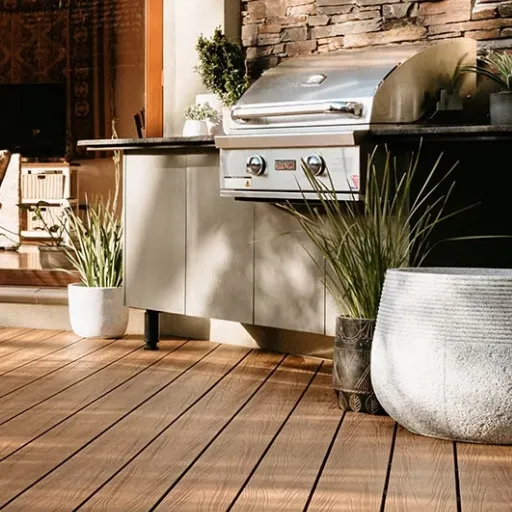
Residential Applications
WPC decking works well for:
- Backyard patios and terraces
- Balconies and rooftop decks
- Poolside and spa surrounds
- Garden walkways and pergola floors
- Outdoor kitchens and dining areas
For homes with children or elderly residents, choose boards with textured, anti-slip surfaces and avoid dark colors that can become uncomfortably hot in direct sun.
Commercial Applications
Commercial projects often use solid, capped WPC decking because of higher traffic and longer performance requirements:
- Boardwalks and nature trails
- Marina docks and piers
- Hotel and resort terraces
- Restaurant outdoor seating
- Public parks and pedestrian bridges
These applications may require additional certifications such as fire ratings, slip-resistance tests, or load-bearing documentation.
Climate-Specific Guidance
Tropical and humid climates: Use capped WPC decking with strong anti-fungal additives. Ensure adequate ventilation beneath the deck to reduce mold risk.
Freeze-thaw climates: Choose boards rated for low-temperature expansion. Leave proper expansion gaps and avoid trapping water between boards and joists.
Coastal climates: Salt air and high humidity demand capped or co-extruded products. Request test reports for UV and moisture resistance. Our guide to waterproof WPC decking covers the best options for pools, patios, and wet climates.
High-heat / desert climates: Light-colored boards reflect heat better than dark boards. Some manufacturers offer heat-reflective pigments.
How to Choose Quality WPC Decking
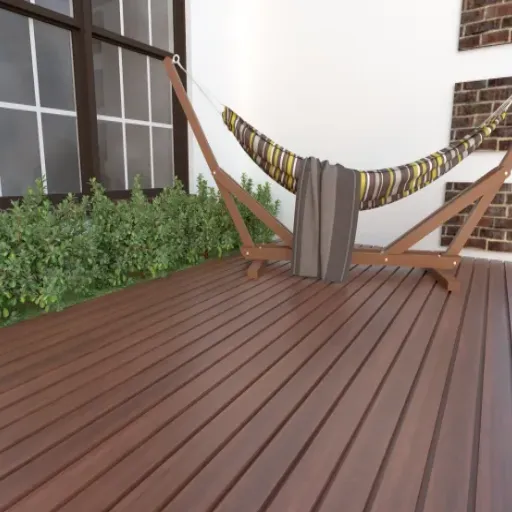
Check Material Composition and Density
Ask suppliers for the wood-to-plastic ratio and the type of plastic used. Higher-density boards with HDPE or PP typically perform better than low-density boards with high filler content. A board that feels light or chalky may contain excessive calcium filler, which weakens the structure.
Select the Right Thickness
- 20-22 mm: Light-duty residential, balconies, roof terraces.
- 23-25 mm: Standard residential decking.
- 26-30 mm+: Commercial, high-traffic, or heavy-load applications.
Verify Certifications
Certifications vary by target market. Common ones include:
- CE marking: Required for sales in the European Economic Area.
- ASTM D7032 / D7031: North American standards for structural and physical properties.
- FSC: Confirms responsible wood sourcing.
- ISO 9001: Quality management system certification.
- REACH: EU regulation on chemical safety.
- SGS / Intertek: Independent testing and inspection reports.
Always request copies of test reports rather than accepting marketing claims.
Evaluate the Warranty
Typical WPC decking warranties range from 10 to 25 years. Read the fine print carefully. Some warranties cover only structural defects, while others include fading and staining. Installation errors, improper cleaning, or failure to maintain the deck may void the warranty.
Request Samples and Compare Batches
Order samples from multiple suppliers and test them side by side. Check color consistency, surface texture, weight, and flex. If possible, visit a completed installation that has been exposed to weather for at least one year. For a complete decision framework, use our WPC decking buyer’s checklist.
Mini-story: A distributor in Europe once received two container loads of WPC decking from the same supplier. The first container matched the approved sample. The second container used a different wood-flour source and faded unevenly within six months. The distributor now requires batch-color testing and a pre-shipment inspection for every order.
Samples alone are not enough; batch consistency matters.
WPC Decking Installation Essentials
Substructure and Joist Spacing
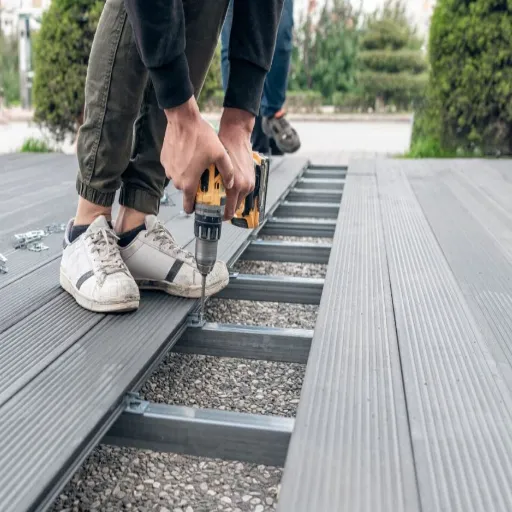
The substructure is the foundation of a successful WPC deck. Common joist materials include pressure-treated lumber, galvanized steel, aluminum, and WPC joists. Spacing depends on board type:
| Board Type | Maximum Joist Span |
|---|---|
| Hollow WPC decking | 30-35 cm |
| Solid WPC decking | 35-40 cm |
| Heavy-duty solid decking | Up to 50 cm |
Always follow the manufacturer’s span tables. Over-spanning causes sagging, board flex, and premature failure.
Expansion Gaps and Fastening Systems
WPC decking expands and contracts with temperature changes. Leave gaps according to manufacturer guidelines, typically:
- Board-to-board: 5-6 mm
- End-to-end: 6-8 mm
- Perimeter gap to walls: 10-15 mm
Use hidden fasteners for a clean surface, or color-matched screws for easier future board replacement. Don’t over-tighten fasteners, as this restricts expansion and can cause buckling.
Drainage and Ventilation
Water management is critical. The substructure should slope slightly away from buildings, and the space beneath the deck should have adequate airflow. Poor drainage traps moisture, promotes mold, and accelerates joist corrosion.
DIY vs Professional Installation
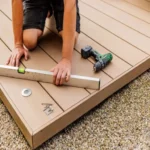
Experienced DIYers can install simple rectangular decks. Complex projects with multiple levels, curves, or integrated lighting should use professional installers who understand WPC-specific requirements. Improper installation is one of the most common causes of warranty disputes.
Common Installation Mistakes
- Insufficient joist spacing: Causes boards to sag or crack.
- Missing expansion gaps: Leads to buckling in hot weather.
- Poor drainage: Promotes mold and substructure rot.
- Wrong fasteners: Corroding screws or incompatible clips damage the boards.
- Ignoring manufacturer instructions: Voids warranty and reduces lifespan.
For a deeper walkthrough, see our dedicated guide on how to install WPC decking.
WPC Decking Cost Guide
Material Prices by Product Tier
Prices vary by quality, profile, and purchase channel. The following ranges are approximate 2026 estimates for WPC decking cost per square meter:
| Product Tier | China FOB (USD/m²) | Retail North America/Europe (USD/m²) |
|---|---|---|
| Standard hollow WPC | $9-$13 | $15−$40 |
| Solid/embossed WPC | $13−$19 | $35−$65 |
| Co-extruded / capped WPC | $18−$28 | $60−$120 |
| Premium deep-embossed WPC | $22−$32 | $80−$150+ |
These are material-only prices. Installation, accessories, and shipping add significantly to the total project cost.
Regional Pricing Differences
China’s factory-direct pricing is substantially lower than retail prices in North America and Europe because it excludes importer margins, certification costs, local warehousing, and installation labor. For buyers importing containers directly, the savings can be significant, but they must also manage freight, customs, duties, and quality inspection.
Installation and Accessory Costs
Budget for:
- Joists and framing materials
- Hidden fasteners or screws
- Starter clips and edge boards
- Fascia boards and end caps
- Labor (if not DIY)
- Tools and adhesives
On many projects, labor and substructure costs equal or exceed the board cost.
Total Cost of Ownership vs Wood
Although WPC decking costs more upfront than pressure-treated wood, the 20-year total cost often favors WPC because of lower maintenance. A wood deck may require staining every 2-3 years, plus occasional board replacement due to rot or insect damage. WPC decking typically needs only cleaning.
For a detailed cost breakdown, see our WPC decking cost guide.
Maintenance and Longevity
Routine Cleaning
Sweep debris regularly and wash the surface with mild soap and water two to three times per year. Use a soft-bristle brush and rinse thoroughly. Avoid wire brushes or abrasive pads that can scratch the cap layer.
Seasonal Maintenance
- Spring: Remove pollen, leaves, and dirt buildup.
- Summer: Check for heat-related expansion or shifting.
- Fall: Clear fallen leaves to prevent mold and staining.
- Winter: Use a plastic shovel for snow removal. Avoid metal blades and harsh de-icing salts.
Stain and Mold Treatment
Clean spills quickly to prevent staining. For mold or mildew, use a diluted vinegar solution or a composite-safe deck cleaner with oxalic acid. Do not use chlorine bleach, as it can discolor or weaken the material.
Expected Lifespan
Quality WPC decking lasts 25-30 years or more when properly installed and maintained. Uncapped or low-density boards may show wear within 5-10 years in harsh climates. Warranty length is a useful indicator, but it should be confirmed with actual performance data and independent testing.
For detailed maintenance instructions, read our WPC decking maintenance guide.
Common WPC Decking Problems and How to Avoid Them
Heat Retention
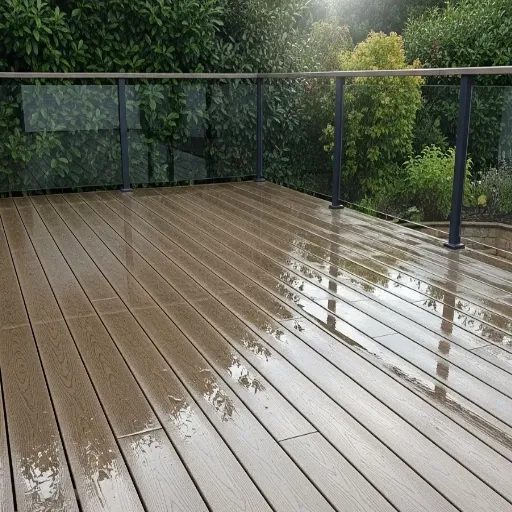
Dark-colored WPC boards can become hot in direct sunlight. In very hot climates, choose light colors, provide shade structures, or select products with heat-reflective pigments.
Fading and Color Change
All WPC decking fades somewhat over time due to UV exposure. Capped boards with quality UV stabilizers fade far less than uncapped boards. Ask suppliers for UV-aging test data before ordering.
Scratching and Scuffing
WPC is scratch-resistant, not scratch-proof. Lift furniture instead of dragging it, use padding under heavy items, and choose textured finishes that hide minor scuffs better than smooth surfaces.
Mold and Mildew
Mold grows on organic debris sitting on the surface, not inside quality capped boards. Regular cleaning and good ventilation prevent most mold issues.
Thermal Expansion
Expansion and contraction cause buckling if boards are installed without proper gaps. Follow manufacturer spacing guidelines for your local temperature range.
Quality Variability
The WPC market includes both premium manufacturers and low-cost producers who reduce plastic content, skip additives, or reuse degraded material. Verify certifications, request test reports, and inspect production facilities or samples before committing to large orders.
Mini-story: A contractor in the Middle East installed dark, uncapped WPC decking around a hotel pool. Within one summer, guests complained the surface was too hot to walk on barefoot, and the color had faded noticeably. The contractor replaced the deck with light-colored, co-extruded boards and added pergola shading. Guest complaints stopped, and the new deck looked consistent after two years.
The replacement cost more than double the original material, but it lasted far longer.
For more details on risks and solutions, see our article on WPC decking disadvantages.
Sourcing WPC Decking from China
Major Manufacturing Clusters
China produces a large share of the world’s WPC decking. Key manufacturing regions include:
- Shandong (Linyi, Qingdao, Jinan): Large-scale production and export-oriented suppliers.
- Anhui (Xuancheng, Guangde, Huangshan): Integrated factories with strong fiber supply.
- Zhejiang (Huzhou, Changxing): Major WPC extrusion hub with full accessory ecosystems.
- Guangdong (Foshan, Dongguan, Shantou): Strong in co-extrusion, color design, and OEM services.
- Jiangsu (Suzhou, Nanjing, Changzhou): Established polymer and flooring base.
Supplier Evaluation Checklist
Before placing an order, evaluate suppliers on:
- Years in business: Look for manufacturers with at least 5-10 years of export experience.
- Production capacity: Can they meet your volume and lead-time requirements?
- Quality control: Do they perform in-house testing and allow third-party inspections?
- Certifications: Are CE, ASTM, FSC, or ISO documents current and verifiable?
- References: Can they provide customer references or case studies in your target market?
- Samples: Do samples match the quoted specifications for weight, density, and color?
- Export documentation: Do they provide packing lists, certificates of origin, and customs paperwork?
Certifications and Test Reports to Request
- Slip resistance test (DIN 51097, ASTM D2047)
- UV aging test (ASTM G154 or equivalent)
- Moisture absorption test (ASTM D570)
- Fire rating test (Class A/B/C or EN 13501)
- Density and flexural strength test
- Heavy metals and chemical safety report (REACH, RoHS)
MOQ, Lead Times, and Shipping Logistics
Minimum order quantities vary by supplier and product. Common ranges:
- Standard WPC decking: 500-2,000 m² per color
- Custom colors or profiles: 3,000-5,000 m² or more
- Lead time: 15-45 days after order confirmation
- Shipping: FOB Qingdao, Shanghai, or Ningbo; sea freight to most destinations takes 20-45 days
Factor in customs clearance, duties, inland transport, and potential port delays when calculating total landed cost.
Why Work with a Linyi-Based Trading Company
As a trading company based in Linyi, Shandong, Linyi Yuheng International Trading Co., Ltd. sits near one of China’s main WPC production centers. We work with multiple manufacturers, compare quality and pricing across suppliers, and manage export documentation, inspections, and logistics on behalf of our customers. This reduces the risk of dealing directly with factories while still accessing factory-direct pricing.
For a deeper sourcing guide, read our article on WPC decking suppliers and manufacturers in China.
WPC Decking FAQ
What is WPC decking made of?
It is made from a blend of wood fibers or flour, thermoplastic polymers such as HDPE or PP, and additives including UV stabilizers, colorants, and bonding agents. The mixture is heated, extruded into board shapes, and then cooled and embossed.
How long does WPC decking last?
Quality boards last 25-30 years or more with proper installation and maintenance. Capped or co-extruded products generally outlast uncapped boards.
Is WPC decking waterproof?
It is highly water-resistant, especially on capped or co-extruded boards. However, the core can absorb moisture if the cap is damaged or if uncapped boards are used in wet environments. For poolside or marine applications, choose fully capped products.
Can WPC decking be installed over concrete?
Yes, it can be installed over concrete using a raised substructure or adjustable pedestals. Adequate drainage and ventilation are essential to prevent moisture buildup.
Does WPC decking get slippery when wet?
Slip resistance depends on the surface finish. Smooth boards can be slippery when wet, while embossed or textured finishes provide better grip. Check slip-resistance test data if safety is a priority.
Can WPC decking be painted or stained?
Most manufacturers don’t recommend painting or staining it because the surface is designed to be low-maintenance. Paint may not adhere well and can void the warranty.
What is the difference between WPC decking and composite decking?
WPC decking is a specific type of composite decking made with wood fibers and plastic. “Composite decking” can also refer to capped composites, PVC decking, or mineral-based composites.
Is WPC decking eco-friendly?
Many WPC products use recycled wood and plastic, reducing waste and demand for tropical hardwoods. Look for FSC, ISO 14001, or other environmental certifications to verify claims.
How much does WPC decking cost per square meter?
China FOB prices range from approximately $9-$32/m² depending on profile and quality. Retail prices in North America and Europe typically range from $15-$150+/m² for materials only, with installation extra.
What certifications should WPC decking have?
Common certifications include CE (Europe), ASTM (North America), FSC (responsible sourcing), ISO 9001 (quality management), and REACH (chemical safety). Commercial projects may also require fire and slip-resistance testing.
Conclusion
WPC decking offers a strong combination of durability, low maintenance, and aesthetic flexibility for residential and outdoor projects. The key to a successful installation is choosing the right product type for your climate and use case, verifying supplier quality through certifications and samples, and following proper installation practices.
Before you buy, focus on five decision factors:
- Profile and cap type: Solid, capped boards for heavy use; hollow boards for light residential projects.
- Certifications: Verify CE, ASTM, FSC, or ISO documents rather than trusting claims alone.
- Climate fit: Match the product to your local weather, moisture, and sun exposure.
- Total cost: Include material, freight, installation, accessories, and lifetime maintenance.
- Supplier reliability: Request samples, test reports, and references before placing large orders.
At Linyi Yuheng International Trading Co., Ltd., we help buyers navigate these decisions with confidence. Our team in Linyi works directly with WPC manufacturers to source quality boards, manage export logistics, and ensure that every order meets your specifications.
If you are planning a WPC decking project, contact us today to request samples, compare pricing, or get a customized quote for your next order.
Categories:
Blog
Related Articles