WPC Decking Disadvantages: 10 Problems Buyers Should Know Before Buying
The main WPC decking disadvantages are heat retention in direct sun, surface scratching, UV fading, mold growth on damp boards, thermal expansion, quality variability between factories, slipperiness when wet, higher upfront cost than wood, structural limitations, and the fact that damaged boards usually cannot be repaired. Most of these problems are manageable if you choose the right product and supplier, but they can become expensive surprises if you do not know what to look for.
WPC decking is marketed as a low-maintenance, long-lasting alternative to wood. For many projects, it delivers. We supply WPC decking from factories in Linyi, China, and we’ve seen the same pattern repeat across international shipments: buyers focus on price and appearance, then discover two summers later that their boards have faded, buckled, or retained enough heat to make the deck unusable in bare feet. This article covers ten real WPC decking problems, backed by ASTM data and field experience, plus how to avoid each one. For a comprehensive overview of selection criteria, installation best practices, and supplier evaluation, see our complete WPC decking buyer’s guide.
Key Takeaways
- Dark WPC boards can reach surface temperatures of 76°C (169°F) in direct sun; light colors and cool pigments reduce this.
- First-generation uncapped WPC scratches and fades faster than co-extruded capped boards.
- Moisture absorption above 1% invites mold, swelling, and warranty disputes; always demand test reports.
- Thermal expansion of 40-50 μm/m·°C means expansion gaps are non-negotiable in hot climates.
- Factory quality varies widely in China; ASTM D7032 reports and third-party audits separate reliable suppliers from risky ones.
| Problem | Why It Happens | Who It Hits Hardest | How to Avoid It |
|---|---|---|---|
| Heat retention | Plastic content absorbs and holds heat | High-sun, dark-colored projects | Light colors, cool pigments, shade |
| Scratching | Softer than hardwood; uncapped surface exposed | High-traffic residential decks | Co-extruded capped boards, furniture pads |
| Fading | UV breaks down dyes and stabilizers | Uncapped or low-grade boards | ASTM G154 reports, quality pigments |
| Mold growth | Wood fiber feeds mold when water sits | Shaded, flat, poorly drained decks | <1% water absorption, drainage, and cleaning |
| Thermal expansion | CTE of 40-50 μm/m·°C | Hot climates with big temperature swings | Proper expansion gaps, acclimation |
| Quality variability | Inconsistent factory formulations and QC | Buyers sourcing from unaudited suppliers | ASTM D7032 reports, factory audits |
| Slipperiness when wet | Smooth or lightly embossed surfaces | Poolside, marina, wet climates | R11/ textured boards, slip test reports |
| Higher initial cost | More material and labor than wood | Budget-driven short-term projects | Total cost of ownership calculation |
| Structural limitations | WPC is not load-bearing | Elevated or commercial decks | Proper substructure, engineer sign-off |
| Limited repair options | Cannot sand or refinish | Any deck with damage | Order 5-10% extra boards, record batch |
1. Heat Retention: Does WPC Decking Get Hot?
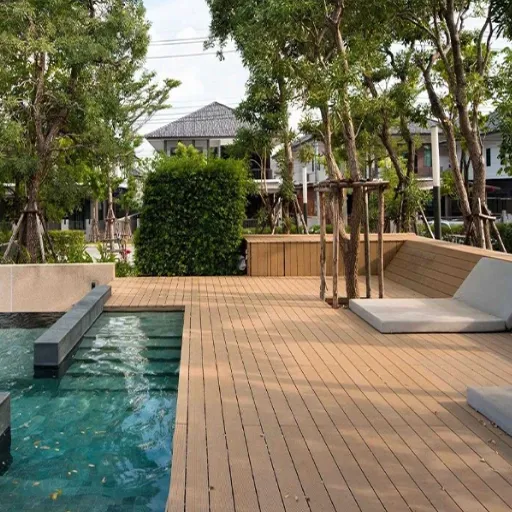
WPC decking gets hot. In direct summer sun, dark-colored boards can reach 76°C (169°F). That is hot enough to burn bare feet and make outdoor spaces uncomfortable during peak hours. The University of Tennessee notes that wood-plastic composites combine wood fiber with thermoplastic polymers. The plastic content absorbs and holds heat longer than natural wood.
Color matters more than many buyers realize. A charcoal or dark brown board can run 10-15°C hotter than a light gray or beige board of the same material. Cool pigment technology can reduce surface temperature by 4-7°C, but it adds cost and is not available from every factory.
A contractor in Dubai told us he had to replace poolside decking for a hotel client because guests could not walk on it at midday. The original specification prioritized the dark walnut color over thermal performance. The replacement used a lighter co-extruded board with cool pigments, and the surface temperature dropped enough to make the deck usable year-round.
Mitigation: specify light colors for high-sun areas, ask about cool pigment options, and ensure adequate airflow and partial shade where possible.
2. Scratching and Surface Damage
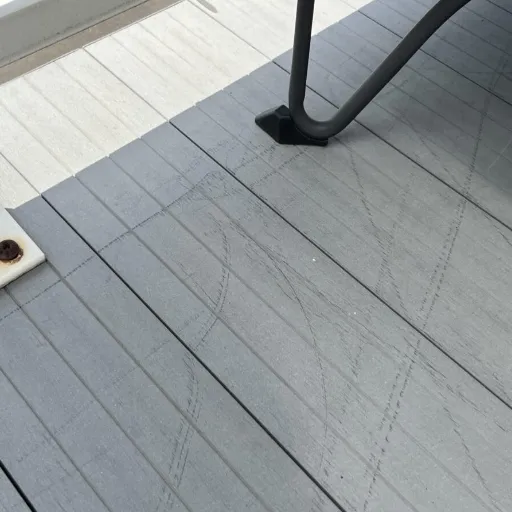
WPC decking is softer than hardwood and easier to scratch. First-generation uncapped boards are the most vulnerable because the wood-plastic mix is exposed across the entire surface. Co-extruded capped boards carry a protective polymer outer layer that improves scratch resistance, but sharp furniture legs, pet claws, and dragging planters can still leave marks.
Mohs hardness ratings for WPC typically fall between 2 and 3, compared to 3.5-4 for many hardwoods. That difference is small on paper but noticeable in daily use. A homeowner in Sydney learned this when metal chair legs gouged her new WPC deck within the first month. She ended up buying outdoor rugs and furniture pads, which helped but did not restore the original finish.
Mitigation: choose co-extruded capped boards, use furniture pads, avoid dragging heavy items, and keep pet claws trimmed.
3. Fading and UV Degradation
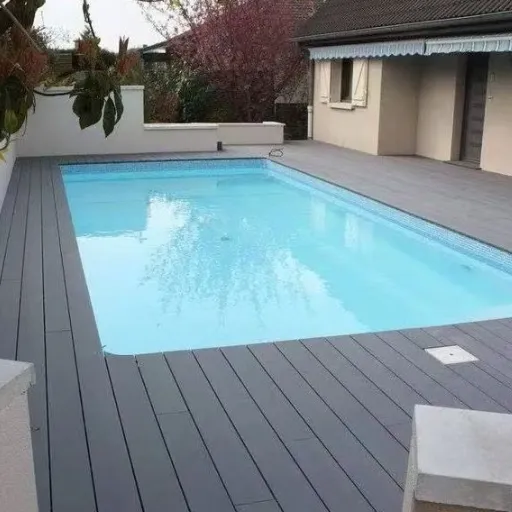
All WPCs fade, but the rate and degree depend heavily on formulation. This is one of the most visible WPC decking disadvantages for buyers who expect long-term color stability. First-generation boards without UV stabilizers can lose significant color within two to three years. Capped co-extruded boards with quality pigments and UV inhibitors hold color much longer. The key metric is ΔE (delta E), which measures color change. Quality manufacturers aim for ΔE below 4.0-5.72 after accelerated UV exposure.
ASTM G154 is the standard test for UV resistance of plastics and composites. If a supplier cannot produce a G154 report, that is a warning sign. We have seen batches from different Chinese factories labeled the same color arrive with visible shade differences before installation even began.
Mitigation: demand UV test reports, specify co-extruded capped products, and avoid the cheapest dye-based color options.
4. Mold and Mildew Growth
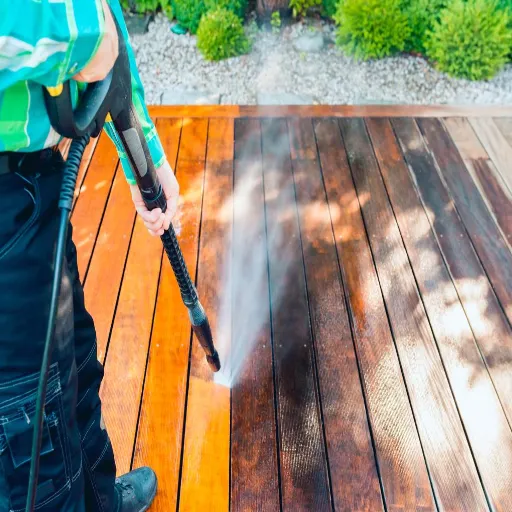
WPC resists moisture better than wood, but it is not immune to mold. The wood fiber content can act as a food source for mold and mildew if water sits on the surface. Premium WPC should absorb less than 1% water by weight. Low-grade products can absorb 3% or more, creating the damp environment that mold needs.
The USDA Forest Service has documented that biological deterioration and moisture sorption remain concerns for wood-plastic composite lumber, especially in shaded or poorly ventilated installations. Drainage, airflow, and periodic cleaning matter more than many buyers expect.
A distributor in Malaysia called us about boards that turned green within six months. The install was flat, with no slope, and leaf litter was allowed to accumulate. The WPC itself was not rotting, but the organic film on top was feeding mold. A thorough clean and improved drainage solved the problem, but the client had already lost confidence in the product.
Mitigation: specify low water absorption boards, design for drainage and airflow, clean the deck regularly, and remove leaf litter and standing water. Establishing a proper WPC decking maintenance routine from day one prevents mold issues and protects your investment.
5. Thermal Expansion and Contraction
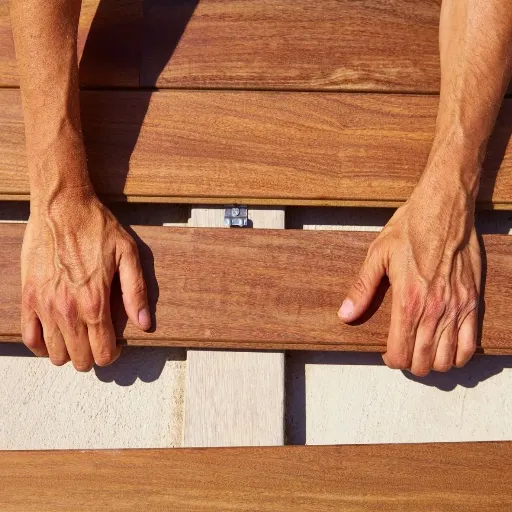
WPC expands and contracts with temperature changes. Standard WPC has a coefficient of thermal expansion (CTE) around 40-50 μm/m·°C. Premium co-extruded products run closer to 25-40 μm/m·°C. Over a 6-meter board and a 30°C temperature swing, that movement adds up to several millimeters.
Installers who ignore expansion gaps create the conditions for buckling, warping, and popped fasteners. European warranty data from 2023 showed that expansion and warping complaints represented 9.3% of product complaints. Many of these were traceable to poor installation rather than defective material.
Mitigation: follow the manufacturer’s expansion gap guidelines. Acclimate boards before installation, and increase gaps in climates with large temperature swings.
6. Quality Variability and WPC Decking Quality Issues
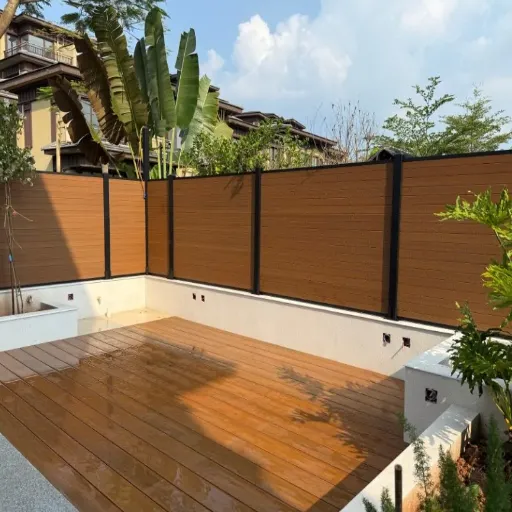
Not all WPC is created equal, and this is where buyers lose the most money. In the Linyi production hub alone, dozens of factories produce WPC decking with wildly different formulations, extrusion standards, and quality control. Some use 60% recycled HDPE with quality additives. Others cut costs with lower-grade plastics, excess wood flour, and minimal UV or biocide protection. These WPC decking quality issues are often invisible until the boards are exposed to sun, rain, and foot traffic.
The result is boards that look similar on day one but perform completely differently after one or two seasons. We have seen supposedly identical products from two suppliers vary by more than 2% in water absorption and by large margins in flexural strength.
ASTM D7032 sets performance requirements for WPC deck boards. It covers flexural strength, temperature and moisture effects, UV resistance, freeze-thaw, and slip resistance. Reputable suppliers should provide third-party test reports. ISO 9001 certification, CE marking, and SGS reports are useful signals, but they should be verified rather than trusted at face value.
Mitigation: request ASTM D7032 test reports, verify certifications with the issuing body, audit the factory or use a trusted local agent, and always order production samples before a full container.
7. Slipperiness When Wet
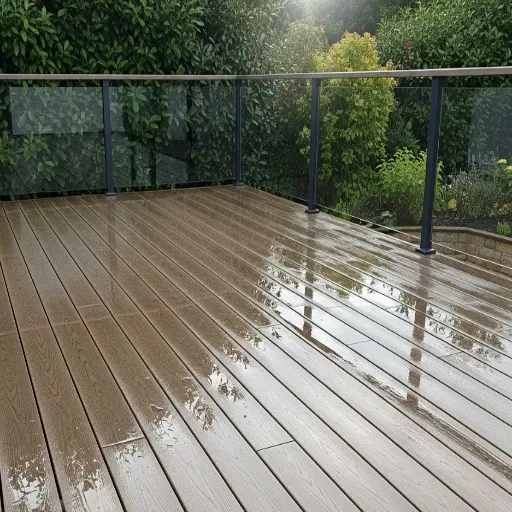
WPC decking can be slippery when wet, especially smooth or lightly embossed boards. Composite decking slipping when wet is a serious safety concern for poolside, marina, and wet climate installations. Coefficient of friction (COF) values under ASTM D2394 typically fall between 0.37 and 0.61. Boards rated R11 under DIN 51130 or with a wet pendulum test value above 36 offer better slip resistance for these applications.
This is not just a residential concern. A commercial client in Singapore had to add anti-slip strips to a rooftop deck after a rain-related incident. The original boards looked clean and modern but had minimal surface texture. Replacement with a deeply embossed, R11-rated board eliminated the problem.
Mitigation: specify textured or R11-rated boards for wet areas, request slip test reports, and consider drainage design that reduces standing water.
8. Higher Initial Cost: A WPC Decking Disadvantage vs. Wood
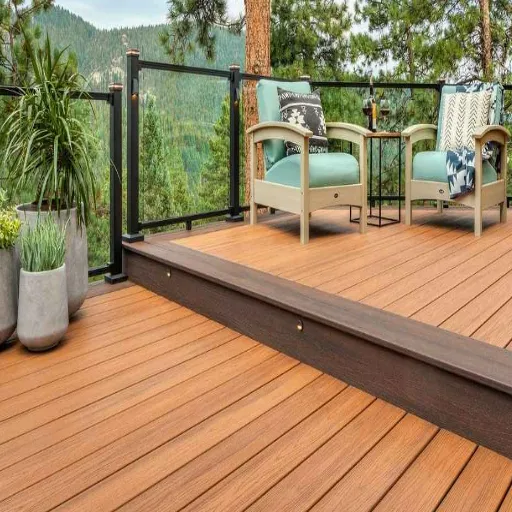
WPC decking costs more upfront than pressure-treated lumber. Material costs are typically around 45% higher. Installation can run 20-25% higher, too, because WPC is heavier and requires specialized fasteners. Over a 25-30-year lifecycle, the lower maintenance and longer lifespan can make WPC the better financial choice, but the payback period matters.
For a rental property or short-term project, wood may be cheaper even with staining and replacement costs. For a hotel, restaurant, or high-end residential install, WPC often wins on total cost of ownership. Evaluating the pros and cons of WPC decking requires looking beyond the initial invoice to maintenance, replacement, and labor over the full life of the deck.
Mitigation: calculate the total cost of ownership, including maintenance, staining, replacement, and labor, before deciding.
For a detailed comparison of long-term performance and lifecycle costs, read our analysis of composite decking compared to wood.
9. Structural Limitations of WPC Decking
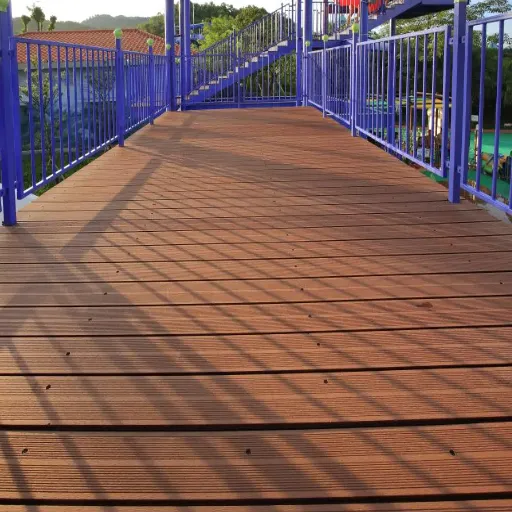
WPC decking is not a structural material. It needs a proper substructure and cannot span the same distances as solid timber or engineered lumber. It is also heavier than wood, which increases freight costs and requires stronger framing for elevated decks.
Most WPC deck boards weigh 7-10 kg per linear meter, compared to 4-6 kg for equivalent softwood. That extra weight adds up quickly on large terraces and rooftop decks where load limits apply. Using WPC as a load-bearing element is a design error that can lead to sagging, failure, and liability issues.
Mitigation: follow manufacturer span tables, use treated timber, steel, or composite joists as specified, and consult an engineer for elevated or commercial structures.
10. Limited Repair Options
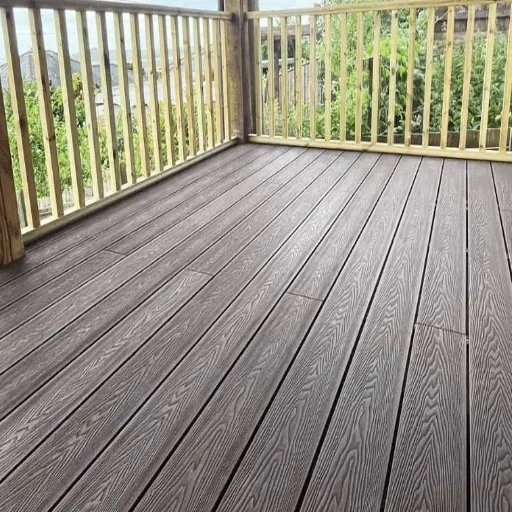
Unlike wood, WPC cannot be sanded, stained, or refinished. A deep scratch, burn mark, or impact damage usually means replacing the board. Color matching is difficult because boards fade at different rates depending on sun exposure, and new boards often look noticeably different against weathered ones.
Smart buyers order 5-10% extra boards and store them in a dry, shaded place with the batch number recorded. We have seen contractors skip this step to save a few hundred dollars, then pay far more two years later to replace damaged boards that no longer match.
Mitigation: order spare boards from the same production batch, document batch numbers, and keep extras stored flat and protected from UV.
How to Avoid These WPC Decking Disadvantages When Sourcing from China
Most WPC decking disadvantages become serious only when buyers choose the wrong product or supplier. A disciplined sourcing process prevents the majority of issues.
Factory Audit Essentials
- Check extrusion lines, raw material storage, and mixing ratios.
- Ask how recycled content is sourced and screened.
- Review recent third-party test reports, not just marketing sheets.
- Verify that the factory exports to your target market and understands local standards.
Certifications to Demand
- ASTM D7032 for structural and performance properties
- ASTM D7031 for physical and mechanical characterization
- EN 15534 for European compliance
- ISO 9001 for quality management
- CE marking and SGS reports were required
Sample Testing Protocol
Before placing a full order, test samples for water absorption, UV exposure, flexural strength, and slip resistance. Compare samples from at least two suppliers under the same conditions. The results usually reveal more than any brochure.
FAQ
Below, we address the most common questions buyers ask about the pros and cons of WPC decking, including performance in extreme weather and long-term maintenance requirements.
Does WPC decking get hot in the sun?
Yes. Dark WPC boards can reach surface temperatures up to 76°C (169°F) in direct sun. Light colors, cool pigments, and adequate shade reduce heat retention significantly.
Is WPC decking slippery when wet?
It can be. Smooth boards have a lower coefficient of friction when wet. For poolside or wet climates, specify textured or R11-rated boards and request slip test reports.
How long does WPC decking really last?
Quality WPC can last 25-30 years structurally, but appearance often deteriorates faster if the product has poor UV stability or is installed without proper drainage.
Can WPC decking be repaired if scratched?
No. WPC cannot be sanded or refinished. Damaged boards must be replaced, so ordering 5-10% extra from the same batch is recommended.
Does WPC decking fade?
All WPC fades slightly, but first-generation uncapped boards fade much faster than co-extruded capped boards. Look for ASTM G154 UV test reports and ΔE values below 4.0-5.72.
Is WPC decking mold-resistant?
WPC resists moisture better than wood, but the wood fiber content can support mold growth if water sits on the surface. Low water absorption, good drainage, and regular cleaning prevent this.
Is WPC decking worth the extra cost?
For long-term projects with low maintenance requirements, WPC is often worth the higher upfront cost. For short-term or budget-sensitive projects, pressure-treated wood may be more economical.
Conclusion
WPC decking has real disadvantages, and ignoring these WPC decking disadvantages does not make them disappear. Heat retention, scratching, fading, mold, thermal expansion, quality variability, slipperiness, higher upfront cost, structural limitations, and repair difficulties are all part of the buyer’s equation. The good news is that most of these problems are predictable and avoidable.
The key is to match the product to the project and verify the supplier before you order. Cheap WPC from an unaudited factory almost always costs more in the long run than a quality board installed correctly. At Linyi Yuheng, we help buyers navigate these trade-offs with factory audits, sample testing, and batch-specific guidance. If you are sourcing WPC decking and want a supplier who will tell you the truth before you buy, contact our WPC decking team today.
Categories:
Blog
Related Articles