Exterior WPC Wall Cladding: A Complete Guide for Commercial Projects (2026)
Exterior WPC wall cladding serves as an engineered siding product created from recycled wood fibers and plastic polymers, which provides the authentic appearance of wood while maintaining the strength of synthetic materials. The product has become the most rapidly expanding segment of the global wall cladding market because it effectively addresses the two main obstacles that traditional wood siding faces, which include ongoing upkeep and damage caused by weather conditions.
The global WPC wall panel market reached 4.5 billion in 2025 according to Verified Market Reports, and it is anticipated to grow to 7.2 billion by 2033 with an annual growth rate of approximately 6.5 percent. The wood-plastic composite industry maintains a market value of 9.6 billion according to Mordor Intelligence, which shows active demand for cladding and decking and structural uses. The growth results from architects and developers, and procurement managers who observed the material’s actual performance during a time span between 15 to 25 years.
The guide provides you with complete information that you need when you select cladding materials for commercial facades, assess materials for multi-unit buildings, and acquire large amounts of products for distribution. The study demonstrates exterior WPC wall cladding production methods while comparing its performance to wood and vinyl products and presenting actual cost details and common errors that lead to early system breakdowns.
Key Takeaways
- Exterior WPC wall cladding, which people refer to as composite wall cladding and WPC exterior cladding, creates a weather-resistant facade material because it combines 60% wood fiber with 30% plastic polymer and 10% additives.
- WPC, which meets exterior-grade standards, provides a lifespan of 20 to 25 years through its upkeep requirements, which demand less maintenance than people need to maintain natural wood.
- WPC requires no staining, painting, or sealing which results in total ownership costs being 30 to 50% lower than wood siding over a period of 20 years.
- Co-extruded WPC with a protective polymer cap outperforms first-generation composites in color retention and scratch resistance.
- The most common failures happen when buyers use interior-grade panels outdoors or skip expansion gaps during installation.
What Is Exterior WPC Wall Cladding?
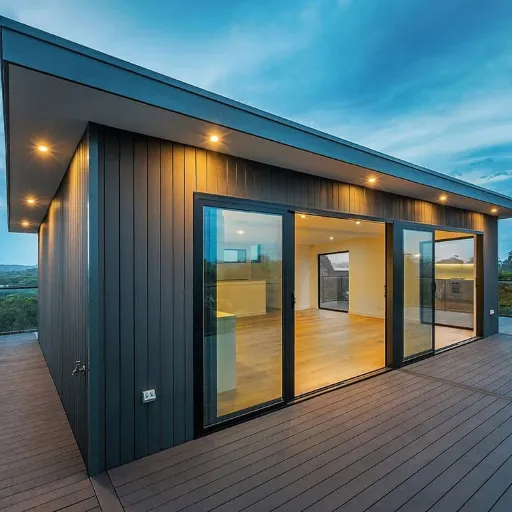
Wood-Plastic Composite (WPC) wall cladding panels are extruded building materials that blend wood fiber, thermoplastic resin, and performance additives into boards or panels that look and feel like natural timber. For a complete overview of all panel types and applications, see our WPC wall panels buyer’s guide. The best exterior-grade products use co-extrusion technology, which means a dense WPC core is wrapped in a protective polymer cap that shields the material from moisture, UV radiation, and physical impact.
Material Composition and Manufacturing
The typical exterior WPC wall cladding formulation uses 60% reclaimed wood fiber, and 30% HDPE or PVC resin, and 10% chemical additives, which include UV stabilizers and colorants, coupling agents, and lubricants. The manufacturers use the raw materials to create boards through a continuous extrusion process, which combines mixing and heating, and forcing the materials through a die to produce products with a uniform size and surface pattern.
Co-extrusion stands as the most important technological achievement that has developed during the last few years. The process thermally extrudes the WPC core together with its protective cap layer, which enables them to bond at a molecular level. The advanced board shows superior resistance against fading, staining, and moisture absorption when compared to first-generation WPC products. You should ask suppliers to confirm that their exterior panels use co-extrusion as a manufacturing method. WPC products that lack a cap layer will experience faster degradation under outdoor conditions during their first generation.
The Critical Difference Between Indoor and Outdoor WPC
This is why most projects go wrong. Both indoor and outdoor panels can look similar, but indoor WPC wall-cladding panels and outside WPC wall paneling are developed and manufactured in several different environmental mediums. The features of indoor panels are accurate dimensional stability and an extremely smooth surface finish through which these particular indoor environments operate well, but outdoor panels face numerous extreme environmental conditions, including thermal cycling and freeze-thaw cycles, harsh ultraviolet radiation, and intermittent heavy rainfall.
James Chen, a project manager who operated out of Melbourne, realized the tragedy of such sorts much later in his career. His 2023 team employed some WPC panels that did not meet the exterior-grade ratings for dressing up a boutique hotel’s front exterior, but it made them realize an economy that, by iteration, had brought them savings to the extent of 15%. It began to show several levels of uneven fading within the first 18 months of usage. This was completed on the cut edges, brought in after a period when unseen moisture showed up. Then the capping, ultraviolet stabilizers certified for external exposure, and the good law association governing outside activities, instituted by the warranty, are obligatory.
7 Benefits of Exterior WPC Wall Cladding
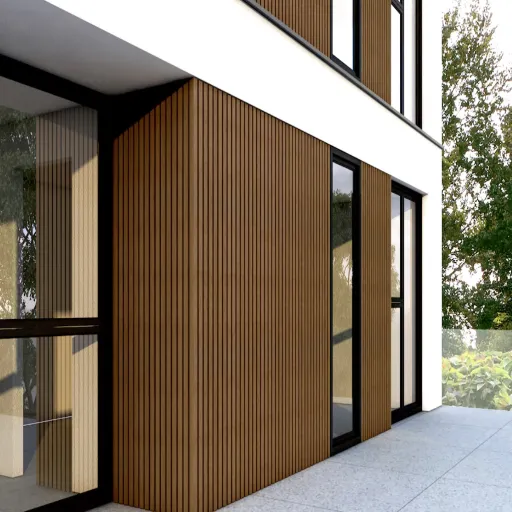
Choosing the right facade material means balancing aesthetics, durability, maintenance, and cost. Exterior WPC wall cladding scores highly across all four dimensions. Here are the seven benefits that drive specification decisions for commercial projects.
1. Superior Weather resistance
Premium outdoor WPC exterior wall covering performs reliably across temperature extremes ranging from -40 °C to +60 °C. Avoiding the absorption of water, the polymer shell provides superb moisture resistance as exterior WPC wall cladding. It will not rot, warp, or split under years and years of rain, snow, and humidity. Compared to natural wood, WPC behaves differently with alterations in the moisture content, as it does not tend to swell or contract to such a magnitude. This is particularly relevant as far as great facade installations are concerned, where minute movements can even create some visible gapping or warping.
2. Minimal Maintenance Requirements
Natural wood siding has to be repainted or stained about every one or two years to keep it up and preserve a protective skin. Exterior WPC wall cladding needs no staining, painting, or sealing at all. Simple cleaning with mild soap and water, even once or twice a year, is needed. On an individual project, these accumulative savings will have made thousands of dollars in both material and labor costs by the end of a 20-year term.
3. Natural Wood Aesthetics
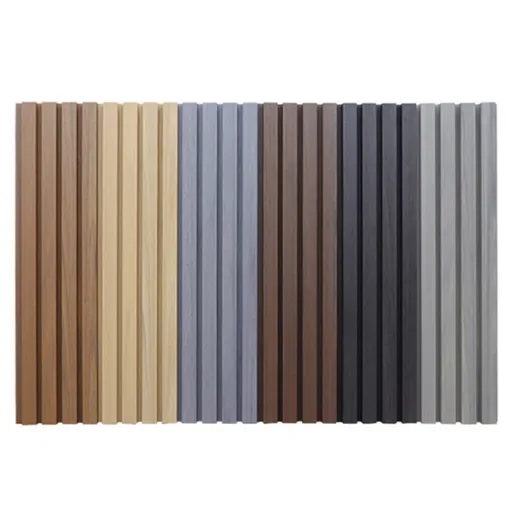
Extraordinarily complex co-extrusion and embossing technology has enabled the depiction of the woodgrain surface in naturally-looking accuracy on WPC cladding panels. Teak, walnut, oak, and charcoal finishes up to several wide types for exterior WPC walls, may be needed, while others supply bespoke color matching on enormous orders. This results in a facade that offers the warmth and visual attractiveness of timber; that is, it neither has the imperfection of natural grain patterns nor the limited color stability problems that are found in stained wood.
4. Termite and Pest Resistance
As the wood fibers in WPC are entirely enclosed in plastic resin, wood-boring insects like termites will not have access to their food. This can apply to almost all good quality types of WPC cladding for outdoors-they are sure to be termite-proof. This is a considerable advantage in tropical and near-tropical regions where termite destruction of wood siding is a constant and costly issue. You can keep away from chemical treatments that are repeatedly required and could be more burdensome in terms of the environment.
5. Thermal and Acoustic Insulation
A well-built structure will always consist of an air gap utilizing WPC cladding, generating a sufficiently ventilated rainscreen. This invisible gap creates better thermal performance in the building envelope by reducing how much heat loss goes through the walls. On the other hand, some WPC pieces have been made that have acoustic properties to diminish external noise. In other words, it can help some commercial buildings lying close to the major roads or airports to keep the inhabitants comfortable without adding any insulating layers.
6. Sustainable Material Choice
Exterior WPC wall cladding products incorporate the former while preventing the latter. These waste wood fibers and recycled plastic materials keep getting disposed of in landfills. As much as 60% to 90% recycled content is achieved in some of the composites used as wall cladding materials by leading manufacturers. The form of waste wood and plastic material used in wall cladding pavements does not contain any formaldehyde and is very low in VOC concentrations, thus guaranteeing better indoor air quality, which can further contribute to various green certification programs like LEED or BREEAM.
7. Fast, Efficient Installation
The cladding quickly installs with tongue-and-groove or clip systems that are more useful than their wood panel predecessors. Almost all cladding panels can be cut using common woodworking tools. Concealed fastening systems also provide a clean, contemporary look. The average installation time for composite wall cladding runs at around 30-50% quicker than for wood cladding, shortening labor periods and project timelines alike.
Exterior WPC Wall Cladding vs. Alternative Cladding Materials
| Feature | Exterior WPC | Natural Wood | Vinyl Siding | Fiber Cement |
|---|---|---|---|---|
| Maintenance | Very low | High (annual stain/paint) | Low | Medium (paint every 10-15 years) |
| Lifespan | 20-25 years | 10-15 years | 15-20 years | 25-30 years |
| Water resistance | Excellent | Poor (rots/warps) | Good | Excellent |
| Pest resistance | Excellent | Poor | Good | Excellent |
| Aesthetic depth | High (natural wood look) | High | Low (plastic appearance) | Medium |
| Thermal insulation | Good | Good | Poor | Poor |
| Material cost/m2 | 20−45 | 30−100 | 15−40 | 50−100 |
| Install speed | Fast | Slow | Very fast | Slow |
Critical Selection Criteria for Buyers
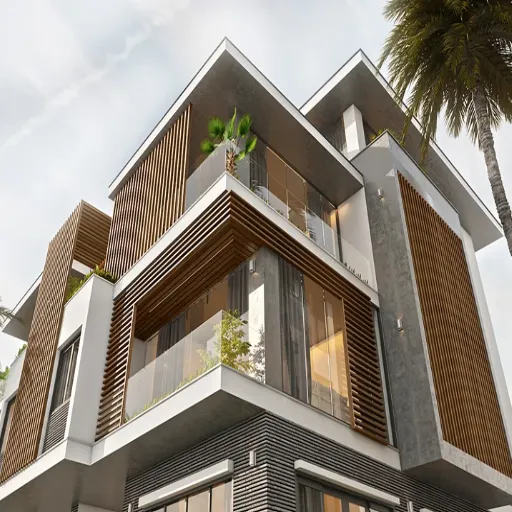
Not all exterior WPC wall cladding is created equal. When evaluating products for a commercial project, look beyond surface appearance and check these six technical criteria.
Co-Extrusion Technology
Always specify co-extruded WPC wall cladding panels for exterior applications. The polymer cap layer is what gives exterior WPC wall cladding its UV resistance, color stability, and moisture protection. Uncapped or first-generation WPC will fade and stain within two to three years of sun exposure. Ask your supplier for documentation confirming co-extrusion manufacturing.
Fire Rating and Code Compliance
Commercial projects require materials that meet local fire safety codes. Quality exterior wpc exterior cladding should carry a Class B1 fire rating under GB/T 8624 or EN 13501-1 standards, meaning it is difficult to ignite and produces limited flame spread. For a complete guide to fire compliance and building code requirements, see our article on fire-rated WPC wall panels. Verify that the supplier has third-party test reports from accredited labs like SGS or Intertek. Do not accept a manufacturer’s claim without independent certification.
UV Stabilization and Color Fastness
The polymer cap should contain UV stabilizers to stop any photochemical degradation. Please provide the data for the color fastness test with the Delta E value after the accelerated weathering process. Delta E of less than 3.0 after 3,000 hours of QUV testing is a major reason for declaring color retention excellent. Any value above 5.0 indicates visible fading will occur within the first few years.
Expansion and Contraction Engineering
WPC swells and shrinks at different rates as temperature changes in the season, but not as large as solid wood. Expansion slots are designed in the boards by a good manufacturer, and also guidelines for the quantity of gapping required. In installations through mixed hot/cold regions, opt for boards that have linear coefficients of expansion much less than 0.05% per degree Celsius.
Substructure and Ventilation Requirements
Ventilation is necessary for exterior composite wall cladding, as well as a roof underdeck water management system that needs to be installed on a ventilated substructure, usually aluminum or impregnated timber battens with a pitch of between 400mm and 500mm. The system allows air movement behind the synthetic WPC wall planks, thus allowing moisture to escape and minimizing the development of condensation. A direct fixing is sometimes allowed if there are some manufacturers, but the ideal installation is a ventilated rainscreen.
Warranty Terms
Read carefully. The warranties of leading manufacturers are often promise 20 years for outside WPC Cladding, but may not always be complete. For various causes, they may regard structural integrity as warranty excellence, which does not apply to color fastness. Some will require you to use certified organizing contractors to keep the warranty. Make sure you understand what they cover, not cover, and the recommended evidence required.
Exterior WPC Wall Cladding vs. Alternative Materials
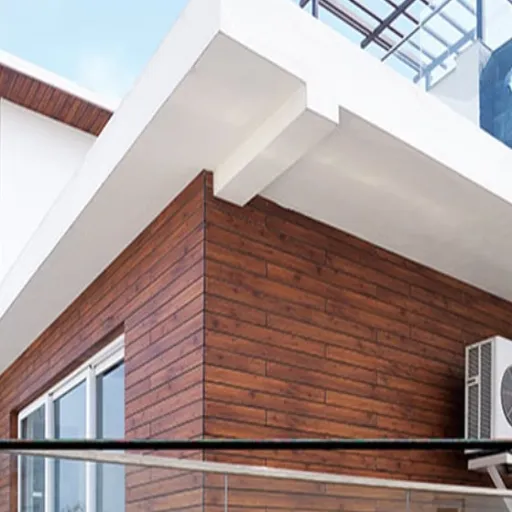
Material selection for a facade is rarely a simple decision. Each option has strengths and weaknesses that matter depending on climate, budget, aesthetic goals, and building type.
WPC vs. Natural Wood Siding
Wood siding’s extreme realism continues the trend of having that kind of siding refinished over and over again. One does not need to stain or paint it since wood siding rots, as its vulnerability to insects is natural, and thus it warps in quality depending on the species or cutting. Exterior WPC Cladding comes with a warranty for more aesthetic warmth, but with less required maintenance in terms of wear and tear compared to natural wood. It also tops vinyl in terms of aesthetics and durability, and serves as a beautiful WPC option for a premium siding. WPC is expected to be a better choice for commercial projects because it minimizes the maintenance cost as much as possible throughout the project period.
WPC vs. Vinyl Siding
The best thing about the vinyl is that it has a great price and ease of installation. However, the downside of vinyl is that it looks very plastic; its texture is just fragile, and it can go brittle or warp under extremely high or low temperature conditions. WPC cladding on the walls up front is 20-50% more expensive than vinyl, but having the precious wood appearance on the inside due to its high resistance to impact and stability at low and high temperatures.
WPC vs. Fiber Cement Board
Fiber cement, for example, James Hardie products, is stronger and fire-resistant. It is also more manageable and installs without dust from hazardous parts. On the other hand, WPC is lighter, easier to cut, and easier to handle. Fiber cement can last up to 5 to 10 years longer compared with the cladding of composite wall, but the exterior wall cladding from the WPC offers better thermal insulation and possibly a more natural appearance.
Which Material Should You Choose?
- Choose exterior WPC wall cladding when you want the look of wood with minimal maintenance, need fast installation, and value thermal insulation. For most commercial facades, WPC exterior cladding offers the best balance of cost, performance, and aesthetics.
- Choose natural wood when authenticity is paramount and you have the budget for ongoing maintenance.
- Choose vinyl siding when upfront cost is the absolute priority and aesthetic depth is secondary.
- Choose fiber cement when maximum fire resistance and the longest possible lifespan are the primary requirements.
Installation Best Practices
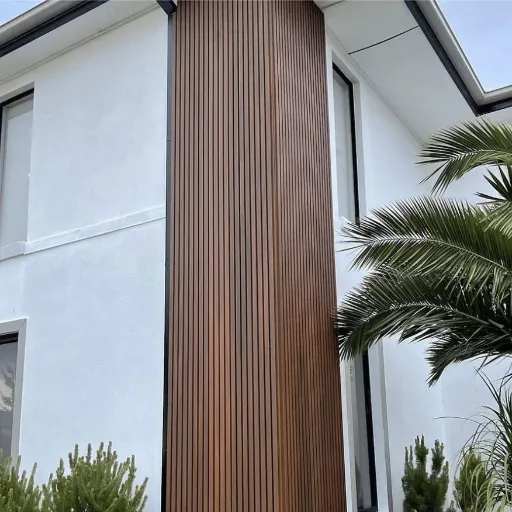
Failure is the result of poor installation, even with the best quality external WPC wall cladding. These best practices have been tried and tested thoroughly and have been formed with the expertise of manufacturers and contractors who have done hundreds of installations in different climate zones.
Substructure Design and Batten Spacing
The substructure of the treated timber or aluminum battens should be placed at 400mm to 500mm at centers on the wall. In areas with high winds, the spacing should be 300mm. All battens should be true and plumb, or any bend they have becomes apparent on the finished facade. It is best if the screws for connecting items to each other are made from corrosion-resistant materials, ideally stainless steel, especially in the coastal areas where salt air speeds corrosion.
Expansion Gap Requirements
Keeping a range of 5 to 7mm of overall gap around all ends of boards and corners. The gap is made for thermal expansion and avoids buckling in hot weather. Keeping a 20mm gap of cladding to the bottom of the wall, or ground or flashing, prevents water wicking. It all goes under starter strips, corner trims, and finishing profiles.
Fastener and Clip Selection
It would be advisable to use the clip system hidden and recommended by the manufacturer. They work by clipping into the grooves on the boards and are screwed through to the battens, hence creating an invisible fastening that keeps the facade clean. Where face fixing is necessary, color-matched screws should be used and pre-drilled to avoid splitting. Never overtighten screws, as they will restrict the natural movement of flooring or cladding contraction and expansion.
Common Installation Mistakes to Avoid
The greatest flaw that arose was that the openings were not expanded adequately. An example includes a development team in Dubai in 2022, who did an installation of WPC exterior cladding systems, which were without end gaps so as to make them look seamless from a distance. By the second summer, most boards were at curling ends with a few bursting. Part removals were necessary, after which they had to be reinstalled. They could easily have been removed, however, by adding 6 mm exactly to the width of the gaps and exchanging the board material involved. The teaching point is that WPC excels in installation, where all rules are followed, but they thrive badly on account of this existing defect, in improper installation.
For a detailed walkthrough of the installation process, see our WPC wall panel installation guide.
Cost Analysis: What to Expect in 2026
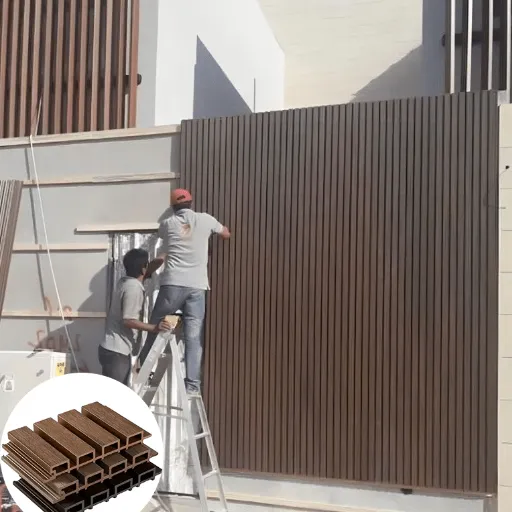
Budgeting for an exterior wpc wall cladding facade requires looking beyond the price per square meter. Material cost, installation labor, accessories, and long-term maintenance all factor into the true cost of ownership for any composite wall cladding system.
Material Cost Ranges by Quality Tier
| Quality Tier | Price per m2 (USD) | Characteristics |
|---|---|---|
| Budget (first-gen, uncapped) | 10−10−20 | Basic UV protection, shorter color life, 10-15 year lifespan |
| Mid-range (co-extruded) | 20−20−35 | Good UV resistance, realistic wood grain, 15-20 year lifespan |
| Premium (co-extruded, enhanced cap) | 35−35−60 | Superior color retention, scratch resistance, 20-25 year lifespan |
Factory-direct pricing from Chinese manufacturers typically falls in the 8to8to25 per m2 range for mid-range co-extruded products, while retail and distributor pricing in Western markets is significantly higher.
Installation and Accessory Costs
Labor costs vary by region but generally range from 15to15to45 per m2 including substructure installation. Accessories such as starter strips, corner trims, edge profiles, and hidden clips add 15 to 20% to material costs. Always factor in 10% wastage for cutting and mistakes.
Total Cost of Ownership
This is where exterior WPC wall cladding demonstrates its real value. Over 20 years, natural wood siding will require staining or painting 10 to 15 times for 5to5to10 per m2 per application. That adds 50to50to150 per m2 in maintenance costs on top of the original material and installation. WPC requires no painting or staining. Its total cost of ownership over two decades is typically 30 to 50% lower than wood.
Maria Gonzalez, a procurement manager for a Spanish residential developer, made the switch to exterior wpc wall cladding for a 120-unit apartment complex in 2019. Her initial material quote for composite wall cladding was 18% higher than treated pine siding. But by 2024, the maintenance savings on the first buildings completed had already offset that premium. By the end of the 20-year analysis period, she projects total facade cost savings of approximately $340,000 across the development.
Factors That Affect Pricing
- Order volume: Bulk orders above 1,000 ㎡ typically qualify for significant discounts.
- Customization: Custom colors, textures, or lengths increase cost and lead time.
- Certifications: Products with full CE, SGS, and ISO 9001:2015 certification command a small premium but reduce compliance risk.
- Shipping terms: FOB, CIF, and DDP terms affect the total landed cost significantly.
Climate Performance: Where WPC Excels (and Where It Doesn’t)
Exterior wpc wall cladding panels perform well in most climates, but understanding its limitations in extreme conditions helps you specify the right product for your project location.
Tropical and Humid Climates
This particular cladding system performs excellently in tropical weather conditions. As its waterproof core and cap resist the kinds of moisture and humidity typically associated with the degradation of wood claddings, WPC is fast becoming the material of choice for such use in areas such as Southeast Asia. Most coastal facades in Central America are now constructed with WPC materials. The all-important requirement: a product with the correct quality of UV stabilizers that allow it to withstand exposure to intense equatorial sun.
Coastal and Marine Environments
Marine-grade stainless steel fixings must be used in such locations, and aluminum battens. High solar exposure in those types of areas also results in lots of glinting off the water. Initially, salt affects fields like open ocean environments, but when it rains, the water spreads the salt outside the beach area on land and affects plant growth in a toxic manner.
Cold and Freezing Regions
The external composite wall cladding sets to work in freezing climates for its outstanding performance, provided that expansion gaps are implemented in the attachment perimeter of the said composite wall cladding system. Such material does not absorb water, so freeze-thaw cycles that normally chip concrete and split wood do not affect WPC. The only issue is that in colder climates, regulations would be applied that make the surface slightly more brittle, thus at least having an impact resistance test conducted at low temperatures before starting any project in the north.
High-Heat and Arid Climates
This is that peculiar environment where WPC mostly takes specific precautions. For desert climates, where surface temperatures on dark-colored walls reach over 70 °C, standard WPC may tend to soften. The remedy is to prescribe light colors with highly reflective solar energy and also to check with the company to ensure that the product is compliant with the expected range of temperature. Typically, up to 60 °C is rated as good quality external WPC, so heat-sensitive areas require specialized formulations.
Common Problems and How to Prevent Them
An open-hearted supplier discusses situations in advance. The top five troubles that are commonly associated with WPC from exterior cladding are how to prevent them in external WPC wall cladding installation.
Fading and Discoloration
Cause: The cap layer has inadequate stabilizers against UV, or the application of uncapped WPC outdoors.
Prevention: Ensure that you co-extrude panels that have been documented through QUV testing. Select lighter colors in the high-UV areas as dark colors absorb more heat and fade quickly.
Warping and Buckling
Cause: The presence of expansion inadequacies, overtightened deck screws, or direct installation without ventilation below.
Prevention: Strict adherence to the manufacturer’s gap specifications. Use hidden clip systems to allow for natural movement. Never face-screw down your breadboards tightly.
Moisture Intrusion at Joints
Cause: Leaks of water from panel ends due to insufficient sealing of the cut ends.
Prevention: Seal all cut ends with the recommended manufacturer’s sealant and put flashing at horizontal joints. Also makes sure that the rainscreen cavity drops are allowed to drain freely at the base.
Fastener Corrosion
Cause: The use of standard steel screws in seaside or humid environments.
Prevention: By using stainless steel or ceramic-coated fasteners, it is cheap, and you can get rid of the ugly stains of corrosion, and, of course, they prevent structural failure.
Using Interior-Grade Products Outdoors
Cause: Low-bid substitution of interior WPC panelling for exterior stowage commission bids.
Prevention: Always validate that the product datasheet shows an exterior rating. Look for exterior warranty conditions. If the price to be paid seems too good for external cladding, then it is sure to be a product that is not externally rated.
Sourcing Exterior WPC Wall Cladding and Outdoor WPC Wall Panels from China
Most of the world’s WPC exterior cladding is produced in China; with direct factory sourcing, you can slash the material costs of WPC wall cladding panels by 30-50%. Not every manufacturer, however, delivers consistent quality-it is precisely this that experienced buyers will be on the lookout for.
What to Look for in a Manufacturer
An ideal manufacturer of WPC should have an in-house extrusion line, a dedicated quality control laboratory, and documented test reports from third-party labs. Get the virtual inspection or video factory trips done. They generate their own formulations or utilize those bought from third-party compounders. Providing full facilities for R&D will help them make colors, textures, and dimensional customization as per your profile, apart from additive formulations.
Certifications That Matter
Do not accept certifications at face value. Verify that certificates are current and issued by accredited bodies. The most important certifications for exterior WPC wall cladding are:
- CE marking (EN 15534 for WPC decking and cladding)
- SGS test reports for physical and mechanical properties
- ISO 9001:2015 for quality management systems
- Fire rating certificates (EN 13501-1 or GB/T 8624)
Customization Options for Bulk Orders
Most Chinese manufacturers provide OEM or ODM services for bulk purchases starting from one to two 20-foot containers. Most important among the many customization options are colors different from the rest, which are customized for the customer, embossed textures as designed by a customer in a particular pattern, and dimensions that no one else offers, apart from the private-label packaging. The manufacturers also require 14 to 21 days to finish the piece for branding, providing it in cast and machined forms.
Lead Times and Logistics
Common products come from major manufacturers; for example, they are mostly from stock and can be packed within a week. Customized orders require time to produce and ship, generally about two to four weeks, after which the order is taken and then shows up at the destination. Linyi in Shandong Province provides a central logistics hub, which is made very accessible to Qingdao port to save costs on inland freight and facilitate document export.
Linyi Yuheng International Trading Co., Ltd. manufactures exterior walls, WPC panels, and WPC wall cladding with coextruded cover technology and Class B1 fire ratings and complete SGS and CE qualification. Our factory in Yuma meets 14-day custom-made outputs, and we deliver all over the globe through ocean and railway carriage. It is possible to want to source your decorative things in China.
Conclusion
WPC external wall padding is universally regarded as the topmost composite wall cladding material for both commercial and residential projects. In terms of aesthetics, exterior WPC wall cladding materials have the look of natural wood and do not demand that much maintenance, effectively perform well in a range of climates, and, unlike traditional wood cladding, realize a lowered total cost of ownership.
For successful external WPC wall cladding, the material used must be the correct grade, the composite wall cladding system must be set up exactly as per the manufacturer’s standards, and it should have source material from a verified quality system, opting for those mills that are equipped with verified export systems in the market.
In case your plans for the year include outside projects needing outdoor WPC wall panel or exterior WPC wall cladding specifications, pricing, or samples, we are here to help you out with such things. Having had more than a decade of manufacturing experience and with quality that starts from the raw material, we produce performance as promised by the product.
Ready to source exterior WPC wall cladding for your next project? Contact our team for a customized quote, technical specifications, or a virtual factory tour. We will walk you through material options, lead times, and logistics to ensure your facade investment delivers value for decades.
Frequently Asked Questions
What is exterior WPC wall cladding made of?
Outdoor WPC wall cladding is made out of a combination of about 60% of recycled wood fibers, 30% of HDPE or PVC plastic resin, and 10% of UV stabilizers and colorants. The best products are created with a co-extruded polymer cap that prevents damage from moisture and sunlight from getting at their core.
How long does WPC wall cladding last?
The simple answer, in the former way, is to tell our customers that the superior quality co-extruded exterior WPC wall cladding, when maintained properly, may last even longer than 20 to 25 years. Normally, the cap-less or 1st generation products are designed for up to 10 to 15 years before starting to reveal the signs of wear and tear.
Is WPC cladding better than wood?
Generally, for the aesthetic impact and maintenance costs, WPC is much better, mainly for exterior cases, in rapidly changing environmental and climate conditions. It is resistant to moisture, rot, and insects, requiring no painting or staining. Wood offers a much more authentic look, and above all, it can be refinished, but it leaves much more cost as the maintenance always continues.
Can WPC cladding be used outdoors?
Exterior-grade WPC only comes with co-extruded cap layers and outdoor-rated UV stabilizers. Interior WPC panels are not weather-protected against signs of deterioration from outside and will not last long.
Is WPC wall cladding waterproof?
WPC is reasonably waterproof rather than completely waterproof. Cap layers prevent absorption of bulk water, but edges must be cut properly, sealing is required, and installation must involve proper drainage and ventilation to handle whatever moisture might find its way in through joints.
How much does WPC wall cladding cost?
Material costs are in the range of 20 to 60 per ㎡, depending on quality grade. Direct factory prices from Chinese units start from 8 to 25 per ㎡ unit. Total installed cost, which includes labor costs and accessories costs, typically adds up to a range of 50 to 120 per ㎡.
Can you paint WPC wall cladding?
It is not suggested that you paint. As for the WPC, it is made with colors in the cap layer integrally part of the cap, so paint will not grip in itself. In case you want to designate a different custom color, you would need to ask the manufacturer again to produce one specially for you.
Does WPC cladding fade in sunlight?
Almost all materials fade a bit, but high-quality co-extruded WPC, which has built-in UV stabilizers, keeps its color for 15 to 20 years. Light colors tend to fade less compared to dark ones, mostly in high-UV areas.
Categories:
Blog
Related Articles