Solid vs Hollow WPC Decking: Which Should You Choose? (2026)
Solid WPC decking is stronger, heavier, and better suited for heavy loads and harsh climates, while hollow WPC decking is lighter, cheaper, and easier to install for residential and elevated decks. The right choice depends on your project load, climate, weight limits, and budget rather than the profile alone.
A hotel developer in Dubai learned this the expensive way. In 2024, his team chose hollow WPC boards for a rooftop pool deck to save on freight and labor. The boards looked identical to solid samples in photos, but after the first busy season, planters, sun loungers, and foot traffic revealed the difference. The hollow profile deflected under concentrated loads, and cut ends without proper sealing allowed water into the cavities. The replacement order for solid boards costs more than the original freight savings.
We supply both solid and hollow WPC decking from Linyi, and we see this confusion often. Buyers compare prices per square meter without comparing profiles, load ratings, or end-sealing requirements. This guide explains the real differences between solid and hollow WPC decking so you can specify the right profile for your project and avoid costly surprises.
Key Takeaways
- Solid WPC decking handles heavier loads and lasts longer in wet, coastal, or freeze-thaw climates.
- Hollow WPC decking reduces weight, freight cost, and installation effort for residential and elevated decks.
- Typical solid board weight is 4.0–5.0 kg per linear meter; hollow is 2.0–2.5 kg/m.
- Hollow boards need proper end caps or sealing to prevent moisture and odor buildup inside cavities.
- Match the profile to load, climate, weight limits, and total cost, not just upfront board price.
What Is the Difference Between Solid and Hollow WPC Decking?
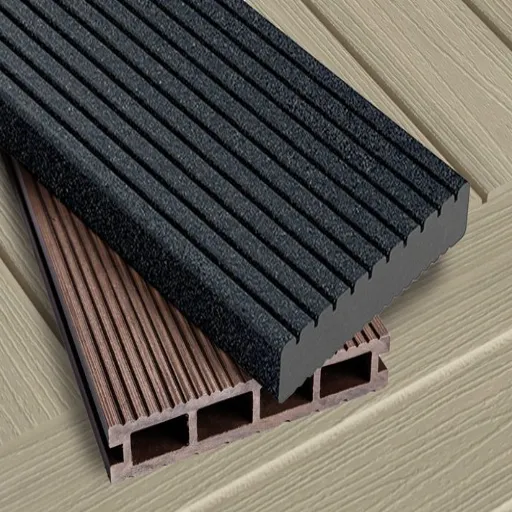
WPC decking boards are made from a blend of wood fibers and plastic, but the internal structure can be very different.
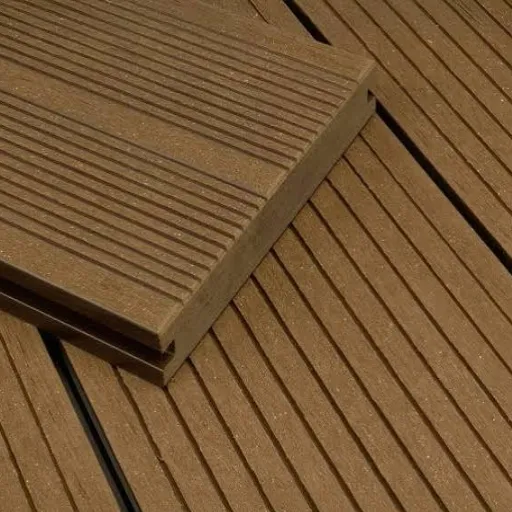
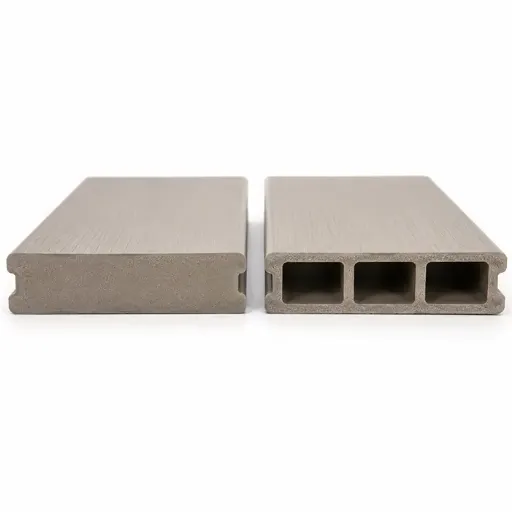
Solid WPC decking has a dense, uniform core throughout the board. There are no air chambers or cavities. It feels more like natural timber underfoot and behaves more like hardwood when cut, screwed, or loaded.
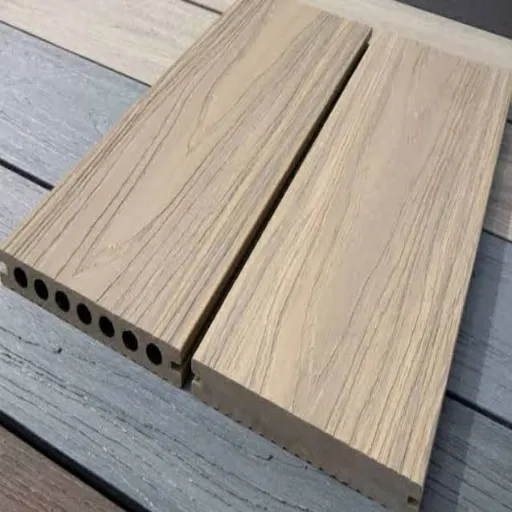
Hollow WPC decking has internal chambers or cavities separated by ribs. These chambers reduce material use and weight. The cross-section can have round, square, or multi-hole designs depending on the manufacturer and die.
The visible surface of both profiles can look the same once installed. Both can be embossed with wood grain, brushed, or finished with a cap layer. The difference is inside the board, and that internal structure affects strength, weight, water absorption, acoustics, and price.
For a broader introduction to WPC decking types and terminology, see our guide to WPC decking.
Structural Performance: Load, Strength, and Span
Flexural Strength and Point Load
Solid WPC boards typically achieve a flexural strength of 36–48 MPa, while hollow boards range from 22–30 MPa. The difference matters when the deck supports concentrated weight.
- Solid WPC point load capacity: approximately 400–600 kg
- Hollow WPC point load capacity: approximately 150–200 kg
This means solid boards are the safer choice for hot tubs, heavy planters, commercial furniture, and high-traffic areas. Hollow boards work well for residential patios, balconies, and walkways with light furniture.
Hosung WPC covers the structural and durability differences between the two profiles in its hollow or solid composite decking guide.
Joist Spacing Requirements
Joist spacing also differs between profiles.
- Solid WPC: typically 350–400 mm between joists
- Hollow WPC: typically 300–350 mm between joists
Because hollow boards deflect more over long spans, they often need closer support. That extra framing can reduce some of the material cost savings from choosing hollow.
Screw Holding and Fastener Compatibility
Solid boards hold screws and hidden fasteners more reliably. The dense material grips fasteners and resists stripping. Hollow boards can strip more easily if screws are driven into the chambers rather than the ribs, so installers must be precise about fastener placement. Many hollow boards are designed for hidden clip systems to avoid this issue.
Weight, Handling, and Shipping
Board Weight
Weight is the most visible difference between the two profiles.
- Solid WPC: ~4.0–5.0 kg per linear meter
- Hollow WPC: ~2.0–2.5 kg per linear meter
A contractor installing a 100 m² deck will notice the difference immediately. Solid boards require more labor and may need two workers per board for long lengths. Hollow boards are easier to carry, faster to position, and less tiring for installers.
Container Load and Freight Cost
For buyers importing from China, weight affects shipping economics.
- Hollow WPC container load: ~2,200–2,500 m² per 40-ft container
- Solid WPC container load: ~1,100–1,300 m² per 40-ft container
Because hollow boards use less material, you can ship roughly twice as much deck area in the same container. Freight cost per square meter can be 40–50% lower for hollow profiles. This is why hollow WPC is popular for large residential projects where freight is a significant part of the landed cost.
Senlai WPC analyzes how the weight difference affects shipping economics in its hollow vs solid composite decking weight comparison.
However, freight savings should not override structural requirements. A developer in Spain once shipped hollow boards for a commercial boardwalk because the container math looked better. The boards performed adequately for two years, but heavy maintenance vehicles caused sagging and clip failure. Replacing the high-traffic sections with solid boards erased the savings.
Water Absorption, Moisture, and Climate Behavior
Water Absorption Rates
Water resistance depends heavily on cap quality and profile design.
- Premium solid WPC: less than 0.8% water absorption after 24 hours
- Premium hollow WPC: less than 1.5% water absorption
- Budget hollow WPC: 2.0–3.5% water absorption
Solid boards have no internal voids, so moisture exposure is limited to the surface and cut edges. Hollow boards have internal cavities that can trap condensation if the ends are not sealed.
Mold and Odor Risks in Hollow Boards
Unsealed hollow boards can become a problem in wet or shaded environments. Water, organic debris, or even pet urine can enter the cavities through cut ends. Once inside, these substances are difficult to clean and can cause odors or mold growth that surface cleaning cannot reach.
Quality manufacturers supply end caps, U-channels, or recommend edge sealing during installation. If your supplier does not address this, it is a warning sign.
Thermal Expansion
Thermal expansion is also profile-dependent.
- Solid WPC: ~12–15 mm expansion over a 5.8 m board
- Hollow WPC: ~18–22 mm expansion over a 5.8 m board
Hollow boards expand and contract more with temperature changes, so they need larger expansion gaps. In climates with wide temperature swings, poor gap planning can lead to buckling or joint stress.
Climate Recommendations
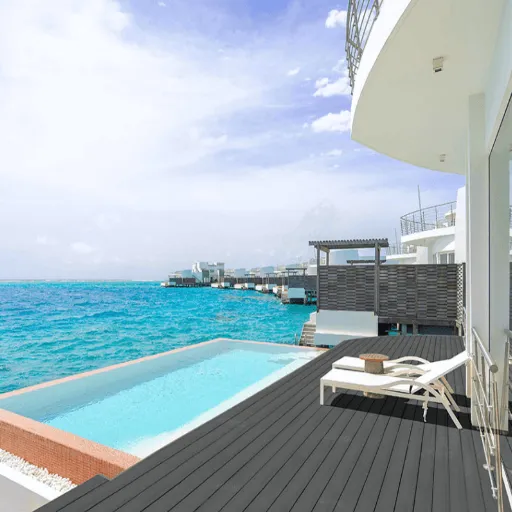
- Choose solid WPC for: wet climates, coastal areas, poolside decks, freeze-thaw regions, and commercial traffic
- Choose hollow WPC for: dry or mild climates, covered decks, balconies, rooftop terraces, and residential patios
For more on climate-related care, see our WPC decking maintenance guide.
Cost Comparison
FOB China Price Estimates
Profile is one of the biggest drivers of board price.
- Co-extruded hollow WPC: ~$12–18/m²
- Co-extruded solid WPC: ~$18–28/m²
Hollow boards are typically 30–40% cheaper at the factory level. The savings come from lower material use and faster extrusion.
Total Cost Considerations
Board price is only part of the project cost. When comparing profiles, also consider:
- Freight: hollow ships have roughly twice as much area per container
- Labor: solid is heavier and slower to install
- Framing: hollow may need closer joist spacing
- Accessories: hollow often requires end caps, U-channels, or trim
- Replacement risk: underspecified hollow boards in heavy-use areas may need early replacement
A distributor in Germany compared two quotes for a hotel terrace. The hollow option saved €4,000 on product and freight. But the project also needed extra joists, end caps, and a stronger substructure for the hot tub area. The total installed cost difference was less than €1,000, and the solid option carried lower warranty risk.
Installation Differences
Handling and Cutting
Solid boards cut cleanly with standard woodworking tools. Hollow boards require care to avoid crushing the chambers and should be cut with a fine-tooth blade to produce clean edges that accept end caps properly.
Onsun WPC’s 2026 comparison also addresses fasteners, end caps, and heat behavior for solid vs hollow composite decking.
Joist Spacing and Fasteners
As noted earlier, hollow boards usually need closer joist spacing. Hidden fastener systems are common with hollow boards because they distribute load and reduce the risk of screw pull-through.
End Caps and Edge Sealing
This is the most important installation detail for hollow WPC. Cut ends expose the internal cavities. Without end caps or sealing, water and debris enter the board. Most quality hollow decking systems include color-matched end caps or recommend a compatible sealant. If your supplier cannot provide these, choose a different profile or supplier.
Expansion Gaps
Hollow boards need slightly larger expansion gaps due to greater thermal movement. Always follow the manufacturer’s recommendations for gap size at board ends and along walls.
How to Verify Quality When Sourcing
Not all solid or hollow boards are created equal. When sourcing from factories in China, ask specific questions before approving samples.
Check Wall Thickness and Rib Design
For hollow boards, wall thickness and rib count determine strength. Thin walls or sparse ribs reduce load capacity and increase damage risk during installation. Request a cross-section photo or sample and compare it with competitor profiles.
Request Cross-Section Samples
A single glossy photo hides differences. Ask for a cut sample showing the internal structure, cap layer thickness, and material density.
Verify Water Absorption Test Reports
Ask for a 24-hour water absorption test report. Premium hollow boards should be below 1.5%. Premium solid boards should be below 0.8%.
Inspect End-Cap and Trim Compatibility
Confirm that end caps, U-channels, and corner trim are available in matching colors. A hollow board without proper edge treatment is a liability in wet climates.
Ask About Cavity Treatment
Some advanced hollow boards include sealed cavities or drainage channels that reduce moisture risk. Ask your supplier whether the chambers are open, partially sealed, or treated for moisture resistance.
Which Should You Choose? Decision Framework
Use the table below to match the profile to your project.
| Factor | Choose Solid WPC | Choose Hollow WPC |
|---|---|---|
| Heavy point loads | ✓ | |
| High foot traffic | ✓ | |
| Wet or coastal climate | ✓ | |
| Freeze-thaw exposure | ✓ | |
| Poolside or marina use | ✓ | |
| Premium hardwood feel | ✓ | |
| Lower upfront cost | ✓ | |
| Reduced freight cost | ✓ | |
| Elevated or rooftop deck | ✓ | |
| DIY or fast installation | ✓ | |
| Dry or covered environment | ✓ |
The best choice is rarely about which profile is “better.” It is about matching the board to the environment and use case. Solid boards cost more but reduce risk in demanding applications. Hollow boards save money and weight when the application is appropriate.
For more guidance on evaluating WPC decking overall, see our article on what is WPC decking.
FAQ
Is solid WPC decking stronger than hollow WPC decking?
Yes. Solid boards typically achieve 36–48 MPa flexural strength compared with 22–30 MPa for hollow boards. They also handle heavier point loads and wider joist spacing.
Is hollow WPC decking cheaper to ship?
Yes. Hollow boards weigh roughly half as much as solid boards, so you can ship about twice as much deck area in a 40-ft container. Freight cost per square meter is typically 40–50% lower.
Can hollow WPC decking support a hot tub?
Generally no. A filled hot tub can exceed 1,000 kg. Hollow boards are rated for lighter point loads and are not suitable for this kind of concentrated weight without additional structural support.
Do hollow WPC boards need end caps?
Yes. Cut ends expose internal cavities that can trap water, debris, and odors. Quality hollow decking systems include matching end caps or recommend edge sealing.
Which is better for balconies or rooftop decks?
Hollow WPC is usually better for balconies and rooftops because the lower dead load reduces stress on the building structure. Confirm that the local load limits and joist spacing are suitable for the profile you choose.
Can you use hollow WPC decking by a pool?
It depends. Hollow boards can work around pools if they are capped, properly sealed, and not exposed to heavy furniture or equipment. For commercial pool decks or wet climates, solid WPC is the safer choice.
Does hollow WPC decking sound hollow underfoot?
Some hollow boards produce a slightly different acoustic response, especially when installed over a rigid substructure. Solid boards tend to feel and sound more like natural timber.
Conclusion
Solid and hollow WPC decking both have a place in the market, but they serve different needs. Solid boards offer strength, durability, and a premium feel for demanding applications. Hollow boards offer cost and weight savings where the load and climate allow.
The wrong choice usually comes from comparing the price per square meter in isolation. A complete comparison includes freight, labor, framing, accessories, climate exposure, and expected traffic. When these factors are added together, the cheaper board is not always the cheaper project.
If you are sourcing WPC decking from China, start by defining the load and climate requirements for each area of the deck. Then request cross-section samples, water absorption reports, and confirmation that edge sealing or end caps are available. Our team in Linyi can supply both solid and hollow profiles and help you match the right board to each project.
Need help choosing between solid and hollow WPC decking? Contact us to request samples, review test reports, or get a competitive FOB China quote based on your project specifications.
Categories:
Blog
Related Articles