Waterproof WPC Wall Panels: The Complete Guide for Wet-Area Projects (2026)
Waterproof WPC wall panels constitute water-resistant cladding materials that manufacturers produce through the combination of wood fibers with HDPE and PVC resin to create composite materials that exhibit water absorption levels between 0.3% and 3% according to different material grades. The high-quality co-extruded WPC material functions effectively throughout bathrooms, kitchens, and basements, whereas its waterproof ability falls short of PVC, which maintains full protection against direct shower spray.
The Dubai hotel group required standard WPC panels for bathroom vanities in their 200-room hotel, which they built in 2023. The panels looked flawless on day one. After 18 months, nearly every guest bathroom displayed edge swelling. The unsealed cut edges allowed humidity to enter. The replacement cost, including guest room downtime and labor, exceeded the original material budget by 240%. The project manager told us later: “We saved 15% by choosing the standard grade. We lost 340% by not choosing the waterproof grade.”
You’re probably evaluating waterproof WPC wall panels for a bathroom renovation, a hotel development, or a commercial kitchen project. You require an unambiguous response that explains the waterproof capabilities of your product and shows PVC and SPC performance differences, and gives you guidance for selecting the appropriate grade. This guide delivers exactly that, backed by factory-level technical data and real project experience.
If you are new to WPC materials altogether, our complete buyer’s guide to WPC wall panels covers all panel types, specifications, and applications in depth.
Key Takeaways
- Waterproof WPC wall panels display water absorption rates between 0.3% and 1.5% based on their grade which shows ten times better performance than natural wood but displays partial water resistance.
- The co-extruded and nano-treated grades provide optimal protection for bathrooms, kitchens, and basements because their protective cap layer seals the wood fibers.
- WPC outperforms PVC on aesthetic appeal, sound absorption, and environmental friendliness, while PVC provides full water resistance and lower initial expenses.
- The installation process in wet areas needs the use of moisture barriers together with correct sealant application at panel joints and ventilation-friendly framework installation methods for panel systems.
- The factory-direct pricing structure for waterproof WPC grades starts at $15 and reaches $45 per square meter while co-extruded panels sell at 20% to 40% higher prices than standard grades.
Are WPC Wall Panels Waterproof?

The waterproof WPC wall panels show excellent water resistance but do not achieve complete waterproof protection. The distinction matters for your project’s success.
WPC stands for Wood-Plastic Composite. The material combines wood fibers with thermoplastic resin, which typically uses HDPE and PVC as its main components. The plastic matrix encapsulates the wood fibers and creates a moisture barrier. The wood content in the material enables water absorption when water penetrates through the top layer and reaches the cut edges or poorly sealed joints.
The degree of water resistance depends entirely on the grade. Here is what factory testing actually shows:
| WPC Grade | 24-Hour Water Absorption | Core Type | Waterproof Performance |
|---|---|---|---|
| Standard WPC | 1.5% – 3.0% | Uncapped wood-plastic blend | Water-resistant; not suitable for wet areas without extra protection |
| High-Density WPC | 0.5% – 1.5% | Denser core with reduced porosity | Highly water-resistant; suitable for humid interiors |
| Co-Extruded (Capped) WPC | <0.5% | Core wrapped in a polymer cap layer | Near-waterproof; ideal for bathrooms, kitchens, and basements |
| Nano-Treated WPC | <0.3% | Core with nano-coating surface treatment | Maximum water resistance; approaches PVC-level performance |
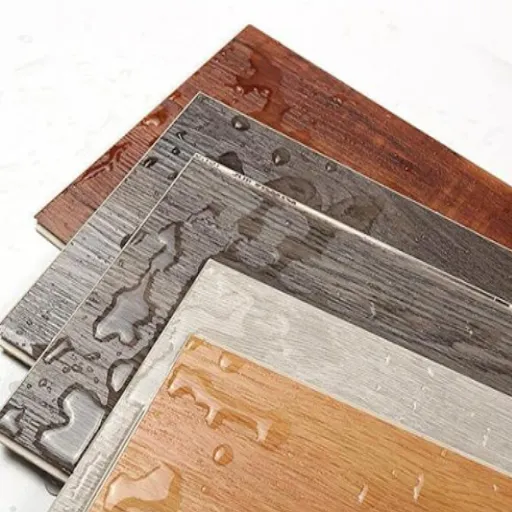
The process of comparing solid wood shows that it needs 24 hours to reach 10 to 15 percent water absorption of its total weight. Plywood shows the worst performance because it reaches water absorption levels between 15 percent and 30 percent. The quality of waterproof WPC wall panels provides 10 to 50 times better moisture resistance than natural wood, which depends on the grade of the product.
Testing standards possess important value. ISO 17064 and ASTM D570 serve as testing standards that reputable manufacturers use to measure water absorption. A test report should be requested before you place your order. A supplier who cannot produce independent lab documentation for their waterproof claims is selling marketing, not material science.
Waterproof WPC Grades: What Manufacturers Do Not Always Explain
The label “waterproof WPC” should only be applied to certain panels that meet the requirements. Understanding the four manufacturing tiers will save you from costly specification errors.
Standard WPC Panels
Standard WPC panels use a single-extrusion process. The manufacturing process creates a uniform layer through the process of mixing wood fiber and plastic, which undergoes heating and extrusion. The surface has no protective cap. Water absorption typically falls between 1.5% and 3.0%. These panels work well in dry interior spaces like living rooms and bedrooms. The product functions effectively in bathrooms and kitchens only when users install an additional waterproof barrier that sits underneath the product.
High-Density WPC Panels
A high-density WPC increases the plastic-to-wood ratio and is under greater core compression at extrusion. This process results in a greater density within boards, much higher than standard WPC and lesser porosity, thus resulting in a moisture absorption capacity of 0.5% up to around 1.5%. The denser atmosphere provides a high humidity level and offers slightly better protection against moisture, as seen in the lack of a surface barrier. This product may be the right one for use as a mid-range solution for powder rooms, laundry areas, and commercial spaces with moderate humidity.
Co-Extruded (Capped) WPC Panels
Co-extrusion is the breakthrough technology for wet-area WPC. The manufacturing process extrudes a protective polymer cap layer simultaneously with the WPC core. The two layers bond at a molecular level. The cap seals the wood fibers completely, reducing water absorption to below 0.5%.
At Linyi Yuheng, our co-extruded waterproof WPC wall panels use a dual-layer system. The core contains 55% to 65% wood fiber with HDPE resin. The cap is a pure polymer shell with UV stabilizers and colorants. This construction delivers the natural wood aesthetic of WPC with moisture resistance that rivals many PVC products.
Want to evaluate co-extruded waterproof panels for your project? Request a sample kit with our standard, high-density, and co-extruded grades side by side. Submerge them for 48 hours and see the difference yourself.
Nano-Treated WPC Panels
The newest innovation in waterproof WPC uses nano-silica or nano-polymer surface treatments. These microscopic particles fill the surface pores and create a hydrophobic “lotus leaf” effect. Absorption rates drop below 0.3%. Nano-treated WPC is still emerging in the market and commands a 30% to 50% price premium over standard grades. For most commercial bathroom and kitchen applications, co-extruded WPC delivers the optimal balance of performance and cost.
WPC vs. PVC vs. SPC: Waterproof Performance Compared
Buyers evaluating waterproof wall panels for wet areas face a three-way decision. Each material has distinct strengths.
| Feature | WPC (Co-Extruded) | PVC | SPC |
|---|---|---|---|
| Water Absorption | <0.5% | 0% | 0% |
| Core Material | Wood fiber + HDPE | Vinyl resin | Limestone + PVC |
| Waterproof Rating | Near-waterproof | 100% waterproof | 100% waterproof |
| Natural Wood Look | Excellent | Moderate | Low |
| Acoustic Dampening | Excellent | Moderate | Poor |
| Thermal Insulation | Good | Moderate | Poor |
| Impact Resistance | Moderate | Moderate | Excellent |
| Weight | Moderate | Light | Heavy |
| Lifespan (Wet Areas) | 15-25 years | 5-10 years | 15-30 years |
| Material Cost (per m2) | 15−45 | 5−15 | 15−30 |
| Best Application | Bathrooms (dry zones), kitchens, accent walls | Budget bathrooms, temporary installations | Shower enclosures, commercial wet areas |
WPC exists as the superior choice because it offers better visual beauty, thermal properties, and soundproofing capabilities. PVC provides complete waterproof protection at the most affordable initial price. The SPC system delivers superior protection against damage while maintaining complete waterproof capability throughout extreme wet conditions.
Co-extruded WPC serves as the best material choice for hotel bathroom vanity walling and kitchen backsplash applications. The material provides guests and homeowners with expected visual warmth while maintaining humidity resistance and preventing the sterile look of plastic materials. SPC serves as a better material choice for shower enclosures that experience continuous direct water contact from spray.
Best Applications for Waterproof WPC Wall Panels
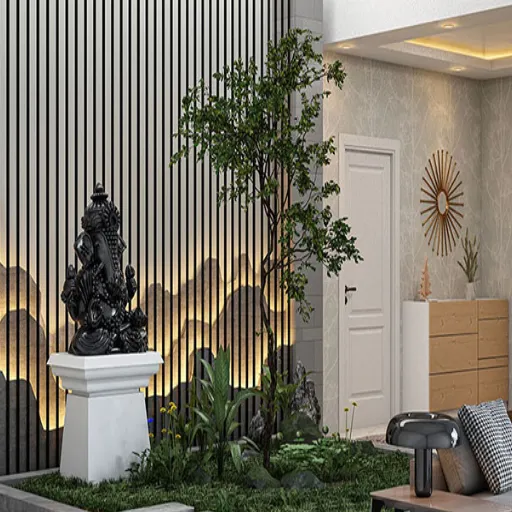
The waterproof WPC wall panels perform best in designated wet-area waterproofing applications. The project requires knowledge of their optimal operational areas and their restricted zones to prevent any potential project failures.
Bathroom Dry Zones (Vanity Walls and Powder Rooms)
The bathroom vanity walls and powder room wainscoting function as the perfect application of co-extruded WPC technology. These areas experience humidity and occasional splashes but not direct water spray. The co-extruded panel system with sealed joints provides a durable solution that lasts over 20 years when properly installed. The wood-grain aesthetic elevates the space far beyond what PVC can offer.
Kitchen Backsplashes and Humid Cooking Areas
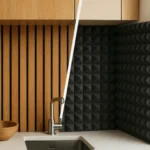
Kitchen backsplashes behind sinks and cooking areas face steam, grease, and splashes. The waterproof WPC wall panels successfully protect against all three elements. The non-porous cap layer wipes clean with standard kitchen cleaner. The installation process for WPC panels does not require grout lines because they install without any need for that material. The material will not absorb steam and develop mold behind the surface, as painted drywall does.
A Southeast Asia apartment developer recently switched from ceramic tile to co-extruded WPC backsplashes across 500 units. The installation process became 60% faster because workers installed panels directly onto prepared drywall without needing mortar or grout material or any drying time. The material waste reduction reached 40% because workers reused cut pieces. After 12 months, tenant satisfaction scores for kitchen appearance improved by 18%.
Basement Walls and Below-Grade Spaces
Basements are moisture battlegrounds. Groundwater vapor seeps through concrete. Condensation forms on cool walls. Traditional drywall and MDF fail within months. Waterproof WPC wall panels installed over a proper moisture barrier create a durable, mold-resistant wall finish.
A UK basement conversion company used high-density WPC panels for wall cladding in 12 London properties. Previous MDF installations had failed within 18 months, swelling and growing mold. After three years, the WPC installations showed zero moisture-related issues. The company now specifies co-extruded WPC as standard for all basement work.
Hotel and Commercial Washrooms
Hotels, offices, and retail spaces need their commercial washrooms to use materials that combine strong durability with visually pleasing aesthetics and simple cleaning capabilities. The three requirements are fully met by waterproof WPC wall panels. The surface creates a seamless design that enables rapid sanitization. The impact-resistant handles protect against vehicle collisions that occur from luggage and cleaning carts. The wood-grain finish creates a premium impression that plain PVC cannot match.
Laundry Rooms and Utility Spaces
Laundry rooms create high humidity conditions because dryers and washing machines operate simultaneously. Waterproof WPC panels on walls protect against moisture damage while providing a cleanable surface. The acoustic dampening properties also help reduce machine noise.
Exterior Facades in Rainy and Coastal Climates
For exterior applications, waterproof WPC cladding with co-extruded caps and UV stabilizers performs well in rainy and coastal environments. The moisture resistance prevents rot, while the UV protection prevents fading. For detailed exterior specifications, see our exterior WPC wall cladding guide.
Where NOT to Use WPC
Be honest about limitations. Do not specify standard WPC inside shower enclosures where water sprays directly for extended periods. Do not use uncapped WPC in steam rooms or saunas. Do not install WPC below the waterline in pools or fountains. For these applications, SPC or tile remains the correct choice.
Installing WPC Wall Panels in Wet Areas: Best Practices
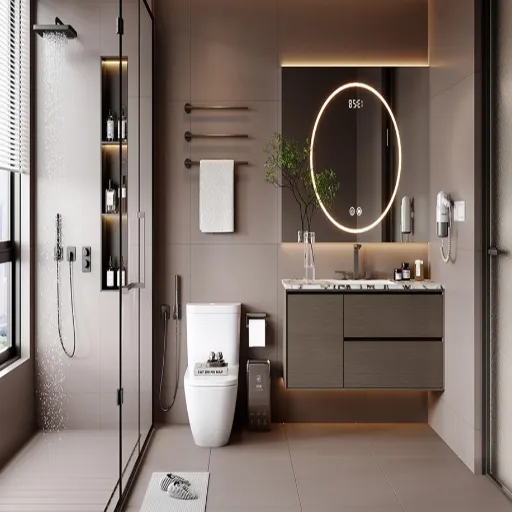
Inaccurate installation will lead to failure of waterproof WPC wall panels, even when they receive proper installation. The process of installing wet areas requires workers to dedicate their efforts towards completing four essential installation steps.
Substrate Preparation and Moisture Testing
The wall substrate needs moisture testing before installation. Concrete walls should read below 4% moisture content on a calcium chloride test or digital moisture meter. Wood substrates should read below 12%. The paneling process requires moisture levels to stay below these specific thresholds. Moisture trapped behind WPC materials creates an environment that allows mold to grow.
Waterproofing Membranes and Vapor Barriers
Bathrooms, kitchens, and basements require a waterproof membrane or vapor barrier installation between the substrate and the panels. The three applicable systems include liquid-applied membranes, self-adhesive sheet membranes, and polyethylene sheeting. The secondary defense mechanism prevents water from reaching structural walls through panel joint water penetration.
Adhesive vs. Framework Methods
Wet-area WPC applications use two main methods for their installation process.
The adhesive method applies construction adhesive directly to the back of each panel and presses it onto the prepared wall. The result creates a smooth surface that appears without any visible imperfections. The system makes it impossible for users to access the area behind the panel. The situation creates a risk because moisture will become trapped in the space that exists between the adhesive and the surface.
The framework method installs aluminum or treated timber battens on the wall first, creating a ventilated air gap. The panels connect to the battens through clips or screws. The air gap provides essential airflow through the panels, which helps to control moisture in regions with high humidity. For wet-area applications, the framework method is strongly preferred.
Sealant Systems for Panel Joints and Edges
The least protected locations, which allow for the infiltration of water, occur at joints of panels and cut edges of the panels. To be site-applied in all vertical and horizontal joints, it should be a waterproof silicone sealant. Seal the perimeter where panels meet the floors, ceilings, and adjacent walls. The use of a color-matching sealant provides aesthetic uniformity on the whole project.
How Much Do Waterproof WPC Wall Panels Cost?
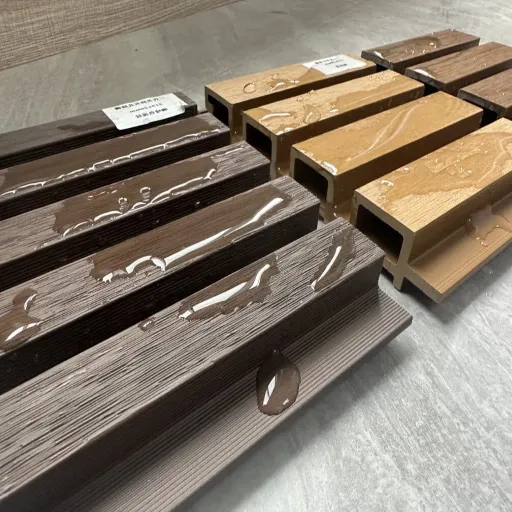
Understanding the cost structure helps you budget accurately and avoid surprise expenses.
Price Tiers by Waterproof Grade
| Grade | Factory-Direct Price (per m2) | Retail Price (per m2) | Best For |
|---|---|---|---|
| Standard WPC | 8−12 | 12−20 | Dry interiors only |
| High-Density WPC | 12−18 | 18−28 | Humid interiors, mild wet areas |
| Co-Extruded WPC | 15−30 | 25−45 | Bathrooms, kitchens, basements |
| Nano-Treated WPC | 25−45 | 40−65 | Premium wet-area projects |
Waterproof Grade Premium vs. Standard WPC
The factory price of co-extruded waterproof WPC wall panels exceeds standard WPC by a cost range that extends from 20% to 40%. The premium price you pay provides you with a polymer cap layer, which results in reduced water absorption, improved UV protection, and an extended warranty period. The premium typically proves its value during commercial bathroom projects. The cost of replacing failed standard panels far exceeds the upfront savings.
Commercial Project ROI for Wet Areas
Consider a 100-room hotel renovation with bathroom vanity walls of 8 square meters per room. Standard WPC at $10 per m2 costs $8,000 for materials. Co-extruded waterproof WPC at $22 per m2 costs $17,600. The premium is $9,600.
The cost of replacing standard panels in year three includes expenses for new materials and removal labor, installation labor, and lost room revenue. The replacement process needs 2.5 to 3 times the budgeted amount for initial materials. The waterproof grade premium of $9,600 functions as insurance when you analyze it through a 15-year asset lifecycle.
Maintenance and Longevity in Wet Environments
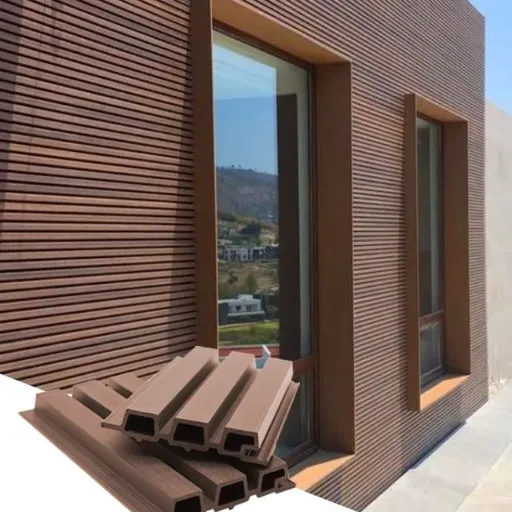
Waterproof WPC wall panels need only small upkeep work because their basic maintenance procedure will boost their operational time.
Cleaning Protocols for Humid Areas
The regularity of panels demands a wet, damp cotton microfiber towel together with some mild detergent to clean them weekly. The cap layer is not to be exposed to any abrasive cleaners or scrubbing pads, which can produce scratches. Commercial bathrooms where employees use the most common sanitizing solutions do not create any skin problems with co-extruded WPC material. Water stains can develop if not washed with clear water and then dried by a soft cloth.
Mold Prevention and Inspection
The inspection process requires evaluation of panel joints and perimeter sealant every six months. The inspection process needs to identify all sealant defects through crack and gap, and discoloration detection. The damaged area of the sealant needs immediate reapplication of sealant. The framework method used to install panels requires annual checks of the space behind panels. All ventilation gaps need to stay free from dust and other obstructing materials.
Expected Lifespan in Wet vs. Dry Conditions
The dry interior environments of co-extruded waterproof WPC wall panels provide a lifespan between 20 and 30 years. The proper installation and maintenance practices will result in a 15 to 25-year lifespan for humid and wet-area applications. Standard WPC in wet areas may show degradation within 5 to 10 years.
Warranty Considerations for Waterproof Grades
The best manufacturers provide co-extruded WPC products with 10 to 25-year warranties, which depend on how customers use their products. The warranty needs to confirm that all wet-area installations receive coverage through the agreement. Certain warranties limit coverage to specific grade products when customers want to use bathrooms or exterior spaces. The detailed product information needs to be read before making a purchase.
Choosing a Waterproof WPC Supplier
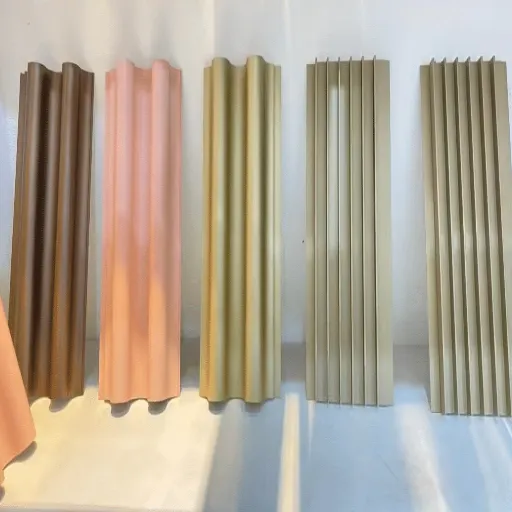
The supplier matters as much as the material. A cheap panel from an unreliable factory will fail regardless of its claimed specifications.
Factory vs. Trading Company for Waterproof Grades
Trading companies add 15% to 30% markup to factory prices. The company staff lacks knowledge about the technical distinctions between standard and co-extruded WPC. The waterproof grades require you to select a supplier who can provide details about cap-layer composition and testing methods, and installation procedures. Factory-direct relationships provide you with access to engineers who created the product design.
Certification Verification
The requirement demands third-party certifications instead of allowing factories to make self-declarations. The requirements need you to search for two specific items, which include:
- CE marking for European projects
- SGS test reports for fire ratings and water absorption
- ISO 9001 for quality management systems
- ISO 14001 for environmental management
- ASTM D570 or ISO 17064 for water absorption testing
The request needs you to obtain the actual test report document instead of a marketing summary. The report should reference the specific product batch and testing laboratory.
Sample Testing: How to Verify Waterproof Claims
Before placing a bulk order, conduct your own simple waterproof test. Cut a 10cm by 10cm sample from the panel. The object requires exact measurements. The object needs to be submerged in water for a period of one day. The object needs to be taken out and dried through patting before weighing it again. The weight increase needs to be calculated in percentage terms.
A legitimate co-extruded waterproof WPC panel should not exceed 0.5% weight increase during testing. The standard WPC material displays a weight increase between 1.5% and 3.0%. The supplier has falsely stated their panels as co-extruded because the test results show 2% absorption, which means you are receiving inferior products from what you purchased.
MOQ and Lead Time Considerations
The minimum quantities for waterproof WPC products from factories typically start at 500-1000 ㎡, and this is even for custom-colored products as well as those with custom designs. In the case of standard-colored products, 200-300 ㎡ have to be taken for each order. Lead time for standard products is between 15 and 30 days, and between 30 and 45 days generally for custom formulations. Your procurement should be planned considering the timing of the material.
Frequently Asked Questions
Are WPC wall panels 100% waterproof?
Definitely not. Water-resistant WPC wall panels could be produced, but these are not 100% waterproof. Co-extruded grades can absorb less than 0.5% of water, which is perfect for bathrooms and kitchens, for direct shower spray or submerged applications. SPC or tile are the safer options.
Can WPC wall panels be used in a shower?
WPC panels for vanity walls and powder rooms, inside a shower enclosure directly receiving sprays of water, will have SPC wall planking or tile. WPC could be used in a shower, its burying surfaces, so that any built-in nooks and crannies would be nano-treated or co-extruded grade, with all joints thoroughly sealed with waterproof silicone.
How do you install waterproof WPC wall panels?
The best way for wet areas is the structure method. Fix the moisture-resistant battens on the wall, with a vapor barrier attached, and then install the boards onto the battens with clips or screws. You must seal all joints and other sharp-angled areas with waterproof silicone.
Can you install WPC panels over existing tiles?
Yes, as long as the tiles are laid on as well as not leveled at the surface. Simply prime the tile surface very well, only if the adhesive manufacturer recommends doing it, then bring the panels in through the adhesive or frame method. The existing grout lines shouldn’t draw ridges of telegraphing through the panels.
Do WPC wall panels mold after getting wet?
A WPC wall panel that is waterproof exhibited a quality that resisted mold growth because the hydrophobic plastic matrix actually absorbed the water. Still, any possible growth of mold may be considered here when models are dry or wet. Any water that accumulates behind the panels is permissible for the mold to grow. Such issues can be prevented by the frame installation method along with an air gap.
How long do waterproof WPC wall panels last?
WPC flooring panels composed of co-extruded water-resistant material are suitable for use in wet areas and can last for a maximum of five to ten years, owing to grade quality, mode of installation, and maintenance. Dry interior applications can have a longer service time, that is, 20 to 30 years.
Do WPC panels fade over time?
Normal WPC can fade away when exposed to UV rays. The co-extrusion with the UV stabilizers in the outer layer had highly improved resistance to fading against the run-of-the-mill panels. Therefore, whenever you need co-extrusion for exterior or sunlight-bathed bathroom applications, always go for this UV-rated co-extruded panel.
Are WPC wall panels better than PVC for waterproofing?
PVC is 100 percent water-resistant, while WPC is just water-resistant. PVC, in terms of being absolutely waterproof, is the clear winner. WPC wins, but not totally convincingly, in aesthetics, acoustic performance, sustainability, and screw-holding strength. For most bathroom and kitchen applications, the best compromise will be delivered by a co-extruded WPC.
How does WPC waterproofing compare to ceramic tiles?
While tiles are nearly impervious themselves, the weak links that become the first ones to crack and leak are the grout lines. A WPC panel gives a seamless surface: no grout. Sealed joints of co-extruded WPC are almost as waterproof, and it is easy to install and maintain.
Conclusion
Waterproof WPC wall panels occupy a valuable middle ground in wet-area construction. They deliver the natural warmth and acoustic benefits of wood with moisture resistance that approaches synthetic alternatives. The key to success is choosing the right grade for your environment, installing with proper moisture management, and sourcing from a manufacturer who backs their claims with test data.
For bathrooms, kitchens, and basements, co-extruded WPC with water absorption below 0.5% offers the best balance of performance, aesthetics, and value. Standard WPC belongs in dry interiors. SPC belongs inside shower enclosures. Nano-treated WPC belongs in premium projects where budget is secondary to maximum performance.
For a complete overview of all WPC panel types, technical specifications, and sourcing strategies, see our WPC wall panels buyer’s guide.
At Linyi Yuheng International Trading Co., Ltd., we manufacture co-extruded waterproof WPC panels for export to over 40 countries. Our production lines include inline quality testing for water absorption, density, and dimensional stability. We offer OEM customization for color, profile, and cap-layer formulation.
Ready to specify waterproof WPC for your next project? Contact our team to request sample kits, technical data sheets, and a factory-direct bulk quotation. We’ll help you choose the right grade, verify specifications, and plan your delivery timeline.
Categories:
Blog
Related Articles