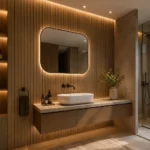
WPC vs Solid Wood Wall Panels: 2026 Comparison & Buyer’s Guide
In harsh weather conditions or high-traffic areas where there might be exposure to water, WPC wall panels could be more suitable than solid wood, because high moisture content usually ruins solid wood. Solid wood remains a better choice for relatively drier, luxury space that gives authenticity to the natural material. The best is all about the type of project, climate, budget, and expectation of maintenance.
The thing is, every manufacturer’s blog will advertise their brand in such a way as to say it is the best. WPC manufacturers will say solid wood is a thing of the past. A sawmill will tell you that nothing is comparable to real wood. If you are a contractor, architect, or bulk buyer wanting to have an objective decision, then it means that the high noise levels should be frustrating. Data are what you need, not marketing messages. In addition, many websites featuring assessments from online manufacturers will seldom provide unbiased information because the results weigh more heavily on one side from which such assessments are being made.
The sourcing of wall panels is an essential aspect in most projects globally. Having been purchasing the materials for over a decade, we have seen some materials that worked well, and others that are complete failures. We know when a WPC panel is worth it because real wood is definitely worth the premium. This article serves as a comparison between WPC and solid wood wall panels when it comes to durability, cost, maintenance, installation, and safety. That is what one needs to know as a guide when selecting one’s own suitably specific project.
Key Takeaways
- These WPC panels are good for 20-30 years with no maintenance and absorb less than 1% water, making them perfect for toilet, kitchen, and commercial installations.
- Solid wood panels have unmatched natural grain, superior acoustics, and reparability. Still, they require frequent sealing and do not adapt well to high-humidity environments
- Material cost outlays in the beginning are almost equal: $3-10 per square foot for WPC against SOLID wood from $5-15 per square foot, but WPC’s minimum maintenance can really add up to a good deal over the decade’s course.
- WPC production at scale, which brings a wide variety of only panels, is something large-scale wood will not be able to compare to-also refers to the 3D and fluted wall panel trend in 2025/2026.
- For material choice, it should always require a third-party certificate (CE, ISO, SGS, EN 13501-1) and production samples before procuring in bulk.
What Are WPC Wall Panels?
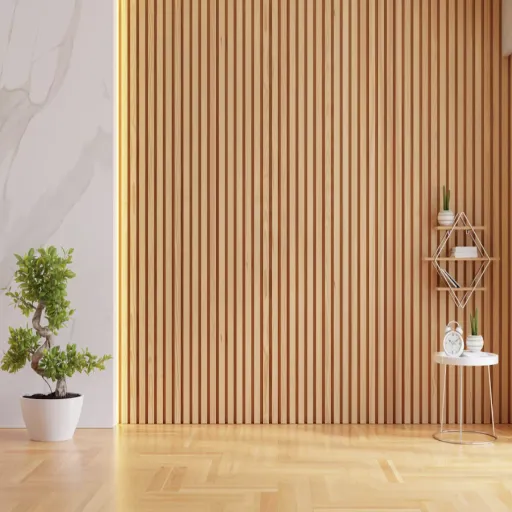
WPC stands for wood plastic composite. This material is engineered by adding wood fibers to thermoplastics like HDPE or PVC. It is a solid, homogenous panel that closely resembles the appearance but performs actions that natural timber cannot perform.
Composition and Manufacturing
A standard WPC is about 60% recycled wood flour and 30% to 40% plastic resin. These materials are blended with some additives, such as colorants, UV stabilizers, and bonding agents, by manufacturers. Thereafter, the mixture is melted and extruded into molds with consistent dimensions, textures, and grain patterns.
This manufacturing process also provides many inherent benefits to WPCs, as it encases the wood fibers with plastic means that to avoid absorbing moisture. The production of complex profiles like hollow cores, interlocking edges, or 3D textures on their surfaces is made possible thanks to a process of extrusion that can be used in varying densities during production, allowing light panels to be made that are easy to handle, and also dense jute to make a high impact on the board front.
Key Performance Characteristics
WPC panels absorb less than 1% of water by weight, even after prolonged exposure to humidity. They resist termites, fungal decay, and rot without chemical treatments. Quality WPC performs reliably in temperatures ranging from -20°C to 60°C without warping or cracking. Independent testing under ASTM D256 shows WPC panels withstand impacts up to 20 kJ/m², exceeding the performance of many standard wood panels. For a comprehensive overview of WPC technology, available profiles, and sourcing guidance, read our complete guide to WPC wall panels.
What Are Solid Wood Wall Panels?

The solid wood wall range consists of exactly that: wall panels made out of wood; filling internal spaces with that warmth, character, and acoustic attributes that are real wood. On the other hand, it still takes on that original vulnerability of organic material.
Wood Species and Grades
The primary species that are used for wall panels are: oak, walnut, teak, pine, and cedar. Each offers a different hardness level, pattern of grain, as well as natural resistance to moisture and insects. Oak and teak are durable and dimensionally stable. Pine is a cheaper material, though it needs more care. Walnut is recognized for giving an aesthetic of luxury to high-end residential and hospitality projects.
The classification of woods matters as much as the species itself. Select-grade wood has fewer knots and colors of a very even tone. Character-grade, on the other hand, has a bestial look upheld by knots and varying grain patterns. Grades affect price and look matters when eating on board, so buy the grade that fits the project best.
Natural Properties
Wood is hygroscopic, which means it can absorb and release air moisture, so this minor absorption-expansion and release-contraction occurs in the seasonal humidity fluctuations. In a dry climate, the gap can be more than during a wet season. In wet climates, it swells in thickness, warps up, and if air is not readily available, mold starts to grow inside.
These features are not downsides but are just as the nature of organic material. Ventilation processes and adequate provision of expansion gaps are practices that can be realized within skilled carpentry, as they adhere to when they seal the wall elevation. It will make the surface more acoustic and provide depth and warmth to the material, unlike many engineered substances.
WPC vs Solid Wood: Head-to-Head Comparison
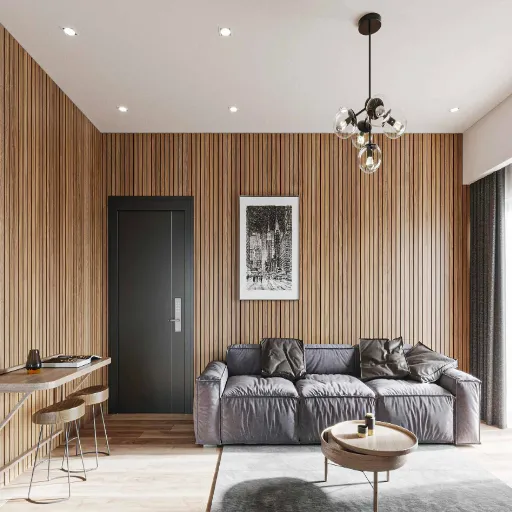
When we compare WPC vs. solid wood wall panels side by side, the differences become clear. If you are also evaluating PVC alternatives, see our WPC vs PVC wall panels guide for a full breakdown of composite options. Neither material is universally better. Each excels in specific conditions.
Durability and Lifespan
WPC boards offer a lifetime of 20-30 years in usual internal conditions. It does not allow the strands of fiber to deteriorate, consequently wiping out the hazard of fiber degradation that is posed by natural wood. Scratch, wear-and-tear, and dents are abuse types often resilient in WPC panels in areas of high commercial traffic.
Solid wood alone has only a 10 to 15-year life in normal conditions. A typical premium species is set to provide more than 50 years of life; however, the usual commercial or residential buildings will not receive this care. Most of the time in the real world, wood becomes spotty and shows wear in a decade.
Mini-Story: When the team at Horizon Hotels renovated their coastal property in Florida in 2023, they initially installed solid teak panels in the lobby. Within 18 months, salt air and humidity caused visible warping near the entrance. They replaced the affected sections with WPC panels. Three years later, those WPC sections still look new despite constant exposure to moisture and heavy guest traffic.
Moisture, Mold, and Termite Resistance
It really has a lead over the WPC. The non-porous structure of the composite does not allow moisture to gain entry into it, flushing molecules so they never swell, rot, or promote mold growth. There are no termites that can chew through the plastic matrix; thus, WPC panels, by their structure, are themselves so naturally termite-resistant and do not require chemical treatments.
In a damp climate, natural wood absorbs moisture by an average of 8% to 12% in weight. Moisture creates an ideal environment for fungi to grow; hence, it is also prone to termite infestation. It is thus necessary to apply sealants and have an inspection check for leaking through wood, similar to those stored in places where moisture also occurs inside basements, bathrooms, or kitchens. Even then, too much moisture over a long time will cause damage.
Maintenance Requirements
WPC needs almost no maintenance at all, as just wiping it with a damp cloth or mild soap will remove most marks. Paint to stain will never be required; the panels do not need any sealer, either. Such extremely detailed technical reviews often refer to it as another of the winning arguments for commercial environments choosing composite instead of natural wood.
Solid wood requires regular maintenance, usually by a regular dusting with wood cleaner and occasional re-oiling or refinishing to keep its luster. Only if the interiors are wet may they have to be resealed every year, a little dirty. Though maintenance costs can exceed or sometimes equal ten times the material cost over a period of 10 years.
Installation Complexity and Labor Costs
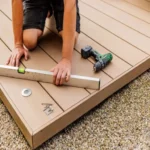
Installing WPC panels with system interlock could cost up to 4-6 hours for an average, skilled crew to be able to set them up fully inside a standard-size room. Added to this: there is a reduced waste of cut straight wood since the typical plank width is not greater than 6 inches, weathered. Lightweight panels that are hollow or core-based in design help with the setup and handling process.
Carpentry in solid wood calls for skill. You have to create on site measure, tone, and finish-cut the panel. In this case, it would take 8-10 hours in an average room. Obviously, it is also labor-intensive to handle the weight of the solid lumber, and the installation cost is usually up to 30-50% higher than that of WPC.
Fire Rating and Safety
Fire safety is important for commercial projects. EN 13501-1 B or C ratings can be achieved by quality WPC panels with the right fire-retardant additives, without forgetting that not all WPC panels have these additives. Always remember to ask for certification on fire justification before deciding to use WPC materials in hotels, offices, or public buildings.
Solid wood is inherently combustible, but its behavior can make fires predictable. Dense hardwoods such as oak and teak undergo charring more slowly, providing an invaluable evacuation period. Fire-suppressed solid design products can be strictly applied under building codes for commercial applications. However, this approach varies: solid wood has a well-documented fire behavior over decades under the different building standards, whereas different WPC fire ratings, depending on the manufacturer, are assumed.
Indoor Air Quality and VOC Emissions
WPC is produced under extremely controlled conditions and is a high-quality product, emitting nearly zero to some VOCs. In these engineered wood products, among many cover-up adhesives, solvents, and extrusion removals, WPCs from unregistered factories can contain cheap quality polymers that keep on volatilizing over time.
Pure wood hardly reports trace amounts of VOCs, but the coating is often thought to be caused by dyes, finishes, adhesives, varnishes, and stains once at installations due to the rise of stylized modeling from the net. Choosing low-VOC waterborne finishes is safer; this step reduces the risks involved with applying stains, varnishes, and adhesives to finishes. Therefore, the materials can both qualify well with respect to meeting the LEED requirement standards and WELL building standards for construction, but the documentation requirements are changed.
Environmental Impact
Recycled wood fibers and/or recycled plastics are used to constitute WPC since fewer virgin timbers are required and more plastic can be diverted from landfills. Technically, WPC is recyclable at the end of life, yet the recycling ground for composite materials appears quite underdeveloped in several regions.
Wood originates most often from those responsible resources, such as those of FSC and PEFC certification. Stored carbon throughout their life, which fits solid wood products at the end of life. It is “environmentally robust” depending on the single point: recycling contents and lowered deforestation dedication it toward the winner’s camp for WPC, whereas compostability and carbon sequestration will put that feather in the hat for certified solid wood.
2026 Cost Analysis: Price Per Sq Ft and Total Ownership
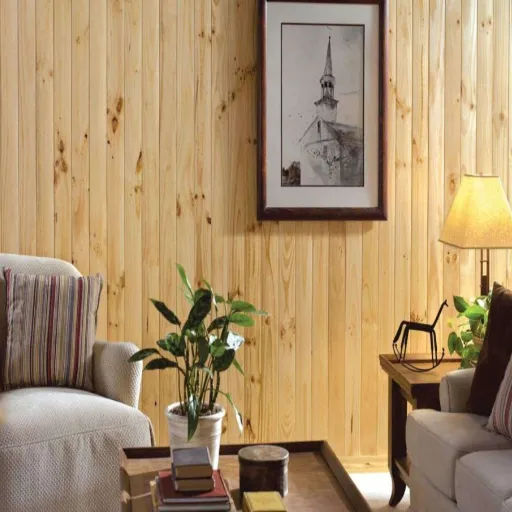
Purchase price is only part of the equation. Smart buyers evaluate the total cost of ownership across the project lifecycle.
Upfront Material and Installation Costs
WPC wall boards cost from $3 to $10 per square foot for integrated profiles. Published source data allocates installed costs between 21.53 and 53.82 per square meter, depending on regional labor rates. Expensive finishes, special flute designs, or even custom colors move material costs toward the higher end.
The output range of solid wood panels is $5 to $15 per square foot for common species. For other premium species like walnut or teak, the range will be over $25 per square foot. Because skilled carpentry is a requirement, installation labor costs will be significantly higher. However, for budget- minded projects, it is quite a bit more affordable considering the cost.
5-Year and 10-Year Maintenance Cost Projections
Assume a 500-square-foot installation. The cost of WPC maintenance in 10 years is negligible. Spend less than $100 cleaning supplies on one occasion.
Solid wood, though, needs sealing every 2-3 years, between $1 and $2 per square foot with an additional application. This comes to between $2,000 and $3,000 in maintenance over 10 years. Refinishing or repairing the wood’s damaged sections carries a cost between $500 and $1,500. The 10-year cost of solid wood ownership often exceeds WPC estimates by 40 to 60 percent.
| Cost Factor | WPC Wall Panels | Solid Wood Wall Panels |
|---|---|---|
| Material (per sq ft) | $3−$10 | $5−$15 |
| Installation (per sq m) | $21.53−$53.82 | $30−$75 |
| 10-Year Maintenance | Under $100 | $2,500−$4,500 |
| Expected Lifespan | 20-30 years | 10-15 years (standard care) |
| Total 10-Year Cost | Lower | Higher |
ROI and Replacement Timeline
WPC is a material with a longer life and lighter maintenance that assures substantial ROI for any kind of commercial property, an office building, a retail space, or a hotel. For residential purposes that quite extraordinarily call for indoor climate-controlled environments, the monetary cost of WPC is one of the very few reasons valid to rebut that premium which solid wood too often demands.
Planning a large project? Contact our team for project-specific pricing and volume discounts tailored to your timeline.
Best Use Cases by Application
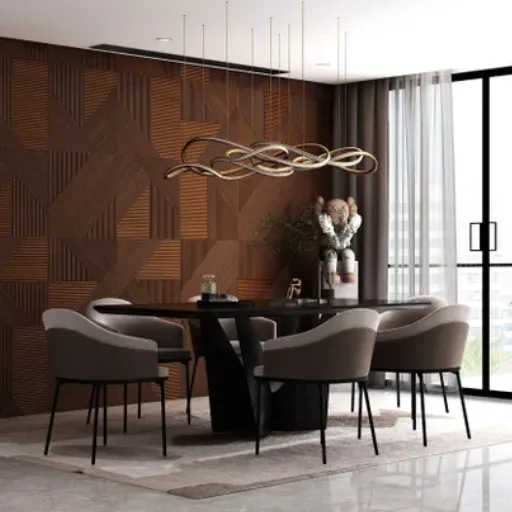
As the question is not about what material is the best for the construction work, the focus is really on what kinds of housing would be favourable to use the put material on.
Residential: Bathrooms, Kitchen, and Basement
WPC is unbeatable for the splash effect in water-intensive areas or wet areas. The non-permeable effect of WPC can be noticed as against wet steam from showers, splashes from sinks, or humidity under damp basements. The interlocking system of WPC allows the choice to lay vinyl from behind the vanity and awkward areas around the plumbing fixtures. For the remodeler, contractor, or homeowner who wants that wood-look finish in a room that is prone to wetness, WPC is the absolute solution.
Residential: Living Rooms, Bedrooms, and Libraries
Solid wood is paramount when used in spaces inside with dry climates and controlled temperature. Security of an accent wall in the bedroom with solid oak, adding texture and character that only a composite could simulate. Libraries and studies have diverse beneficial aspects of noise absorption. In these areas, the care problem is less and more rewarding on an aesthetic level.
Commercial: Hotels, Offices, and Retail Spaces
An essential factor for the commercial sector has taken a particular interest in WPC used in commercial premises. Not to mention variety. First, it is above all the durability that WPC has in heavy loads. Second, WPC is watertight. Three is the cardinal principle: care of maintenance costs, which is then reduced as much as necessary. Fourth, the panels deliver a uniform quality panel in the entire area at the same time.
Healthcare and Educational Facilities
Hygienic and waterproof, WPC is perfect in hospitals, schools, and clinics. The non-porous surface is the very best barrier against bacterial contamination. Besides this, a simple and regular cleaning using disinfectants can also clean the WPC surface. The porous surface of solid wood contaminates and requires specific cleaning methods for upscale medical environments.
2025-2026 Design Trends: Fluted, 3D, and Slat Wall Panels
The wall panel market shows rapid development. Fluted 3D wall paneling and WPC manufacturing create the main trend, which will establish itself between 2025 and 2026.
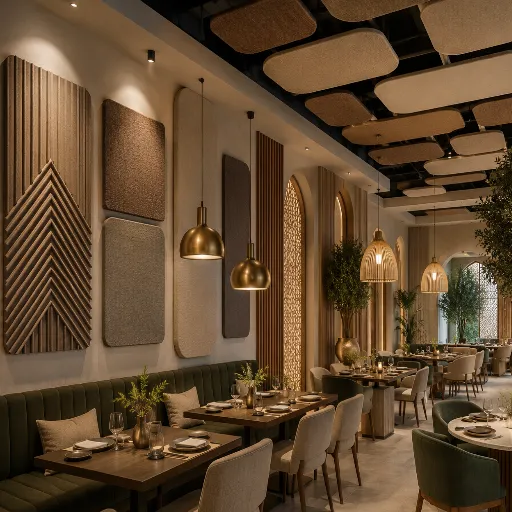
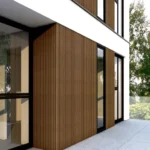
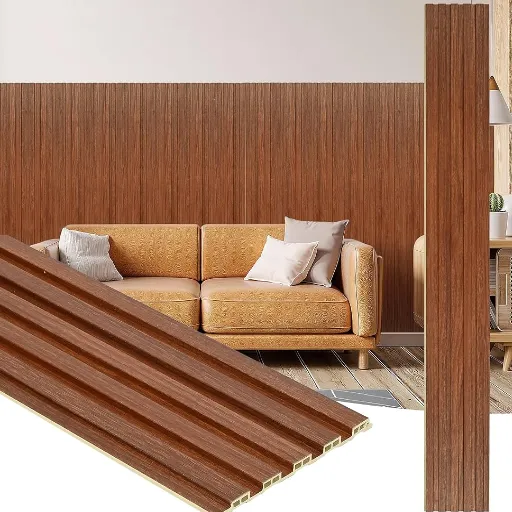
Fluted panels feature vertical or horizontal grooves that create rhythmic shadow lines across wall surfaces. The texture enhances visual appeal through its ability to create depth, which breaks the monotony of plain rooms. WPC extrusion technology produces fluted profiles with perfect consistency at scale. The identical grooves create a unified look that extends across an area of thousands of square feet.
Milling enables solid wood to achieve fluted designs, but this method becomes expensive and time-consuming while delivering inconsistent results. The visual flow of the design gets interrupted by grain variations together with knots. WPC provides architects and designers a budget-friendly solution that enables them to create commercial spaces with sophisticated fluted wall designs.
3D slat wall panels currently represent an emerging design trend. These panels create sculptural wall surfaces through their design, which includes different depths and angles. WPC material enables designers to create complex shapes that would require high costs when using solid wood. The architectural feature delivers a strong visual impact, which should attract attention yet does not exceed standard budget constraints.
Color technology now shows greater progress. Advanced WPC formulations now replicate the tonal variation of natural wood grain with surprising accuracy. WPC material now replicates a solid wood appearance, so trained professionals can only identify the difference between the two materials after examining them at close distances.
How to Evaluate Suppliers and Ensure Quality
After 10 years of sourcing wall panel materials, we have learned that supplier quality varies more than most buyers expect. Here is what to look for.
Certifications to Request
You should request third-party certifications before you proceed with bulk purchase orders. Essential documents include:
- CE marking for products sold in European markets
- ISO 9001 quality management system certification
- SGS or Intertek test reports verifying material composition and performance claims
- EN 13501-1 fire classification for commercial projects
- FSC or PEFC chain-of-custody certification for solid wood products
The documents establish a distinction between genuine manufacturers and trading companies that repackage inferior products.
Red Flags When Sourcing WPC Panels
Inconsistent density across panels indicates poor extrusion control. Panels should feel uniform in weight and hardness. Poor UV stabilizers cause fading within months of sun exposure. Request accelerated weathering test data. Weak interlocking edges break during installation, causing delays and waste. Test the connection mechanism on sample panels before ordering.
Red Flags When Sourcing Solid Wood Panels
Unseasoned wood with high moisture content will warp after installation. Ask for moisture content reports; 6-10% is ideal for interior use. Improper kiln drying creates internal stresses that crack over time. Undocumented species claims are common. A supplier labeling rubberwood as teak is not unheard of. Request species verification certificates for premium timbers.
Sample Testing Before Bulk Orders
Mini-Story: Maria, a procurement manager for a European retail chain, learned this lesson the hard way. She placed a $40,000 WPC order based on a glossy catalog and a video call with a supplier. The shipment contained panels that showed visible color differences, had damaged interlocking edges, and emitted a chemical smell, which indicated poor-quality plastic material. The entire lot was unusable. Now she requires physical samples, third-party test reports, and a pre-shipment inspection for every new supplier. Her reject rate dropped to zero.
Request production samples from the exact batch line that will fill your order. Test water absorption, impact resistance, and color consistency. For solid wood, verify species, moisture content, and grade. The small cost of sampling prevents the high cost of receiving the wrong material.
FAQ: WPC vs Solid Wood Wall Panels
Which is more expensive, WPC or solid wood?
Solid wood costs more in the beginning because premium species are available there. But the fiscal difference becomes quite big as time passes by. Actually, solid wood entails maintenance that results in expensive expenditures over the years. As a cause of action, WPC, which is quite expensive at first, scores through the minimal maintenance and longer life.
Do WPC wall panels look like real wood?
Modern WPC boards assign wood grain accurately from far up, upwards. It is possible to discern even extrusion marks in inch-by-inch measurement by an expert. It’s basically irrelevant for the majority of residential applications and commercial ones. Serious, nothing shall replace solid wood if supreme authenticity is an absolute demand.
Are WPC panels safe for indoor air quality?
Quality WPC boards made by certified manufacturers have minimal VOC emissions and comply with indoor air quality standards. The risk lies in acquiring low-quality products from uncertified factories. Always ensure that emissions test reports and manufacturing standards have been verified before installing in occupied spaces.
How long do WPC wall panels last?
WPC panels of good quality will last for 20-30 years when installed in the usual interior atmosphere, but the lifespan decreases if exposed to UV and extremes of temperature or is abused. With general indoor utility, WPC outlasts most solid wood installations.
Are WPC wall panels termite-proof?
Yes. The plastic matrix of WPC is not a balanced diet for bugs such as termites. It is blessed with this natural resistance; there is no need for a chemical attack to be treated as in the case of solid wood in termite-prone areas.
Can you mix WPC and solid wood panels in one project?
Absolutely. Many designers use WPC in utility areas like bathrooms and kitchens while reserving solid wood for feature walls in living spaces. This hybrid approach balances practicality with premium aesthetics. Just ensure transition details between materials are planned during the design phase.
Does WPC increase property value?
WPC provides added benefits through durability and low maintenance, especially in rental residential as well as commercial spaces, thereby accounting for the cost. Wooden solid gives the essence of luxury and durability. The perception and advent of timeless value are obsessed with it. This perceived value appears different depending on buyer expectations amongst various market segments.
Conclusion
The selection process between WPC and solid wood wall panels needs to follow specific requirements. The selection process demands material selection to match your project’s requirements. WPC provides bathrooms and kitchens, basements, and commercial spaces with its strong capacity to resist moisture while requiring minimal upkeep. Solid wood provides authentic value through its natural warmth and sound absorption capabilities and its ability to be restored in upscale dry interiors where authenticity holds the highest importance.
The common mistake is letting a manufacturer steer you toward their product regardless of your needs. The correct solution always stems from an independent assessment that examines your climate conditions and traffic patterns, maintenance abilities, and budget limits.
Linyi Yuheng International Trading Co., Ltd. sources WPC and solid wood wall panels for international project needs. Our company operates without promoting any single material as superior to others. We assist you in project material selection while we verify supplier quality and ensure the timely delivery of consistent products. Our decade of experience in manufacturer evaluation and international logistics control has equipped us with expertise about effective methods for acquiring high-quality wall panels.
Ready to move forward? Our team is available to answer questions and guide you toward the best choice for your specific application.
Categories:
Blog
Related Articles