WPC Wall Panels: The Complete Buyer’s Guide for Commercial Projects (2026)
WPC wall panels are wood-plastic composite cladding boards made from a blend of wood fibers and thermoplastic polymers. They function as design elements for indoor walls and bathroom areas and outdoor building designs in both commercial and residential spaces. The global WPC wall panel market hit $4.5 billion in 2025 and is growing at roughly 6.5% per year because people want sustainable products that require less upkeep than solid wood and PVC.
Most buyers encounter their main challenge when they discover that online information either provides insufficient details or contains content that lacks credibility. The search results show that generic “Top 10 Manufacturers” listicles are the most common type of content. The market today contains multiple trading companies that present their products through superficial product pages. The search will not produce any authentic source material that establishes itself as a credible reference from a person who works in the industry of panel manufacturing and international distribution.
The guide provides complete information about its content. The next few minutes will provide you with complete knowledge of WPC panel composition, project-specific panel selection, essential technical specifications and budget requirements, and methods to identify genuine factories and their products. This guide provides architects, contractors, and distributors with material information that helps them make confident decisions.
Key Takeaways
- WPC panels combine 55-65% wood fiber with 30-35% recycled plastic to create materials that look like wood while displaying synthetic material strength
- Co-extruded (capped) panels provide 15-25 years of outdoor durability, whereas solid core panels can withstand their maximum impact capacity
- The factory direct pricing system charges $8-35 per square meter based on the product’s grade and thickness and surface treatment
- The premium panels use fire ratings from ASTM E84 and EN 13501-1 and display water absorption rates below 1% and show UV stability results to create a distinction from budget panels
- When you purchase from a manufacturer instead of a trading company, you can expect to save 15-30% while gaining direct control over your product specifications.
What Are WPC Wall Panels?
WPC stands for wood-plastic composite. The product is a building material that results from mixing hardwood powder or sawdust with thermoplastic polymers such as HDPE and PP, and special additives that provide UV protection, color preservation, and fire safety.
The manufacturing process consists of simple steps that require operators to maintain exact control over their work. The process begins with drying raw wood fiber until it reaches a moisture level below 3 percent, and then it combines the dried fiber with plastic pellets and additives inside a high-speed blender. The compound enters a twin-screw extruder, which operates at temperatures between 170 and 200 degrees Celsius to create a panel through a die. The extruded board undergoes a calibration table process, which cools it until it reaches its final size before proceeding to a surface treatment process, which involves sanding, embossing, or laminating to achieve its final texture.
The product creates a panel that displays the appearance and texture of wood, yet functions as an engineered plastic material. The material will not decay, bend, or draw termites. The product requires no need for painting, staining, or sealing. WPC panels obtain true environmental credibility because their wood content comes from recycled sawmill waste, while their plastic content derives from post-consumer HDPE, which makes them more sustainable than solid wood.
Architect Marcus from Dubai first saw WPC panels when he visited them in 2023, but he doubted their effectiveness. The client requested a wood-grain facade for a beachfront hotel with 200 rooms, but the project team eliminated solid teak because of cost and maintenance issues. PVC material appeared excessively artificial to him. Marcus requested three suppliers to send him samples, which he used to conduct his own salt-spray and impact tests before he selected co-extruded WPC cladding, which included a 25-year warranty. The facade maintains its fresh appearance after two years. The hotel received no guest complaints about exterior upkeep.
Types of WPC Wall Panels
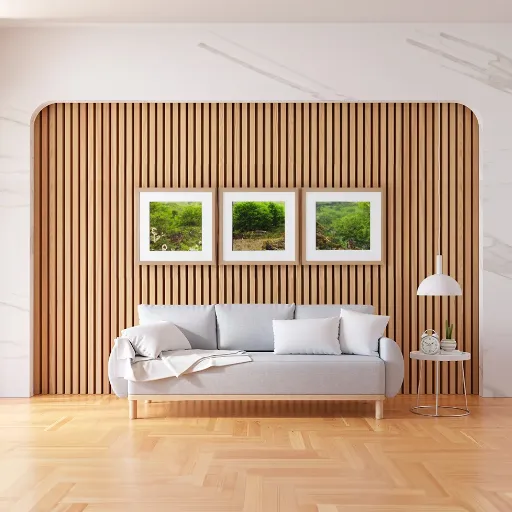
The construction of WPC panels shows differences between various panel types. The internal structure, surface treatment, and formulation differ between different applications. The following information describes the actual procurement process.
Solid Core Panels
Solid core WPC panels have a weighty and sturdy structure, which makes them highly resilient. The entire cross-section of the product contains composite material, which enables it to achieve maximum impact resistance and weight support for all WPC products. The product weight ranges between 8 and 12 kg per square meter, which depends on the material thickness.
The panels perform effectively in commercial spaces that experience heavy foot traffic, which includes hotel lobbies and restaurant walls, and retail storefronts, because customers and employees frequently move through these areas. The weight of the product requires higher installation needs with substructure requirements, while shipping expenses also become more expensive.
Hollow-Core Panels
Hollow-core panels use internal chambers or ribs to achieve material reduction without compromising their structural strength. The weight of these items is usually between 4 and 7 kg per square meter, which makes them simpler to transport during construction activities. The system achieves speedier installation together with decreased transportation expenses, which becomes critical when handling substantial international shipments.
The empty design results in automatic air spaces, which boost insulation performance and help control moisture behind building exterior walls. The high expenses associated with crane operation make hollow-core panels the most efficient solution for upper-story facade construction work.
Co-Extruded (Capped) Panels
The premium tier of co-extrusion represents the highest level of product quality. The production process includes a protective polymer shell that combines ASA or PMMA materials to create an outer surface that protects the WPC core through a single extrusion procedure. The capstock layer delivers enhanced UV block ability together with color retention and stain block ability that surpasses the standard WPC performance.
The independent QUV testing results demonstrate that capped panels maintain their color integrity for over 8000 hours of simulated weathering. The facade maintains its fresh appearance after ten years, whereas the other option has turned into a dull gray color. The use of co-extruded panels is mandatory for outdoor applications that experience severe weather conditions, including coastal salt air exposure and extreme sunlight and freeze-thaw cycles.
3D Slat and Fluted Panels
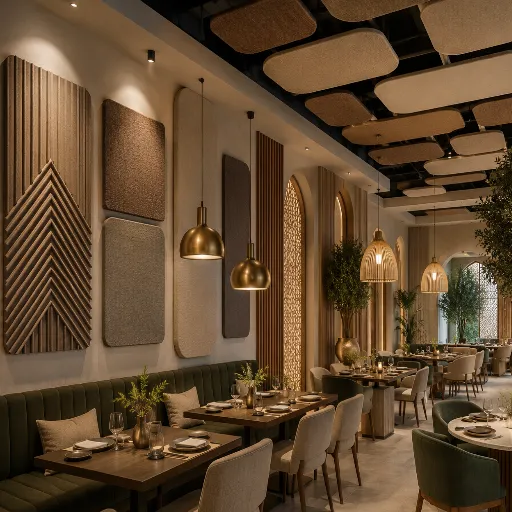
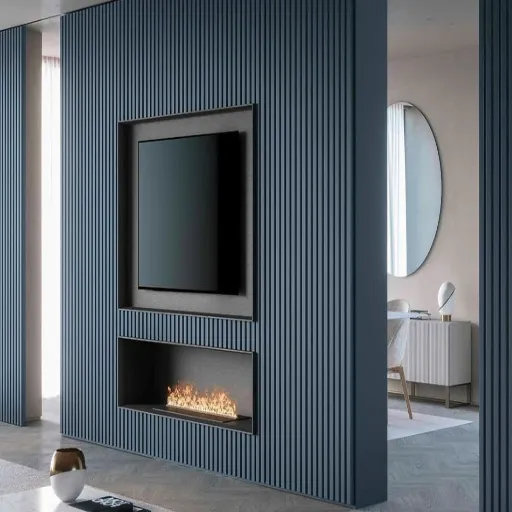
The fastest-growing segment in WPC wall panels right now is 3D profile designs. Slat, fluted, and wave patterns create dimensional wall surfaces that catch light and cast subtle shadows. They’re particularly popular in hospitality interiors, office reception areas, and residential feature walls where visual impact matters as much as durability.
Some 3D panel designs incorporate acoustic perforations or grooved back channels that improve sound absorption. This creates an interesting product overlap with acoustic treatment panels — a category Yuheng also manufactures. For more on dimensional designs, see our guide to WPC 3D slat wall panels.
Self-Adhesive Panels
The DIY renovation market is served by self-adhesive WPC panels, which contain a ready-to-use peel-and-stick adhesive. The product’s thickness ranges from 5 to 8 millimeters, which enables a single person to handle the installation process. The product functions effectively in indoor dry spaces and serves as a temporary solution for upgrades.
Self-adhesive panels do not meet the needs of commercial buyers. The adhesive bond between surfaces will deteriorate when exposed to high-humidity environments because the product has a low thickness, which provides only limited protection against impacts. The solution works for your project, which requires you to refresh a rental property or set up a temporary display. The building facade of a hotel and the exterior of an office building require you to choose between a proper clip or screw-mounted system.
Technical Specifications That Actually Matter
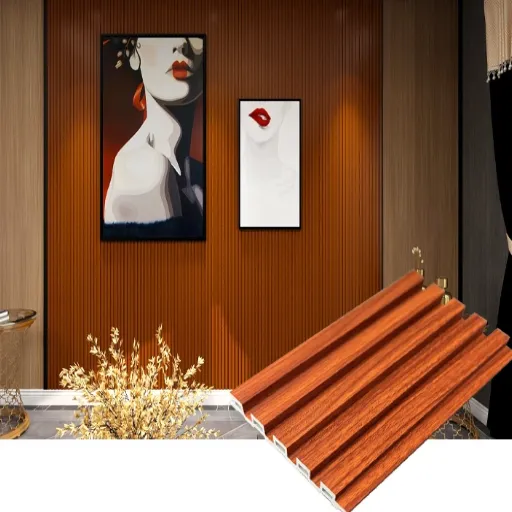
Online guidance systems reach their maximum failure point at this particular location. The report states WPC possesses both “durability” and “waterproof” characteristics, yet lacks essential numerical data for creating specifications or assessing supplier performance through data sheets. You should request the following requirements.
Density and Composition
The bulk density of high-quality WPC wall panels ranges between 1.15 and 1.4 g/cm³. The existence of lower-density materials points to two issues, which include excessive filler content and poor mixing processes, both of which represent warning signs that indicate negative effects on material performance across an extended period. The ideal wood-to-plastic ratio consists of 55 to 65 percent hardwood fiber combined with 30 to 35 percent HDPE or PP polymer, while the remaining 5 to 10 percent includes coupling agents, lubricants, UV stabilizers, and pigments.
Request your supplier to provide you with a material composition certificate. The use of “recycled plastic” and “wood fiber blend” terms without specific percentage information demonstrates either a lack of knowledge or an attempt to hide information. A legitimate manufacturer knows their exact formulation.
Water Absorption
The water absorption limit for interior and bathroom applications needs to stay under 1% after testing with ASTM D570, which requires 24-hour water immersion. The recommended panel requirements for exterior cladding in rainy climates require sealed edge panels with a water absorption rate that stays below 0.5%. The panels will start to absorb moisture, which will cause them to swell and warp until the surface completely delaminates.
Fire Ratings
Fire performance is non-negotiable for commercial buildings. WPC panels are combustible, but formulations with fire-retardant additives can achieve meaningful ratings. For a complete compliance guide covering ASTM E84, EN 13501-1, and permit documentation, see our article on fire-rated WPC wall panels.
- ASTM E84: Look for a Flame Spread Index below 200 and Smoke Developed Index below 450 for a Class B rating
- EN 13501-1: European projects typically require Class B-s1,d0 or better
- GB 8624: Chinese domestic projects use the B1 classification system
Always request the actual test report, not a generic certificate. The report needs to show testing results from the past three years, and test results must match the product you intend to purchase. Some suppliers submit premium formulations for testing while shipping standard-grade product.
UV Stability and Colorfastness
The exterior applications require QUV accelerated weathering test data, which demonstrates less than 3 Delta E color change after 3000 hours. The co-extruded panels with ASA capstock should achieve Delta E results under 3 after 8000 hours of testing.
The budget panels without UV stabilizers will begin to show visible fading after 18 months of direct sunlight exposure. The dark colors, which include charcoal, deep brown, and navy, tend to fade more than the lighter shades.
Thermal Expansion
WPC material experiences greater thermal expansion and contraction than wood, but shows lesser expansion and contraction than pure PVC. The linear expansion coefficient typically shows a range between 3 and 5 multiplied by 10 to the power of minus 5 for each degree Celsius of temperature change. The 3-meter facade panel will exhibit total movement of 4 to 6 millimeters in a climate that experiences seasonal temperature changes of 40 degrees Celsius.
The process requires proper installation, which must include all necessary elements. The installation requires 5-10mm expansion gaps, which should be placed at panel ends, and the use of flexible joint covers at corners, and the avoidance of rigid face-fixing methods. The contractor who installs WPC cladding like an aluminum composite panel will create gaps, buckling, and fastener fatigue within the first year.
Need help interpreting a supplier’s technical data sheet? Send us the document, and our engineering team will review the specifications against your project requirements at no charge.
Applications by Environment
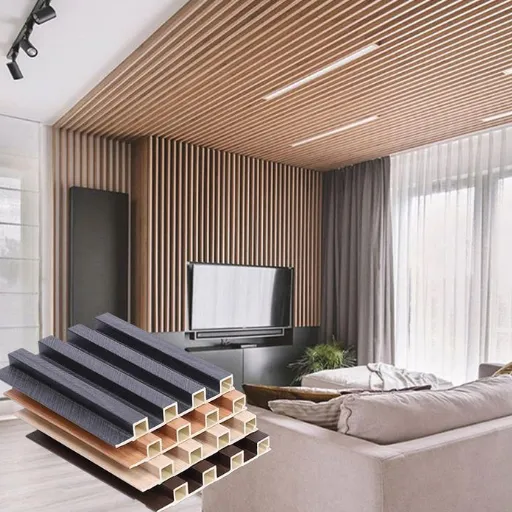
Interior Dry Areas
The basic application of the study exists in office lobbies, hotel corridors, retail stores, and residential living rooms. The standard solid and hollow-core WPC panels display wood-grain and solid-color finishes, which function effectively. The main criteria for selection involve aesthetic compatibility, together with impact resistance and cleaning simplicity.
For commercial spaces that experience heavy foot traffic, designers should use solid core panels that have a surface hardness rating of 2H pencil hardness (ASTM D3363) or above. The system protects against scuffing and scratching, which occur from luggage, cleaning equipment, and normal daily use.
Bathrooms and Kitchens
WPC panels function effectively in damp indoor spaces. The material protects against moisture but does not offer complete waterproofing. The article on waterproof WPC wall panels for bathrooms and kitchens provides a complete guide to wet-area applications. Water will not seep through the surface until after extended contact with joints or edges, which will ultimately lead to material expansion.
For bathroom applications:
- Use panels with water absorption below 0.5%
- Specify sealed edge profiles or silicone sealing at all joints
- Shower enclosures should use tile or solid surface panels to protect areas that receive direct shower spray.
- The wall behind the panels needs both a moisture barrier and a proper ventilation system
Kitchen backsplashes behind stoves and sinks are generally safe, though grease accumulation on textured wood-grain surfaces requires more frequent cleaning than smooth panels.
Exterior Facades and Cladding
Exterior WPC cladding is where material selection becomes critical. Only co-extruded panels with proper capstock layers should be used. For a complete technical specification guide covering rain-screen systems, ventilation, and building codes, see our exterior WPC wall cladding guide. The installation system must include:
- A rain-screen design with a minimum 20mm ventilation gap behind panels
- Furring strips or aluminum rails for consistent air circulation
- Hidden clip or stainless steel fastener systems — never face-screw through the panel body
- Appropriate expansion gaps and flexible joint profiles
- Flashing and drainage details at windows, doors, and base transitions
Coastal projects require additional attention to fastener corrosion. Stainless steel A2 or A4 fasteners are essential. Galvanized steel will rust within 2-3 years in salt air, staining the panel face and compromising structural attachment.
Commercial Spaces: Hotels, Offices, KTV
WPC panels have become the default specification for budget-to-midscale hotel renovations in Asia, the Middle East, and increasingly in Europe. The appeal is straightforward: wood-grain aesthetics at roughly 40% the installed cost of solid wood, with zero ongoing maintenance.
The business case for hotel developers presents strong advantages. A 150-room hotel with WPC paneling in corridors, lobbies, and guest room feature walls saves approximately $80,000-120,000 in initial material costs compared to teak or walnut veneer. The ownership period of ten years will generate maintenance savings of $30,000-50,000 through the elimination of refinishing and termite treatments and moisture damage repairs.
WPC vs Alternative Materials
| Feature | WPC | PVC | SPC | Solid Wood | Ceramic Tile |
|---|---|---|---|---|---|
| Water Resistance | ★★★★☆ | ★★★★★ | ★★★★★ | ★★☆☆☆ | ★★★★★ |
| Fire Rating | B1 | B1 | A/B | C | A |
| Impact Resistance | ★★★★☆ | ★★★☆☆ | ★★★★☆ | ★★★☆☆ | ★★★★★ |
| Installation Ease | Clip/screw | Adhesive/clip | Click-lock | Nail/adhesive | Mortar/grout |
| Maintenance | Low | Very low | Very low | High | Low |
| Aesthetic Warmth | ★★★★★ | ★★★☆☆ | ★★☆☆☆ | ★★★★★ | ★★★☆☆ |
| Cost (per m²) | $8-35 | $5-20 | $10-40 | $25-80 | $15-50 |
| Eco-Friendly | ★★★★☆ | ★★★☆☆ | ★★★☆☆ | ★★★★☆ | ★★★☆☆ |
| Lifespan (exterior) | 15-25 yrs | 10-20 yrs | 15-20 yrs | 5-15 yrs* | 30+ yrs |
*Solid wood lifespan assumes regular maintenance; unmaintained wood degrades much faster.
WPC vs PVC: PVC panels are pure plastic, lighter, and often cheaper. But they feel plasticky, dent more easily, and lack the thermal mass and acoustic properties of WPC. For commercial spaces where first impressions matter, WPC’s wood-like warmth is worth the modest premium. See our detailed WPC vs PVC wall panels comparison for a full breakdown of durability, cost, and fire performance.
WPC vs SPC: The material, stone plastic composite (SPC), uses calcium carbonate as a replacement for wood fiber to produce a panel that has increased hardness and stiffness. SPC shows excellent performance in wet conditions, yet its surface maintains a cold and uninviting appearance. WPC provides superior sound insulation capabilities together with a more visually appealing design.
WPC vs Solid Wood: Wood is beautiful, renewable, and repairable. It’s also high-maintenance, termite-prone, dimensionally unstable in humidity, and increasingly expensive. For most commercial projects, WPC delivers 90% of the visual appeal at 50% of the lifecycle cost. Read our WPC vs solid wood wall panels analysis for a 10-year total cost of ownership comparison.
How Much Do WPC Wall Panels Cost?
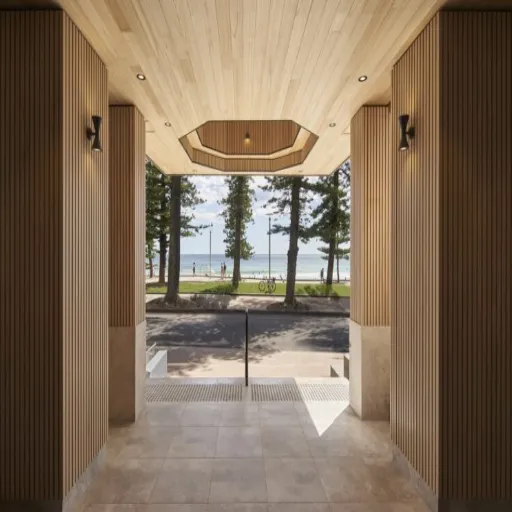
Pricing is where factory-direct sourcing makes the biggest difference. For a detailed breakdown, including cost-per-square-meter by region and a commercial project ROI calculator, see our WPC wall panel pricing guide. Here’s what you should actually expect to pay in 2026.
Price Tiers by Grade
| Grade | Price (USD/m²) | Typical Specs | Best For |
|---|---|---|---|
| Budget | $8-15 | Hollow-core, basic embossing, 5-year warranty | Temporary installations, rental properties, low-traffic interiors |
| Mid-Range | $15-25 | Solid or hollow-core, deeper embossing, 10-15 year warranty | Standard commercial interiors, residential projects, and hotel renovations |
| Premium | $25-35 | Co-extruded capstock, 3D textures, 20-25 year warranty | Exterior facades, high-end hospitality, signature architectural features |
| Specialty | $35-50+ | Custom colors, fire-rated formulations, acoustic perforations | Bespoke projects, heritage matching, and specific code requirements |
Factors That Affect Price
- Panel thickness: Standard interior panels have a thickness range between 8 and 10 millimeters. Exterior cladding typically runs 15-20mm. Each millimeter increase in thickness results in higher material expenses.
- Surface treatment: Basic embossing is standard. The synchronized wood-grain texture, which aligns with the printed grain pattern, increases the cost by $2-4 per square meter. The 3D slat profiles increase the cost by $3-6 per square meter.
- Order quantity: MOQs from Chinese manufacturers typically start at 500-1,000 m² for standard colors. The minimum order for custom colors starts at 2,000 square meters. You start receiving bulk pricing after you reach 5,000 square meters.
- Certifications: Fire-rated formulations cost 15-25% more than standard. FSC-certified wood fiber requires a minor additional cost, which enables access to green building certification projects.
- Shipping terms: FOB pricing from a Chinese port is standard. The DDP (delivered duty paid) service to your warehouse requires payment for freight and insurance and customs clearance, which typically costs between 20% and 35% of product cost, depending on destination.
Hidden Costs to Budget For
- Accessories: Beading, corner trims, starter trims, and screws shall add $1-3/m²
- Installation labor: Simple professionals for WPC cladding may bid around $8-15/m², depending on the area and volume of work
- Substructure: Furring strips, aluminum rails or treated timber battens, depending on exterior cladding, all cost around $3-6/m².
- Wastage: Put about 8-12% more on the first order in order to account for cut-off waste, especially the one on varied geometry projects.
On a total façade area of 12,000 m², Ahmed, a procurement manager of a hotel developer in Saudi Arabia, compared the quotes and found that the trading company quoted $28/m² DDP. Directly, he contacted Yuheng and was given a factory quote of $19.50/m² FOB, plus $4.20/m² freight and customs clearance to Jeddah. The total landed cost thus came to $23.70/m². His project had saved him $51,600, which was enough to upgrade the lobby finishes from mid-range to premium grade.
Installation Overview
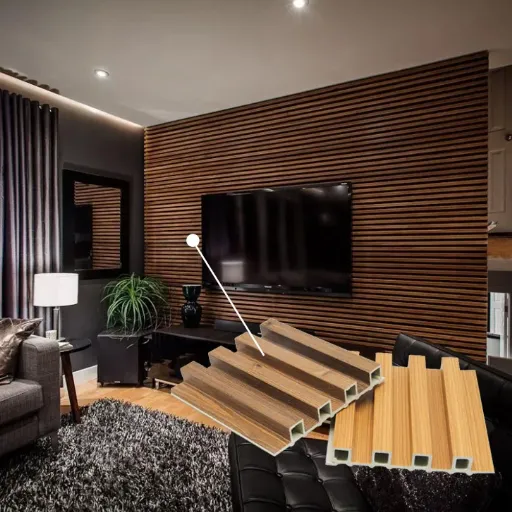
Common Methods
Clip Systems: Another technical construction method is the utilization of clips. These are fixed by means of aluminum or stainless steel to the wall substructure, and the panel locks into place. It is favored for exterior claddings, which allow thermal movement and a face without screws.
Face-Fixing: Face-fixing is where the panel is screwed down right through the face to the framework. Nicer, quicker, and easier, but unfortunately, the screw heads show unless hidden under colored caps. One of the better ways for indoor applications, where you can get away with visible fasteners.
Adhesive Bonding: The panel is bonded with structural adhesive at the rear and, in this way, pressed against a prepared substrate. It is only appropriate for interior dry areas with perfectly flat walls. For external applications, however, glue must not be used on its own, for the bond will in the end be defeated by the wind load and thermal expansion.
For step-by-step contractor guidance covering substrate prep, clip spacing, and climate requirements, see our WPC wall panel installation guide.
Substrate Preparation
For internal walls, they should be smooth, dry, and free from loose materials. Moisture content of timber studs should not be more than 18%. For exterior cladding, a weather-resistive barrier (WRB) must be installed over sheathing before furring strips are installed.
Climate Considerations
Install the WPC panel when the ambient temperature is from 12 °C to 28 °C. Cold panels shrink and then expand from 5 °C to 35 °C, making for a double workload on fasteners. Hot panels expand and stop at 35°C, after being installed, return to 5°C, and an astonishing looking game over with gaping eyes to see the gaps arising.
Expansion Gaps
5-10mm expansion gaps need to be left at the ends of panels and at building corners. Use flexible joint covers to flush the gaps out architecturally or use shadow gaps. Rigid butt joints with no allowance for movement are the most common cause of WPC cladding failure.
Maintenance and Longevity
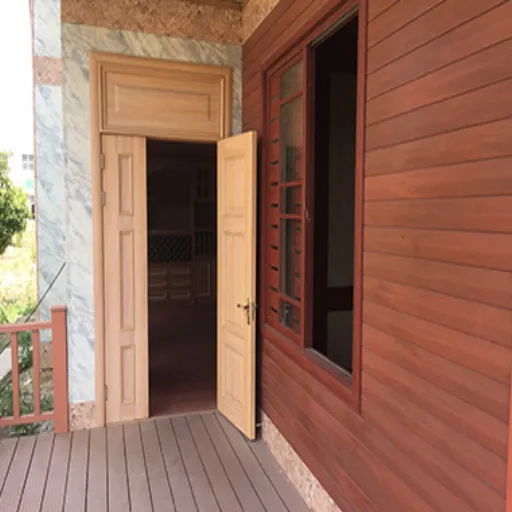
One of WPC’s biggest selling points is low maintenance. But low maintenance doesn’t mean no maintenance. For detailed cleaning protocols, inspection schedules, and repair guidance, see our WPC wall panel maintenance guide.
Cleaning Protocols
Interior panels: Clean them once every month with a microfiber cloth. Wash with a damp cloth that has a neutral pH cleaner (in a pH range of 6-8) at three-month intervals. Always avoid the use of ammonia-based and abrasive cleaners as they lead to tarnishing the surface finish.
Exterior cladding: Wash using domestic water twice a year through garden hoses. In an industrially polluted urban setting, even polluted environments are washed primarily with a mild detergent to prevent a buildup of dirt and inclusive staining of the white-colored cladding.
Inspection Schedule
Monthly: Give a visual walk-around for damages, loosen fasteners, or any panel movement at its joints.
Annually: Checking that expansion gaps have not closed up due to accumulated debris. Confirm that behind the cladding, there are clear drainage paths. Every loose clip or fastener should be tightened.
Every 5 years: It should be checked by a professional for high-rise or coastal building exteriors. In the south-facing elevation, U. V. degradation should also be checked.
Expected Lifespan
- Indoor dry areas – This colombinite board will last between 25 and 30 years
- Bathrooms and Kitchens – a quality panel would last between 15 and 20 years, provided that proper ventilation is fitted.
- Exterior Facade – 15-25 years (co-extruded), depending upon the severity of the climate.
- Exterior Facade (Standard grades) – approximately 8-12 years before fading or any noticeable degradation of the surface.
Warranty Realities
A 20-year pro-rata warranty may probably only pay back 25% of the price for merchandise replacement. Still, you need to understand all the things that must be outlined within the warranty. Most product warranties run between 5 and 25 years. Particular attention should be given to the small print on the warranties. Warranties typically and only cover manufacturing defects and not installation errors, impact damage, or neglecting maintenance guidelines.
Sustainability and Certifications
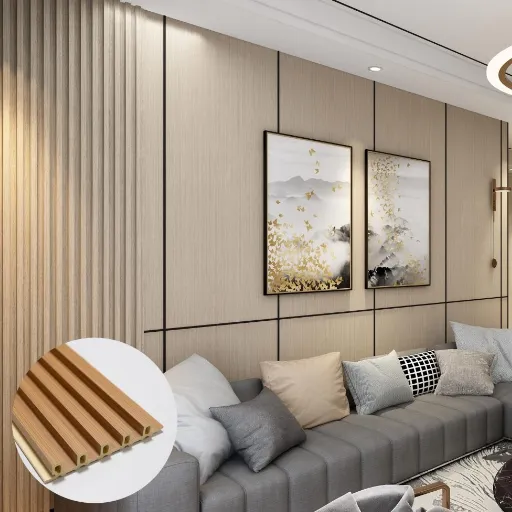
WPC boards hold a unique distinction when it comes to the talk about sustainable nature. They are not perfect, but indeed much better than a few common alternatives.
Recycled Content
Good quality WPC boards have between 30-100% recycled wood fibers, a byproduct from sawmill waste that would otherwise have been incinerated or sent to a landfill. The plastic share often includes post-consumer HDPE sourced from milk jugs and detergent bottles. Ideally, ask about the recycling content in some of these boards and request the data, which is tracked by genuine producers.
Indoor Air Quality
Low VOC formulations might comply with E0 or E1 emission standards of EN 717-1. Inform actors for highly sensitive environments, such as schools, hospitals, or senior living facilities to report formaldehyde emission tests. Premium panels would give a formaldehyde-emission level below 0.05 mg/m3 (following the E0 standard).
Key Certifications to Request
| Certification | What It Proves | Relevance |
|---|---|---|
| ISO 9001 | Quality management system | Baseline for any serious supplier |
| ISO 14001 | Environmental management | Shows a systematic approach to sustainability |
| CE Marking | European conformity | Required for EU projects |
| ASTM E84 | Fire performance | Required for US commercial projects |
| FSC Chain of Custody | Sustainable wood sourcing | Important for green building certifications |
| SGS/Intertek Test Reports | Independent verification | Confirms supplier’s internal test claims |
End-of-Life Considerations
WPC panels are technically recyclable — the wood and plastic can be separated and reprocessed. In practice, recycling infrastructure for WPC building waste is limited in most markets. The realistic sustainability case for WPC is front-loaded: it diverts waste wood and plastic from landfills during manufacturing, and its long lifespan reduces the frequency of replacement compared to less durable materials.
Choosing a WPC Wall Panel Supplier
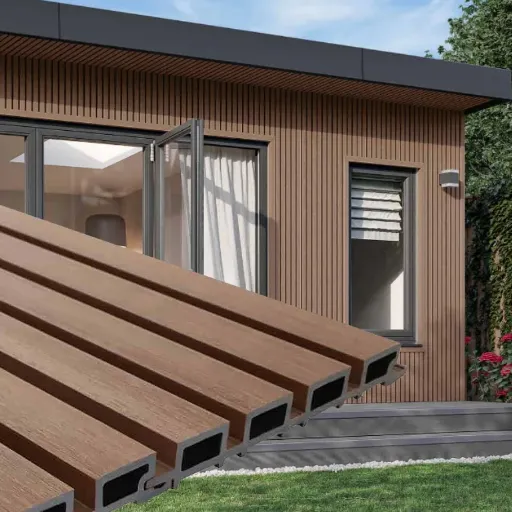
This section matters more than any other. A great panel from an unreliable supplier is a liability. A mid-grade panel from a dependable partner is an asset. For a detailed factory audit checklist and verification strategies, see our guide on how to choose a WPC wall panel manufacturer in China.
Factory vs. Trading Company
Trading companies don’t manufacture anything. They source from multiple factories, add a 15-40% markup, and handle export logistics. Some trading companies provide genuine value — quality control, consolidated shipping, and payment security. Others are simply middlemen with Alibaba accounts.
Direct factory relationships give you:
- Lower pricing (no trader margin)
- Direct control over specifications and customizations
- Faster response to technical questions
- Transparent production scheduling
- Accountability if something goes wrong
The challenge is verifying that you’re actually talking to a factory, not a trader posing as one.
Factory Audit Checklist
Verify the following basic points before placing a significant order-
- Business license: Request for a business license to be produced, check with the authority of their jurisdiction
- Production facility: Leading questions or a video tour of the extrusion lines, because showroom photos don’t really mean anything.
- Extruder count: The real manufacturers of WPCs must have at least 3-5 production lines to warrant meaningful capacity
- QC process: Finally, ask for incoming material inspection records, in-process quick-check points, and final outgoing test report copies
- Export experience: Inquire about the release certificate or shipping documents recently from the region to see the customs declaration
- Sample consistency: Sample twice on two different dates; then compare the color, weight, and surface. If the samples are different, bad process control is happening.
Certification Verification
Do not just take certificates at their word. Cross-check them:
- ISO certificates: Only verifiers like SGS, Bureau Veritas, TÜV are respectable; most local fish certifiers are unfamiliar; check with the verifier on its own website
- Test report: Check that the report belongs to the actual product models you are ordering and not a variation.
- Factory audit: Some vendors share audits that they carry out for other customers. Request verification of the date and scope.
Sample Evaluation
It’s best to check a good figure in production on the scales if body runs are to be achieved. Test for:
- Color consistency: Stand the samples of different batches next to each other when it comes to daylight, and the Delta E should be less than 1.5 for an acceptable match.
- Surface hardness: Try to scratch your nail, a coin, and a key on the surface. The best or premium panels should be resistant to all three.
- Flexural strength: Support the 30 cm test sample on both ends and press the center, and it must easily flex without any cracks.
- Water absorption: Keeping in view, weigh down the sample, then type in and let it be for 24 hrs, then weigh again and calculate the percentage gain. It should not be more than 1%.
MOQ and Lead Time Negotiation
More often than not, standard colors from big manufacturers come with 500-1,000 m² MOQs. Custom colors start at 2,000 m². Lead times are 15-25 days for standard products, 30-45 days for customized formulations or colors.
In this, for really big and multi-building projects, you might have to work on staging. Instead of taking 10,000 m² all at once and getting all warehouse costs and damage risk in one go, schedule shipments on reduced quantities monthly or quarterly to tie off your responsibilities to the project and site requirements.
Frequently Asked Questions
What are WPC wall panels made of?
WPC wall panels’ basic composition is hardwood fiber, about 55%-65% mixed with thermoplastic polymers (HDPE, PP) by 30%-35%, along with 5%-10% additives for UV resistance, color, and fire retardancy.
Are WPC wall panels waterproof?
WPC panels are resistant to moisture, but certainly not waterproof. Panels of good quality absorb less than 1% water after a 24-hour soak time. That’s nice for dry areas in bathrooms and external facades, while installed properly, but nothing can be said about the use of surface water when it comes to hitting the joints with a direct water spray.
How long do WPC wall panels last?
WPC boards for interiors stay good between 25 and 30 years. The WPC panel used for the exterior is co-extruded and lasts 15 to 25 years, depending on the geographical location. Weathering of the external surface is seen post-exposure of the WPC panel without capstock, typically after 8-12 years’ time.
Can WPC panels be used outdoors?
Yes, co-extruded (capped) with UV stabilizers against standard interior panels that fade and weather quickly. It requires proper rain-screen installation with ventilation gaps to be used as an outside application.
What is the difference between WPC and PVC wall panels?
Wood Plastic Composite is made of wooden fibers that make it stronger, more organic, and give it great impact resistance. PVC, on the other hand, is pure plastic — that means it is less expensive, lightweight, water-resistant, but even less strong and less beautiful for surfaces. For commercial spaces with high appeal and need for durability, WPC fits in; on the other hand, in budget installations where money is saved, PVC is used.
How can WPC wall panels be installed?
The inside panels can be put up using a clip system, face-screwed to studs, or adhered. Rain-screen installation on exterior walls requires a rain-screen system with furring strips, hidden clips or stainless fasteners, and expansion gaps of 5-10mm at the ends of the panels. Exterior works should strive to achieve professional workmanship.
Can WPC wall panels be painted?
They could be changed to a new color, but it is also not advisable because they are integrated with color and UV protection. In most cases, painting voids most manufacturer warranties and is usually made up for by a less fine and cleaner factory finish. However, if you are very particular about having a specific color, which you call for custom color rendering, you can also have factory panels painted as well.
Do WPC wall panels require maintenance?
As a matter of maintenance, WPC is low maintenance, not no maintenance. As for the interior panels, this should be done at least every quarter, a cleaner found to have a pH-neutral. The exterior cladding should be rinsed twice yearly, in addition to being examined annually as to the condition of the fasteners and the joints.
Are WPC wall panels eco-friendly?
WPC uses a wood fiber that is rendered from recycled waste that can be blended with post-consumer plastic content in order to make it ecologically sound. It goes far beyond other wood materials and is particularly beneficial for high-wear applications in which wood would require frequent replacement. But compared to pure PVC, WPC is eco-friendlier. Check for FSC certification and E0/E1 (low-VOC) ratings for the environment-conscious individual.
How much do WPC wall panels cost per square meter?
For budget-made hollow panels, prices run from $8 to $ 15 per square meter, $ 15 to $ 25 for commercial-class standard, and $ 25 to 35 for premium co-extruded exterior cladding. A variance might show up in the case of custom formulations, specialty fire ratings, or acoustic perforations. Only a few producers would distribute at rates of $ 35-50 per square meter or above.
Conclusion
WPC wall panels have matured from being a special niche selection toward the mainstream, and for very good reason. They bring to warm and aesthetically compelling looks but without the need of caring for very time-consuming maintenance and the risk posed by moisture exposure leading to termite attack on the material. The best lifecycle-cost advantage is in commercial projects: hotels, office buildings, retail chains, and residential developments.
However, selecting the materials is only the first half of the equation. The other half lies in your supplier selection. As good as the specification is good the factory that produces it. Check the performance information. Testing the samples. Visit our video-audit production facility. Determine that by working through a trading company, consumers and industry gain, or that just adds to value.
We have had existing PN junctions in WPC boards for more than a decade. Across the Middle East, our panel delivery has been to hotel chains. With projects all over Europe and Africa, there have been deliveries to residential buildings in South Asia. We do not just sell panels; architects and developers get specifications on formulating and meeting local codes, as well as deadlines on delivery.
Ready to move forward with your project? Request a free sample pack with our standard color range and surface finishes, or contact our technical team for specification support and bulk pricing on orders over 1,000 m².
Categories:
Blog
Related Articles