WPC Decking Maintenance: How to Clean and Care for Composite Decks (2026)
WPC decking needs simple, regular cleaning to stay in good condition. Sweep debris weekly, wash with mild soap and water every one to three months, and deep clean twice a year. Avoid bleach, ammonia, and pressure washers set above 1,500 PSI, and your deck will look fresh for 25 years or more.
A hotel maintenance manager in Miami learned this the hard way. In 2023, his property installed uncapped WPC decking around a shaded courtyard. He assumed the “low maintenance” label meant he could ignore it. Leaves collected between the boards for months, trapped moisture, and surface mold appeared within a year. The cleaning bill to restore the deck was three times what a seasonal maintenance routine would have cost. After switching to capped WPC and setting a quarterly cleaning schedule, the same courtyard stayed clean with half the effort.
We supply WPC decking from Linyi, one of China’s largest WPC manufacturing clusters, and we talk with buyers every week about what happens after installation. This guide covers the tools, cleaning steps, seasonal schedule, stain treatments, and common mistakes that affect WPC decking maintenance. Whether you are a homeowner, contractor, or wholesale buyer setting client expectations, you will find a practical routine you can follow. For a broader introduction to WPC decking types and applications, start with our complete WPC decking buyer’s guide.
Key Takeaways
- WPC decking is low-maintenance, not maintenance-free. Sweep weekly and wash with soap and water every 1–3 months.
- Use only soft brushes, pH-neutral or mild soap cleaners, and garden hoses. Bleach, ammonia, and high-pressure washers can damage the surface.
- Capped WPC absorbs less than 0.5% water and resists stains better; uncapped WPC needs faster spill response and more frequent cleaning.
- A typical residential WPC deck costs $50–$100 per year to maintain, compared with $200–$850 per year for pressure-treated wood.
- Deep clean twice a year, check drainage gaps seasonally, and replace boards that show swelling, cracking, or delamination.
Is WPC Decking Really Maintenance-Free?
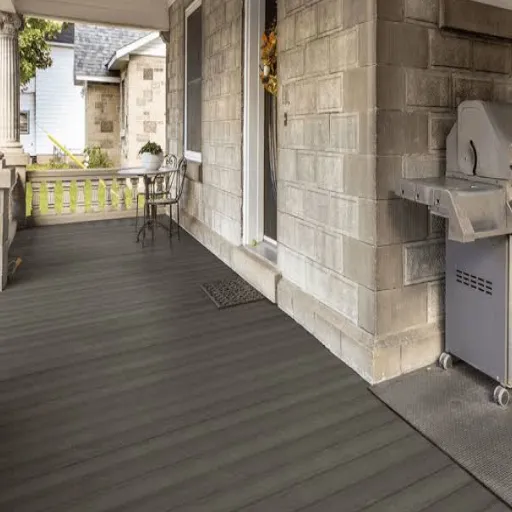
No decking material is truly maintenance-free. WPC decking eliminates the sanding, staining, and sealing that wood requires, but it still collects dirt, pollen, leaves, and spills. The difference is that WPC decking maintenance is mostly cleaning rather than repair and refinishing.
The amount of maintenance depends heavily on the board type. First-generation uncapped WPC has an exposed wood-plastic core that absorbs 3–8% water after 24 hours of immersion, while capped or co-extruded WPC absorbs less than 0.5% because of its protective polymer shell (WPC Information Center). That cap layer makes the board far more resistant to mold, mildew, stains, and fading.
Climate also matters. Decks in humid, shaded, or coastal areas collect moisture and organic debris faster than decks in dry, sunny locations. High-traffic commercial decks need more frequent cleaning than residential patios. Understanding these variables helps you set the right WPC deck maintenance schedule.
Basic WPC Decking Cleaning Tools and Supplies
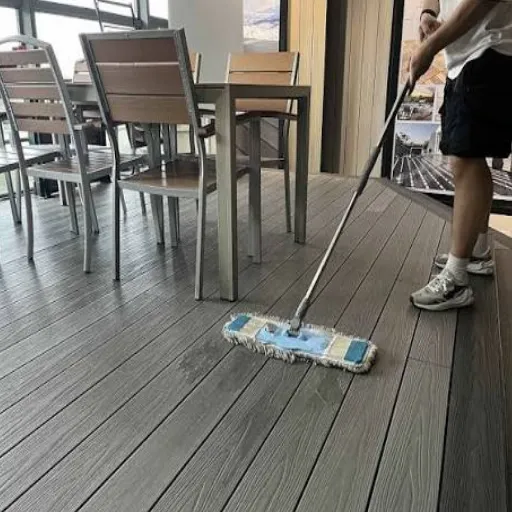
The right tools make WPC decking maintenance faster and safer. You do not need specialized equipment for routine cleaning.
Recommended Tools
- Soft-bristle broom or outdoor brush
- Garden hose with spray nozzle
- Bucket
- Soft cloth or sponge
- Medium-stiff nylon brush for stubborn spots
Safe Cleaners
- Mild dish soap
- pH-neutral detergent
- White vinegar mixed with water
- WPC-approved or composite deck cleaner
What to Avoid
- Bleach and chlorine-based cleaners
- Ammonia or solvent-based products
- Abrasive powders and metal scrubbers
- Steel-wire brushes
- Metal shovels for snow removal
WPC Decking Care Tips
- Sweep before washing so loose dirt does not scratch the surface.
- Use lukewarm water instead of hot water, which can soften the cap layer.
- Rinse from the highest point downward so dirty water drains away.
- Test new cleaners on an off-cut or hidden corner first.
Using the wrong cleaner is one of the fastest ways to void a warranty. Most manufacturers list approved products and methods in their care guides. When in doubt, test any cleaner on a small hidden area first.
How to Clean WPC Decking: A Composite Decking Maintenance Routine
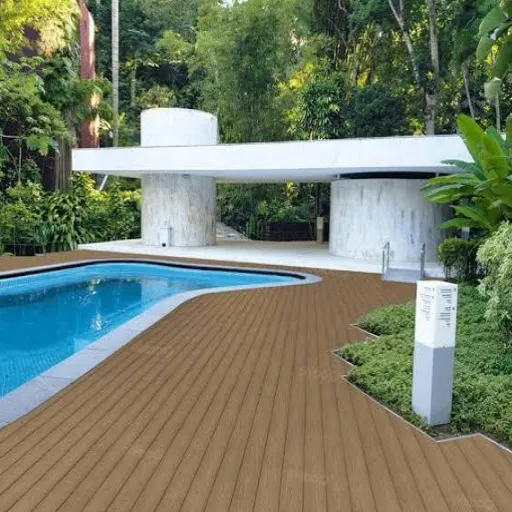
This routine works for both capped and uncapped WPC decking. Adjust frequency based on climate and traffic.
Step 1 — Clear and Sweep
Remove furniture, planters, and grills. Sweep the surface with a soft broom to clear leaves, dirt, and debris. Pay attention to the gaps between boards, where buildup traps moisture.
Step 2 — Rinse with a Hose
Wet the deck surface with a garden hose. This loosens dirt and prevents the cleaning solution from drying too quickly in warm weather.
Step 3 — Prepare the Cleaner
Mix warm water with a small amount of mild dish soap or pH-neutral detergent. For a typical bucket, one or two tablespoons of soap is enough. Too much soap leaves a residue that attracts dirt.
Step 4 — Scrub Gently
Dip a soft brush or sponge into the solution and scrub with the grain of the board. Work in small sections so the cleaner does not dry before rinsing. For textured or embossed surfaces, a medium-stiff nylon brush helps reach grooves without damaging the cap layer.
Step 5 — Rinse Thoroughly
Rinse each section with clean water immediately after scrubbing. Leftover soap can make the surface slippery and attract more dirt.
Step 6 — Let It Dry
Allow the deck to air dry before replacing furniture. In humid climates, use a leaf blower or dry mop to speed up drying and reduce the chance of mold.
A contractor in Arizona once skipped the gentle scrubbing step and attacked a dirty WPC deck with a pressure washer set to 3,000 PSI. The high pressure etched the cap layer, stripped the embossed texture, and left permanent streaks. He later replaced several boards at his own expense. The lesson: water pressure matters more than elbow grease.
Seasonal WPC Decking Maintenance Calendar
A seasonal schedule keeps maintenance predictable and prevents small problems from becoming expensive repairs.
| Season | Tasks | Frequency |
|---|---|---|
| Spring | Deep clean; inspect fasteners, railings, and gaps; remove winter debris | Once |
| Summer | Sweep pollen and dust; clean food and grease spills; check shaded areas for mold | Weekly to monthly |
| Fall | Clear leaves frequently; clean drainage gaps; inspect for staining | Weekly |
| Winter | Remove snow with a plastic shovel; avoid de-icing salts; check for pooling water | As needed |
For most residential decks, this translates to:
- Sweeping: weekly or bi-weekly
- Soap-and-water wash: every 1–3 months
- Deep clean: once or twice a year, usually in spring and fall
- Fastener and gap inspection: twice a year
Commercial decks, decks under trees, and poolside installations may need the upper end of these frequencies. Decks in dry, low-traffic areas can often stay on the lower end.
How to Remove Common Stains from WPC Decking
Speed matters. The longer a spill sits, the harder it is to remove. Always blot liquids before scrubbing.
| Stain Type | Recommended Treatment | What to Avoid |
|---|---|---|
| Oil and grease | Mild dish soap or degreaser with warm water and a soft brush | Solvent-based cleaners |
| Mold and mildew | White vinegar solution or oxygen-based composite cleaner | Chlorine bleach above 5% concentration |
| Rust | Phosphoric or oxalic acid-based rust remover | Abrasive scrubbing pads |
| Food, wine, and juice | Blot immediately, then clean with mild soapy water | Letting spills dry in the sun |
| Leaf tannins and dirt | pH-neutral composite cleaner | High-pressure close-range spraying |
For mold and mildew, spray the affected area with a mixture of one part white vinegar to one part water. Let it sit for 10–15 minutes, scrub with a nylon brush, and rinse well. If the growth is heavy, use an oxygen-based cleaner labeled safe for composite decking.
If you notice recurring mold in the same shaded corner, the cause is usually trapped moisture rather than the decking itself. Trim overhanging branches, improve airflow, and make sure water drains freely between boards.
Can You Pressure Wash WPC Decking?
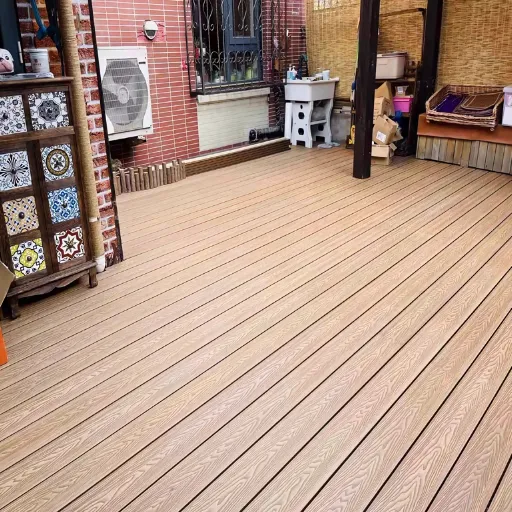
Yes, but only with care. Pressure washing can damage the cap layer or force water into gaps if done incorrectly.
Safe pressure-washing guidelines:
- Keep pressure at or below 1,500 PSI.
- Use a fan-tip nozzle, not a pinpoint jet.
- Hold the wand at least 20–30 cm from the surface.
- Spray with the grain of the boards.
- Rinse only; do not use pressure as the main cleaning method.
Always check your manufacturer’s warranty before pressure washing. Some brands allow it only for rinsing, while others discourage it entirely. When we ship WPC decking from Linyi, we include care notes with each order so installers can pass the correct guidance to end users.
Preventing Scratches, Fading, and Water Damage
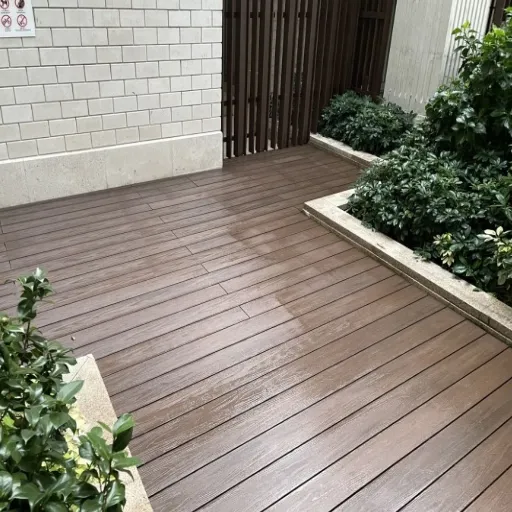
Most WPC decking damage is preventable with a few simple habits.
Protect Against Scratches
- Place felt or rubber pads under furniture legs.
- Lift planters and chairs instead of dragging them.
- Keep pets’ nails trimmed in high-traffic deck areas.
- Avoid metal tools and sharp objects.
Minimize Fading
- Choose lighter colors for high-sun installations; they fade more evenly than dark colors.
- Add shade structures such as pergolas, umbrellas, or awnings.
- Use outdoor rugs labeled UV-resistant, and move them occasionally to avoid uneven sun exposure.
Control Water
- Keep gaps between boards clear of leaves and dirt.
- Ensure the deck surface has a slight slope, at least 1–1.5%, for runoff.
- Maintain at least 20 mm of under-deck ventilation where possible.
- Wipe or sweep standing water after heavy rain.
Some problems, such as heat retention in dark boards or surface scratching in commercial spaces, are tied more to product choice and installation than to maintenance. A deeper look at these issues is covered in our WPC decking disadvantages guide.
Capped vs Uncapped WPC: Maintenance Differences
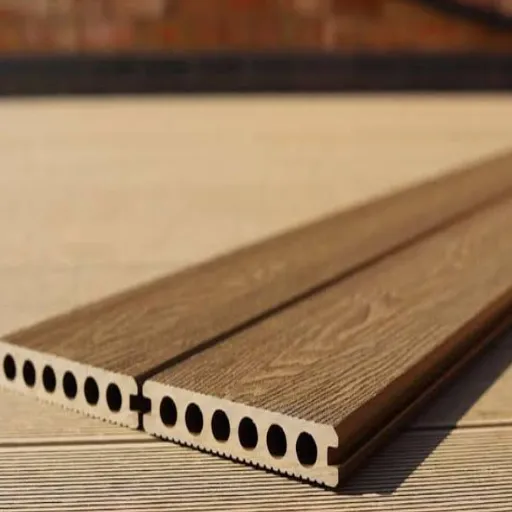
Not all WPC decking behaves the same way. The cap layer is the biggest factor in how much maintenance a deck needs.
Capped WPC
- Water absorption: less than 0.5%
- Stain resistance: high
- Mold resistance: high
- Cleaning frequency: every 1–3 months
- Repair: minor scratches can sometimes be blended; serious damage usually requires board replacement
Uncapped WPC
- Water absorption: 3–8%
- Stain resistance: moderate
- Mold resistance: moderate
- Cleaning frequency: every 2–4 weeks in damp or shaded areas
- Repair: surface fading and staining are harder to reverse
For wet climates, pool decks, and commercial installations, capped WPC is the minimum standard. Uncapped WPC can work in covered, dry areas or temporary installs, but buyers should understand the higher maintenance load. When sourcing from China, ask your supplier to confirm whether boards are capped or uncapped, and request the 24-hour water absorption test report.
WPC Decking Maintenance Cost vs. Wood and PVC
One of the strongest selling points of WPC decking is low long-term maintenance cost.
| Material | Annual Maintenance | 10-Year Maintenance Estimate | Main Tasks |
|---|---|---|---|
| WPC decking | $50–$100 | $500–$1,000 | Soap-and-water cleaning, occasional deep clean |
| Pressure-treated wood | $200–$850 | $4,500–$8,500+ | Staining, sealing, sanding, and board replacement |
| Hardwood decking | $450–$1,050 | $5,000–$10,500+ | Oiling, sealing, repairs |
| PVC decking | $25–$75 | $250–$750 | Occasional soap-and-water cleaning |
These figures are for a typical residential deck. Commercial installations scale with traffic and size, but the ratio between materials stays similar. Wood decking is cheaper upfront but becomes more expensive within 3–5 years because of staining, sealing, and repair costs. PVC has the lowest maintenance cost but the highest material cost. WPC sits in the middle: moderate upfront cost and low ongoing care. For a full cost and performance comparison, see our guide to composite decking vs wood.
Common WPC Decking Maintenance Mistakes
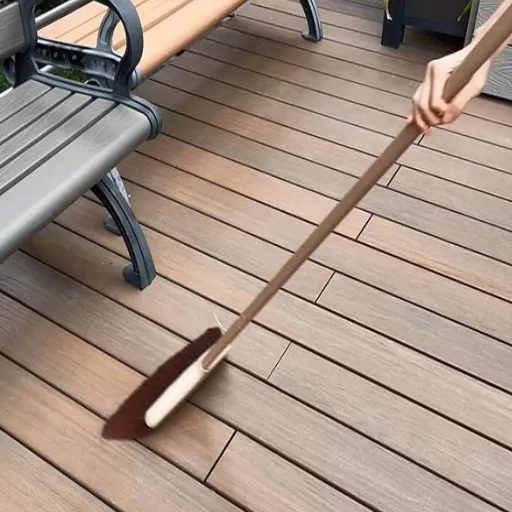
Even careful owners make these errors. Avoiding them saves money and extends deck life.
- Using bleach or ammonia-based cleaners. These chemicals can discolor the cap layer and weaken the surface over time.
- Pressure washing too close or too strong. High pressure erodes the protective cap and can void the warranty.
- Ignoring drainage gaps. Clogged gaps trap water and lead to mold, mildew, and accelerated wear.
- Dragging heavy furniture. Scratches and gouges are difficult to repair on WPC.
- Using metal shovels in winter. Sharp edges scratch the surface. Use a plastic shovel or soft brush instead.
- Letting spills sit. Oil, wine, and grease stains become harder to remove the longer they wait.
- Skipping manufacturer guidelines. Each product has specific approved cleaners and pressure-washing rules.
A restaurant owner in Sydney made mistake number three. His waterfront deck looked fine from above, but leaves and grit had packed into the gaps between boards. After a rainy winter, the trapped moisture caused surface mildew and made the boards slippery. A single afternoon clearing the gaps and washing the deck solved the problem, but the neglect had already created a safety issue during peak season.
When to Repair or Replace WPC Deck Boards
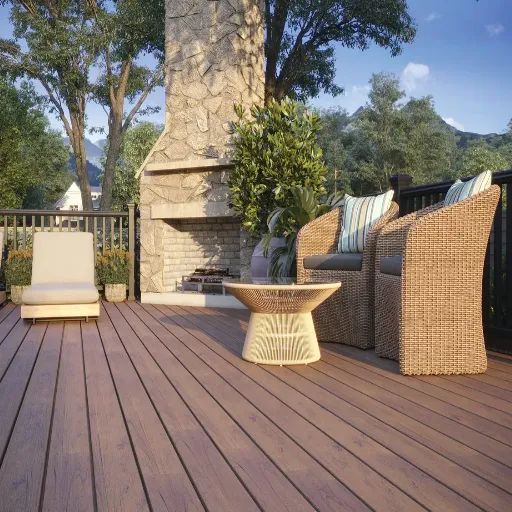
Regular inspections help you catch problems early. Check fasteners, gaps, and board surfaces at least twice a year.
Minor Issues
- Light surface scratches may be blended with a heat gun or matching touch-up product on the manufacturer’s advice.
- Small stains usually respond to the stain treatments listed above.
- Loose fasteners: tighten or replace with corrosion-resistant screws.
Signs a Board Needs Replacement
- Swelling or warping, especially at cut ends
- Deep cracks or delamination
- Significant fading that exposes the inner core
- Structural weakness under foot traffic
- Persistent mold that returns after cleaning
When replacing a board, use the same profile and color batch if possible. Cut ends of capped boards should be treated according to the manufacturer’s instructions to avoid exposing the core. For a deeper look at problems that lead to replacement, see our guide to WPC decking disadvantages.
FAQ
How often should I clean WPC decking?
Sweep weekly or bi-weekly. Wash with soap and water every 1–3 months. Deep clean once or twice a year, and clean spills immediately.
Can I use bleach on WPC decking?
No. Bleach, ammonia, and strong solvents can discolor or damage the surface. Use mild soap, vinegar solutions, or WPC-approved cleaners instead.
Can you pressure wash WPC decking?
Yes, but keep pressure at or below 1,500 PSI, use a fan-tip nozzle, hold the wand at least 20–30 cm from the surface, and spray with the grain. Check the manufacturer’s warranty first.
Does WPC decking need staining or sealing?
No. WPC decking does not require staining, sealing, or painting like wood. Some manufacturers offer optional UV protectant sprays, but they are not necessary for most installations.
How do I remove mold from WPC decking?
Use a mixture of one part white vinegar and one part water, or an oxygen-based composite cleaner. Let it sit for 10–15 minutes, scrub with a nylon brush, and rinse thoroughly. Improve drainage and airflow to prevent regrowth.
Is WPC decking slippery when wet?
Some WPC decking can be slippery when wet, especially if mold or algae grows on the surface. Regular cleaning and choosing boards with textured or anti-slip finishes reduce the risk.
Can WPC decking be painted?
Most WPC decking is not designed to be painted. Paint may not bond well to the cap layer and can peel or flake. If you want a different color, it is usually better to replace the boards.
How long does WPC decking last with proper maintenance?
Quality capped WPC decking lasts 25–30 years. Uncapped WPC typically lasts 10–15 years, depending on climate and maintenance.
What is the best cleaner for WPC decking?
A mild dish soap or pH-neutral detergent mixed with warm water works for routine cleaning. For mold or stubborn stains, use a cleaner specifically labeled safe for composite or WPC decking.
Does capped WPC need less maintenance than uncapped WPC?
Yes. Capped WPC resists moisture, stains, and mold far better than uncapped WPC, so it needs less frequent cleaning and fewer repairs.
Conclusion
WPC decking maintenance is straightforward, but it is not optional. A simple routine of sweeping, washing with mild soap, and inspecting twice a year keeps boards looking good and protects your warranty. The biggest differences come from product choice and early action: capped WPC handles neglect better than uncapped WPC, and fast spill response prevents most stains from setting.
For contractors and wholesale buyers, clear maintenance guidance is part of the value you deliver to end users. When clients know how to care for their deck, they are happier with the product and less likely to blame the material for preventable problems.
Ready to source WPC decking that is easy to maintain and built to last? Contact our team to request samples, review cap-layer test reports, or get a competitive FOB China quote based on your project size.
Categories:
Blog
Related Articles