WPC 3D Slat Wall Panels: The Complete Guide for Architects and Buyers
The best WPC 3D slat wall panels combine recycled wood fibers with premium PVC resin to create durable, moisture-resistant interior cladding with striking three-dimensional profiles. Whether you are an architect specifying materials or a contractor sourcing for a commercial project, understanding material composition, installation methods, and supplier quality is essential for success.
Last year, a design firm in Dubai selected what appeared to be high-end WPC slat panels for a luxury hotel renovation. Within six months, the panels warped along the edges. The problem was not the material itself, but a low-grade core with excessive calcium filler and no UV stabilizers. The panels had cost 30% less upfront. The replacement cost the client three times that difference.
You already know that WPC panels are popular for modern interiors. But popularity does not equal quality. This guide will show you exactly how to choose, install, and source WPC 3D slat panels with confidence. We will cover material science, installation methods, design trends, and a buyer’s checklist for sourcing from manufacturers.
If you are new to WPC wall panels altogether, start with our complete buyer’s guide to WPC wall panels for a broader overview of all panel types, grades, and applications.
Key Takeaways
- WPC 3D slat wall panels use a combination of wood fiber and PVC resin to achieve a moisture absorption rate that stays below 0.8%, and this performance exceeds that of natural wood.
- The Class B1 fire-rated WPC panels extinguish themselves within seconds while complying with commercial interior building regulations.
- The 3D slat design of these panels efficiently disperses sound waves, which makes them suitable for use in offices, hotels and media rooms.
- The three available installation methods include direct adhesive and keel framework, and hidden clip systems, which provide solutions for various wall conditions.
- The price range for standard interior WPC slat panels, which factories sell directly, starts from $0.87 and goes up to $2.98 per meter, yet different manufacturers produce different levels of quality.
What Are WPC 3D Slat Wall Panels?

WPC stands for Wood Plastic Composite. The panels function as building materials that manufacturers create through an extrusion process that uses a specific combination of wood powder, PVC resin, calcium carbonate, and performance additives. The surface of the board develops through its ribbed and grooved structure, which produces strong shadow effects that extend across the wall surface.
Material Composition and Manufacturing
The production process starts when workers combine different raw materials. Premium manufacturers use a ratio of roughly 50% wood fiber, 35% virgin PVC resin, and 15% additives. The additives include UV stabilizers, flame retardants, and lubricants. Plastic manufacturers use twin-screw extruders to process this mixture. The PVC material enters a molten state through heat and pressure, which creates a bond between the PVC and wood fibers. The molten composite material moves through a specially designed steel die, which creates the three-dimensional shape.
The die serves as the main element. It determines the slat width, groove depth, and overall panel geometry. The panels move into a vacuum cooling tank after the extrusion process ends. This process creates a permanent shape while stopping the material from bending out of its intended form. The surface treatment line applies the finish, which can be either wood-grain laminate or solid color film or textured coating.
Manufacturers create different WPC panel recipes to produce their products. Budget manufacturers often increase calcium carbonate content to reduce costs. This makes panels brittle and prone to cracking. High-quality panels maintain a balanced ratio that preserves flexibility and impact resistance.
Terminology Clarification: Slat, Fluted, and Great Wall
Three product descriptions exist that describe products that have almost identical features according to buyers. The subtle differences between two items enable you to establish better relationships with your suppliers.
The design of slat panels includes separate raised strips, which create a visual effect of vertical wooden slats standing above their backing. Fluted panels use the same concept, but the term emphasizes the concave grooves rather than the raised strips. In WPC manufacturing, these two products share the same extrusion profile, which companies sell under different brand names.
The term Great Wall panels functions as a Chinese manufacturing term that directly translates into English. The term describes the wavy wall structure, which creates a ribbed pattern on the surface. This term, used on Alibaba and in factory catalogs, describes the same product that WPC slat and fluted panels represent.
The key point is simple. The specifications should be your main focus rather than the marketing name. The supplier should provide you with the exact profile dimensions and material composition, and certification documents.
Common Specifications and Sizes
Standard WPC 3D slat wall panels come in widths ranging from 120mm to 400mm. Thicknesses vary from 7mm for lightweight DIY series up to 28mm for heavy-duty commercial profiles. Lengths are typically 2.8m, 2.9m, or 3m, though most manufacturers offer customization for large orders.
At Linyi Yuheng, we produce several distinct series. The Slim Series uses 12mm to 15mm slat widths for refined, subtle texture. The Bold Series employs 25mm to 35mm slats for dramatic visual impact. The Circular Arc Series moves beyond straight lines with curved profiles for statement walls. Each series serves different design intents and price points. Browse our WPC slat wall panel series to see specifications, finishes, and pricing.
Why WPC 3D Slat Panels Outperform Traditional Materials
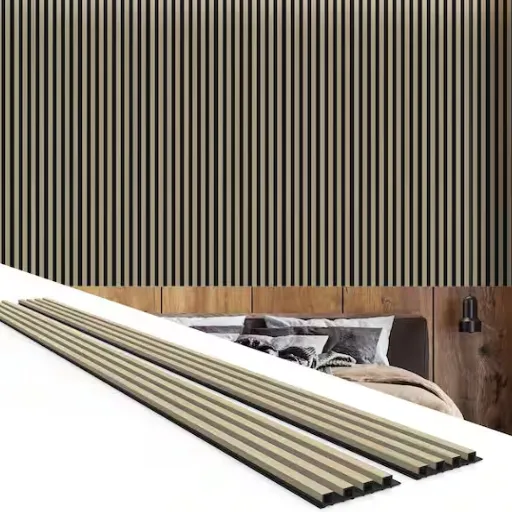
Traditional wall finishes have limitations. Paint chips. Wallpaper peels. Natural wood warps. Tile requires messy, wet installation. WPC 3D slat wall panels solve these problems through engineered material science.
Durability and Weather Resistance
WPC panels achieve moisture absorption rates below 0.8% according to independent laboratory test results. Natural wood has the ability to absorb between 10% and 20% of its weight. The near-waterproof properties of WPC slat panels make them appropriate for use in hotel lobbies, spa reception areas, and coastal residential projects.
The plastic components of the material protect it from damage by termites, wood-boring beetles, and fungal rot. The WPC material will maintain its original size despite changing humidity levels throughout the year. The material maintains its shape because it does not develop cracks in dry environments and does not change shape in moist conditions. WPC slat panels that installers set up according to proper methods will keep their original dimensions for 15 to 25 years.
Fire Safety and Certifications
Commercial projects require companies to demonstrate actual fire performance evidence. High-quality WPC slat panels achieve a Class B1 fire rating according to the Chinese standard GB 8624. The material demonstrates resistance to ignition, which causes it to extinguish itself within seconds after flames stop contacting it.
Request the actual test report when you want to assess fire claims. The test results should come from an independent laboratory that has been accredited by SGS, Intertek or another equivalent organization. The report should contain information about the specific standard that was tested rather than providing a common certificate. For European projects, ask about EN 13501 classification. For North American projects, ASTM E84 is the relevant standard.
Acoustic Performance
Slat panels appear visually appealing because their 3D designs create auditory output control. The raised slats break up sound waves as they hit the wall surface. The grooves create air gaps that trap and dissipate acoustic energy. The WPC slat panels with acoustic felt backing can achieve Noise Reduction Coefficient values that range from 0.5 to 0.85.
The design functions effectively in open-plan offices, hotel corridors, conference rooms, and home theaters. The acoustic benefit is often overlooked in product selection. Architects who specify WPC slat panels for visual impact frequently discover the sound-dampening benefit as a secondary advantage.
Sustainability
WPC panels use recycled wood fibers together with post-consumer plastic materials. This diverts waste from landfills and reduces demand for virgin timber. The E0 formaldehyde emission standard, which requires less than 0.5 mg/L across these panels, makes them safe for immediate occupancy. The installation process requires no off-gassing period.
WPC eliminates the requirement for staining, sealing, and chemical treatments throughout its entire lifespan when compared to natural wood slat walls. The complete product lifecycle assessment shows that WPC paneling has lower environmental effects than traditional wood paneling.
WPC vs. PVC Slat Panels: Which Should You Specify?
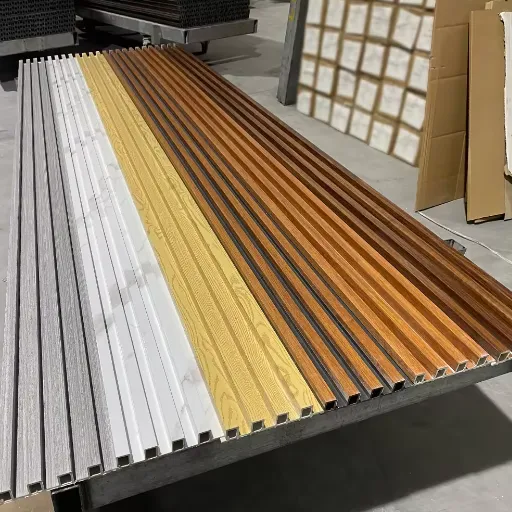
Buyers often confuse WPC with PVC slat panels. The difference matters for performance, aesthetics, and long-term value.
Material Differences
WPC contains wood fibers. PVC panels do not. A true WPC panel has a composite core with visible wood grain texture and a warm, tactile surface. A PVC panel exists as a complete synthetic plastic material. The material can imitate wood through printing and lamination yet its actual wood properties differ from the imitation.
The wood fiber content of WPC enables it to achieve superior screw-holding strength. The material allows fastener attachment without any risk of fastener stripping. PVC panels develop cracks around screw heads when they experience excessive stress.
Performance Comparison
WPC panels have higher weight and density than PVC panels. A standard WPC slat panel weighs roughly 3.5 to 5 kg per square meter. PVC panels have a weight range of 1.5 to 3 kg per square meter. The extra density translates into increased ability to resist impacts. WPC materials better protect against dents, scratches, and collisions than PVC materials do.
PVC provides complete protection against water. WPC shows strong resistance against water. PVC stands as the most secure option for enclosed shower areas and regions that experience direct water sprays. WPC material provides sufficient performance for interior walls that encounter humidity and occasional water splashes.
Cost and Value Analysis
PVC panels cost less upfront. Typical prices range from $5 to $20 per square meter at retail. WPC panels range from $15 to $45 per square meter. However, the lifespan gap is significant. PVC panels in commercial settings often need replacement within 10 to 15 years. WPC panels maintain their functionality for 20 years through low maintenance requirements.
WPC provides hotel owners with lower total ownership costs throughout their 20-year asset lifecycle. Landlords on a limited budget should choose PVC as their most effective option for preparing rental units. Your project’s timeline, traffic level, and aesthetic requirements will determine which option to select.
Design Applications and 2025 Trends
WPC 3D slat wall panels have moved beyond niche design circles into mainstream commercial and residential architecture.
Residential and Commercial Applications
In residential settings, these panels dominate TV accent walls, bed headboards, and living room feature walls. Homeowners appreciate the fast installation and zero-drying-time advantage. A typical accent wall installs in four to six hours. The room is usable immediately. No paint fumes. No plaster dust.
Commercial applications are where WPC slat panels truly shine. Hotel lobbies use them for rapid renovation turnaround. Office reception areas specify them for acoustic control and brand aesthetic. Retail stores choose custom-colored panels to match corporate identity. Restaurants install them in dining areas for ambiance and easy cleaning.
2025 Design Trends
The current design landscape favors three distinct directions. Vertical orientation remains dominant. It draws the eye upward and creates the illusion of higher ceilings. Bold, wide slats are gaining ground for large commercial spaces. The Chunky slat look creates dramatic focal points in open-plan environments.
Color palettes are shifting toward natural oak, warm walnut, charcoal gray, and earth tones. The era of high-gloss, artificial-looking finishes is fading. Matte and low-sheen surfaces that mimic real wood grain are now preferred. Designers also increasingly specify horizontal slat layouts for media walls and bed headboards. This orientation makes spaces feel wider and more expansive.
LED Lighting Integration
One trend competitors rarely address is the marriage of WPC slat panels with LED strip lighting. The grooves between slats create natural channels for concealed lighting. When LED strips are installed behind the slats, light washes across the wall surface. This creates dramatic shadow play and ambient illumination.
Architects in hospitality and retail are specifying this combination for feature walls that serve as both structure and light source. The panels hide wiring and fixtures while providing a finished architectural surface.
When Marcus launched his boutique furniture showroom in Berlin last March, he wanted a statement wall that would photograph well for social media. He chose matte black WPC slat panels with warm white LED backlighting. The installation took one day. The wall became the most photographed feature in his store. Three interior design magazines featured his space within the first six months. The material cost was less than a custom millwork solution by 60%.
Installation Best Practices
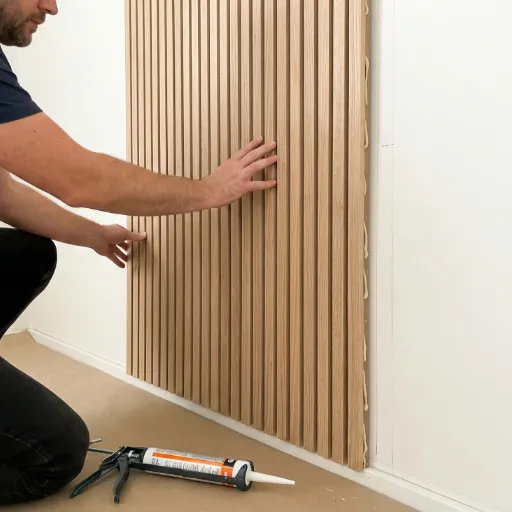
WPC 3D slat wall panels are designed for relatively fast, dry installation. But speed does not mean skipping steps.
Pre-Installation Preparation
Start with a thorough wall inspection. The surface must be clean and dry, and it needs to maintain its structural integrity. Remove old wallpaper, loose paint, or crumbling plaster. The installation methods permit minor unevenness that reaches a maximum of 3mm across 2 meters. Greater unevenness requires a support framework.
The installation room needs to be kept for at least 24 to 48 hours before panel cutting and mounting can begin. This process enables the material to adapt to the existing temperature and humidity conditions. The most common reason for post-installation warping to occur is not following the acclimation procedure.
Plan your layout before cutting. The panel needs to be oriented from a specific starting point, which includes three different elements for corner, outlet, and window handling. The stud or batten locations need to be marked on the wall surface. The laser level enables users to achieve perfect alignment for their initial panel installation. The first panel establishes the alignment system, which controls all subsequent work. The complete contractor process includes all tool specifications and substrate preparation requirements, and troubleshooting information, which is available in our detailed WPC wall panel installation guide.
Three Installation Methods
The direct adhesive method works best for smooth, even walls and lightweight panels. The panel back requires S-pattern construction adhesive application or high-bond silicone attachment. The user needs to press against the wall while maintaining pressure for the time period that the manufacturer specifies. The method provides the quickest results because it does not create any space for airflow between the building materials and the surface.
The keel framework method represents the established professional standard. The installation requires wooden or metal battens to be positioned vertically or horizontally across the wall. The spacing between interior battens should be between 400mm and 600mm. The design creates a ventilation gap that prevents moisture accumulation. The system enables you to create a level surface by using shims between the battens to correct wall imperfections. The panels get attached to the framework through screws or nails.
The hidden clip system provides the most aesthetically pleasing finish. The starter clips connect to either the wall or the building framework. The first panel locks into the clips. The panels that follow use tongue-and-groove edges to connect with each other. The finished surface contains no visible fasteners. The method serves as the primary choice for commercial installations that require high-end design elements.
Common Installation Mistakes to Avoid
The installation of panels should never reach the point where they touch the floor. A space between two surfaces needs to exist because it stops water from moving through the materials. Screws should be installed with a force that stops at their recommended limit. The WPC material maintains its shape until it experiences a weight that exceeds its breaking point. The space between walls, corners, and ceiling junctions needs a 5mm to 10mm gap for expansion. The WPC material shows expansion and contraction behavior that depends on temperature variations.
Direct contact with heat sources must be avoided. WPC material starts to lose its shape when temperatures reach 70 degrees Celsius or higher. The product requires installation with thermal barriers in place behind stoves, fireplaces, and heating elements.
Elena, who works as a contractor in Barcelona, selected the hidden clip system to install WPC slat panels at a boutique hotel lobby entrance. The existing wall surface from the 1920s showed multiple plaster damages that reached a height of 15mm. Her team completed their work by building a metal framework system, which they used to create a level surface that supported panel installation for two days. The client occupied the space on day three. A traditional plaster and paint finish would require five days of drying time before it would be ready for the next steps.
Planning your own installation? Contact our team for technical drawings, clip specifications, and layout guidance tailored to your project.
Sourcing WPC 3D Slat Panels: A Buyer’s Checklist
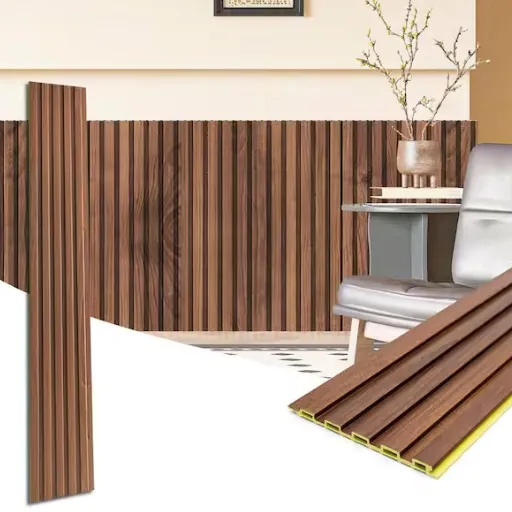
The gap between premium and budget WPC panels is enormous. Knowing how to evaluate suppliers protects your project and your budget.
What to Look for in a Manufacturer
Production capacity matters for large orders. A factory with five or more extrusion lines can deliver 50,000 meters per month. Single-line workshops struggle to meet tight deadlines. Export experience is equally important. Manufacturers who regularly ship to Europe, North America, or Australia understand certification requirements, packaging standards, and customs documentation.
Request samples before placing bulk orders. Premium manufacturers send samples within three to seven days. The sample needs evaluation for surface consistency, edge sharpness, and color uniformity assessment. Bend a small piece slightly. Quality WPC flexes without cracking. Low-grade material snaps or shows white stress lines.
At Linyi Yuheng, we operate from Linyi, Shandong, one of China’s primary WPC manufacturing hubs. Our facility produces custom profiles across six distinct series with OEM color matching and tailored dimensions available for qualified orders. Request a sample kit from our factory with custom profile options and fire test documentation.
Quality Inspection Points
Inspect your shipment immediately after it arrives at your location. Use good lighting to check the surface finish of the product. The inspector needs to find all visible surface defects, which include scratches, bubbles, and color streaks. The inspector should use calipers to measure the panel dimensions. The thickness measurement must not exceed 0.2mm from the specified value.
The inspector needs to check the profile edges for defects. The presence of sharp, clean edges indicates that the die has been calibrated with high precision. The presence of rounded or irregular edges indicates that the die has experienced wear and the extrusion process has produced inconsistent results. The inspector needs to check color batch consistency by laying five panels in a straight line. The appearance of any difference between panels of the same batch indicates a potential problem.
The packaging quality of a product demonstrates the manufacturing standards that a factory uses. The proper method for panel separation requires the use of foam or cardboard spacers. Shipping to ocean destinations requires outer packaging to contain thick cardboard or plywood crates. International shipping requires more than thin plastic wrapping because it does not meet safety standards.
Pricing and Logistics
The factory-direct price for standard interior WPC slat panels starts at $0.87 and reaches a maximum of $2.98 for every meter. The market charges extra costs for thicker panels because they need special colors and unique finishes. The exterior-grade panels with co-extrusion UV layers have a price range that starts at $2.50 and extends to $4.99 for each meter.
The required minimum order quantities differ from each other. The standard color and size options need between 500 and 1,000 meters of material. The custom profile needs 2,000 meters or greater material requirements. You should always validate that pricing shows EXW, FOB, or CIF shipping terms. Your total expenses for delivery will change according to the Incoterm you select.
Shipping organizations need to calculate weight because it impacts their operations. A panel with dimensions of 160mm width and 22mm thickness has a weight range between 2.8 and 3.2 kilograms per meter. A standard 20-foot container can store between 20,000 and 25,000 meters of panels, which depends on their size and packaging method. Standard orders need between 15 and 25 days for their production lead time.
The procurement manager David for a retail chain in Australia learned the lesson through direct experience. He chose to buy 8,000 meters of WPC slat panels from a new supplier because he only considered the price. The sample appeared satisfactory. The bulk shipment arrived with color variation across batches, inconsistent groove depths, and panels that cracked during cutting. He had to spend three times the ocean freight cost to send the replacement panels through air freight. The initial savings vanished within a period of weeks.
Maintenance and Long-Term Care
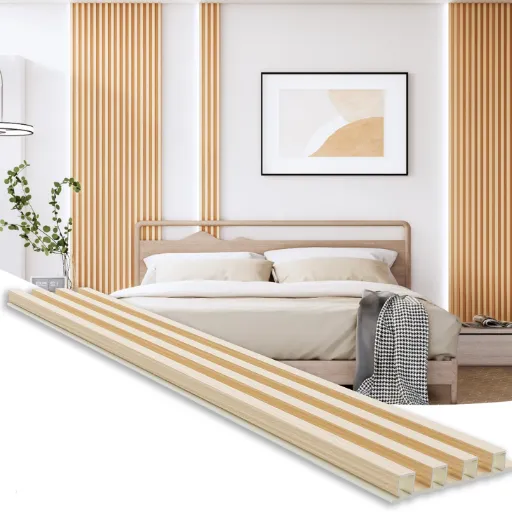
WPC 3D slat wall panels require minimal maintenance. The panels establish their strongest market advantage through this particular feature.
The process for cleaning the surface requires minimal effort. Dusting the surface requires a dry microfiber cloth which should be used every two weeks. For cleaning higher levels of dirt, users should use a damp cloth together with mild detergent. The correct cleaning method involves using a damp cloth to wipe slats while maintaining their original direction.
The use of pressure washers should be avoided. The forceful water stream from a pressure washer can harm the surface laminate while it forces water to enter between panel edges. Users should not use abrasive scrubbers or bleach, or solvent-based cleaners. These substances will make the finish lose its shine and will cause the PVC binding to break down.
The organization should perform an inspection every year. Inspect the area for any loose fasteners, any gaps present at trim pieces, and any signs of surface damage. Users can fix small scratches by using a repair marker that matches the color of the surface. Users should resolve all water infiltration issues at the edges without any delay.
The appearance of WPC slat panels stays intact for 15 to 25 years when users install them correctly and perform basic maintenance. The process requires no staining and no sealing, and no repainting.
Conclusion
The WPC 3D slat wall panels provide aesthetic appeal together with durable performance and quick installation. They outperform natural wood in both moisture resistance and maintenance requirements. The material delivers better structural strength and acoustic performance years than PVC. The 3D profile creates architectural depth which flat wall finishes fail to achieve.
Three decisions serve as the foundation for achieving success. Choose the right material grade for your environment. Install with proper acclimation and expansion gaps. Source from a manufacturer with verified certifications and consistent quality control.
WPC 3D slat wall panels provide enduring value for hotel lobby designs and retail space renovations and residential development material specifications.
Ready to specify WPC 3D slat wall panels for your next project? Request a sample kit from our team at Linyi Yuheng. We will send material samples, fire test reports, and custom profile options so you can evaluate quality firsthand before committing to a bulk order.
FAQ: Common Questions About WPC 3D Slat Wall Panels
What are WPC 3D slat wall panels made of?
WPC panels are creation through an extrusion process that uses a material combination of wood fibers and PVC resin, calcium carbonate, and performance additives. The ratio determines durability and cost. Premium panels use approximately 50% wood fiber, and 35% virgin PVC, and 15% additives.
Are WPC slat wall panels waterproof?
The product shows strong protection against water because it absorbs moisture at a rate below 0.8%. The product can be used in spaces that experience high humidity and short periods of water exposure. The product cannot withstand direct contact with water and the conditions found in steam shower environments.
How long do WPC slat panels last?
The lifespan of WPC slat panels extends from 15 to 25 years when they receive proper installation and basic maintenance. Exterior-grade panels with UV stabilizers typically carry 10 to 20-year warranties.
Can I install WPC slat panels myself?
Yes. Homeowners with basic tools can use the direct adhesive and hidden clip methods to install the system. The framework system provides the necessary support for installers to handle both large commercial walls and surfaces with uneven areas.
Do WPC slat panels help with sound?
Yes. The 3D design creates barriers that prevent sound waves from traveling through. When combined with acoustic backing, the NRC values range from 0.5 to 0.85. The product serves as a suitable solution for office spaces, hotel environments, and media presentation areas.
What is the difference between slat and fluted panels?
The WPC industry uses both terms to refer to the same material during production. Slat panels emphasize the raised strips. Fluted panels emphasize the concave grooves. The Great Wall is the Chinese industry term for the same profile. Always verify dimensions rather than relying on terminology.
How do I clean WPC slat wall panels?
Use a dry or damp cloth together with mild detergent to wipe surfaces. The use of pressure washers and abrasive pads, bleach, and solvents must be avoided. The slats must be cleaned in the direction that matches their orientation.
Categories:
Blog
Related Articles