WPC Wall Panels for Shower: The Honest Grade-by-Grade Guide
Yes, you can use WPC wall panels in a shower, but only if you pick a co-extruded or solid-core grade rated IPX5 or higher, seal every cut edge and joint with mildew-resistant silicone, and install the panels vertically so water runs down the face. Standard WPC absorbs 1 to 3 percent moisture and is not safe for direct spray. For shower trays and wet-room floors, choose PVC, SPC, or tile instead.
Search for “wpc wall panels for shower” and you will get two contradictory answers. One retailer calls its panels “100 percent waterproof and ideal for wet rooms.” A comparison blog warns that WPC contains wood fiber and should never go inside a shower enclosure. Both are technically right, because both are describing different grades.
We manufacture WPC wall panels for export, so we can show you exactly where each grade is safe. This guide covers the four WPC grades, the shower wet zones where each belongs, how to install and seal panels so they last, design ideas, and when to choose a different material. For the full picture across the whole room, our complete WPC bathroom wall panel guide walks through every bathroom application.
Key Takeaways
- Co-extruded or solid-core WPC (water absorption under 0.5%, IPX5 or higher) is safe for shower walls when every edge and joint is sealed and panels go up vertically.
- Standard WPC (1 to 3 percent absorption) belongs on dry bathroom walls, never on a shower wall.
- Use WPC for shower walls (Zone 1) and splash zones (Zone 2); choose PVC, SPC, or tile for the shower tray (Zone 0) and wet-room floors.
- The number one cause of shower failure is an unsealed cut edge around a valve or fixture, not the panel itself.
- Verify “waterproof” claims by asking for water absorption test data (ASTM D570) and the IPX rating on the exact product before you buy.
WPC vs PVC vs SPC for Shower Walls
Before you pick a panel, you need to know where WPC stands against its two closest rivals. This matters most in a shower, because it is the wettest room in the house and the place where material differences become visible failures.
| Material | Water absorption | Shower wall (Zone 1) | Shower tray (Zone 0) | Wood look | Relative cost | Lifespan |
|---|---|---|---|---|---|---|
| Standard WPC | 1-3% | Not recommended | No | Excellent | $ | 15-20 yrs |
| Co-extruded / solid-core WPC | Under 0.5% | Yes, when sealed | No | Excellent | $$ | 20-25 yrs |
| PVC | 0% | Yes | Yes | Fair | $ | 20-30 yrs |
| SPC | 0% | Yes | Yes | Good | $$$ | 20-30 yrs |
| Ceramic tile | 0% | Yes | Yes | Excellent | $$$ | 30+ yrs |
The honest summary is simple. WPC wins on looks, warmth, acoustic comfort, and a lower environmental footprint. PVC wins on pure water resistance and price. SPC sits between the two and is the closest thing to a tile that still installs like a panel. The global shower wall panel market is worth about $2.6 billion in 2026 and is growing at roughly 4.7 percent a year, according to Research and Markets, and most of that volume still goes to PVC and SPC. WPC is the growth story in design-led projects, not in raw volume.
Here is the situation where this decision actually plays out. Tom, a bathroom contractor in London, was asked by a client to match a wood-look feature wall in a walk-in shower. He chose standard WPC because it was cheap and looked great in the showroom. Within fourteen months, the panels around the shower valve started to swell at the cut edge where the mixer passed through. The client was not happy, and the fix meant cutting out two panels. Standard WPC on a direct-spray wall was the wrong grade for the job, not a bad material.
When you compare materials for a specific shower, the question is always zone by zone. For the shower tray and wet-room floor, PVC, SPC, or tile is the safer call. For the shower walls themselves, premium sealed WPC works and looks better than any alternative. Most comparison guides, including Dundee Deco’s SPC vs PVC vs WPC breakdown, steer buyers to SPC for shower enclosures, and that advice is sound for the tray zone. We break down the full head-to-head in our honest WPC vs SPC comparison for specifiers.
WPC Wall Panels for Shower: The 4 Grades and What’s Safe

Not all WPC is the same, and this is where most of the confusion starts. There are four common grades, and each one handles water differently.
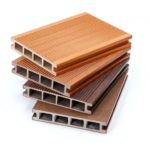
Standard WPC. Wood fiber mixed with HDPE or PP plastic, typically absorbing 1 to 3 percent moisture. Fine for bedroom and living room walls. Not for shower walls.
High-density WPC. A denser board with absorption of 0.5 to 1.5 percent. Good for splash zones and humid areas. Acceptable behind a bath or in a powder room.
Co-extruded (capped) WPC. A plastic shield is fused over the core during extrusion, bringing absorption under 0.5 percent. This is the grade for shower walls, as long as you seal every cut edge.
Solid-core / nano-treated WPC. The densest construction, sometimes with a nano-waterproof treatment, pushing absorption under 0.3 percent. Some panels carry IPX6 or IPX7 ratings. This is the wet-room and full-enclosure grade.
A quick word on IPX ratings, because retailers use them loosely. IPX4 means splash-proof. IPX5 withstands water jets, which covers most shower spray. IPX6 handles powerful jets, and IPX7 survives temporary submersion. For a shower wall, look for IPX5 or higher on the exact product you plan to buy, not on the brand’s marketing page.
For a deeper look at absorption numbers and testing standards across every grade, see our waterproof WPC grades and water absorption data in depth.
Shower Wet Zones: Where Each WPC Grade Belongs
Bathroom installers use the UK and EU wet-zone system to decide what is safe where. It is the clearest way to think about a shower.
Zone 0. Inside the shower tray or wet-room floor. This area sees direct, constant water. No WPC grade belongs here. Use PVC, SPC, tile, or a solid surface panel.
Zone 1. The shower walls. This is the space above the bath and within 1.2 meters horizontally and 2.25 meters vertically of the showerhead. Co-extruded or solid-core WPC works here when edges are sealed and panels are vertical. Standard grades do not belong.
Zone 2. Within 600 millimeters of Zone 1. This is the splash zone beyond the spray. High-density or co-extruded WPC is fine. Standard WPC is acceptable here if edges are sealed.
Outside the zones. Vanity walls, dry feature walls, and powder rooms. Any grade works, and WPC’s wood-look makes it a natural choice for a feature wall.
| Wet zone | Water exposure | Recommended WPC grade | Safer alternative |
|---|---|---|---|
| Zone 0 (tray / floor) | Direct, constant | None | PVC, SPC, tile, solid surface |
| Zone 1 (shower walls) | Direct spray | Co-extruded / solid-core, sealed, vertical | PVC, SPC, tile |
| Zone 2 (splash) | Splash only | High-density or co-extruded | PVC, SPC |
| Outside zones | Dry | Any grade | None needed |
Full-coverage versus partial coverage is the next decision. A full shower wall means panels from floor to ceiling, which maximizes the seamless look and minimizes grout lines. A partial approach uses WPC on a feature wall or niche and tiles elsewhere. Many renovators do exactly this: WPC on the feature wall for the wood-look warmth, tile in the direct-spray enclosure. It is a smart way to get the aesthetic without pushing the material beyond its limits.
How to Install WPC Wall Panels for a Shower

Correct installation decides whether WPC stays intact in a shower. The panel itself is rarely the problem. The installation is. Follow these steps.
Step 1. Prepare the substrate. The wall must be sound, flat, and dry. Run a moisture test first, and install a waterproofing membrane in wet areas. Panels installed over a damp wall will fail regardless of grade.
Step 2. Choose the method. You can bond panels with adhesive or fix them to a framework. In a shower, use galvanized or aluminum furring so the metal does not corrode, and leave a small air gap behind the panels to let moisture escape.
Step 3. Install vertically. This is not a style choice. Vertical panels let water run down the face instead of collecting in horizontal seams. It is the single most important orientation rule in a shower.
Step 4. Seal every cut edge. When a panel is cut to fit around a shower valve, the raw composite edge is exposed. Water creeps in here first. Apply mildew-resistant silicone to every cut edge, corner, and fixture penetration.
Step 5. Seal the joints. Run silicone inside the tongue-and-groove groove before you click panels together. This closes the seam against water before the panel is even in place.
Step 6. Leave expansion gaps. Allow 2 to 3 millimeters between panels and at the perimeter, then cover them with PVC trim or profiles. Panels expand and contract with heat, and trapped expansion causes buckling.
Step 7. Cut carefully around fixtures. Measure twice, cut once, and seal the cut edge around the valve, mixer, and any other penetration.
Step 8. Manage the wall-to-floor junction. In a wet room, the wall panels must overlap the tray or floor with a proper seal at the junction. This is the most common place for water to escape and cause damage underneath.
Anna, a DIY renovator, used co-extruded WPC in her walk-in shower after her previous MDF panels failed within eighteen months. She installed the panels vertically, sealed every cut edge around the mixer, and ran silicone in the joints. Three years later, there is no swelling and no mold. The material did its job because the installation did its job.
For a complete run-through with exact spacing and sealant details, our step-by-step bathroom installation guide covers the whole process. And if you are still weighing the waterproofing question across the full room, read are WPC wall panels waterproof for bathroom for the honest zone-by-zone answer.
Ready to choose the right grade for your shower? Request a shower-grade sample and a bulk quote, and our team will help you match the panel to your exact wet zone. Contact us to get started.
WPC Wall Panels for Shower: Design Ideas for 2026
The wood-look aesthetic is the main reason people pick WPC over PVC. Here are the shower-wall designs working best right now.
Wood-look feature wall. WPC behind a freestanding bath or in the shower niche brings warmth to an otherwise tiled space. Use it as the accent, not the whole enclosure.
Slat and fluted panels. Vertical slats create a spa-like texture and naturally shed water if the channels run with the grain. They also add acoustic softness in a hard, echoing room.
Large-format stone and marble effects. Oversized panels minimize seams and give a hotel-style shower. This look is the strongest 2026 trend.
Warm earthy tones. Terracotta, sage, taupe, and warm greys are replacing stark white schemes. Matte finishes hide water marks better than gloss.
Small-shower tricks. Lighter panels make a small shower feel bigger, and vertical slats lift the eye. A mirror-sheen finish bounces light around a compact space.
Remember the constraint that runs through all of these ideas. The design only survives if the grade and installation match the zone. A fluted standard WPC panel in a direct-spray enclosure will not hold up, no matter how good it looks.
Lifespan, Maintenance & Mold Prevention
Premium WPC panels last 20 to 25 years in a shower when installed correctly, and standard grades last 15 to 20 years in dry conditions. The grade, the sealing, and the ventilation decide which end of that range you land on.
Maintenance is simple. Wipe the walls after use to stop soap scum and hard water building up. Use warm soapy water and a soft cloth, and avoid abrasive pads and harsh acid cleaners because they can damage the surface and void the warranty.
Mold prevention comes down to three things. First, ventilation: even waterproof panels need airflow, so run the extractor. Second, sealed seams: mold behind panels usually means water found a way in at a joint. Third, inspection: check the silicone seals every six to twelve months and reapply when they look worn.
How to Verify a “Shower-Proof” Claim Before You Buy

The shower market is full of panels marketed as “100 percent waterproof.” Some of those claims are accurate for the right grade. Some are marketing. Here is how to tell the difference.
Ask for measurable specs, not adjectives. Request the water absorption test report, usually ASTM D570 or ISO 17064. Under 0.5 percent is the threshold for shower-grade WPC. Ask for the mold-resistance result under ASTM G21, and confirm the IPX rating on the exact product you are buying.
Check certifications. CE, ISO 9001, and ASTM E84 for flame spread are the basics. Third-party reports from labs like SGS carry more weight than a brand’s own spec sheet.
Order samples and test them. Put a sample in water for a few days and check the edges for swelling. It is a crude test, but it tells you more than a brochure.
Watch for red flags. A supplier who claims “100 percent waterproof for everything” without a spec sheet is not being honest. A supplier who shares real absorption data, IPX ratings, and third-party test reports usually is. As a factory-direct exporter, we publish our grade data and send samples for exactly this kind of verification.
When Mike’s property company needed panels for forty rental-unit showers, he asked every supplier for absorption data before ordering. Three out of four could not provide it. He specified a co-extruded grade with test documentation and a sealed-edge install, and the units have needed zero panel callbacks in two years. Asking the right questions up front saved him a very expensive retrofit.
Frequently Asked Questions
Can WPC wall panels be used in a shower?
Yes, with a condition. Use a co-extruded or solid-core grade rated IPX5 or higher, seal all edges and joints with mildew-resistant silicone, and install the panels vertically. For the shower tray, choose PVC, SPC, or tile.
Are WPC panels waterproof enough for a shower?
Premium sealed grades with water absorption under 0.5 percent are safe on shower walls (Zone 1). Standard WPC at 1 to 3 percent absorption is not. “Waterproof” for WPC always depends on grade and installation.
Do WPC panels swell in a shower?
Only when water reaches the raw wood fiber. This happens when edges are unsealed or the protective cap is damaged. Sealed cut edges and a co-extruded cap prevent swelling.
Can you use WPC panels in a wet room?
On the walls, yes, with solid-core or co-extruded WPC and proper sealing. On the wet-room floor, no. That surface needs SPC, tile, or a solid surface panel.
Are WPC panels better than PVC for a shower?
WPC looks better, feels warmer, and has a lower environmental footprint. PVC is more forgiving of installation mistakes because it absorbs zero water. For a careful install, WPC wins on looks; for reliability, PVC wins.
What is the best WPC grade for a shower wall?
Co-extruded or solid-core WPC with an IPX5 or higher rating and water absorption under 0.5 percent. Look for panels 8 to 12 millimeters thick with anti-mold additives for wet rooms.
How do you install WPC panels in a shower?
Vertically, on a dry flat substrate, with a waterproofing membrane in wet areas, silicone in the joints, and every cut edge around valves and fixtures sealed. Leave 2 to 3 millimeter expansion gaps.
Can you install WPC over existing shower tiles?
Yes, if the tiles are sound, flat, and well bonded. Skip this if there is any movement or moisture behind them. Clean and prime the surface before bonding panels.
Are solid core WPC panels waterproof?
Solid-core WPC has the lowest absorption (under 0.3 percent) and is the closest WPC gets to waterproof. It is marketed for wet rooms, but it still requires sealed edges and correct installation to perform in a shower.
How long do WPC shower panels last?
20 to 25 years for premium shower-grade panels in a shower, and 15 to 20 years for standard grades in dry areas. Grade, sealing quality, ventilation, and maintenance determine the actual result.
Conclusion
So, can you use WPC wall panels in a shower? Yes, when you choose the right grade and install it the right way. Use co-extruded or solid-core WPC rated IPX5 or higher for the shower walls, seal every edge and joint, and install vertically. Keep standard WPC on dry walls, and leave the tray and wet-room floor to PVC, SPC, or tile.
The three rules that separate a shower wall that lasts from one that fails are grade, sealing, and orientation. Pick the right grade for the zone. Seal every cut edge around valves and fixtures. Install vertically so water runs off the face.
If you are planning a shower renovation or sourcing panels for a commercial project, request shower-grade samples and a bulk quote. Our team can help you match the right WPC grade to your exact wet zone. Contact us to get started.
Categories:
Blog
Related Articles