Are Wpc Wall Panels Waterproof For Bathrooms? The Honest Answer (2026)
WPC wall panels are water-resistant, not 100% waterproof like PVC or ceramic tile. Standard grades absorb 1.5-3% moisture and are fine for bathroom dry zones, while premium sealed co-extruded or solid-core grades (water absorption under 0.5%) are safe in shower and bath wet zones when installed with sealed edges and joints. For direct-spray enclosures, PVC, SPC, or tile is the safer call.
Search for “are wpc wall panels waterproof for bathroom,” and you will get two contradictory answers. One site says WPC is “100% waterproof, safe for kitchens, bathrooms, and basements.” Another warns that WPC contains wood fiber and “is not recommended for direct shower enclosures.” Both are technically correct. The real answer depends on the grade you buy, where you install it, and how carefully you seal it.
Here is what we want to clear up. We are Linyi Yuheng International Trading Co., Ltd., a WPC manufacturer and exporter. We produce the standard grades and the premium waterproof grades, so we can tell you exactly where each one is safe. By the end of this guide, you will know which WPC wall panels belong in your bathroom, zone by zone, and how to verify a supplier’s “waterproof” claim before you spend money.
Key Takeaways
- WPC is water-resistant, not 100% waterproof. Standard grades absorb 1.5-3% moisture; premium co-extruded grades absorb under 0.5%.
- In the UK/EU wet-zone system, WPC is safe in Zone 2 and outside zones with any grade, in Zone 1 with a premium sealed grade, and in Zone 0 only with a dedicated waterproof solid-core product (or choose PVC/SPC/tile).
- Edges, joints, and cut ends are the weak points. Proper sealing with mildew-resistant silicone decides whether WPC stays waterproof.
- Premium grades cost 20-40% more than standard, but last 15-25 years in humid bathrooms and eliminate grout maintenance.
- Always ask for water absorption test reports (ASTM D570 or ISO 17064) and mold resistance results (ASTM G21) before buying.
Why the Internet Gives You Two Conflicting Answers
The confusion is not an accident. The industry is split into two camps, and each one serves a different purpose.
The “100% waterproof” camp is dominated by manufacturers and retailers selling premium solid-core or co-extruded panels. These products genuinely are waterproof enough for bathrooms. Bushboard, for example, markets a WPC compound that “won’t swell or warp in water” and backs it with a lifetime guarantee. When a factory says its top-tier panel is waterproof, it usually means that exact grade, properly installed.
The “never use WPC in a shower” camp is made up of comparison blogs and consumer guides. They are warning against cheap, standard-grade WPC with unsealed edges, which genuinely can swell if water gets behind the protective layer. They are right about that grade.
Both are correct because they are talking about different products. That is why this question cannot be answered with a simple yes or no. The honest answer is: it depends on the grade, the zone, and the installation.
What “Waterproof” Actually Means for WPC
Water-Resistant vs. Waterproof
Before anything else, you need the industry’s dirty secret: the word “waterproof” is used loosely. A panel that shrugs off humidity is not the same as one that handles direct water spray.
- Water-resistant means the material tolerates moisture, steam, and splashes without degrading. Most standard WPC panels fall here.
- Waterproof means the material blocks water penetration entirely, even under direct spray. Only sealed, high-grade WPC products genuinely qualify.
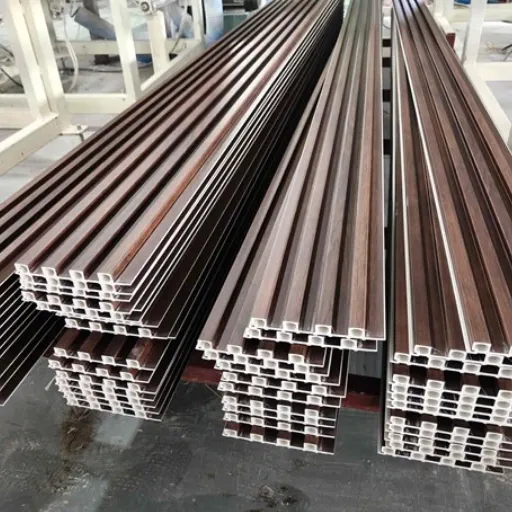
WPC (wood-plastic composite) is made of wood or bamboo fiber (roughly 55-65%), a thermoplastic polymer like HDPE or PP (30-35%), and additives that include waterproofing agents and anti-mold compounds. The plastic matrix encapsulates the wood fibers, which blocks the capillary action that makes solid wood swell. That is why even standard WPC is far more moisture-resistant than timber, which absorbs 8-15% water.
Water Absorption Rates by Grade
The single most useful number to ask for is water absorption, measured by immersion testing under ASTM D570 or ISO 17064. Here is how grades compare:
| Grade | Water Absorption | Bathroom Suitability | Typical Use |
|---|---|---|---|
| Standard WPC | 1.5-3% | Dry zones and Zone 2 only | Feature walls, vanities, powder rooms |
| High-density WPC | 0.5-1.5% | Zone 2 and some Zone 1 areas | Bath surrounds, splash zones |
| Co-extruded / capped WPC | Under 0.5% | Zone 1 and Zone 2 with sealing | Showers, bath walls |
| Nano-treated / solid-core WPC | Under 0.3% | Zone 0 and Zone 1 with sealing | Wet rooms, shower enclosures |
For context: solid wood absorbs 8-15%, plywood 15-30%, and PVC or ceramic tile essentially 0%. The gap between a 3% standard panel and a 0.3% nano-treated panel is the difference between a powder-room wall and a wet-room wall.
IPX Ratings: A Quick Shortcut
Some manufacturers rate panels with IPX codes. IPX4 is splash-proof, IPX5 withstands water jets, and IPX6 is fully waterproof against powerful jets. If you want WPC in a shower, look for IPX5 or IPX6, and confirm the rating on the exact product, not the brand’s marketing page.
Bathroom Wet Zones: Where WPC Is (and Isn’t) Safe
The UK and EU use a zone system to define water risk in bathrooms. It is the most practical framework for choosing any wall panel, and it applies directly to the question of whether WPC is waterproof enough.
- Zone 0: Inside the shower tray or bath. Direct, constant water contact.
- Zone 1: Above the bath, and within 1.2 m horizontally and 2.25 m vertically of the showerhead.
- Zone 2: Within 600 mm of Zone 1, where splashes can reach.
- Outside zones: The rest of the bathroom, including vanity walls and powder rooms.
Here is the zone-by-zone verdict for WPC:
| Zone | Water Exposure | Recommended WPC Grade | Safer Alternative |
|---|---|---|---|
| Zone 0 | Direct, constant | Dedicated waterproof solid-core, fully sealed | PVC, SPC, or tile |
| Zone 1 | Direct spray, steam | Co-extruded or solid-core, sealed edges and joints | PVC, SPC, or tile |
| Zone 2 | Splashes | High-density or co-extruded WPC | Fine with any panel |
| Outside | Humidity only | Any grade | N/A |
The practical rule: use premium sealed WPC for Zone 1 and Zone 2, and switch to PVC, SPC, or tile for Zone 0 shower trays. If you want the wood look on your shower wall specifically, choose a sealed co-extruded or solid-core grade and follow the installation rules below. For a complete breakdown of how WPC compares with SPC for wet zones, see our guide to WPC vs SPC wall panels for bathroom.
The 4 WPC Grades and What They Mean for Your Bathroom
Standard WPC
The entry-level product. It resists humidity and light splashing, but it will absorb measurable moisture if water sits on unsealed edges. Use it for feature walls, vanity backsplashes, and powder rooms. It is the most affordable option and the least suited to wet zones.
High-Density WPC
A denser core means less room for water and better structural stability. Panels are often thicker (8-9 mm instead of 5-7 mm). This grade suits bath surrounds and splash zones where it will not face direct spray.
Co-Extruded (Capped) WPC
A solid protective cap layer is fused over the composite core during extrusion. This cap is the same reason co-extruded decking lasts decades outdoors. The cap seals the wood fiber away from moisture, pushing water absorption under 0.5%. More than 60% of new WPC wall panels now use co-extrusion, which tells you where the industry is heading. This is the grade we recommend for bathroom wet zones.
Nano-Waterproof Treated Panels
A surface treatment that repels water at the molecular level, often combined with a solid core. These reach under 0.3% absorption and are the closest WPC gets to a true waterproof wall panel. They cost 30-50% more than standard grades, but they are the only WPC we would trust in a wet room.
How do you tell a real wet-zone grade from a marketing claim? Check the thickness (5-9 mm), look for a visible co-extruded cap layer, confirm anti-mold additives and UV stabilizers, ask for the IPX rating, and request the water absorption test report. If a supplier cannot produce numbers, treat the “waterproof” claim with suspicion.
Do WPC Wall Panels Swell or Mold in a Bathroom?
This is the question behind the question, and the honest answer has two parts.
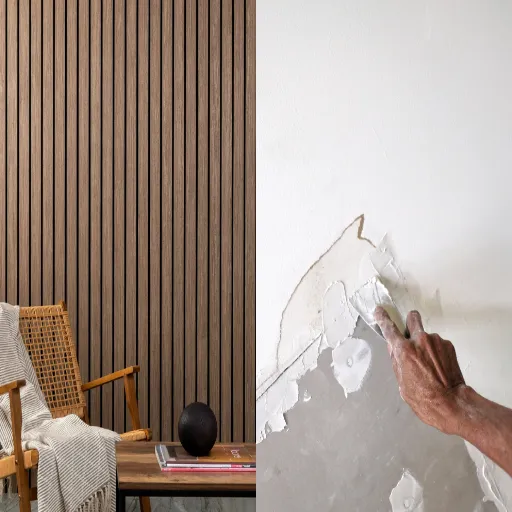
Swelling happens when edges are unsealed. The plastic cap protects the face of the panel, but the cut ends are raw composite. When a contractor cuts a panel to fit around a shower valve and leaves the cut edge open, water can creep in. Over months, the exposed wood fiber swells and the edge rises. We have seen this exact failure on a 200-room hotel project: standard-grade panels in high-humidity guest bathrooms showed edge swelling within 18 months, and the hotel replaced them with a co-extruded grade. The fix is simple. Seal every cut edge and joint with mildew-resistant silicone, and install the panel so water runs down the face, not into the seams.
Mold struggles to grow on WPC itself. Because WPC absorbs so little water, it deprives mold of the moisture it needs. The plastic-encapsulated fibers are also physically inaccessible to mold spores, so this resistance is a property of the material, not a coating that wears off. Panels typically pass ASTM G21 mold-resistance testing at a rating of 0 or 1 (no growth). Where mold actually appears in bathrooms, it is usually on surface dust and grime, or inside improperly sealed seams. Clean panels regularly and re-inspect your silicone every couple of years. For the full routine, our article on how to clean and maintain WPC wall panels in bathrooms walks through it step by step.
WPC vs. PVC vs. SPC vs. Tile for Bathroom Waterproofing
If you are comparing materials, here is the honest landscape:
| Material | Waterproof | Wet-Zone Rating | Aesthetics | Warmth/Acoustic | Cost/m² | Lifespan |
|---|---|---|---|---|---|---|
| WPC | Water-resistant | Zone 1-2 (premium) | Wood look, textured | Warm, quieter | $35-250 | 15-25 yrs |
| PVC | Waterproof | Zone 0-1 | Print patterns | Thin, cool | $20-80 | 15-20 yrs |
| SPC | Waterproof | Zone 0-1 | Stone/wood print | Dense, hard | $40-120 | 20-30 yrs |
| Ceramic tile | Waterproof | Zone 0-1 | Premium, timeless | Cold, echoes | $30-200+ | 25+ yrs |
WPC wins on warmth, acoustic feel, the realistic wood texture, and a carbon footprint roughly 37% lower than PVC. It loses to PVC, SPC, and tile on raw waterproofing. That trade-off is exactly why specifiers get stuck on this question. Our bathroom cluster breaks the decision down further: see the full WPC wall panels for bathroom guide for the complete material comparison and room-by-room recommendations.
Installation: The Step Most People Skip
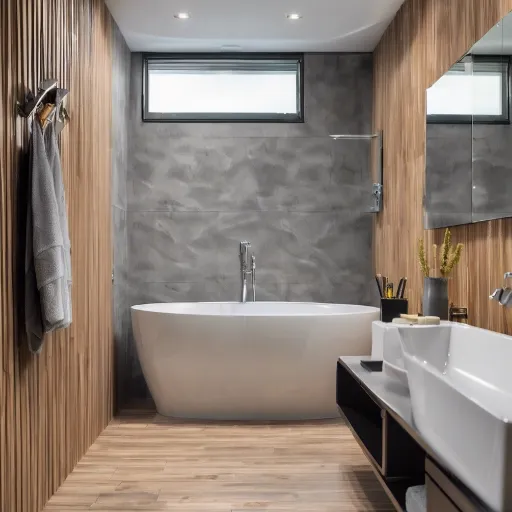
A WPC panel is only as waterproof as its installation. This is the part of the job that separates a 10-year wall from an 18-month failure.
- Prepare the substrate. The wall behind the panels must be sound, dry, and moisture-resistant. Concrete, cement board, or moisture-treated plywood are all fine. Test for damp before you start.
- Add a vapor barrier in wet areas. In Zone 1 and Zone 2, a waterproofing membrane behind the panels is cheap insurance against condensation and hidden leaks.
- Choose the mounting method. Adhesive works for dry zones. In damp areas, use a framework of galvanized or aluminum furring strips spaced 40-60 cm apart. The air gap lets moisture escape and keeps panels off a damp wall.
- Seal every joint, corner, and cut edge. Use mildew-resistant silicone. This single step prevents most edge swelling and mold problems.
- Leave expansion gaps. Panels expand slightly with heat and humidity. Leave 1-2 mm between panels and 2-3 mm at the perimeter, then cover with trim.
- Install vertically in showers. Vertical panels shed water along the surface and leave fewer horizontal seams for water to find.
Our step-by-step guide on how to install WPC wall panels in a bathroom covers every step with the exact spacing and sealant details. For the shower zone specifically, see WPC wall panels for showers and wet rooms.
How Long Do Waterproof WPC Panels Last in a Bathroom?
With the right grade and correct installation, expect 15-20 years in a humid bathroom, and up to 25 years for premium co-extruded or nano-treated grades. In dry zones, 20-30 years is realistic. Compare that with tiling, which needs grout maintenance and occasional re-grouting, and the total cost of ownership starts to favor panels, especially because they install in hours instead of days.
How to Verify a “Waterproof” Claim Before You Buy
The fastest way to protect yourself is to demand measurable proof, not marketing words.
- Ask for test reports. Request water absorption data from ASTM D570 or ISO 17064, and mold resistance from ASTM G21 (a rating of 0 or 1 is good).
- Check certifications. Look for CE, ISO 9001, and where relevant, ASTM E84 for flame spread. For commercial projects, third-party reports like SGS add another layer of confidence.
- Order samples and test them yourself. Soak a sample edge in water for 24 hours, inspect the density and thickness, and check whether the cap layer is genuinely fused.
- Walk away from red flags. A supplier who claims a single panel is “100% waterproof for everything,” cannot produce a spec sheet, or has no third-party test data is not worth the risk. The honest ones publish their numbers.
As a factory-direct supplier, we publish grade-level absorption data for every panel we export, and we send samples for independent testing. If you are sourcing for a project, request samples or a bulk quote and our technical team will help you match the grade to your wet zones.
Frequently Asked Questions
Are WPC wall panels 100% waterproof?
No. WPC is water-resistant, not 100% waterproof like PVC. Premium sealed grades absorb under 0.5% and are safe in bathroom wet zones when installed correctly, but no standard-grade WPC is truly waterproof.
Can WPC wall panels be used in a shower?
Yes, with a condition. Use a co-extruded or solid-core grade rated IPX5 or higher, seal all edges and joints with mildew-resistant silicone, and install vertically. For a shower tray (Zone 0), choose PVC, SPC, or tile.
Do WPC wall panels mold in a bathroom?
Rarely, because WPC absorbs so little water that mold cannot establish itself. Panels pass ASTM G21 mold-resistance testing. Mold appears on surface grime or in unsealed seams, so clean regularly and inspect sealant.
Will WPC wall panels swell in a bathroom?
Only if water reaches unsealed edges or the protective cap is scratched through. Sealed co-extruded grades and proper installation prevent swelling.
Are WPC panels better than PVC for a bathroom?
For waterproofing, no, PVC wins. For warmth, acoustic comfort, realistic wood texture, and eco-friendliness, WPC wins. Choose by zone and by what matters to you.
What is the water absorption rate of WPC?
Standard WPC absorbs 1.5-3%; high-density 0.5-1.5%; co-extruded under 0.5%; nano-treated under 0.3%. Always ask for the ASTM D570 report for the exact product.
The Bottom Line
So, are WPC wall panels waterproof for bathrooms? The answer is yes, with the right grade in the right zone, and no, if you buy standard-grade panels and install them in a shower. Use premium co-extruded or solid-core WPC for Zone 1 and Zone 2, seal every edge and joint, and switch to PVC, SPC, or tile for direct-spray Zone 0 areas. Ask every supplier for water absorption and mold-resistance test data, and test samples before you commit.
We build both the standard and the waterproof grades, so we can help you choose the right one for your project without the marketing spin. Contact our team for grade recommendations, samples, or a bulk quote for your next bathroom renovation.
Categories:
Blog
Related Articles