WPC Deck Tiles Disadvantages: 10 Problems Buyers Should Know
WPC deck tiles are interlocking wood-plastic composite panels, and their main disadvantages are heat retention in direct sun, fading over time, mold and mildew in damp conditions, base-grid connector failure, wet slipperiness, and the need for a perfectly flat, solid base. Most of these problems are avoidable with a quality capped tile, correct base preparation, and honest expectations about the product.
If you have spent any time reading about outdoor flooring, you have heard that WPC deck tiles snap together in minutes and turn a tired concrete patio into a warm, low-maintenance outdoor space. That’s true. The part most marketing pages skip is that the modular format brings its own set of trade-offs, and buyers who discover them after purchase are the ones who pay the price.
This article is written by a trading company based in Linyi, China, one of the world’s largest WPC production hubs. We see deck tiles at every quality level, from premium co-extruded products to cheap imports that fail within two years. That factory-floor perspective lets us give you the honest version: the ten real disadvantages of WPC deck tiles, why they happen, and exactly how to avoid each one before you spend a dollar.
Key Takeaways
- Most WPC deck tile problems trace to the base grid, not the surface. Cheap recycled-PP grids crack and snap after UV and freeze-thaw cycling; quality grids use virgin, UV-stabilized polypropylene with 2 to 3 mm locking tabs.
- WPC tiles need a flat, solid base. On bare soil, grass, or uneven ground they sink, rock, and pull apart at the joints.
- Dark tiles can reach 65 to 75 degrees C in direct sun. Lighter colors, cool pigments, and co-extruded caps reduce the heat and slow fading.
- Water absorption below 0.5% separates quality tiles from cheap ones. Higher absorption leads to swelling, mold, and freeze-thaw cracking.
- WPC deck tiles are not permanent. They shift under heavy traffic, can lift in wind on exposed rooftops, and collect debris in the drainage gap.
What Makes WPC Deck Tiles Different From Decking Boards
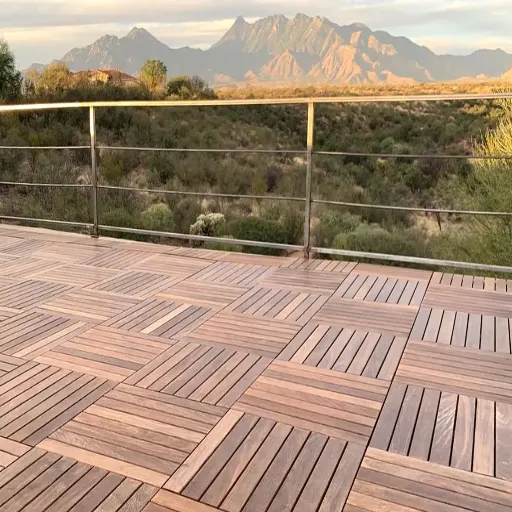
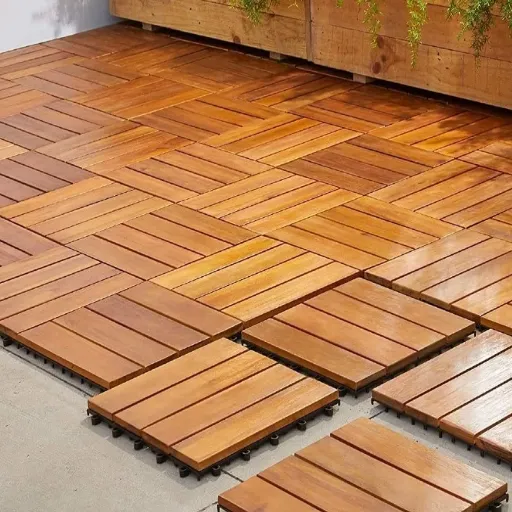
Before we list the problems, it helps to know what is unique about the tile format. Traditional WPC decking boards are long planks screwed to a joist frame. WPC deck tiles are 300 x 300 mm modular panels with a plastic base grid underneath, designed to click together as a floating floor with no fasteners. That interlocking base grid is what makes installation so fast, but it is also the source of several problems that decking boards simply do not have, including base-grid breakage, wind lift, and the demand for a perfectly flat sub-surface.
The tile format is not better or worse than boards, just different. If you are weighing the two, our comparison of WPC deck tiles vs WPC decking boards walks through the installation, cost, and durability differences in detail. For the rest of this guide, we focus on the tile-specific downsides.
The 10 Disadvantages at a Glance
| # | Problem | Why It Happens | How to Avoid It |
|---|---|---|---|
| 1 | Heat retention | Dark WPC absorbs solar heat, reaching 65 to 75 degrees C | Choose light colors or cool pigments; install in shade |
| 2 | Thermal expansion | A locked tile field has nowhere to release movement | Leave 10 to 12 mm gaps around walls and fixed structures |
| 3 | Fading | UV degrades the wood fiber; budget tiles skip the cap layer | Buy co-extruded tiles and demand the ASTM G154 report |
| 4 | Mold and mildew | Wood fiber absorbs water; debris clogs the drainage gap | Keep water absorption below 0.5% and lift tiles for cleaning |
| 5 | Base grid failure | Recycled PP grids turn brittle under UV and freeze-thaw | Inspect the grid: virgin PP with 2 to 3 mm locking tabs |
| 6 | Wet slipperiness | Smooth faces plus sunscreen oils and algae reduce grip | Choose R11-rated textures for pools and high-traffic areas |
| 7 | Sub-surface demands | Tiles rock and sink on uneven ground | Prepare a flat base with 5 mm per meter tolerance |
| 8 | Wind lift | Light tiles act like wings on exposed rooftops | Add perimeter fixings, ballast, or a securing system |
| 9 | Shifting and debris | A floating floor creeps under traffic; gaps trap dirt | Secure the perimeter and clear the drainage gap yearly |
| 10 | Quality variability | Filler ratios and grid materials vary by manufacturer | Verify the factory and document batch numbers |
Heat Retention and Thermal Expansion
The most common complaint about WPC deck tiles is heat. Wood-plastic composite absorbs and holds solar heat, and dark-colored tiles in direct sun can reach surface temperatures of 65 to 75 degrees C (149 to 167 degrees F). That’s far too hot for bare feet, which matters on pool decks, balconies, and any spot where people walk barefoot in summer.
Thermal expansion is the quieter companion problem. WPC expands and contracts with temperature swings, and a tightly locked tile field has nowhere to release that movement. On larger installations, cumulative expansion can push tiles against walls and fixed structures until edges lift or joints buckle. Because interlocking tiles are locked together across the whole field, the expansion behaves differently than on a board deck where each plank has its own spacing.
Elena learned both lessons at once. She bought budget composite tiles for her south-facing rooftop terrace in Valencia, attracted by a price a third below the premium brand. The samples looked flawless in spring. Sixteen months later, the color had faded two shades and two tiles had buckled at the corners during the August heat wave. She spent three weekends replacing nearly half the terrace and still could not match the faded color of the surviving tiles.
The mitigation is straightforward: choose lighter colors or cool-pigment formulations, install in the morning when tiles are coolest, leave 10 to 12 mm expansion gaps around walls and fixed structures, and avoid the cheapest uncapped grades.
Fading and UV Degradation
Fading is the second most reported WPC deck tile problem. The wood-fiber content that gives WPC its natural look is also vulnerable to UV radiation, and budget tiles that skip the protective cap layer can fade, yellow, or chalk within two to five years.
Here is the detail most guides leave out: color loss is not always gradual. Many tiles go through a fast stabilization phase in the first few months, then hold color for years. The risk is batch-to-batch inconsistency. Buyers have reported that tiles purchased a month after their original order were a completely different shade, because the factory ran a different pigment batch. If you install in phases or need to replace a tile later, matching color can be impossible.
Quality co-extruded tiles use a polymer cap layer loaded with UV stabilizers that seals the core and protects the pigment. That cap typically costs 20 to 30% more, and it is the single most effective way to prevent fading. Ask every supplier for the UV aging test report, usually run under ASTM G154, and check the color-change threshold before you order. For a deeper look at how the cap layer protects color in wet areas, see our waterproof WPC deck tiles guide.
Moisture, Mold, and Mildew
WPC is marketed as waterproof, and quality tiles are highly moisture-resistant, but they are not immune to damp problems. The wood fiber in the core can absorb water if the formulation is poor, and tiles with high water absorption rates swell, warp, and crack when water freezes inside them. Premium tiles absorb under 0.5%; low-grade tiles can absorb 2 to 5% or more.
The drainage gap under a floating tile deck solves one problem and creates another. Water flows underneath instead of pooling on top, which is good. But in persistently wet, shaded, or poorly drained spots, organic residue accumulates in that gap, and mold and algae grow under the tiles. You will not see it until you lift a tile, and by then it may already be spreading across the surface in damp climates.
If your installation is around a pool, in a rainy region, or over a surface with poor drainage, choose co-extruded tiles with documented water absorption below 0.5%, keep the drainage gap clear, and lift tiles for cleaning at least once a year. Ventilation underneath matters as much as the tile itself.
Base Grid and Connector Failure
Here’s the WPC deck tile problem nobody puts in the marketing brochure: the base grid is the first thing to fail, not the surface. The plastic grid under each tile carries every step you take, and it is where manufacturers cut corners most aggressively.
Quality base grids are molded from virgin polypropylene with UV stabilizers and locking tabs 2 to 3 mm thick. Cheap grids use recycled polypropylene with little or no stabilization, and they turn brittle after a few seasons of UV exposure and freeze-thaw cycling. The connectors snap, the grid cracks under a heavy furniture leg, and tiles start rocking or coming apart.
A distribution company in Vancouver found this out with a full container order. The supplier promised premium grade, and the tops of the tiles looked excellent. When the distributor opened the cartons, 12% of the base grids had hairline cracks, and several connector tabs snapped during a test install on a warehouse floor. The tiles were unusable, the supplier refused a full refund, and the distributor absorbed the loss on a bad container.
You can spot this problem before it costs you money. Flip any sample tile over and inspect the grid. Stiff, uniform plastic with thick locking tabs signals quality. Thin, bendy plastic that creaks when you press it, or a strong chemical smell, signals a product that will fail within a few years. If you are sourcing from China, this inspection is one of the first things we check during factory verification.
Slipperiness When Wet
WPC deck tiles can be slippery when wet, even though most have a textured surface. Grooved and 3D embossed finishes provide decent grip, but smooth-faced budget tiles lose traction quickly in rain, and every tile gets more slippery as sunscreen oils and algae build up on the surface over time.
Slip resistance is measured by the coefficient of friction and by wet-area classifications under standards like DIN 51130. For pool decks and areas with children or older adults, aim for R11 or higher and confirm the supplier has a slip test report rather than a verbal claim. For general patios and balconies, R10 is usually enough. If you are designing a commercial space, the slip rating is a safety and liability issue, not just a comfort preference, so verify it in writing.
Sub-Surface Demands and Installation Limits
WPC deck tiles require a flat, solid, stable base. This is the limitation that disqualifies more installations than any other. Interlocking tiles are not suitable for bare soil, grass, loose sand, or uneven ground, because the tiles sink, shift, and pull apart at the joints. They are designed to float over concrete, pavers, existing tile, or a prepared compacted sub-base, with a flatness tolerance of about 5 mm per meter.
The same rigidity that makes the tiles stable also makes them unforgiving. WPC does not settle into place the way wood does, so any flaw in the sub-surface shows up in the finished floor. Uneven ground trapped under the base grid causes tiles to rock, and a single misaligned base can crack a connector under load. Real customer reviews include broken clips caused purely by uneven ground beneath the tile.
You also give up flexibility in cutting. Edge tiles around posts, railings, and odd shapes need a jigsaw or fine-tooth saw, and a floating tile field adds about 18 to 25 mm of height, which can jam sliding doors and create steps at thresholds. Measure your door clearance before you order.
The Floating-Floor Trade-Off: Shifting, Wind, and Debris
Because WPC deck tiles are loose-laid, they are not a permanent floor. That removability is a feature for renters, but it comes with three practical downsides.
- Shifting under traffic. On a busy pathway or commercial terrace, the field creeps and edge tiles work loose over time. Secure the perimeter and re-seat edge tiles as needed.
- Wind lift on exposed rooftops. A lightweight tile with an open grid acts like a small wing, and wind from below can peel the field from the edges. If your location is elevated and exposed, plan for perimeter fixings, ballast, or a securing system from the start.
- Debris in the drainage gap. Leaves and dirt collect underneath, and unless you lift tiles periodically, debris blocks the drainage the system relies on.
Priya, a hotel manager, installed floating composite tiles on her pool terrace for a fast turnaround between seasons. Within a year, guests complained that tiles near the doorway shifted under the constant foot traffic, and a summer storm lifted two edge tiles. A perimeter securing system fixed the issue in an afternoon, but it was a fix she had not budgeted for, and the unplanned work delayed the terrace reopening by a day.
None of this makes the tiles a bad choice. It means you should plan the installation like a professional: secure the perimeter, keep the field tidy, and expect to lift tiles for maintenance. For the full step-by-step on getting this right, the modular WPC decking buyer’s guide covers surface preparation, layout, and edge detailing in depth.
Cost, Quality Variability, and Repair Limits
Two financial realities round out the list. The first is upfront cost. WPC deck tiles cost more than pressure-treated wood on day one, typically $4.50 to $11 per square foot for quality tiles compared with $3 to $6 for basic wood alternatives, and premium composite products can exceed $15 per square foot. Budget a 10% waste factor for cutting and mistakes on top of that.
The long-term math is kinder. Wood costs $450 to $850 per year in sanding, staining, and sealing, while WPC costs $5 to $15 per year in occasional cleaning. Over 20 to 25 years, WPC totals roughly $6,100 to $12,300 while wood totals $17,000 to $33,000, which is why quality WPC tiles become the better value after about seven or eight years.
The catch is the word quality. Low-cost imports fail early and never reach that break-even point.
The second reality is quality variability, which is wider in deck tiles than almost any outdoor product. Formulations, cap layers, filler ratios, and base-grid materials vary so much between manufacturers that two products that look identical can have completely different lifespans. Excessive calcium carbonate filler above roughly 35 to 38% by weight causes micro-cracks and edge brittleness, and you can’t see filler content from a photo.
There is also no practical repair for a badly aged tile. A faded or warped tile must be replaced, not fixed, and matching the color of an older tile is often impossible. Order 5 to 10% extra from the same batch and keep it stored, so future replacements match.
How to Avoid These Problems When Sourcing
Every disadvantage above shares the same root cause: buying an unknown tile from an unverified supplier. Most WPC deck tile problems trace to low-grade formulations, cheap base grids, and poor QC, not to the material itself. Here is a practical checklist to protect yourself.
- Inspect the base grid first. Flip a sample and check for virgin PP, UV stabilizers, and 2 to 3 mm locking tabs. Press on it; stiff is good, bendy is bad.
- Demand test reports, not claims. Ask for water absorption (target below 0.5%), UV aging (ASTM G154), and slip resistance results in writing.
- Do a cross-section check. A capped tile shows a visible outer shell. An uncapped tile is a single material all the way through.
- Run simple field tests. Snap two samples together and confirm a firm connection. Leave a cut sample in water for 48 hours and check for swelling.
- Verify the factory. Confirm ISO 9001, CE marking, and independent third-party reports from SGS, Intertek, or TUV before ordering at container volume.
- Document batch numbers for every order so color and formulation stay consistent for future replacements.
As a trading company operating in the Linyi manufacturing cluster, we sit at the source of most of the world’s WPC deck tiles. That proximity lets us verify factory quality, pull test documentation, and ship only tiles we would install ourselves, at competitive bulk pricing. When you are ready to compare real samples, contact our team for quotes and factory-verified options.
FAQ: WPC Deck Tiles Disadvantages
Do WPC deck tiles get hot?
Yes. Dark WPC deck tiles can reach 65 to 75 degrees C in direct sun, too hot for bare feet. Lighter colors, cool pigments, and co-extruded caps absorb less heat, and shaded or covered installations stay cooler.
Are WPC deck tiles slippery when wet?
They can be. Grooved and 3D embossed surfaces hold traction reasonably well, with wet-area ratings around R10 to R11 under DIN 51130, while smooth budget tiles become slippery in rain. Sunscreen oils and algae build-up reduce grip over time, so clean the surface regularly and confirm the slip test report.
Do WPC deck tiles fade?
Quality co-extruded tiles fade slowly over many years, but budget uncapped tiles can fade or yellow within two to five years. Ask for the UV aging report and choose a capped product with UV-stabilized pigment to protect the color.
Do WPC deck tiles need a flat surface?
Yes. WPC deck tiles need a flat, solid base with about 5 mm per meter of flatness. They are not for bare soil, grass, or loose sand, and on uneven ground they rock, sink, and pull apart at the joints.
Can WPC deck tiles be repaired?
Damaged or faded tiles must be replaced, not repaired, and matching the color of an older tile is often impossible. Order 5 to 10% extra from the same batch and store it for future replacements.
Are WPC deck tiles worth it?
For most buyers, yes, if you choose a quality capped tile. WPC costs more than wood upfront, but near-zero maintenance makes it cheaper over 20 to 25 years. Cheap imports fail early and never reach that break-even point, so the brand and quality you choose decide the value.
Conclusion: Buy With Your Eyes Open
WPC deck tiles have real disadvantages, and pretending otherwise does no one any favors. They get hot, they can fade, they need a flat base, the base grid is a weak point, and they are not a permanent floor. But here’s what ten years of working in the WPC industry has taught us: almost every complaint on this list traces back to a cheap product or a skipped preparation step, not to the material itself.
A quality co-extruded tile with a solid base grid, installed on a properly prepared surface, easily reaches the 8 to 15 year lifespan these products promise. The buyers who get burned are the ones who chase the lowest price and skip the inspection. Do not be one of them.
Start with the checklist in this article, inspect samples before you commit, and verify every claim with test reports. When you are ready to compare factory-verified options, contact our team for a tailored quote, samples, or help selecting the right tile grade for your project and climate. The right tile, bought with your eyes open, is a great investment. The wrong one is a weekend you will never get back.
Categories:
Blog
Related Articles