What Is WPC Decking? Definition, Composition & Types Explained (2026)
WPC decking is a wood-plastic composite outdoor flooring material made from wood fibers, thermoplastic polymers, and additives. The blend creates boards that look like timber but resist rot, insects, and moisture better than natural wood. If you have ever wondered what the “WPC” label means on decking samples, it simply stands for wood-plastic composite.
The labels can be confusing. One supplier calls it WPC decking. Another calls it composite decking. A third advertises co-extruded or capped decking. All of these terms overlap, but they are not identical. For buyers, contractors, and homeowners, understanding the difference helps you choose boards that match your climate, budget, and maintenance expectations.
We supply WPC decking from Linyi, one of China’s largest WPC manufacturing clusters, and we speak with buyers every week who are comparing samples that look the same in photos but perform very differently on site. This guide explains what WPC decking is, what it is made of, how it is manufactured, and how to judge quality before you order. For a deeper look at sourcing, pricing, and installation, see our complete WPC decking buyer’s guide.
Key Takeaways
- WPC decking is a wood-plastic composite made from wood fibers, thermoplastic polymers, and additives.
- A typical board contains 50–70% wood fiber and 30–50% plastic, plus UV stabilizers, colorants, and coupling agents.
- Capped or co-extruded WPC has a protective polymer shell that resists moisture, stains, and fading better than uncapped WPC.
- WPC decking is low-maintenance but not maintenance-free; regular cleaning extends its service life.
- Check wood-plastic ratios, water absorption reports, cap layer coverage, and certifications before placing a large order.
What Is WPC Decking?
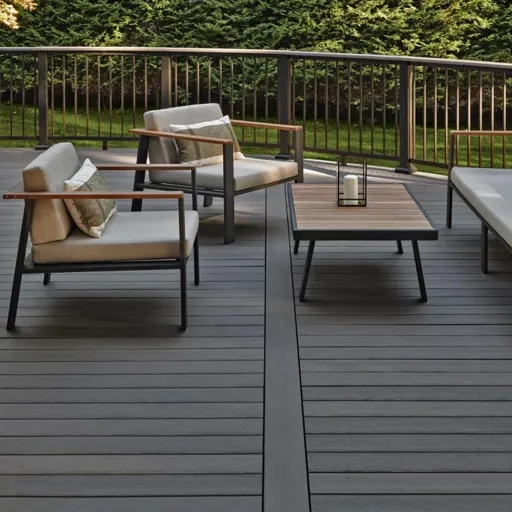
WPC decking stands for wood-plastic composite decking. It is an engineered outdoor flooring material made by blending wood fibers or wood flour with thermoplastic polymers such as polyethylene, polypropylene, or PVC, then adding performance additives and extruding the mixture into board shapes.
The result is a board that mimics the appearance of natural wood while offering greater resistance to moisture, insects, rot, and warping. You may also see it called wood-plastic composite decking, WPC composite decking, or simply composite decking when the broader category is meant.
WPC decking sits in the middle of the outdoor flooring market. Pressure-treated wood is cheaper upfront but needs regular staining, sealing, and board replacement. PVC decking is highly water-resistant but usually costs more and can look less natural. WPC combines wood aesthetics with plastic durability, which is why it has become a popular choice for residential patios, pool decks, boardwalks, and commercial terraces.
The global WPC decking market reached approximately USD 7.48 billion in 2026, according to Custom Market Insights, and is forecast to grow to USD 15.84 billion by 2035. That growth means more choices, but also more variation in quality.
What Is WPC Decking Made Of?
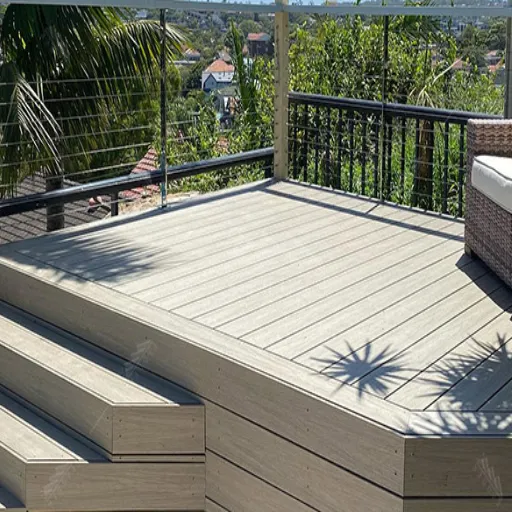
WPC decking is made from three main groups of ingredients: wood fibers, plastic polymers, and additives. The exact recipe varies by manufacturer and product grade, but a common formulation is roughly 50–70% wood fiber and 30–50% plastic by weight, plus additives.
Wood Fibers or Wood Flour (50–70%)
The wood portion provides the natural look, rigidity, and some structural strength. Common sources include:
- Recycled sawdust
- Wood chips
- Wood flour
- Bamboo powder
Higher wood content can make boards look and feel more like timber, but it can also increase water absorption if the fibers are not fully encapsulated. That is one reason the cap layer matters.
Thermoplastic Polymers (30–50%)
The plastic portion binds the wood fibers and protects them from moisture. Common polymers include:
- HDPE (high-density polyethylene): widely used, good moisture resistance, recyclable
- PP (polypropylene): strong, heat-resistant, often used in higher-grade boards
- PVC (polyvinyl chloride): highly water-resistant, common in premium or co-extruded products
The type and quality of polymer affect how the board performs in wet, hot, or freezing climates. Lower-grade boards may use recycled plastics with inconsistent quality, which can lead to warping or fading.
Additives (5–10%)
Additives improve performance, appearance, and processing. Typical additives include:
- UV stabilizers slow down color fading from sun exposure
- Colorants and pigments: create wood-grain and solid-color finishes
- Coupling agents: improve the bond between wood fibers and plastic
- Lubricants: help the material flow during extrusion
- Anti-fungal or anti-mildew agents: reduce mold growth in damp or shaded areas
- Fire-retardant compounds: required for some commercial or fire-rated installations
A contractor in Florida once showed us two samples that looked nearly identical. One board used HDPE with UV stabilizers and anti-fungal additives. The other used a lower-grade polymer mix with minimal UV protection. After one summer on a sunny terrace, the second board had faded noticeably and developed surface mildew. The difference was in the recipe, not the photograph.
How Is WPC Decking Manufactured?
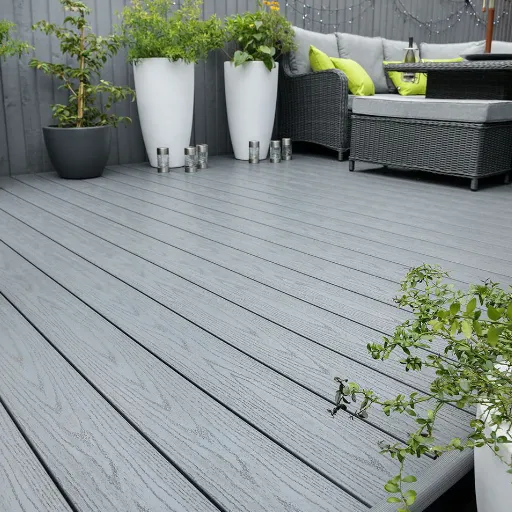
Most WPC decking is produced through an extrusion process. The steps are straightforward, but each one affects the final quality.
Step 1 — Mixing
Wood fibers and plastic are dried, measured, and blended with additives. Moisture control is critical. Excess moisture in the wood fibers can cause bubbles, weak spots, or later swelling in the finished board.
Step 2 — Extrusion
The mixed material is heated and forced through a die that shapes the board. Common profiles include solid rectangular boards, hollow boards with internal chambers, and grooved boards for hidden fasteners.
Step 3 — Cooling and Cutting
The extruded board passes through cooling baths or calibration tables to hold its shape, then is cut to length.
Step 4 — Surface Finishing
Some boards receive an embossed wood-grain texture, brushing, or sanding to improve appearance and slip resistance.
Standard Extrusion vs Co-Extrusion
- Standard extrusion produces a single material throughout the board. The wood-plastic mix is exposed on all surfaces.
- Co-extrusion applies a protective polymer shell, or cap layer, around the core during a second extrusion pass. This creates capped WPC decking.
The cap layer acts like a shield. It reduces water absorption, resists stains, and protects against UV fading. Capped boards usually cost more, but they last longer in harsh climates and high-traffic areas.
Types of WPC Decking
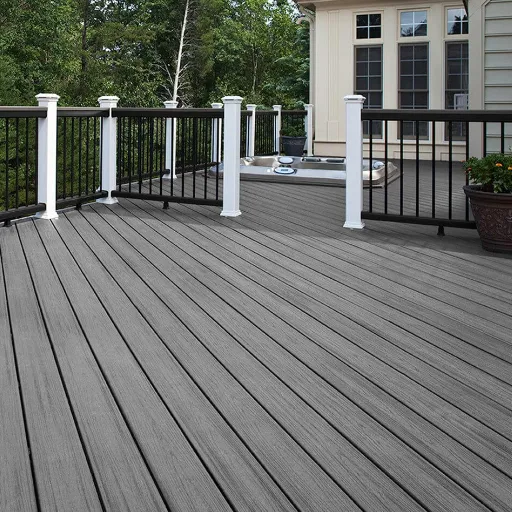
WPC decking is usually categorized by profile and by surface protection.
By Profile
| Profile | Characteristics | Best For |
|---|---|---|
| Solid core | Heavier, stronger, higher impact resistance, wider joist spacing | Commercial decks, high-traffic areas, ground-level installs |
| Hollow core | Lighter, lower cost, easier to handle, requires closer joist spacing | Residential patios, balconies, rooftop decks |
Solid boards feel more like timber underfoot and can span greater distances between joists. Hollow boards reduce weight and shipping cost but need more support and care during installation to avoid crushing the chambers. For a detailed comparison, see our guide to solid vs hollow WPC decking.
By Surface Protection
| Type | Water Absorption | Stain Resistance | Best For |
|---|---|---|---|
| Uncapped WPC | 3–8% after 24 hours | Moderate | Covered, dry, low-traffic areas |
| Capped WPC | Less than 0.5% | High | Wet, sunny, or high-traffic environments |
Capped WPC decking is sometimes called co-extruded WPC because of the manufacturing process. The terms are often used interchangeably in supplier catalogs.
By Surface Style
- Wood-grain embossed: mimics natural timber texture
- Brushed or wire-brushed: softer, more natural feel
- Smooth: modern look, easy to clean
- Grooved: accepts hidden fasteners for a clean surface
Advantages and Disadvantages of WPC Decking
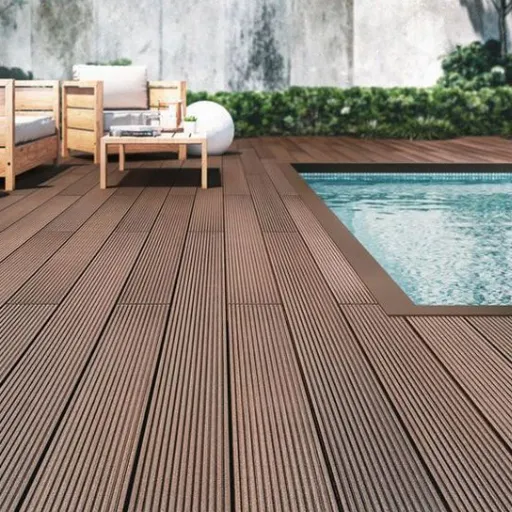
No decking material is perfect. WPC decking offers a strong balance of durability and appearance, but it has trade-offs that buyers should weigh against their project needs.
Advantages
- Low maintenance: no sanding, staining, or sealing like wood
- Durability: resists rot, insects, warping, cracking, and splintering
- Aesthetic variety: available in many colors, textures, and finishes
- Slip resistance: textured surfaces provide better grip when wet
- Recycled content potential: many boards use recycled wood fibers and plastics
- Consistent supply: manufactured boards avoid natural wood grade variation
Disadvantages
- Higher upfront cost than pressure-treated wood
- Heat retention: dark colors can become hot under direct sunlight
- Water absorption: uncapped boards absorb more moisture than capped or PVC boards
- Difficult to repair: damaged boards are usually replaced, not refinished
- Color fading: lower-quality boards may fade unevenly over time
- Heavier than PVC: solid boards require more structural support and effort to install
WPC Decking vs Other Materials
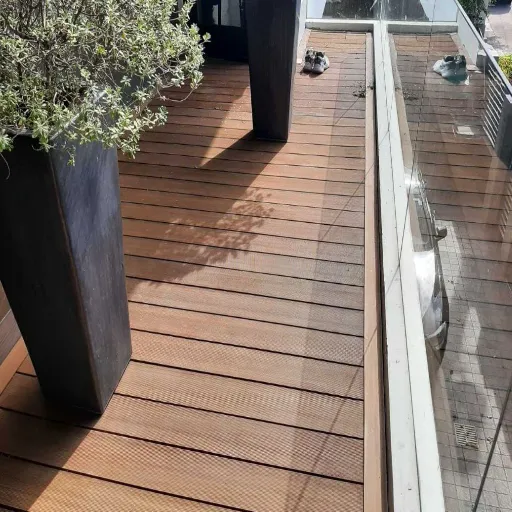
Understanding how WPC compares to alternatives helps buyers make the right choice.
WPC Decking vs Wood
Wood decking has a lower upfront cost and a natural look that some buyers prefer. However, it requires regular staining, sealing, and sanding. Over 10 years, the maintenance cost of pressure-treated wood often exceeds the total cost of WPC.
WPC Decking vs PVC
PVC decking is 100% synthetic and fully waterproof. It resists moisture better than WPC and is lighter in weight. However, PVC can look more artificial, become very hot underfoot, and usually costs more. For buyers in extremely wet climates or near pools, PVC may be worth the premium.
WPC Decking vs Capped Composite
Capped composite decking is technically a subcategory of WPC. The main difference is the protective cap layer. When a supplier says “capped composite,” they usually mean WPC with a polymer shell. When they say “WPC decking” without specifying, ask whether it is capped or uncapped.
| Material | Waterproof | Maintenance | Cost | Natural Look |
|---|---|---|---|---|
| WPC decking | Water-resistant | Low | Moderate | Good |
| Wood | Not waterproof | High | Lower upfront | Excellent |
| PVC decking | Fully waterproof | Very low | Higher | Moderate |
| Capped WPC | Highly water-resistant | Low | Moderate to high | Good |
Common Applications for WPC Decking
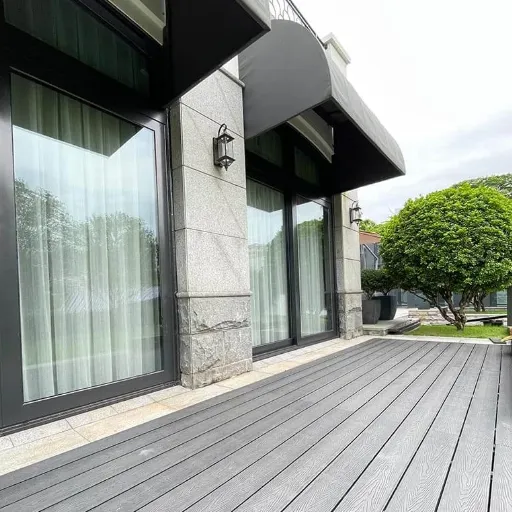
WPC decking works in a wide range of outdoor projects.
- Residential decks and patios: the most common use, especially for homeowners who want a wood look without the upkeep.
- Poolside areas: capped WPC is preferred because of its moisture and stain resistance.
- Boardwalks and marinas: commercial projects use solid, capped boards for load capacity and durability.
- Hotels, restaurants, and rooftop bars: low maintenance and consistent appearance appeal to commercial property managers.
- Balconies and rooftop decks: hollow boards reduce weight while still providing a finished outdoor surface.
- Public spaces and parks: slip-resistant textures and long service life make WPC suitable for high-traffic areas.
How to Evaluate WPC Decking Quality
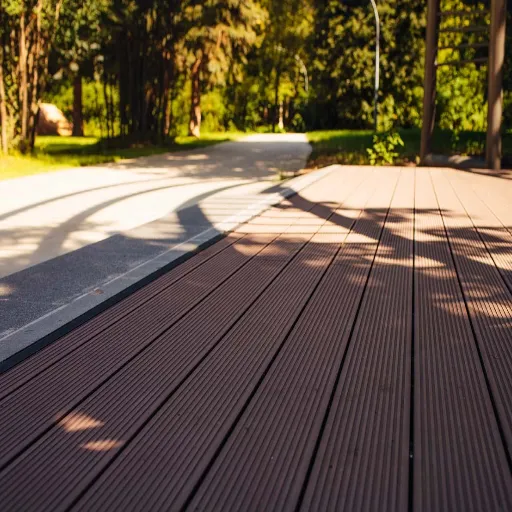
Not all WPC decking performs the same way. If you are sourcing from a factory or distributor, ask the right questions before ordering.
Check the Wood-Plastic Ratio
A balanced ratio, typically 50–70% wood fiber and 30–50% polymer, provides good strength and moisture resistance. Too much wood can increase water absorption. Too much plastic can make the board look artificial and reduce structural rigidity.
Ask for a 24-Hour Water Absorption Test
This test shows how much water the board absorbs after immersion. Capped WPC should absorb less than 0.5%. Uncapped WPC typically absorbs 3–8%. Lower is better for wet climates.
Verify Cap Layer Coverage
For capped boards, confirm that the cap covers the top and sides, not just the visible surface. Partial capping leaves exposed edges that can absorb water and swell.
Request Certifications
Look for relevant certifications based on your market:
- CE marking for Europe
- ASTM standards for North America
- ISO 9001 for quality management
- FSC or recycled-content claims for sustainability positioning
Order Production Samples
Catalog photos can hide differences in color consistency, surface texture, and cap quality. Request samples from the actual production batch, then expose them to sun and water for a few days before approving a large order.
A distributor in Germany learned this lesson when he approved a container based on a single glossy sample. The delivered boards had inconsistent cap thickness and visible color variation between pallets. His customer rejected the shipment. Now he requires samples from each production run and a third-party inspection report before every container ship.
WPC Decking Maintenance Overview
WPC decking is often marketed as low-maintenance, but that does not mean no maintenance. Regular care keeps it looking good and protects your warranty.
- Sweep debris weekly or bi-weekly.
- Wash with mild soap and water every 1–3 months.
- Deep clean once or twice a year.
- Clean spills quickly, especially oil, grease, and wine.
- Avoid bleach, ammonia, and pressure washers above 1,500 PSI.
FAQ
Is WPC decking the same as composite decking?
Composite decking is the broader category. WPC decking is a type of composite decking made from wood fibers and plastic. Other composite materials may use different fillers or cap layers.
Is WPC decking waterproof?
WPC decking is water-resistant, not fully waterproof. The plastic component resists moisture, but the wood fibers can absorb water over time, especially in uncapped boards. PVC decking is a better choice for fully waterproof applications.
How long does WPC decking last?
Quality capped WPC decking can last 25–30 years with proper maintenance. Uncapped WPC typically lasts 10–15 years, depending on climate and care.
Can WPC decking be painted?
Most WPC decking is not designed to be painted. Paint may not bond well to the cap layer and can peel or flake. If you want a different color, it is usually better to replace the boards.
Is WPC decking slippery when wet?
Some smooth WPC boards can be slippery when wet. Textured or embossed finishes, especially those rated R11 or higher for slip resistance, reduce this risk.
What does WPC decking cost?
China factory FOB prices typically range from $9–$32/m², while retail installed prices in North America and Europe can reach $60–$220+/m².
Conclusion
WPC decking is a practical choice for anyone who wants the look of wood without the heavy maintenance schedule. It combines wood fibers with thermoplastic polymers and additives to create boards that resist rot, insects, and moisture better than natural timber.
The key is knowing what you are buying. Capped WPC outperforms uncapped WPC in wet or sunny climates. Solid boards handle heavy traffic better than hollow boards. And not all factories produce the same quality, which is why wood-plastic ratios, water absorption tests, and cap layer coverage matter.
If you are sourcing WPC decking for a project or resale, start with clear specifications and production samples. Our team in Linyi can help you review cap-layer test reports, compare profiles, and get a competitive FOB China quote based on your project size.
Ready to choose the right WPC decking for your next project? Contact us to request samples, review certifications, or get a tailored quote.
Categories:
Blog
Related Articles