Waterproof WPC Decking: A Buyer’s Guide for Pools, Docks, and Wet Climates
Waterproof WPC decking is not a single product. It is a category of highly water-resistant, capped or co-extruded WPC boards designed for pools, docks, marinas, and other wet environments. Standard uncapped WPC absorbs 3-8% water after 24 hours of immersion, while quality capped WPC absorbs less than 0.5%. That difference determines whether a deck lasts 25 years or needs replacement after five.
A resort developer in Thailand learned this the expensive way. In 2023, he installed hollow, uncapped WPC decking around a new saltwater pool because the price was attractive and the color matched the design perfectly. Within ten months, the cut ends had swollen, the surface became slippery with algae, and the boards started to warp where water pooled. He replaced the entire deck with capped solid-core boards, added SS316 fasteners, and improved drainage. The second installation looked the same on day one but performed completely differently after the first rainy season.
We supply WPC decking from Linyi, one of China’s largest WPC manufacturing hubs, and we see the same question from buyers every week: Is this board truly waterproof enough for my project? This guide answers that question with real numbers, application-specific advice, and installation requirements. For a broader overview of WPC decking types and quality factors, start with our complete WPC decking buyer’s guide.
Key Takeaways
- Capped or co-extruded WPC decking absorbs less than 0.5% water after 24 hours; uncapped WPC absorbs 3-8%.
- Poolside, dock, and marina projects need R11 slip resistance or higher, solid-core boards, and SS316 fasteners.
- Proper drainage and ventilation matter as much as the board itself; never install WPC directly on concrete without airflow.
- EN 15534 and ASTM D7031 test reports verify water absorption, slip resistance, and structural performance.
- China-sourced waterproof WPC can cut material costs, but cap-layer quality and third-party test data must be verified before ordering.
Is WPC Decking Waterproof?
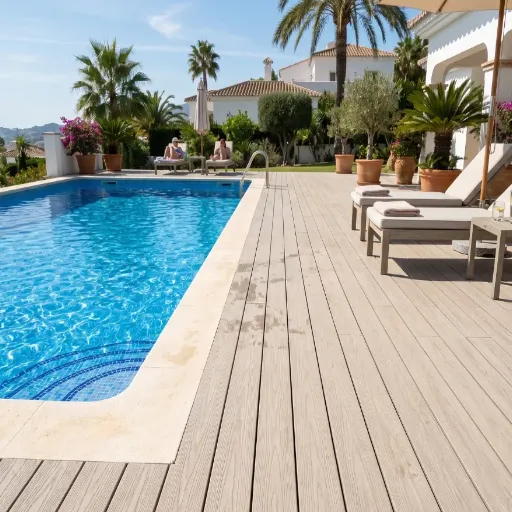
WPC decking is highly water-resistant, especially when capped or co-extruded, but it is not 100% waterproof in every condition. Quality capped WPC absorbs less than 0.5% water after 24 hours of immersion, while uncapped WPC absorbs 3-8%. Moisture can still reach the wood fibers through cut ends, fastener holes, or surface damage if the board is not properly capped.
WPC decking combines wood fibers with thermoplastic polymers such as HDPE. The plastic content slows water absorption, but the wood fibers still attract moisture. This is why the cap layer matters so much.
Capped or co-extruded WPC decking has a protective polymer shell, usually 0.5- 2.0 mm thick, that surrounds the core. According to Senyu WPC, co-extruded boards absorb less than 0.5% water by weight after prolonged immersion. Untreated timber can absorb 20-30%.
For most outdoor applications, capped WPC is effectively waterproof. For pool decks, docks, and marinas, it is the minimum standard you should consider.
How Waterproofing Works in WPC Decking
The Cap Layer
The cap layer is the main reason some WPC boards perform well in wet environments, and others fail. It is a polymer shell, typically made from HDPE, PP, or ASA, that is bonded to the WPC core during extrusion.
A 360-degree full wrap protects all sides of the board. Some products only cap the top and sides, leaving the bottom exposed. For wet environments, full-wrap capping is worth the extra cost because it protects the board from below as well as above.
The cap layer does three things. It blocks water from reaching the wood fibers. It resists chlorine, salt spray, and UV radiation. It also creates a harder, more stain-resistant surface.
Core Composition
The core of a WPC board contains wood fiber, plastic, and additives. Higher wood fiber content can feel more natural underfoot, but it also increases water absorption if the cap is damaged. HDPE-based cores resist moisture better than mixed-recycled-plastic cores.
For wet environments, look for a controlled wood-plastic ratio, consistent additives, and minimal filler content. Excessive calcium carbonate filler reduces strength and increases water absorption.
Waterproof Composite Decking vs Capped WPC Decking
You may see the terms “waterproof composite decking” and “waterproof WPC decking” used interchangeably. Most composite decking contains wood fibers and plastic, so it is technically a type of WPC. For wet environments, the same rule applies: look for a capped or co-extruded board with verified low water absorption. The cap layer, not the brand name, determines how well the deck handles moisture.
WPC Decking Drainage Requirements
Drainage is just as important as the board. Even the most water-resistant WPC will fail if water sits underneath or between boards for long periods. Slope the subfloor, leave expansion gaps, and maintain airflow beneath the deck. These details separate a successful wet-environment installation from a warranty claim.
| Board Type | 24h Water Absorption | Best Use |
|---|---|---|
| Capped / co-extruded WPC | <0.5% | Pools, docks, marinas, wet climates |
| Standard uncapped WPC | 3-8% | Covered areas, dry climates, temporary installs |
| Tropical hardwood | 20-30% | High maintenance, regular sealing required |
| PVC decking | <0.2% | Maximum water resistance, different look and feel |
Request ASTM D7031 or EN 15534 water absorption test data from your supplier. If they cannot provide it, treat that as a warning sign.
Wet-Environment Applications
Swimming Pools and Poolside Decks
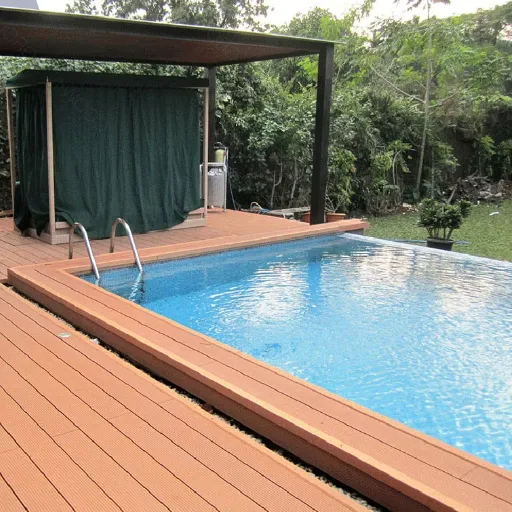
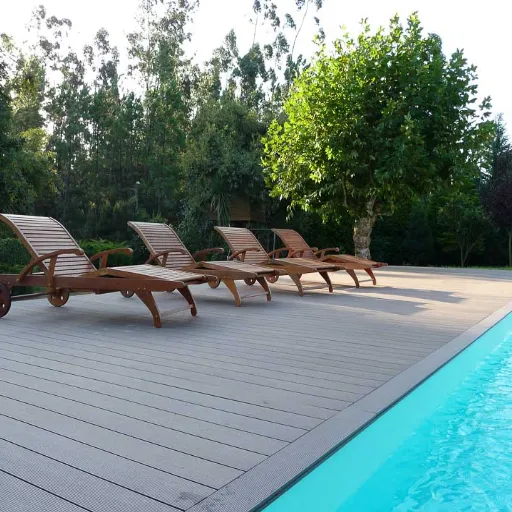
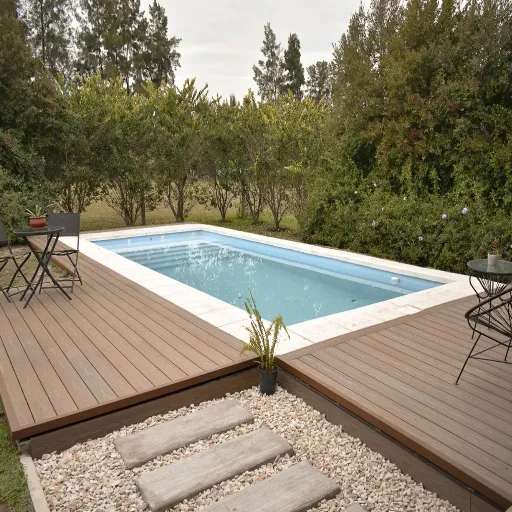
Pool decks present four challenges at once: constant moisture, chlorine exposure, UV radiation, and barefoot traffic. Waterproof WPC decking handles all four well if you choose the right product.
For poolside use, specify:
- Capped or co-extruded boards
- R11 minimum slip resistance rating under DIN 51130 or EN 16165
- Solid-core boards for commercial or high-traffic residential pools
- Light colors to reduce surface heat in direct sun
- Bull-nose edge profiles for pool coping areas
According to ONSUN WPC, quality co-extruded WPC around a swimming pool can last 20-30 years, while uncapped WPC in the same environment may only last 5-8 years.
Docks and Marinas
Marine environments add salt spray, tidal movement, and freeze-thaw cycles to the moisture problem. Salt accelerates corrosion in standard steel fasteners and can leave residue on the surface.
For docks and marinas, specify:
- Co-extruded solid-core WPC
- ASA cap layer for superior UV and salt resistance
- R11-R13 slip resistance for commercial marine walkways
- SS316 stainless steel clips and screws
- Aluminum or galvanized steel substructure
- Slope for drainage and airflow underneath
Rooftop and Balcony Decks
Rooftop decks have weight limits and drainage requirements that influence board choice. Hollow boards reduce load, but they trap water inside if the installation is not well ventilated. Solid boards add weight but drain more predictably.
For rooftop and balcony applications, coordinate the WPC decking choice with the waterproofing membrane beneath. The decking is the wearing surface, but the membrane underneath is what keeps the structure dry.
Commercial Walkways in Wet Climates
Hotels, resorts, public parks, and boardwalks in rainy or humid regions need boards that resist moisture, mold, and algae without frequent maintenance. Capped WPC decking with anti-slip texture and proper spacing is usually the most cost-effective long-term choice.
Need help matching a board to a specific wet environment? Contact our team to discuss project specs, climate conditions, and performance requirements.
Key Performance Criteria for Waterproof WPC Decking
Water Absorption Rate
The most important number for waterproof WPC decking is the 24-hour water absorption rate. Target less than 1% for wet applications. Premium capped boards often fall below 0.5%. Ask for the test standard used, such as ASTM D7031 or EN 15534.
Slip Resistance
Slip resistance is critical for pool decks, docks, and any area where people walk with wet feet. Common ratings include:
- DIN 51130: R11 minimum for poolside, R12-R13 for commercial pools
- EN 16165 / BS 7976 pendulum test: PTV ≥36 wet, ideally ≥45 for high-traffic wet areas
- DIN 51097: slip class C for barefoot wet areas
Surface texture affects slip resistance as much as material. Deep embossed or wire-brushed finishes generally perform better than smooth surfaces.
Cap Layer Quality
Not all caps are equal. ASA caps offer the best UV and chlorine resistance for pool and coastal applications. HDPE caps are common and cost-effective. The cap should fully wrap the board, not just cover the top surface.
Profile and Core
Solid-core boards handle moisture and traffic better than hollow boards in wet environments. Hollow boards can trap water inside their chambers if water enters through cut ends or fastener holes. For pool decks and marinas, solid core is the safer choice.
Installation Requirements for Wet Areas
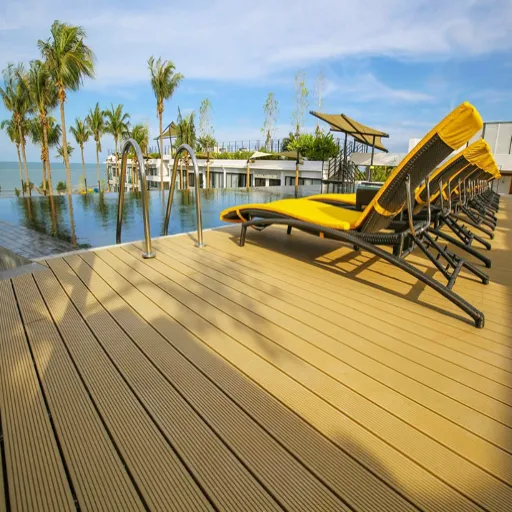
The best waterproof WPC decking will still fail if it is installed without drainage, ventilation, and the right fasteners.
Drainage and Ventilation
Water must be able to drain off the surface and escape from underneath. Without airflow, trapped moisture creates mold, algae, and premature board degradation.
Key requirements:
- Leave 5- 8 mm expansion gaps between boards
- Maintain a minimum clearance gap between the deck and the ground or structure below
- Slope the subfloor slightly so water runs off
- Avoid boxing in the deck perimeter, which blocks airflow
Substructure
Do not install WPC decking directly on concrete. Use a raised subframe with a moisture barrier or drainage mat underneath.
Recommended substructure materials for wet areas:
- Aluminum joists
- Galvanized steel framing
- Pressure-treated lumber with proper spacing
Follow the manufacturer’s joist spacing recommendations. Wet environments usually require closer spacing than dry residential installations.
Fasteners
Standard steel fasteners corrode quickly near pools and saltwater. Use SS316 stainless steel clips, screws, and brackets. Hidden fastening systems reduce the number of penetrations in the board surface and give a cleaner appearance.
Edge Sealing and Detail Work
Every cut exposes the core of the board. In wet environments, seal cut ends with a manufacturer-approved sealant. Use bull-nose edging for pool coping, and install drainage channels where water collects.
Maintenance of Waterproof WPC Decking
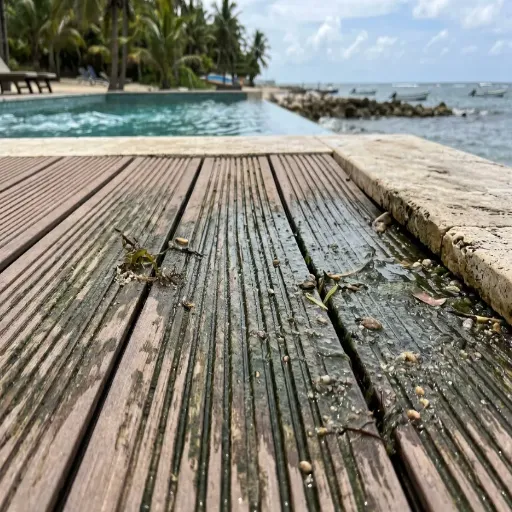
Capped WPC decking requires far less maintenance than wood, but wet environments still need attention.
- Clean quarterly with mild soap, water, and a soft brush
- Rinse pool chemical spills immediately
- Inspect hidden clips, gaps, and drainage slopes annually
- Remove leaves and debris that trap moisture
- Avoid abrasive cleaners, wire brushes, and high-pressure washing close to the surface
- Treat mold or algae with a cleaner approved for composite decking
For a full maintenance schedule, read our WPC decking maintenance guide.
Common Mistakes to Avoid
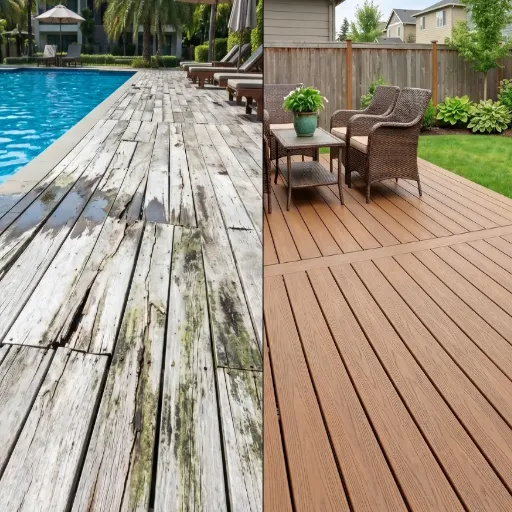
Even experienced contractors make these errors with waterproof WPC decking:
- Choosing uncapped WPC for wet areas: The upfront savings disappear quickly when boards absorb water and warp.
- Installing directly on concrete: Without airflow, moisture builds up underneath and damages the boards from below.
- Ignoring slip ratings: A smooth board may look elegant but becomes dangerous around water.
- Using standard steel fasteners: Rust stains and structural failure follow within months near saltwater or pools.
- Skipping expansion gaps: WPC expands and contracts with temperature. Wet boards swell further without room to move.
- Poor drainage design: Standing water is the enemy of any deck, even one labeled waterproof.
For a broader list of what can go wrong with WPC decking and how to prevent it, see our article on common WPC decking problems.
Sourcing Waterproof WPC Decking from China
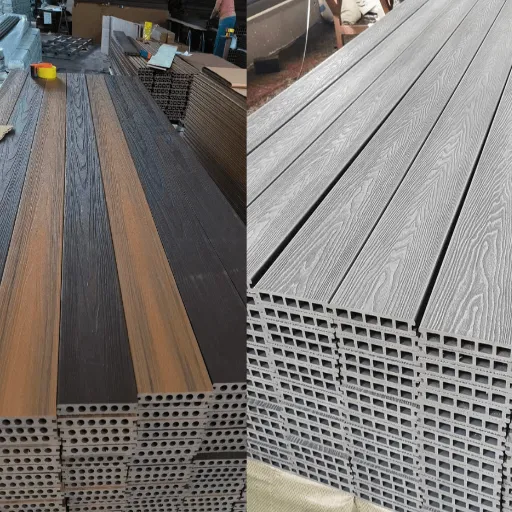
China produces a wide range of WPC decking, from budget uncapped boards to premium ASA-capped marine-grade products. The challenge for buyers is separating real waterproof performance from marketing claims. When sourcing from China, verify these points before placing an order.
Request 24-hour water absorption test reports to ASTM D7031 or EN 15534. Ask for slip resistance certificates for your target market. Confirm the cap layer type, thickness, and whether it fully wraps the board. Check availability of SS316 fasteners and matching accessories. Ask about the factory QC process for cap-layer bonding.
Request physical samples and test them yourself. Place a cut end in water for 48 hours and compare swelling across suppliers. The difference is usually obvious.
Final Checklist for Wet-Environment WPC Decking
Use this checklist before finalizing a waterproof WPC decking order:
- Is the board capped or co-extruded with a full wrap?
- Does the 24-hour water absorption rate fall below 1%, ideally below 0.5%?
- Is the slip rating appropriate for the application: R11 for residential pools, R12-R13 for commercial?
- Is the core solid for high-traffic or marine use?
- Does the supplier provide ASTM or EN test reports?
- Is the substructure designed for drainage and airflow?
- Are SS316 fasteners specified for pool, dock, or marina use?
- Are expansion gaps and edge sealing included in the installation plan?
- Has a sample been tested for water absorption and UV exposure?
- Is the warranty clear on coverage for wet-environment installation?
If you can check all ten boxes, you are specifying a deck that should last.
Conclusion
Waterproof WPC decking works well for pools, docks, marinas, and wet climates, but only when the right product is selected and installed correctly. The cap layer is the key difference between a deck that lasts 25 years and one that fails within five. Water absorption below 0.5%, R11 or higher slip resistance, solid-core construction, and SS316 fasteners are the baseline for demanding wet applications.
Beyond the board itself, drainage, ventilation, expansion gaps, and edge sealing determine long-term performance. A board labeled waterproof will still suffer if water pools underneath or cut ends are left exposed.
Ready to source waterproof WPC decking for your next project? Contact our team to request samples, review test reports, or get a competitive quote for pool, dock, or marina-grade WPC decking.
Categories:
Blog
Related Articles