WPC Wall Panel Maintenance: The Complete Cleaning & Care Guide
WPC wall panel maintenance is simply dusting with a microfiber cloth on a weekly basis, wiping down with mild soapy water during a monthly cleaning, and checking fasteners every quarter. Neutral cleaners, which are pH 6-8, should be used rather than bleach and abrasives. Indoors, humidity should be kept between 40 and 60%. An interior system that is properly maintained can last up to 25-30 years, while the co-extruded exterior cladding can last between 15 and 25 years.
However, this is the space where most consumers find out too late. WPC members are marketed as “low-maintenance,” which is a contradiction in terms. Managers of buildings, hotels, and even homeowners all take “low” as “zero” and pick up all-purpose bleach sprays. Then they seal all stops and wash external cladding at 3,000 psi, like it’s concrete. Two years later, it looks like delamination on the capstock layer, fading color, and denial of the warranty claim.
At Yuheng, we’ve manufactured and exported WPC panels for over a decade. We’ve watched as things go on when you adhere to preventative maintenance, and when you do not. This very guide provides you with the precise cleaning schedules, product specifications, repair techniques, and warranty guidance, which most manufacturers’ leaflets forget to inform you about. Whether you are a general manager of multiple luxury hotels or just working on one single renovation, you will be able to direct it to your maintenance team upon finishing this article.
Key Takeaways
- WPC boards are recommended to be dusted on a regular weekly basis and washed every month with a pH-based cleaner, avoiding things like bleach and abrasives
- The interior paneling could last 25 to 30 years, while coextruded exterior-finished panels would last 15 to 25 years
- Commercial buildings must usually be serviced daily for high-touch and monthly inspections to protect the building
- The appropriate care is obviously influenced by the climate. Consider care and maintenance, such as those needed to protect your investment
- Warranty compliance requires maintenance records and the avoidance of harsh chemicals that degrade the polymer binding
What Makes WPC Wall Panels Low-Maintenance?
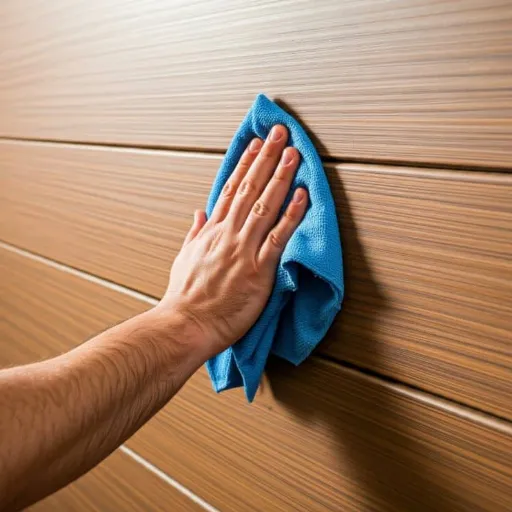
Understanding the basics of WPC wall panel maintenance starts with the material itself.
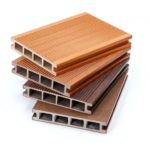
WPC stands for wood-plastic composite. The material blends roughly 55–65% hardwood fiber with 30–35% thermoplastic polymer, typically HDPE or PP. A co-extruded capstock layer — made from ASA or PMMA — fuses to the surface during manufacturing. This structure gives WPC panels their durability edge.
The wood fiber content is fully encapsulated in plastic. That means no rot, no termite damage, and no need for staining or painting. The capstock layer blocks UV rays, resists stains, and prevents moisture from penetrating the core. For a complete breakdown of material composition and panel types, see our complete buyer’s guide to WPC wall panels.
But “low-maintenance” is not the same as “maintenance-free.” Consistent WPC wall panel maintenance protects your investment over decades. The capstock can scratch. The edges can swell if water pools at joints. And the polymer binding that holds wood fibers together can degrade when exposed to ammonia, bleach, or highly acidic cleaners. Industry testing indicates that pH-neutral cleaners extend panel life by up to 40% compared to harsh household chemicals. The maintenance burden is small, but it is real — and skipping it voids most manufacturer warranties.
Essential Cleaning Tools for WPC Wall Panel Cleaning
Recommended Supplies
It is vital to clean the WPVC Wall Panels with the right tools quickly and safely. Proper cleaning of WPC wall panels helps restrain costly damage developments that nullify warranties. This is what your maintenance technicians must have altogether:
- Microfiber cloths: For trapping dust without scratching, use them in a specific set for cleaning panels to save members of the household from abrasive dust.
- Soft-bristle brushes: Specifically to clean grooved or 3D slat panels, even good for removing the dust from those channels. Nylon or natural bristle only—no wire or stiff plastic bristle.
- pH-neutral cleaner (pH6-8): These are general-purpose household cleaning solutions that fall at this level — just check on labels “pH-Neutral” or “safe for composite surfaces.”
- Mild dish soap: 1-2 tbsp added to a bucket of warm water provides the right solution for the masses’ house cleaning efforts that should occur every month.
- WPC-specific composite cleaner: This is mostly intended for cleaning external cladding or heavily soiled commercial surfaces. It is actually made to mimic the polymer chemistry of the WPC component.
- Soft sponges: Pure and gentle cellulose sponges for applying cleaning solution. Completely avoid scouring pads.
What to Avoid
Having the wrong product is worse than even having no product in place. Avoid using on WPC panels:
- Bleach and ammonia: They both degrade the polymer, binding your wood fibers to each other. Eventually, chalking on the surface and structural integrity loss become highly obvious.
- Undiluted vinegar: The acid (pH 2 – 3) rusts the capstock layer, dulling the finish and creating microscopic pores where stains settle.
- Abrasive pads and steel wool: Of course, they scratch the capstock, which in the end exposes your wood fiber core to the damaging effects of moisture and UV light.
- High-alkaline cleaners (pH > 9): Dissipate the lubricants and coupling agents incorporated in the composite matrix.
- Steam cleaners on high setting: Excessive heat softens the polymer and causes warping, especially in thin interior panels.
He named it for a stringent and demanding product list that went with him to the housekeeping supplier for the 200-room hotel, the beachfront hotel, and WPC cladding. Bleach could not be used on any of the WPC surfaces. Two years later, the facade still looks new. Guest complaints about exterior maintenance? Zero.
WPC Wall Panel Maintenance Schedule by Environment
The right frequency depends on traffic, location, and climate. Here’s what works in practice.
| Frequency | Interior Residential | Commercial (Hotel/Office/Retail) | Exterior Cladding |
|---|---|---|---|
| Daily | Dust high-traffic areas with dry microfiber | Wipe high-touch surfaces (lobbies, corridors, elevator walls) | Visual check after storms |
| Weekly | Damp-wipe all panels with pH-neutral solution | Full surface wipe in public areas; dust private offices | Remove cobwebs and debris from the base |
| Monthly | Deep clean with mild soapy water; inspect for scuffs | Full deep clean; inspect fasteners and joints in high-traffic zones | Check drainage paths behind cladding |
| Quarterly | Inspect expansion gaps and corner trims | Professional inspection of clip systems and edge seals | Inspect stainless fasteners for corrosion |
| Annually | Check bathroom and kitchen panels for edge swelling | Review maintenance logs; schedule any needed repairs | Wash with mild detergent; apply UV sealant if needed |
For wet-area applications like bathrooms and kitchens, the protocol shifts slightly. Water splashing on the surface won’t penetrate immediately, but prolonged exposure at joints or edges will eventually cause swelling. Use panels with water absorption below 0.5% per ASTM D570 testing, and specify sealed edge profiles or silicone sealing at all joints. For more on wet-area specifications, see our guide to waterproof WPC panels for bathrooms and kitchens.
Removing Stains and Tough Marks
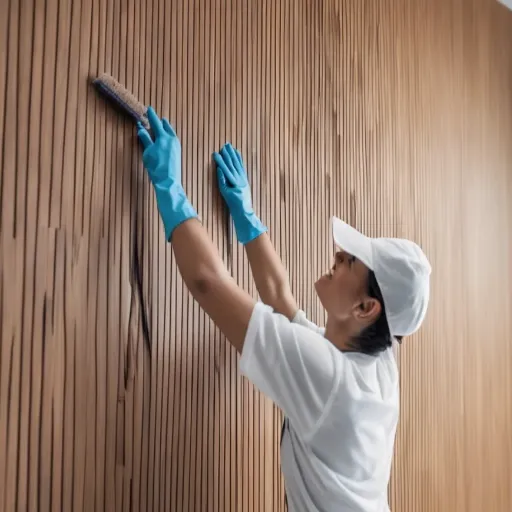
Accidents happen. Knowing how to remove stains is a core part of WPC wall panel maintenance. The key is matching the stain to the right treatment — and acting fast.
| Stain Type | Recommended Treatment | What to Avoid |
|---|---|---|
| Grease / Oil | Apply a paste of baking soda and water. Let’s sit for 15–20 minutes. Wipe gently with a soft cloth. | Don’t rub aggressively — it drives the oil deeper into the surface texture. |
| Mold / Mildew | Spray with white vinegar diluted 1:1 with water. Wait 10 minutes. Wipe clean and dry thoroughly. For stubborn cases, use a 1:10 bleach-water solution, but test a hidden area first. | Never use full-strength bleach. It degrades the capstock and voids most warranties. |
| Scuff Marks | Rub gently with a melamine foam eraser (magic eraser). Move with the grain of the embossed texture. | Don’t use abrasive scrubbers or sandpaper on scuffs — you’ll create permanent scratches. |
| Ink / Marker | Apply a WPC-specific composite cleaner. Let it dwell for 2–3 minutes, then wipe. | Avoid acetone-based solvents — they dissolve the polymer surface. |
| Exhaust / Soot | Use a pH-neutral degreaser with a soft sponge. Rinse with clean water and dry immediately. | Don’t let the degreaser sit longer than 5 minutes. |
| Red Wine / Coffee | Blot immediately with a dry cloth. Clean with mild soapy water. | Never rub — blot only. Rubbing spreads the stain and grinds it into the texture. |
The golden rule for all stains: blot, don’t rub. Rubbing generates friction heat and pushes the staining agent deeper into the embossed surface. Blotting lifts it out. Always test any new cleaner on a hidden panel edge or behind furniture before using it on a visible surface.
Seasonal Maintenance by Climate Zone
WPC cladding maintenance requirements vary significantly by region. A one-size-fits-all schedule ignores the reality of local weather and environmental stressors.
Tropical and Humid Climates
High humidity accelerates mold growth on surface dust. It also increases the risk of moisture infiltration at panel edges. Control the relative humidity at less than 60% indoor by means of either dehumidifiers or HVAC. Monthly makes something for the bathroom and kitchen panel for early signs of swelling at joints. Increase how often the house is washed to every 3–4 months to avoid organic feed and mold buildup.
Coastal and Salt-Air Environments
Salt deposits corrode fasteners and leave white staining on panel surfaces. Rinse exterior cladding every 2–3 months with fresh water — more often if you’re within 500 meters of the shoreline. Inspect stainless steel clips and screws quarterly for corrosion. Only A2 or A4 grade stainless steel should be used in coastal installations. Galvanized steel will rust within 2–3 years, staining the panel face and compromising attachment. For full exterior specification guidance, see our exterior WPC wall cladding best practices.
Cold-Climate and Freeze-Thaw Zones
WPC expands and contracts with temperature changes. The linear expansion coefficient is typically 3–5 × 10⁻⁵ /°C. On a 3-meter panel in a climate with 40°C seasonal swings, that translates to 4–6mm of total movement. Check expansion gaps every spring — ice and debris can wedge into gaps, preventing panels from expanding in summer heat and causing buckling. Remove snow with a plastic shovel or soft broom only. Metal shovels scratch the capstock.
Arid and Dust-Heavy Regions
Fine dust accumulates in embossed textures and acts as an abrasive when wiped dry. Dampen your microfiber cloth before dusting — never dry-dust in arid environments. UV exposure is also more intense. Apply a UV-protective sealant to exterior panels every 18–24 months instead of the standard 2–3 year interval.
WPC Wall Panel Repair and Troubleshooting Guide
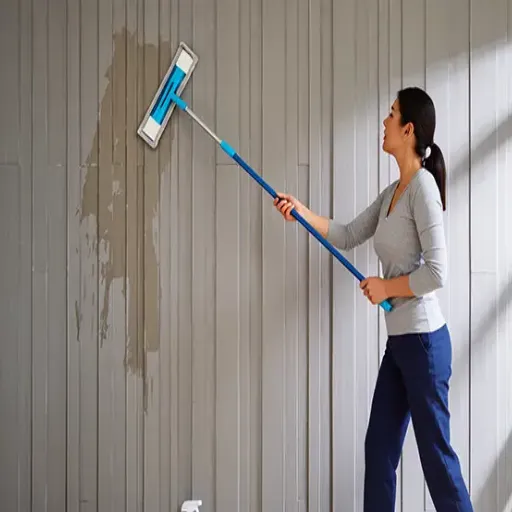
It is not necessary to substitute every appearance of blemishes. Many times, WPC wall panel repair is an easy process once the proper findings are made, and knowing what causes the problem. Here’s how to fix common issues.
Light Scratches and Surface Scuffs
This can be removed through light polishing with sandpaper. Use 220-grit sandpaper and work gently in the direction of the embossed grain. Wipe away dust and apply a color-matched touch-up wax or repair paste. You should also first test it on a hidden area, as sanding creates an assault on the wood-fiber core, which can be worse than the original scratch.
Deep Scratches and Chips
If the scratch has made its way into the capstock, then it usually requires replacement, which is the most secure option. Some manufacturers offer WPC repair kits with color-matched filler that works well in most cases on solid-color panels, but it seldom matches the wood-grain embossing patterns. If their visibility is a concern in high-trafficked commercial areas, then one may even consider replacing an entire panel.
Warping or Buckling
Warping has three common causes: trapped moisture, excessive heat exposure, or improper expansion gaps during installation. First, check if the panel was installed with 5–10mm expansion gaps at ends and corners. If gaps are missing or clogged, that’s your culprit. Remove the affected panel and let it dry flat in a climate-controlled space for 48–72 hours. If it doesn’t return to shape, replace it. For guidance on proper gap spacing and clip systems, see our WPC wall panel installation guide.
Loose Panels
Loose panels are evidence of fastener fatigue or failures in adhesion. For clip-mounted systems, tightening or replacing the clip fixes them. If adhesive-mounted on the interior, remove the earlier adhesive as well as apply new construction adhesive, and then brace the panel for 24 hours. Mechanical fasteners might be added in areas of great commercial traffic.
Discoloration and Fading
Fading over a larger area uniformly means that UV degrades. The panel, if WPC standard grade without capstock, should be faded in no more than 5-8 years outdoors. In the case of coextrusion, there are major variations, and this might point to a compromised cap stock layer directly due to harsh chemicals or sustained physical damage. UV-protective sealant forms a barrier to further degradation but will not reverse it.
Long-Term Protection: Sealants, UV Coating, and Warranties
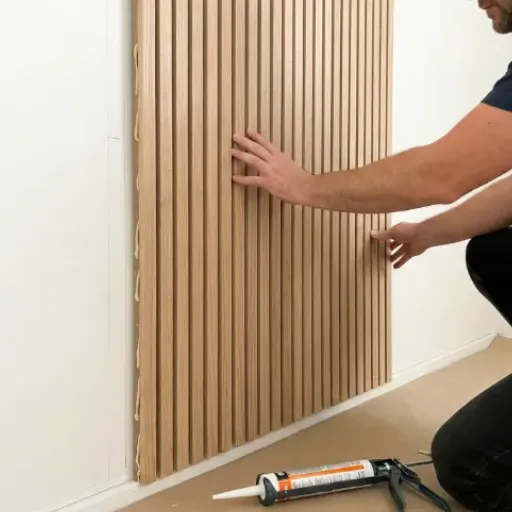
When to Apply Protective Coatings
Exterior WPC cladding benefits from a clear UV-protective sealant every 2–3 years. In harsh climates — intense sun, coastal salt, or extreme temperature swings — reduce that interval to 18–24 months. The sealant should be specifically formulated for composite materials. Generic wood sealants or deck coatings may not bond properly to the polymer surface.
Long-term WPC wall panel maintenance for interior panels rarely requires protective coatings unless the installation is in a high-wear commercial space. In those cases, a clear matte-finish protective coating can add scratch resistance.
Warranty Compliance: What to Track
From 5 to 25 years, many WPC producers offer warranties. However, common manufacturing defects remain out of bounds for warranties against maintenance failure. To maintain your eligibility for coverage, keep records of:
- Installation dates and panel batch numbers
- Product labels or safety data sheets of cleaning agents
- Inspection dates and details, and record any repairs made
- Photos of the completion of installation and yearly photographs of the same
What cancels the warranties:
- Using bleach, ammonia, or any highly acidic or alkaline cleaners
- Pressure washing above 1,500 PSI or at close range
- Panels installed without expansion gaps fitted
- Fixing exterior cladding by screwing the face rather than through hidden clip systems
- Disregard of moisture barriers in wet-area installation
Maintenance Costs: WPC vs. Wood vs. PVC Over 10 Years
A critical question for any WPC wall panel maintenance plan is the total cost of ownership. The real value of WPC isn’t just the purchase price — it’s what you don’t spend over the life of the installation. Here’s how the numbers stack up for a typical commercial interior project.
| Cost Factor | WPC Wall Panels | Solid Wood Panels | PVC Wall Panels |
|---|---|---|---|
| Annual cleaning cost | $0.20–$0.40/m² | $0.50–$1.00/m² (requires specialized wood cleaner) | $0.10–$0.20/m² |
| Refinishing / sealing | None needed | $3–$6/m² every 2–3 years | None needed |
| Repair frequency | Rare (impact-resistant) | Moderate (scratching, denting) | Moderate (denting, puncture) |
| Replacement timeline | 25–30 years (interior) | 10–15 years (with maintenance) | 8–12 years |
| 10-year total maintenance | $2–$4/m² | $15–$30/m² | $1–$2/m² |
WPC panels lower maintenance expenses by 70% compared to traditional solid wood, which lasts throughout their entire lifespan. The savings result from the complete removal of both refinishing and staining processes, together with termite protection treatments. WPC materials need replacement because PVC maintains lower upkeep costs, except that it deteriorates through UV exposure and develops permanent dents. For complete material evaluation, please refer to our WPC versus wood durability and cost study. The hotel with 2,000 square meters of paneling achieves maintenance cost savings between $26,000 and $52,000 through its choice of WPC over wood during the 10-year period.
WPC maintenance benefits from Ahmed’s total cost of ownership analysis, which he conducted for a 12,000 square meter project as the procurement manager of a Saudi hotel developer. Solid wood would have required refinishing every three years in the harsh desert sun. PVC would have needed partial replacement after eight years due to UV brittleness. WPC co-extruded panels with proper maintenance received a 20-year warranty, which required no refinishing during that time. The maintenance savings validated the small initial cost increase.
Need help calculating maintenance costs for your specific project? Contact our technical team with your square footage and climate details. We’ll run the numbers and recommend the right panel grade and care protocol.
Frequently Asked Questions About WPC Wall Panel Maintenance
How Long Do WPC Wall Panels Last?
Inner WPC wall panels last 25-30 years if properly maintained. Exterior co-extruded wall panels may last from 15 to 25 years, according to exposure to the weather and quality of care. The panels will fade, ruin, or degrade after a year out in the sun if there is no protective capstock layer, so I often recommend co-extruded grades for all outdoor applications.
What Is the Best Way to Clean WPC Wall Panels?
Dust it each week using a microfiber cloth and have it washed once per month with mild soapy water or a pH-neutral cleaner having a pH of between 6 and 8. You would not need bleach, ammonia, abrasive pads, or pure vinegar. The external cladding must be cleaned with fresh water every two to three months and then every year with a composite-safe detergent.
Can I Use a Pressure Washer on WPC Wall Panels?
Yes, but only on exterior cladding, particularly below 1,500psi and with a fan-tip nozzle positioned at least 20cm distant from the wall surface. So never pressure-clean your indoor panels as well. High pressures attach the force bringing water into joints, strip the capstock layer, and void warranties.
How can I Remove Scratches from WPC Wall Panels?
Minor surface scratches wear off when sanded with a 220-grit sandpaper as per the texture in the embossing direction, then followed by colored match touch-up wax. Any deep scratches that go through the capstock layer and on to the core are best repaired by replacing the whole panel, more so in highly visible commercial spaces.
What Cleaning Products Void WPC Panel Warranties?
These include bleach, ammonia, strongly acidic cleaners—with a pH lower than 5—and highly alkaline cleaners, with a pH higher than 9, which wear off the polymer tying and capstock layer acceleratedly. Use of these products will violate most manufacturer warranties, so it is suggested to know the conditions of your warranty and use only pH-neutral, composite-safe cleaning products, since they are safe for rollers.
Conclusion
WPC wall panel maintenance is not complicated, but it is specific. These panels last for between 25 and 30 years indoors and survive 15 to 25 years outdoors, but only after the right care. Do not use pH-neutral cleaners, but avoid harsh abrasives and bleach. Locally check expansion gaps a few times each year and keep records of maintenance. Aim to match your cleaning frequency with your environment: every day on a heavy commercial site, once each week in residential interiors, and twice yearly for exterior cladding.
This does not only mean disastrous loss of appearance to the latter class of competitor, but cancellation of warranty and early expenditure for that which almost certainly defeats the whole purpose of the investment they tried to protect. Only a few minutes at the end of the week entail the prevention of years of expensive breakdown of truth.
At Yuheng, we’ve supplied WPC panels to hotel chains, residential developments, and commercial projects across the Middle East, Southeast Asia, Europe, and Africa. We don’t just ship panels — we help you specify the right product, install it correctly, and maintain it for the long haul. If you’re evaluating WPC for an upcoming project, start with the right foundation. Request a free sample pack with our standard color range, or reach out to our team for a maintenance protocol tailored to your climate and application.
Categories:
Blog
Related Articles