Top WPC Wall Panel Manufacturers in China (2026): A Buyer’s Guide to Factory Direct Sourcing
The top manufacturers of WPC wall panels in China operate their facilities in Shandong Province, which features Linyi City as the main production center that produces WPC wall panels. The main factories provide their products through factory-direct pricing, which enables customers to save 20-40% when compared with prices from trading companies, but customers need to use more than Alibaba search results to determine their ideal business partner.
China produces approximately 55% of the worldwide market for wood-plastic composite (WPC) wall panels. The market control that China currently holds results from deliberate actions. The combination of extrusion technology, extensive materials distribution networks, and strict quality control for exports, which China has maintained for decades now, lets Chinese companies become the primary option for contractors, distributors, and developers who work in all regions of the world.
The large size of operations creates a major challenge. For every legitimate factory running ISO-certified production lines, there is a trading company posing as a manufacturer, a middleman who inflates prices by 30%, or a supplier who cuts corners by using recycled plastics and omitting UV stabilizers. Your experiences with a panel container that warped within three months have shown you how much a cheap supplier will cost you.
This guide straightforwardly provides information. We evaluated dozens of manufacturers against real criteria — production capacity, third-party certifications, export track records, and quality control systems — to give you a shortlist you can trust. The complete WPC wall panel buyer’s guide presents WPC material types and their respective applications and specifications, which you can study in detail, for your ongoing WPC material research. You will learn how to spot red flags, what questions to ask during a factory audit, and how to structure your first order so you minimize risk while locking in competitive pricing.
Key Takeaways
- The market for WPC wall panels in China reached a value of over $2.5 billion in 2025 and continues to expand at an annual growth rate between 6.5% and 10.9% with Shandong Province serving as the primary manufacturing center for this market.
- The process of factory-direct sourcing from verified manufacturers enables companies to achieve cost reductions that range between 20% and 40% when compared to costs from trading companies.
- The most reliable manufacturers hold ISO 9001, CE marking, and SGS test reports as baseline prerequisites for export markets.
- Before making bulk purchases, buyers need to request live video factory tours, multiple product samples, and independent certification verification.
- The production process needs between 15 and 30 days to complete, while customers can place trial orders with minimum order quantities that begin at 100 meters.
How We Evaluated the Top WPC Wall Panel Manufacturers
The list requires this explanation because it documents our complete process of creating our final product. Most “top manufacturer” articles online display themselves as promotional directories. The factory at position one may have paid for placement. The factory at position five might not exist outside of a rented office.
We selected a different method for our work. The assessment process for every manufacturer on our list involved six essential criteria, which wholesale buyers consider most important.
The assessment process confirmed that the factory had production capacity that matched its operational capacity. A factory running three extrusion lines cannot reliably fulfill a 20,000-square-meter hotel project. We selected manufacturers who demonstrated operational capacity through their more than 10 production lines, which generated daily outputs that exceeded 5,000 square meters.
The process required export experience and international certifications to achieve success. The process requires CE marking for Europe and SGS test reports for product safety and ISO 9001/14001 certification for quality and environmental management as mandatory elements of cross-border trade. The team confirmed the presence of current certifications that recognized bodies had issued.
The process requires distributors and private-label brands to obtain products that meet their specific requirements. We searched for OEM/ODM support, which included custom color matching and branded packaging, and flexible options for surface texture design.
The system used to control quality includes three processes that establish a boundary between reputable factories and operators who lack confidence in their work. The system used to control quality includes three processes that establish a boundary between reputable factories and operators who lack confidence in their work.
The team established two requirements for establishing market reputation. The team established three requirements for establishing market reputation through client references, completed project portfolios, and verified platform reviews on Alibaba and Made-in-China, and Global Sources.
The Top WPC Wall Panel Manufacturers in China
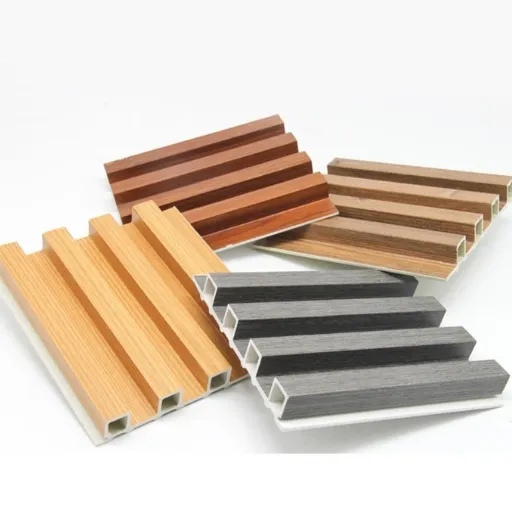
1. Linyi Yuheng International Trading — Best for Flexible Factory-Direct Sourcing
Yuheng operates from Linyi City, which serves as China’s WPC manufacturing corridor and offers distributors, contractors, and private-label brands access to its products at factory-direct prices while delivering export-ready services.
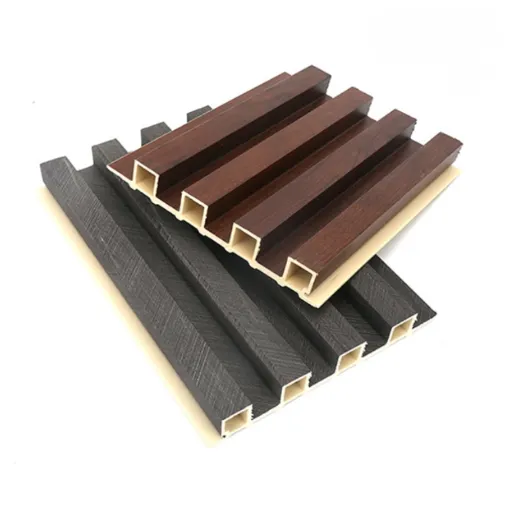
The core products of the company include WPC wall panels used for interior decoration and exterior cladding, and fluted 3D panels and UV-coated marble-effect boards. Their catalog covers the full range of thicknesses, surface finishes, and installation systems that international buyers expect.
The company holds ISO 9001 certification for its quality management system while conducting product testing through independent laboratories. The company performs pre-shipment inspections on all panels to check color consistency, dimensional accuracy, and surface finish quality.
The company developed its export and OEM capabilities to provide flexible solutions. The company allows trial orders to start at a minimum of 100 meters while offering custom colors and textures and branded packaging services to its private-label clients. The company delivers products through three shipping options, which include FOB, CIF, and DDP, with typical lead times of 15 to 25 days after the receipt of the deposit.
Why it stands out: Yuheng’s location in Linyi — where raw material suppliers, extrusion equipment vendors, and logistics providers cluster within a 50-kilometer radius — translates to competitive pricing, fast turnaround, and supply chain resilience that isolated factories cannot replicate.
2. Anhui Sentai WPC Group — Best for North American Markets
Anhui Sentai operates one of the most patent-heavy WPC operations in China, with 42 national patents and ASTM-certified products designed specifically for U. S. and Canadian building codes.
Their core products include WPC wall panels, decking, and integrated facade systems. Their co-extrusion technology creates a protective outer shell that shows superior resistance to fading and scratching when compared to single-layer products.
The company holds three certifications, which include ASTM compliance for North America, CE marking for Europe, and ISO 9001 quality management. Sentai’s formaldehyde emission reports meet CARB Phase 2 standards, which represent essential requirements for indoor use throughout California and other restricted regions.
The company has extensive capabilities for both export and original equipment manufacturing. The group maintains dedicated North American support staff and can deliver custom lengths, embossed textures, and branded cartons. The company establishes minimum order quantities that start at 1,000 meters for standard lines and decrease to 500 meters for repeat customers.
Why it stands out: Sentai’s patent portfolio and ASTM certification give North American distributors a defensible quality story when selling to code-conscious contractors and architects.
3. Meixin Technology — Best for Large-Scale Engineering Projects
Meixin Technology operates as an influential entity that remains unknown to most people outside China. The company has existed for 22 years, and it holds more than 170 international patents, which Meixin Technology used to establish national WPC standards in China.
The main products of the company focus on producing high quantities of polyethylene-based WPC cladding and structural panels. The company operates automated extrusion lines together with real-time quality monitoring systems to achieve an annual production capacity of 20,775 tons.
The company possesses multiple certifications, which include ISO 9001, ISO 14001, CE, and various fire resistance assessments. The testing laboratory of the company holds internal accreditation, which enables it to deliver custom product validation results more quickly.
The company specializes in providing bulk supply services to government buildings, infrastructure projects, and commercial developments through its export and OEM operations. Meixin provides better pricing for container shipments, but it limits its ability to process small orders.
Why it stands out: For buyers bidding on municipal or commercial tenders where compliance documentation and production scale matter more than customization, Meixin delivers unmatched credibility.
4. HOSUNG WPC — Best for Eco-Friendly and Sustainable Lines
HOSUNG WPC established its brand in 2005 through its commitment to environmental conservation. The company holds FSC certification for responsible wood sourcing and produces panels with up to 95% recycled content.
The company produces indoor WPC wall panels and outdoor cladding and decking systems as its main products. Their eco-line uses post-consumer plastic waste and reclaimed wood fiber, which third-party sources verify through their chain-of-custody documentation.
The certifications function as a sustainability checklist, which includes ISO 9001, ISO 14001, CE, SGS, FSC, REACH, and RoHS compliance. The fire resistance reports, together with the anti-slip testing results, establish the specifications needed for public building requirements.
The company provides export and OEM services to more than 80 countries. HOSUNG provides complete private-label solutions, which include specialized color development and embossed texture creation and ready-to-sell packaging. The company requires customers to purchase 500 units of each design as their minimum order quantity.
Why it stands out: HOSUNG gives distributors and developers a verifiable sustainability story that satisfies green building mandates and LEED-point calculations.
5. COOWIN Qingdao Barefoot Construction Material — Best for Design Innovation
Since its establishment in 2000, COOWIN has developed new design possibilities for WPC products. The company creates visually striking panels through its collection of more than 60 exclusive surface designs and its advanced co-extrusion production technology.
The company offers core products that include interior decorative panels designed with 3D textures and metallic coatings, and marble-effect finishes. Architects choose COOWIN outdoor cladding products because they achieve a premium hardwood appearance through their design.
The company holds three certifications, which include ISO 9001 and CE marking, and SGS test reports. The company’s design patents protect their unique surface treatments, which provide exclusive product rights to their brand partners.
The company provides export and OEM services to more than 90 countries. COOWIN’s design team works directly with clients to create custom textures and colorways, which has made them a popular choice among private-label brands that want to enter high-end markets.
Why it stands out: When your competitive edge depends on aesthetics — hotels, showrooms, luxury residential — COOWIN’s design library and rapid prototyping deliver results that commodity manufacturers cannot match.
6. Greenzone — Best for Fire-Rated and Commercial Interiors
Greenzone established its business as one of China’s first WPC companies when it began operations in 1999. Their focus on fire-rated panels and acoustic performance has made them a staple supplier for commercial fit-outs, hospitals, and educational facilities.
Their core products include B1- and B2-fire-rated WPC wall panels and acoustic boards, as well as ceiling systems. The indoor panels from their collection achieve strict EU fire safety standards while preserving the natural wood appearance.
The organization holds certifications including ISO 14001, ISO 9001, RoHS, and REACH compliance. Independent laboratories conducted fire classification tests, which verify the specifications used in regulated commercial environments.
The company offers export and OEM services, which include the development of custom fire-rated products and testing for specific projects, and complete export documentation. The organization operates a commercial project portfolio, which includes hotels, schools, and healthcare facilities throughout Europe and Southeast Asia.
Why it stands out: Greenzone solves the problem that stops many commercial projects: finding WPC panels that look like wood but carry the fire ratings required by building inspectors.
7. Shandong Lusen WPC Composite Material — Best for European Export
Shandong Lusen has built its reputation through 19 years of successful export business. The company based in Shandong Province produces over 20000 tons of products each year, which it distributes to more than 50 countries.
The company’s core products consist of interior decorative panels, exterior cladding, and co-extruded WPC boards, which provide enhanced UV protection. Their outdoor line serves European climates best because it withstands freeze-thaw cycles and salt exposure better than cheaper materials.
The company holds certifications for ISO 9001, ISO 14001, and CE marking. The independent SGS reports show that the product maintains its dimensional stability while meeting EU construction product regulations for fire resistance testing.
The company has established its export and OEM operations. Lusen provides support for private labeling and custom packaging, along with project documentation needs. The company sets its minimum order quantity at 500 meters for standard products while offering better pricing for customers who buy container quantities.
Why it stands out: Lusen’s 19-year track record and strict adherence to European standards make it a low-risk choice for buyers who cannot afford quality disputes or customs rejections.
8. Unifloor — Best for High-Volume Wholesale
Unifloor operates its 60+ extrusion lines throughout a production facility that spans over 8,000 square meters. The company started in 2010 and achieved rapid growth through its emphasis on efficient operations and high export output.
The main products of the company encompass standard WPC wall panels, co-extruded wall panels, and decking and fencing products. Their co-extrusion production lines manufacture capped panels that exhibit exceptional scratch resistance and UV protection, which makes them suitable for challenging outdoor environments.
The company holds three certifications, which include ISO 9001 certification, CE marking, and SGS product testing. Their quality laboratory conducts ongoing batch examinations to determine density and moisture absorption, and color fastness.
The company provides export and OEM services, which extend to more than 120 countries. Unifloor specializes in container-scale orders with custom lengths up to 5+ meters. The automated packaging system of the company reduces transit damage, which frequently affects bulk importers.
Why it stands out: When your business model depends on moving large volumes at thin margins, Unifloor’s scale and efficiency protect your profitability without sacrificing baseline quality.
Comparison Table: Top WPC Manufacturers at a Glance
| Manufacturer | Location | Best For | Key Certifications | Typical MOQ | Lead Time |
|---|---|---|---|---|---|
| Shandong Lusen | Shandong | European export | ISO 9001, CE, SGS | 500 m | 15–25 days |
| Anhui Sentai | Anhui | North America | ASTM, ISO 9001, CE | 500–1,000 m | 15–25 days |
| Meixin Technology | — | Large projects | ISO 9001, ISO 14001, CE | Container scale | 20–30 days |
| HOSUNG WPC | Anhui | Sustainability | FSC, ISO 9001, REACH | 500 pcs | 15–25 days |
| COOWIN | Qingdao | Design innovation | ISO 9001, CE, SGS | 500 m | 15–25 days |
| Greenzone | Guangdong | Fire-rated commercial | ISO 9001, ISO 14001, RoHS | 500 m | 15–25 days |
| Linyi Yuheng | Shandong | Flexible sourcing | ISO 9001, third-party testing | 100 m | 15–25 days |
| Unifloor | Zhejiang | High-volume wholesale | ISO 9001, CE, SGS | 2,000+ m | 15–25 days |
The Hamburg-based building materials distributor Marcus switched from trading operations to direct factory procurement through his Shandong manufacturer partnership. The price decrease brought unexpected results because the price reduction happened with unchanging quality. For the first time in three years, every container arrived with identical color matching across batches. His contractor clients stopped complaining about touch-up work, and his return rate fell to zero.
The process of purchasing through a middleman who changes subcontractors differs from working together with a production facility that manages its complete manufacturing operations.
Want to explore factory-direct pricing for your next project? [Request a free sample and quote from Linyi Yuheng →]
How to Choose the Right WPC Wall Panel Manufacturer for Your Needs
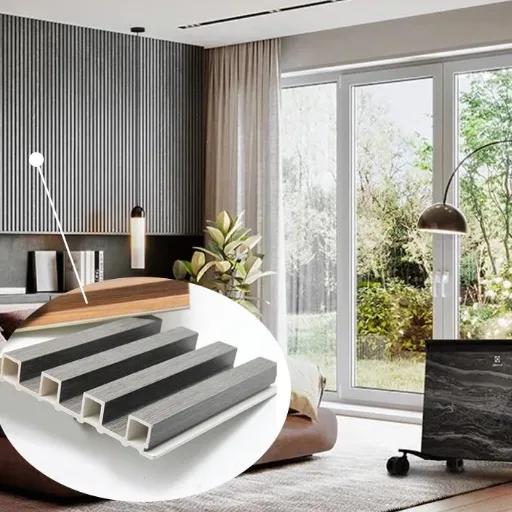
Not every buyer needs the same supplier. A contractor bidding on a 5,000-square-meter hotel facade has fundamentally different priorities than a distributor building a private-label brand. Your manufacturer selection needs to match your business model requirements.
For Bulk Importers and Distributors
The company needs to give priority to production capacity and quality maintenance, and affordable FOB rates. Manufacturers need to possess 50 or more extrusion lines that operate through automated quality control systems. The company needs to request container-loading photos together with third-party inspection reports from the pre-shipment stage. Your margins depend on volume, so even a $0.10-per-meter advantage compounds across thousands of square meters.
For Contractors and Commercial Projects
The company needs to document its certifications and fire ratings, together with its project references. The company requires documentation that meets building inspectors and architects requirements. The company needs to verify that test reports have a current status and that they come from accredited laboratories such as SGS, Intertek, and Bureau Veritas. The company needs to receive contact information for previous clients who are located within their service area.
For Private Label and Branding Partners
The company needs to highlight its OEM/ODM capabilities together with its ability to create custom packaging and design assistance services. The best private-label manufacturers offer 3D rendering of custom textures, branded carton design, and marketing photography. The company needs to confirm its intellectual property security for all unique surface patterns that it plans to create.
For Budget-Conscious Buyers
The price should match the minimum quality standards that need to be met. The investigation should begin when a quote presents an impossibly low estimate, which shows interior panel costs below $0.20 per meter and exterior cladding costs below $1.00 per meter. The common methods that manufacturers use to reduce their production costs result in panels that develop warping, fading, and delamination problems within months because they use recycled materials, lower panel density, and remove UV stabilizers.
Priya, a Dubai contractor, discovered a 40% lower exterior WPC cladding quote, which she believed represented a good deal. The panels had faded to mottled gray from their original walnut brown color six months after the installation was completed. The surface film was peeling at the edges. She had to pay $12,000 for the removal process and replacement work after her client withheld payment. The “savings” had cost her the profit on the entire job plus her reputation.
Red Flags: How to Spot Unreliable WPC Manufacturers
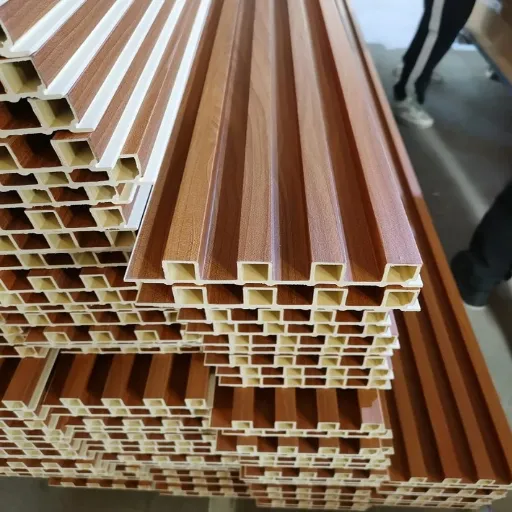
Every experienced importer has a story about a supplier who looked perfect on paper and disastrous in practice. The following signs should make you stop your deposit process until you confirm safety.
Trading Companies Posing as Factories
This represents the main fraudulent activity that exists throughout the WPC industry. A company rents a small office, builds a professional website, and claims to own a factory. The company receives your order, increases the cost, and hires the cheapest vendor to handle production. Your quality control rights are eliminated because the intermediary vanishes during problem situations.
How to spot them: They deflect requests for live video calls from the production floor. The company cannot answer technical questions about both extrusion temperatures and material ratios. Their business license lists a trading company, not a manufacturing enterprise.
Unrealistically Low Pricing
The first bid, which offers a price reduction between 30 to 50 percent, has to be seen as evidence that the contractor will cut necessary expenses. The common shortcuts that builders use to save costs include reducing wood-plastic density and using recycled plastics that have different material properties, skipping UV stabilizers, and applying low-grade surface films that peel off within one year.
Missing or Unverifiable Certifications
The CE logo can be easily copied and displayed on any website by anyone. Manufacturing companies that operate legally must provide certificate numbers, which can be verified through the issuing organization. Treat certifications as fictional when a supplier provides blurry screenshots instead of downloadable PDFs that contain verifiable registration numbers.
Inconsistent Communication or Vague Answers
The dedicated foreign trade staff at professional factories provide immediate responses that include technical details about their products. If your inquiries receive delayed, templated responses that ignore your specific questions, you are likely dealing with a small operation or a middleman who must check with someone else before answering.
Refusal to Provide Samples or Factory Video
The legitimate manufacturer should provide samples and factory video tours because both requests represent standard business procedures. The typical shipping period for samples requires 7 to 15 days. If a supplier demands a deposit before sending samples or claims their factory is “too busy” for a video call, find another partner.
Factory Audit Checklist: 10 Steps to Verify Your Supplier
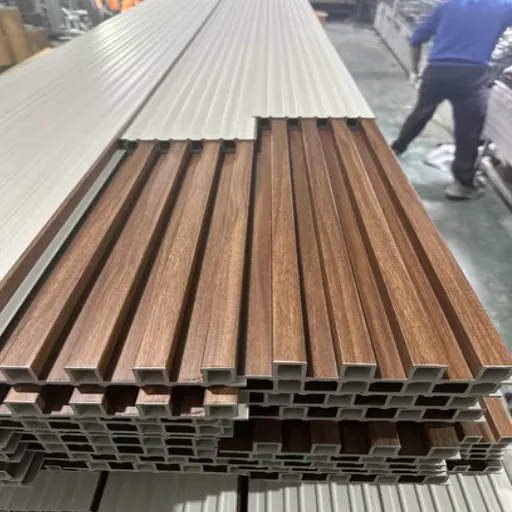
Before you choose any manufacturer to work with, complete this checklist. The steps you take will help you build successful partnerships while decreasing your operational risk.
- Request a business license and verify the registration through China’s National Enterprise Credit Information Publicity System. The business scope must include manufacturing as well as trading activities.
- The production floor requires a live video call demonstration instead of using a conference room. The company needs to show its extrusion lines together with its raw material storage facilities and its quality control areas.
- The numeric certification details should be checked by users on the official websites of certification bodies. ISO certificates are verifiable through the certification body. The CE declaration should include references to the relevant harmonized standards.
- Request samples from multiple production batches to evaluate color consistency, surface finish, and structural integrity across runs.
- You need to check client references in the specific market that you want to enter. Past buyers will tell you about delivery reliability, product quality, and customer service support after they make a purchase.
- The material composition needs to be verified. The exact wood-to-plastic ratio and the grade of plastic used (virgin vs. recycled), and the types of additives used need to be provided.
- The quality control documentation needs to be reviewed. Factories that operate professionally keep their batch records together with inspection reports and non-conformance documentation.
- Production capacity needs to be verified through assessment of shift schedules and line utilization information. A factory with 30,000 square meters of space needs to show how many production lines it operates and what hours those lines work.
- The system needs testing because it only shows direct response time and results through delivering answers, which leads to predicting future issues. The system needs testing because it only shows direct response time and results through delivering answers, which leads to predicting future issues.
- Before you make a decision to buy large quantities, start with a small trial order. The trial order of 100–500 meters enables you to test packaging together with shipping documents and actual production quality without facing significant risks.
Understanding Pricing, MOQs, and Lead Times
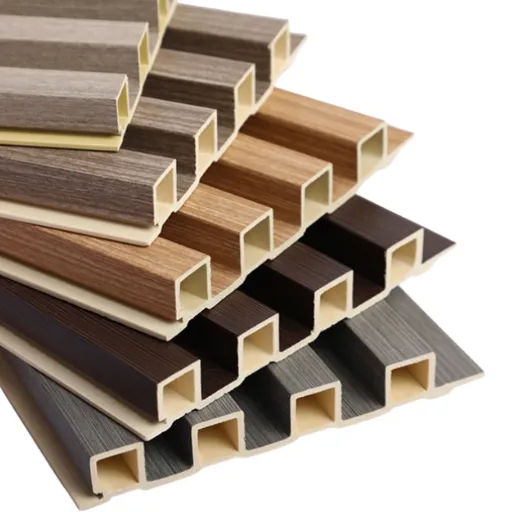
Pricing in the WPC industry is not standardized. Two panels that look identical in a photo can differ dramatically in material quality, density, and durability. Understand the pricing tiers before you negotiate.
Typical Price Ranges by Product Type
The decorative fluted and flat panels, which serve as interior wall panels for residential and commercial spaces, use WPC material as their base. The product range pricing starts at $0.24 and reaches a maximum of $0.95 per meter, which applies to factory-direct FOB sales. The spread depends on three factors, which include the thickness, surface finish complexity, and the size of the order.
Exterior WPC cladding requires materials that meet higher standards of UV protection, moisture resistance, and dimensional stability. The factory-direct prices range from $1.10 to $4.12 per meter. The price range reaches its highest point through co-extruded panels, which feature protective outer shells.
The premium price and specialized panels, which include custom textures and metallic finishes and fire-rated formulations, start at $3.66 and reach a maximum of $7.98 per meter or piece. The production of these products needs special tools, which require more time to set up.
MOQ Expectations
Most established factories accept trial orders of 100 to 500 meters or pieces for standard products. The best FOB rates become available through container-scale orders, which require a minimum of 2000 meters, and customers receive free customization services. Linyi-based manufacturers permit trial orders, which start at 100 meters to establish long-term customer relationships.
Lead Time Ranges
Sample production requires 7 to 15 days to complete, based on the project’s complexity. Bulk production starts 15 to 30 days after the company receives its initial deposit, but peak construction seasons may cause delays beyond this timeframe. The shipping process requires 15 to 45 days to complete, which depends on the shipping destination and the method used.
Importing WPC Wall Panels from China: Logistics Essentials
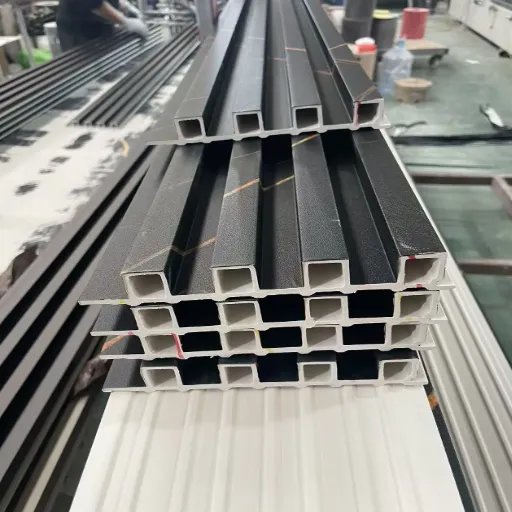
Sourcing the right product at the right price is only half the battle. Getting it to your warehouse without customs surprises requires attention to logistics details that many first-time importers overlook.
Common Incoterms
The most common import arrangement for WPC panels uses FOB (Free On Board) shipping. The factory delivers goods to the port and loads them onto the vessel. You have authority over ocean freight operations and insurance procurement. CIF (Cost, Insurance, and Freight) shipping delivers goods to your destination port. DDP (Delivered Duty Paid) shipping represents the most convenient delivery method but comes with higher expenses.
HS Codes and Customs Considerations
WPC wall panels generally fall under HS codes, which relate to plastic building materials and wood-plastic composite materials. The exact classification affects duty rates, so confirm with your customs broker before shipping. Misclassification can trigger unexpected tariffs or port delays.
Packaging and Container Loading
Standard packaging uses cartons on wooden pallets. The factory must demonstrate proper edge protection methods along with moisture barrier solutions. Container loading photos should show uniform stacking and proper weight distribution. A poorly loaded container costs far more in damaged goods than the time spent reviewing loading documentation.
Typical Shipping Timelines
Ocean freight to Europe takes between 25 and 35 days. North American West Coast delivery takes 14 to 21 days, while East Coast routes require 30 to 40 days. Southeast Asia shipments arrive after 7 to 14 days. Middle East destinations typically see 20 to 30-day transit times.
Frequently Asked Questions
What is the largest WPC wall panel manufacturing region in China?
Shandong Province, specifically Linyi City, contains the largest number of WPC panel factories found throughout China. The area enjoys advantages because it lies close to raw material suppliers and already established logistics systems, and has spent more than 30 years developing its extrusion technology. The presence of multiple manufacturers within a 50-kilometer range produces both competitive pricing and rapid delivery capabilities.
How do I know if a supplier is a real factory or a trading company?
Request a live video tour of the production floor. The person needs to ask technical questions that involve extrusion temperatures, material ratios and production capacity. The system needs to verify the business license through China’s National Enterprise Credit Information Publicity System, which will confirm the registered business scope includes manufacturing. Trading companies typically deflect technical questions and cannot show active production lines.
What certifications matter most for WPC wall panel exports?
ISO 9001 demonstrates consistent quality management throughout its entire framework. CE marking functions as a compulsory requirement for businesses that want to enter the European market. The test reports from SGS and Intertek serve as independent proof that verifies both product safety and performance standards. The E0 and E1 formaldehyde emission standards establish essential requirements for indoor usage. The B1 and Class C fire resistance ratings serve as common requirements for commercial construction projects.
What is a reasonable MOQ for WPC wall panels from China?
Most established factories accept trial orders of 500 to 1000 meters for standard products, while Linyi manufacturers permit trial orders that start from 100 meters. The best pricing and customization options become available through container-scale orders, which require a minimum of 2000 meters.
How long does it take to receive an order from China?
The production process requires 15 to 30 days after we receive the deposit. Sample orders ship within a period of 7 to 15 days. The duration of ocean freight depends on the destination, which takes between 15 and 45 days. You should expect the complete process to take between 6 and 10 weeks, which starts from order confirmation and ends with warehouse delivery.
Can Chinese WPC manufacturers customize colors and textures?
Yes. Most established factories offer OEM and ODM services, which enable customers to create custom colors and surface textures, embossed patterns, and panel lengths and branded packaging. Some manufacturers maintain design libraries with 60-plus exclusive patterns. The custom development process demands higher minimum order quantities, together with extended time periods needed for tool development.
Conclusion
The process of selecting a WPC wall panel manufacturer in China requires more than understanding the lowest price. The process requires you to select a supplier who provides consistent product quality, dependable document delivery, and fast order processing throughout your entire purchasing process.
The manufacturers on this list have demonstrated those capabilities through years of export performance, third-party certifications, and verified client outcomes. The supplier database contains sources that meet your needs for European-compliant cladding and North American ASTM certification and flexible factory-direct pricing from Linyi.
You need to take your next action. Select two or three manufacturers that match your specific market and project requirements. Ask for product samples. Perform video audits. Validate certifications through independent testing. You should conduct a trial order before proceeding to larger orders.
The hotel developer, Ahmed in Riyadh, followed the process when he required 5,000 square meters of fire-rated WPC cladding for his new resort. He checked three factories and analyzed samples for color stability and fire safety performance before ordering 500 meters of product. The factory delivered products on schedule with all required B1 fire documentation and Arabic installation instructions. The entire order processing went smoothly, which allowed the resort to open according to its planned schedule.
That is what happens when you treat supplier selection as a process, not a gamble.
Ready to source WPC wall panels from a verified manufacturer? [Contact Linyi Yuheng for a factory-direct quote, free samples, and export documentation tailored to your market →]
Categories:
Blog
Related Articles