WPC Wall Panels for Hotel: The Complete 2026 Specification & Sourcing Guide
Short answer: WPC wall panels for hotel projects are an excellent fit for lobbies, guest rooms, restaurants and dry bathroom zones, a conditional fit for corridors, and a poor fit for service corridors, commercial kitchens and showers. Get the zone right, insist on fire and VOC certification that matches the actual supplied batch, and they deliver a warm, wood-look finish that installs fast, cleans easily and lasts 15 to 25 years.
That blunt answer saves a lot of money. It is also the answer most suppliers will not give you, because they would rather sell you panels for every wall in the building.
If you are specifying a new-build hotel or running a rolling refurbishment, this guide walks you through every decision that matters: which zones suit WPC, the hospitality-grade specs you must demand, how to renovate while the property stays open, what it costs, and how to source at volume without getting burned.
Key Takeaways
- WPC suits hotels zone by zone, not wall by wall. Lobbies, guest rooms and restaurants are strong fits; corridors are conditional on impact; service corridors, kitchens and showers are usually a no.
- Fire and VOC are the two non-negotiable specs. Demand ASTM E84 Class A or EN 13501-1 Class B-s1,d0 fire ratings plus E0 / CARB Phase 2 emissions, with test reports matched to the exact panel batch you receive.
- The hospitality wall coverings market is heading to $14.7 billion by 2031, and 61.4% of demand now comes from renovation, not new build, which makes phased-install panels a strategic advantage.
- You can renovate a hotel without closing it. Dry-fixed panels go over sound existing walls, so you can work floor-by-floor and wing-by-wing with no wet trades and no guest disruption.
- Factory-direct sourcing cuts the markup tiers. Buy by grade, verify certification, and plan a single batch run to guarantee color consistency (ΔE ≤1.5) across a multi-stage project.
Why Hotels Are Switching to WPC Wall Panels
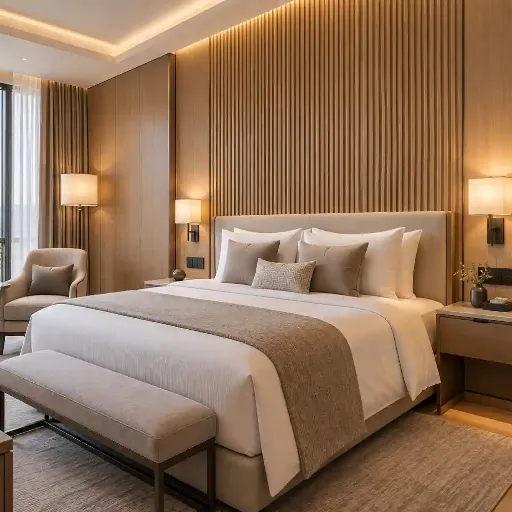
Hotels are the toughest client a wall finish can have. Guests drag suitcases down corridors, housekeeping carts bash skirting boards, steam fills bathrooms, and the property has to look brand-new for its next inspection. Traditional finishes struggle somewhere in that list. Paint scuffs permanently. Wallpaper peels at the seams. Tile is heavy, slow to install and expensive to replace in a single room.
WPC wall panels, a composite of wood fiber and polymer, were engineered for exactly this kind of abuse. They resist moisture, termites and cracking. They wipe clean with a neutral cleaner. And they take daily contact from trolleys and luggage far better than paint or plaster, all while adding a warm wood texture that softens echo in long corridors. As a commercial wall panel and hotel wall cladding choice, they solve a problem paint, wallpaper and tile all struggle with.
The market is responding. The hospitality wall coverings market is forecast to reach $14.7 billion by 2031, growing at a 4.2% compound annual rate, with wall panels the fastest-growing product type at 4.8% CAGR. Even more telling: 61.4% of 2025 wall-covering demand came from renovation and remodeling, not new construction, driven by hotel brands running rolling property-improvement programs.
In China alone, hotel renovation projects rose 36% year on year, with more than 880,000 rooms awaiting an update in tier-one and tier-two cities according to the Shanghai hotel expo. Renovation is where the volume is, and renovation is exactly where fast, dry-fixed panels win.
Want the full material picture first? Start with our complete buyer’s guide to WPC wall panels for composition, grades and specifications before you spec a single wall.
Zone by Zone: Where WPC Wall Panels Work in a Hotel
This is the section most supplier pages skip. The honest truth is that a hotel has eight or nine different wall environments, and WPC is a strong fit in some and a mistake in others. Here is the framework professional specifiers use.
| Hotel Zone | WPC Suitable? | Main Check | Recommended Spec |
|---|---|---|---|
| Lobby & reception | Yes | Traffic + impact | Fire-rated co-extruded, feature-wall grade |
| Guest rooms | Yes | Fire + finish | E0 low-VOC, fluted or flat, feature walls |
| Corridors | Conditional | Impact frequency | Impact-grade + skirting/trim, B1 fire |
| Restaurant & bar | Yes | Cleaning regime | Co-extruded, wipe-clean surface |
| Bathroom dry zone | Conditional | Moisture | High-density or co-extruded, sealed edges |
| Service corridors | Usually no | Heavy cart impact | Use impact panel or HPL systems |
| Commercial kitchen | No | Heat + grease | Stainless or ceramic systems |
| Shower / wet room | No | Direct water | SPC, tile or dedicated wet-wall system |
| Exterior | Only if rated | UV + weather | Exterior-rated WPC cladding only |
Hotel Lobby and Reception
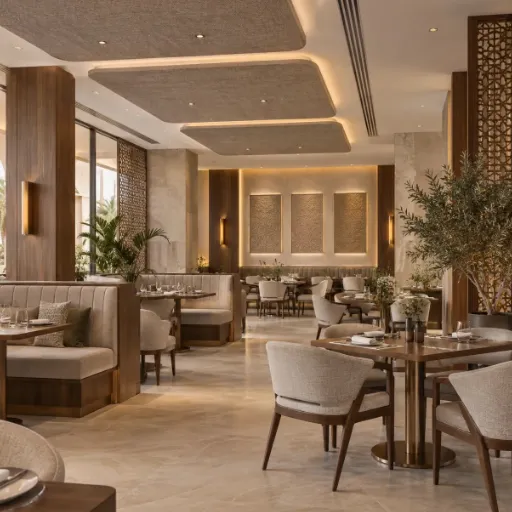
Lobbies are where WPC performs best. There is foot traffic, but it is spread out, and the aesthetic payoff is highest. A warm wood-grain or fluted feature wall behind reception immediately communicates the brand’s character and hides the scuffs that show on painted plaster.
The one thing to watch is solar exposure. A west-facing lobby with intense, direct sun carries a higher fading and movement risk, so specify a UV-stabilised co-extruded panel and confirm the color-fastness data. In one documented UAE project, a hotel used roughly 4,000 m² of fluted panels across lobby walls and executive-suite acoustic walls in a 45°C climate, and the specification passed local civil-defence fire testing at B1.
Guest Rooms
Guest rooms are a natural fit, and they follow the same design logic you would apply to a residential feature wall. WPC works beautifully as a headboard backdrop, a TV wall or a full accent wall, replacing wallpaper or wood veneer while adding sound insulation and a premium hand-feel.
The checks here are fire and finish. Guest rooms are enclosed, occupied spaces, so low-VOC panels (E0 or CARB Phase 2) matter for indoor air quality, and the finish has to survive housekeeping’s cleaning regime without dulling. If you want to think through the room-level design and durability questions first, our guide to whether WPC wall panels are good for a living room covers the same material behaviour a guest room demands.
Corridors
Corridors are the conditional zone, and this is where most projects get it wrong. The main variable is impact frequency: how often luggage trolleys and housekeeping carts contact the wall. WPC handles this far better than paint, but a thin decorative panel can still bruise over years of heavy contact.
Three specs fix this. If you are specifying hotel corridor wall panels, first choose an impact-grade or thicker panel. Second, add a skirting or trim at floor level to absorb the worst hits. Third, for heavy service corridors behind the scenes, drop WPC entirely and spec an impact panel or HPL system. Fluted profiles also soften corridor echo, which guests notice more than they realise.
Restaurant, Bar and Bathroom Dry Zones
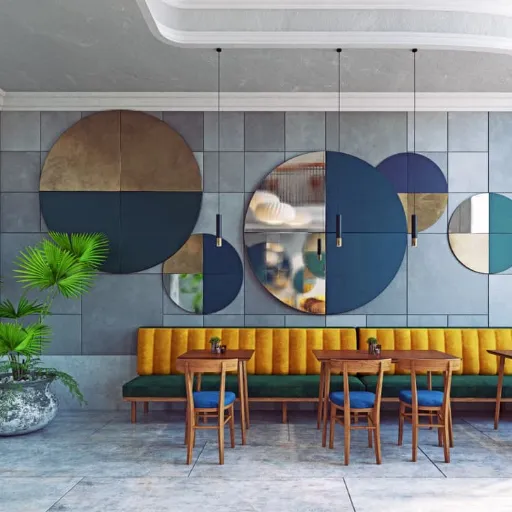
Restaurant and bar walls suit WPC because the cleaning regime is manageable and the aesthetic works. Choose a co-extruded panel with a sealed surface that tolerates neutral cleaners and degreasers.
Hotel bathroom wall panels work well in dry zones (the wall behind a vanity or toilet), using a high-density or co-extruded panel with properly sealed edges. Showers and wet rooms are not. Standard WPC is water-resistant, not waterproof under pressurised hot water, so the wet-zone logic is different. Our dedicated guide to WPC panels for hotel bathrooms walks through the wet-zone framework in detail.
Hospitality-Grade Specifications You Must Demand
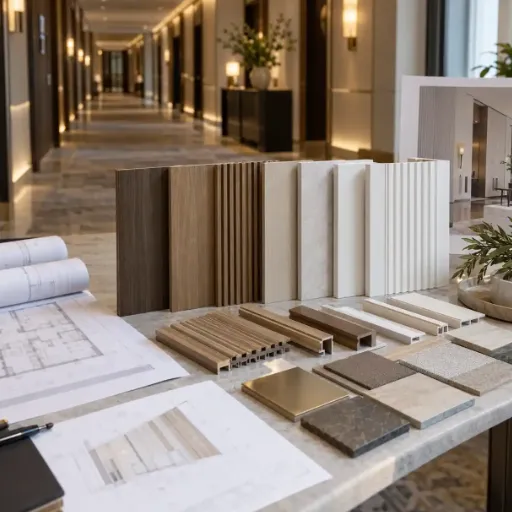
A WPC panel that looks right but fails code is the most expensive panel in the building. When you specify for a hotel, these six specs separate a hospitality-grade product from a decorative one.
Fire Performance
Fire rated wall panels for hotels are non-negotiable, especially in corridors and egress paths. The benchmark depends on your region: ASTM E84 Class A in North America, EN 13501-1 Class B-s1,d0 in Europe, and B1 in China.
Here is the trap. Fire behaviour depends on the formulation, the additives, the panel construction and the test method, so two panels that look identical can perform completely differently. Do not accept a generic “fireproof” claim. Insist that the exact fire test documentation matches the exact product supplied, issued by an accredited body such as SGS or Intertek. For the deep compliance detail, see our fire-rated WPC panel guide.
VOC and Emissions
Enclosed guest rooms need clean air. Specify panels meeting E0 or CARB Phase 2 emission standards, and confirm the adhesive or mounting method is low-VOC too. Modern co-extruded panels bound with heat-molding or PUR hot-melt adhesives emit effectively zero VOCs, which is what you want in a sealed, occupied room.
Impact and Abrasion Resistance
Corridor and lobby panels take repeated physical punishment. Ask for impact and abrasion test data, and for high-traffic zones choose thicker panels and a co-extruded cap layer that resists scuffing and stains.
Thermal Expansion and Dimensional Stability
WPC moves with temperature. Indoor allowance is commonly 3 to 5 mm per meter, so confirm the figure in the product data sheet and ensure your installer leaves the correct expansion gaps. Low-grade panels with high expansion coefficients buckle, warp or pull away after installation, and that failure always shows up after handover.
Colour Consistency at Scale
A hotel is rarely installed in one delivery. If you clad a 240-room property across several phases, the color must match from the first batch to the last, or guests will see the seams. Specify a batch tolerance of ΔE ≤1.5 and plan a single production run for the entire project wherever volume allows.
The Honest NRC Story on Acoustics
Many suppliers imply that fluted panels absorb sound. Often they do not. A decorative panel mounted on a hard wall commonly has an NRC below 0.1, which is acoustically useless. Real absorption requires a tested system with a felt or mineral-wool backing behind the slats. If corridor echo matters to your project, specify the full tested assembly, not just the visible panel. Our 3D slat and fluted panel guide explains how acoustic-rated profiles are built.
Renovating a Hotel with WPC Panels Without Closing
Fast installation is not a nice-to-have in hospitality. It is the difference between one disrupted week and a lost season of bookings. WPC’s biggest commercial advantage is that it is dry-fixed.
Surface-Over-Surface Installation
Panels can be installed directly over structurally sound, dry, level walls, including painted walls and even old tile. That means no demolition, no plaster drying time, minimal dust and a fraction of the waste. In one real refurbishment, a resort renovated 100 bathrooms over 18 months while staying fully open, panelling over old tiles rather than removing them, and reporting roughly half the labour and installation time of a strip-out job.
Floor-by-Floor and Zone Phasing
Because the panels are dry-fixed, a renovation can be sequenced. Work the top floor first, then move through corridors and public spaces, leaving the lobby for off-peak hours. Limit the work to a set number of rooms per week and concentrate noisy tasks into short daily windows. This is how a property keeps trading through a full refresh.
Off-Peak Scheduling and Guest Comfort
The best-phased projects control noise and dust deliberately: cutting done away from guest areas, adhesive-based fixing to minimise drilling, and wings handed back the same day. Guests tolerate a renovation that respects their sleep far better than one that does not.
Across all of this, the installer’s first panel sets the alignment for the entire wall, so a laser level and a dry-fit are worth the extra minutes.
Hotel Design Trends and WPC in 2026
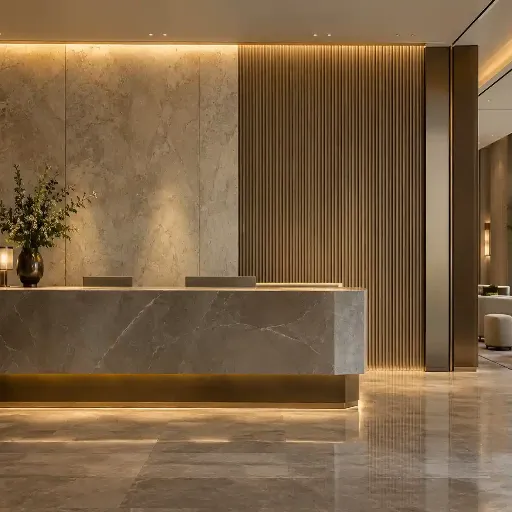
Design is where hotel interior wall panels earn their place beyond pure durability. According to the LX Hausys hospitality insights report, 83% of designers expect greater demand for healthy, sustainable accommodation, and 85% of guests expect wellness amenities. Both trends push toward warm, natural, low-emission finishes.
Here is how that plays out in WPC specification for 2026:
- Biophilic wood-grain guest rooms. Deep-embossed warm oak and walnut fluted profiles bring the warmth of timber without the maintenance burden of real wood.
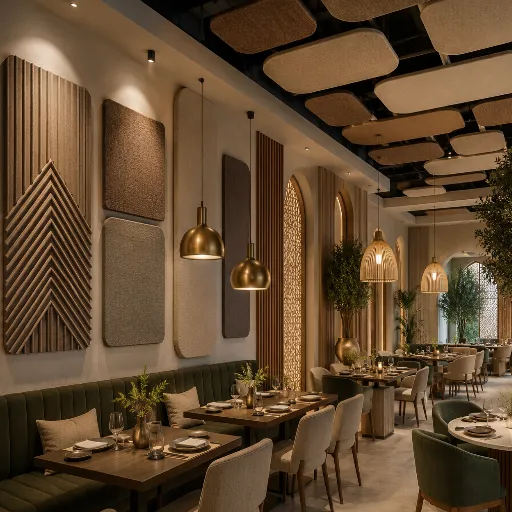
- Brand-identity lobbies. Feature walls in slatted cores and stone-effect finishes let a brand express character the moment a guest walks in.
- Fluted corridors that soften echo. Vertical and spatial slat textures hide trolley scuffs and reduce the cold, hard feel of a long hallway.
- Low-VOC, sustainable material stories. Guests and owners increasingly reward finishes that use recycled content and meet healthy-materials standards.
Many of these hospitality looks began in residential interiors, which is why the design language transfers so cleanly. For the room-level palette and styling ideas, our WPC wall panels for living room guide is a useful reference when you brief a designer on guest-room feature walls.
Specifying a refurbishment right now? Send us your wall schedule and we will map the right panel grade to each zone. Request hospitality-grade samples and a project quote →
What Do Hotel WPC Wall Panels Cost?
Cost is where transparent suppliers and trading companies separate. Here is the honest picture for hospitality-grade panels.
Price Tiers by Grade (per square meter)
- Economy hollow-core: $35 to $55/m². Dry, decorative zones only.
- Standard solid-core: $60 to $90/m². Guest rooms and dry walls.
- Premium co-extruded (hospitality-grade): $100 to $250/m². Corridors, lobbies, fire and VOC rated.
Full Hotel-Project Cost Estimate
Material is only part of the number. Add installation labour (roughly $60 to $130/m², far lower than wet trades), accessories and trim at $15 to $25/m², and wastage. Allow 8% waste on simple walls and 12% or more on complex hotel interiors with many doors, columns and reveals. Wall area is length times height, minus openings, plus waste.
Return on Investment
Against vinyl wallcovering, paint or tile, WPC’s total cost of ownership over 10 to 15 years is usually lower. There is no grout to discolour, no wallcovering to lift at the seams, and no repainting cycle between turnovers. A wing that costs more on day one saves on every refurbishment that never has to happen. For a full breakdown across applications, see our WPC wall panel pricing guide. Room-level budgeting for a single guest-room feature wall follows the same logic as a residential project, which is why our guide to living room wall panelling cost is a good starting point for per-room estimates.
Consider Priya, an FF&E procurement manager for a 180-room airport hotel. Her first quote for co-extruded corridor panels came in at the premium tier and looked expensive next to vinyl. Once she added the ten-year cost of seam repairs, spot repainting and a full wallcovering replacement cycle, WPC came out cheaper per room per year, and it passed the fire inspection that vinyl had failed twice.
Sourcing WPC Wall Panels for a Hotel Project
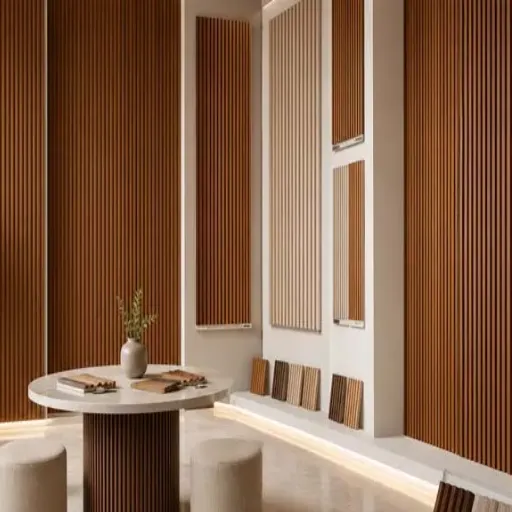
Sourcing at hotel scale rewards preparation. Here is the workflow that keeps a multi-stage project on budget and on schedule.
Factory Versus Trading Company
A factory controls formulation, fire-rating consistency and batch color, which matters enormously on a project installed over several months. A trading company adds a markup tier and often cannot guarantee batch continuity. Ask directly who manufactures the panels and whether the fire certificate is issued in the factory’s own name.
Verify Certification for Your Approved-Materials List
Your approved-materials list is only as strong as the documents behind it. Collect CE, ISO 9001 and the ASTM E84 or EN 13501-1 fire reports, then verify each report references the exact product code you are buying. Batch-level SGS or Intertek reports add the final layer of assurance for inspection.
Custom Colour, Texture and Batch Quality Control
Hotels are designed, not stocked. Hospitality projects usually need a custom color or profile matched to the brand palette. Place custom orders early (allow extra lead time for color development) and lock the full project into a single production run where possible. Confirm the batch tolerance in writing.
MOQ, Lead Times and Freight
Standard panels typically ship in 15 to 25 days, with another 7 to 15 days for custom colors or textures, so book three to four weeks ahead for a renovation program. Confirm MOQ by grade and profile, and agree Incoterms (FOB or CIF) before you finalise your landed-cost model. Our guide to evaluating WPC manufacturers in China covers the sourcing checklist in depth.
Red Flags to Avoid
- A fire certificate that names a different product or a generic “series.”
- Refusal to provide batch-level test reports.
- No committed color tolerance for multi-stage orders.
- Panels marketed as both indoor and outdoor with no exterior rating.
Frequently Asked Questions
Are WPC wall panels suitable for hotels?
Yes, in the right zones. WPC is a strong fit for hotel lobbies, guest rooms, restaurants and dry bathroom areas. It is conditional for corridors and generally not suitable for service corridors, commercial kitchens or showers, where heavier-impact or wet-wall systems perform better.
Which wall panels are best for hotel corridors?
Impact-grade WPC panels work well when paired with a skirting or trim to absorb trolley contact, plus a B1 or Class A fire rating. For heavy service corridors with constant cart traffic, spec a dedicated impact panel or HPL system instead of decorative WPC.
Do WPC wall panels meet hotel fire safety codes?
Quality panels can meet ASTM E84 Class A, EN 13501-1 Class B-s1,d0 or Chinese B1, depending on formulation. Fire performance is not universal, so always require test documentation from an accredited lab that matches the exact product and batch you receive.
Can WPC panels be used in hotel bathrooms?
In dry zones such as behind a vanity or toilet, yes, using a high-density or co-extruded panel with sealed edges. Showers and wet rooms should use SPC, tile or a dedicated wet-wall system instead, because standard WPC is water-resistant rather than fully waterproof.
How much do hotel wall panels cost per square meter?
Hospitality-grade co-extruded WPC runs roughly $100 to $250/m², with standard grades from $35 to $90/m². Add $60 to $130/m² for installation, $15 to $25/m² for accessories, and 8 to 12% for waste on a full hotel costing.
Can you install hotel wall panels over existing walls?
Yes. WPC panels are dry-fixed and can be installed over sound, dry, level walls, including painted surfaces and old tile. This avoids demolition and plaster drying time, which is what makes a stay-open, floor-by-floor renovation possible.
How do you renovate hotel walls without closing the property?
Sequence the work floor-by-floor and wing-by-wing, keep lobby work to off-peak hours, limit noisy tasks to short daily windows, and hand wings back the same day. Dry-fixed panels remove the long drying delays that make traditional finishes so disruptive.
What fire rating do hotel wall panels need?
Corridors, egress paths and common areas generally require A-rated or Class B-s1,d0 cladding, depending on local code and building height. Always confirm the requirement with your fire consultant for the specific jurisdiction and building type.
Are WPC panels durable enough for high-traffic hotel areas?
Yes, with the right grade. Co-extruded panels resist scuffing and stains far better than paint or plaster, and they wipe clean. The key is matching panel thickness and impact grade to the traffic level of each zone.
How do you source WPC wall panels in bulk for a hotel project?
Buy factory-direct by grade, verify fire and VOC certification against the exact batch, plan a single production run for color consistency, and agree MOQ, lead times and Incoterms early. Place custom color orders three to four weeks ahead of your install schedule.
Conclusion: Getting WPC Wall Panels for Hotel Projects Right
WPC wall panels can transform a hotel’s interiors, but only when the specification matches the zone. Get the fundamentals right and the rest follows:
- Zone first. Lobbies, guest rooms and restaurants are strong fits; corridors are conditional; kitchens and showers are out.
- Fire and VOC certification matched to the batch are the two specs that keep you out of trouble.
- Dry-fixed panels let you renovate while the property trades, which protects revenue during the project.
- Factory-direct sourcing by grade removes markup tiers and gives you batch color consistency at scale.
- The cost case is long-term. Lower maintenance and higher durability beat cheaper finishes over a 10 to 15 year horizon.
A well-specified WPC program installs fast, passes inspection, and still looks sharp years later. That is the standard a hotel should demand.
Request hospitality-grade samples and a project quote → Send us your wall schedule and fire requirements, and we will map the right panel grade to every zone in the building.
Categories:
Blog
Related Articles