Living Room Wall Panelling Cost: WPC vs MDF vs Wood vs PVC (2026 Prices)
Living room wall panelling costs between roughly £1.40 and £13 per square foot (£15 to £140 per square metre) for materials alone. Professionally installed, expect £9 to £25 per square foot (£100 to £275 per square metre). A typical feature wall of about 100 sq ft (9 m²) lands at £765 to £1,350 in the UK, or $900 to $2,400 in the US.
That spread is enormous, and it’s the reason most people end up confused. Search for living room wall panelling cost and you get UK averages in pounds, Indian rates in rupees per square foot, and US installed figures in dollars per square foot, with no bridge between them and no answer to the question you actually asked: what will my living room cost?
Priya, a homeowner in Manchester, found that out the expensive way. She priced fluted panels online at £24 each and budgeted £430 for the wall. The three quotes she received came back between £980 and £1,240. Nothing was wrong with the quotes. She had simply priced the panels and not the battens, adhesive, trims, waste and a day of fitting that make a wall, and every guide she read had made the same mistake.
This guide fixes that. You will see what each finish costs per square metre and per square foot, what a feature wall, a three-wall job and a full room cost, the costs nobody puts in the headline, where factory-direct sourcing changes the numbers, and when the cheaper option is genuinely the right one. We supply WPC interior panels factory-direct from Linyi, Shandong, so we’ll show both sides of the price ladder. For the design side of the same project, start with our living room WPC wall panel design guide.
Key Takeaways
- Materials alone run £15-140/m² (£1.40-13/sq ft). Professionally installed, budget £100-275/m² (£9-25/sq ft) and expect labour to make up 30-50% of the total.
- WPC sits close to MDF on price but lasts 15-25 years against MDF’s 8-12, and it doesn’t swell. On any wall that sees moisture, “cheap” MDF becomes the expensive choice.
- Hidden costs add roughly 20-35% to the panel price: battens, adhesive, trims at 12-18% of material, 10-15% waste, wall prep, paint, electrical and LED.
- A single feature wall is the best value per pound. Full-room panelling costs four to five times more for four to five times the area, with no proportional gain in impact.
- Buying direct from the factory cuts 40-75% off retail panel pricing at volume, but a single feature wall is usually cheaper to buy locally.
How Much Does Living Room Wall Panelling Cost?
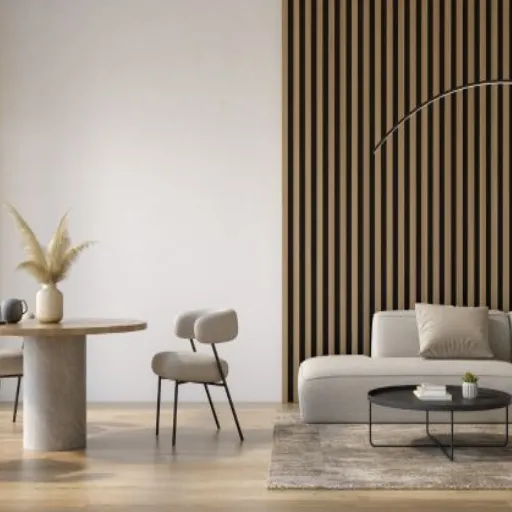
For a living room, wall panelling costs £15 to £140 per m² for supply-only materials and £100 to £275 per m² fully installed in the UK, where Checkatrade’s 2026 guide puts the overall average at £225/m² across types. In the US, installed wall panelling runs $7 to $25 per sq ft, with Homewyse’s national average at $7.78 to $11.55 per sq ft. In India, installed rates start around ₹130 per sq ft for PVC and ₹130 to ₹290 for WPC.
The gap between the two numbers is the single most important thing to understand about wall panelling costs. Materials are the part you can price online. Labour, prep and accessories are the part that turns a £430 material budget into a £1,000 invoice, and no per-panel price includes them.
A note on units, because this is where most budgets go wrong. UK and EU guides quote per square metre, while US and Indian guides quote per square foot. One square metre is about 10.76 square feet, so a panel at £40/m² is roughly £3.70/sq ft. Convert everything into one unit before you compare anything.
Want to check a finish against your own room before you budget it? Panels and sample colours behave differently under your lighting, so start with a physical sample. Request a free sample kit →
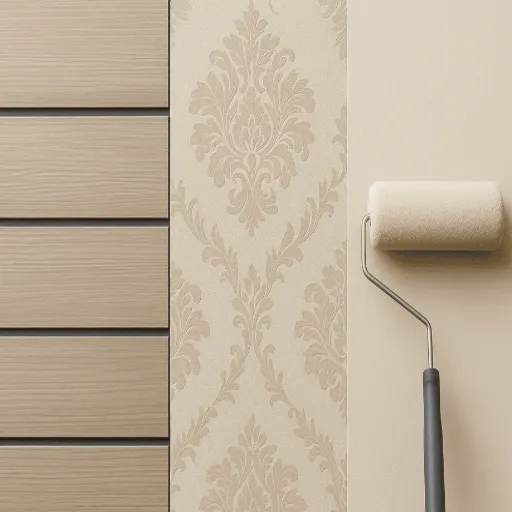
Wall Panelling Cost by Material: 2026 Comparison
The material you choose sets the price band more than anything else. The table below compares the finishes used in living rooms on a like-for-like basis, with supply-only and installed columns and a plain verdict for each.
| Material | Supply-only | Installed | Per sq ft (installed) | Lifespan | Moisture | Living-room verdict |
|---|---|---|---|---|---|---|
| PVC / PVC fluted | £20-45/m² | £20-45/m² + labour | ~£4-9 | 10-15 years | Very good | Cheapest wet-safe option; plastic-looking up close |
| MDF (standard) | £15-30/m² | £7.50-16/sq ft (US) | £6-12 | 8-12 years | Poor | Cheapest on a dry, painted wall only |
| WPC (standard) | £25-60/m² retail | £9-19/sq ft (US) | £7-15 | 15-25 years | Excellent | Best all-round value for a living room |
| WPC (co-extruded premium) | £40-90/m² retail | £12-25/sq ft | £10-20 | 20-25 years | Excellent | Best finish durability and fade resistance |
| Wood slat (MDF or composite core) | €25-55/m² | €25-55/m² + €20-35/m² | £9-16 | 15-20 years | Moderate | Warm look; keep out of damp zones |
| Wood slat (real veneer) | €40-90/m² | €60-125/m² | £12-25 | 20+ years | Needs sealing | Premium look, premium price |
| Solid hardwood | £100-450/m² | £23-50/sq ft (US) | £18-40 | 20+ years | Needs finishing | Statement wall only |
| Shiplap / board-and-batten | £20-60/m² | £15-20/sq ft (US) | £12-18 | 15-20 years | Poor if MDF | Cheap DIY look, labour-heavy |
| Paint (baseline) | n/a | $4-7/sq ft | $4-7 | Recurs every 3-5 years | n/a | Cheapest upfront, recurring cost |
The pattern is clear. PVC and MDF are the entry points, WPC is the middle that behaves like a premium material, and solid wood sits at the top. Solid oak panelling averages £275/m² in the UK against a £225/m² overall average, so the wood premium is real.
MDF deserves the warning it gets. It is the cheapest substrate and it paints beautifully, but a test sample can swell by around 30% after only two hours of moisture exposure, and standard MDF next to a shared or damp wall can fail within months. Where moisture is a possibility, WPC and PVC are the only sensible panel choices. Our guide to whether WPC wall panels are good for living rooms walks through the room-by-room suitability, and for a direct material match-up see how WPC compares with PVC panels.
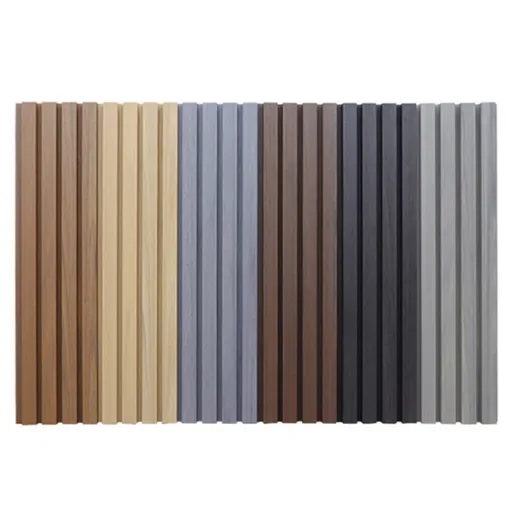
A quick word on finish choice, because it moves the number. Standard printed finishes sit in the lower WPC bands, while co-extruded and nano finishes carry a premium for fade resistance and depth. If you’re weighing appearance against budget, our guide to WPC wall panel colours explains which finishes hold their look and why ordering the full quantity in one batch matters.
What Does It Cost by Scope? Feature Wall vs Full Room
Per-square-metre pricing answers a question nobody asks. Homeowners want to know what the room costs, so here is the scope table.
| Scope | Typical area | Supply-only | DIY total | Professionally installed |
|---|---|---|---|---|
| Single feature wall | 7-14 m² (80-150 sq ft) | $250-600 | $400-750 | $900-2,400 |
| Two to three walls | 16-30 m² | $600-1,400 | $900-1,800 | $2,000-5,000 |
| Full room (four walls, less openings) | 35-50 m² | $1,200-2,600 | $1,800-3,400 | $3,500-8,000+ |
Two real examples anchor those ranges. A UK mid-range feature wall of 8.5 m² has been quoted at £765 to £930, made up of roughly £610 in panels at around £90/m² plus a day’s fitting at about £210 and consumables. The same source scales a 40 m² full room to about £3,600.
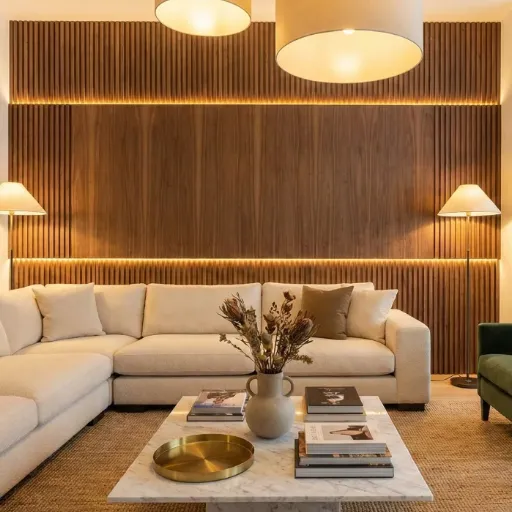
That ratio is the argument. A full room costs roughly five times a feature wall for five times the area, but the visual return doesn’t scale with it. One well-proportioned feature wall behind the seating carries most of the impact in a living room, which is why it stays the best-value scope in almost every project. For layout options that earn the spend, see our accent wall panel ideas.
In India, the standard scope is even tighter. myNivasa’s Bengaluru guide puts the normal job at one feature wall of 90 to 120 sq ft, not a whole room, which is a useful reality check against image-led inspiration.
The Hidden Costs Nobody Quotes
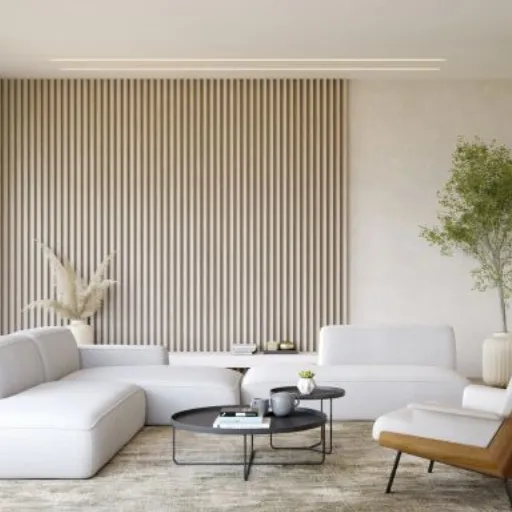
This is where the online price and the final invoice stop talking to each other. Budget for these or your estimate is wrong.
Battens and framing. An adhesive-only install suits a flat, solid wall. Anything else needs horizontal battens, typically 20×40 mm, which also create the cavity for cable routing. Add 10-20% of the material figure for framing.
Adhesive. Construction adhesive runs about $8-20 per tube, and an accent wall takes two to four. Cheap adhesive fails under a heavy panel, so this is not the line to trim.
Trims and edge profiles. Corner trims, end caps and skirting covers add 12-18% of material cost, or about $2-5 per linear foot.
Waste. Order 10% extra for flat panels and 15% for fluted or slatted profiles. The arithmetic catches people out: a 12 in by 10 ft fluted panel covers 10 sq ft, so a 108 sq ft wall needs 11 panels, not 10.8, plus cut-off waste on top.
Wall preparation. Wall prep and repair adds $1-3 per sq ft. In the UK, a plaster patch runs £70-130, reskimming starts at £150, and a full replaster starts at £400.
Paint and primer. Unfinished MDF needs priming and painting at $50-100 per accent wall, and decorating labour averages around £30 per hour in the UK.
Electrical. Moving sockets, chasing walls and adding a spur for lighting is invisible in every panel price and almost always needed.
LED lighting. A strip, channel and dimmable driver for a typical feature wall costs $80-150. Plan the channel before the wall closes, because retrofitting is difficult.
The services you forget. Moving a radiator averages £150, and replacing plus painting skirting boards runs about £250 and £200 respectively in the UK.
The rule that saves you. Add a 20% contingency to whatever you calculate. If the number still looks comfortable, your budget is realistic. If it doesn’t, you’ve found the gap before you signed anything.
For the grade-by-grade WPC figures behind these ranges, see our full WPC wall panel price breakdown by grade.
Factory-Direct vs Retail: Where the Markup Goes
Panel pricing follows a ladder, and knowing where you sit on it explains most of the spread in quotes.
The panel leaves the factory at a FOB price, an importer or distributor adds their margin, a retailer adds theirs, and an installer adds labour on top. Retail pricing typically sits 40-75% above factory-direct, which is the honest answer to why the same-looking panel costs £5/m² in one place and £55/m² in another.
Factory-direct WPC interior panels run from about US$0.70 to US$8 per m² in bulk, with the standard planning range at US$3-8/m². Real listings sit at $4.10/m² for 100-499 m² and $3.50/m² above 500 m², and premium 3D, metallic or fire-rated finishes climb to $6-18.48/m². Co-extruded outdoor cladding, which is a heavier board, runs $11.85-22/m² with a 300 m² minimum order.
Put plainly: a mid-range WPC panel might be $4/m² FOB, $30-55/m² at retail, and $100-200/m² installed. Each step buys something real, but only one of them is the panel.
What changes your landed cost is the order size. MOQs typically start around 50 m² for some grades and reach 1,000 m² for others, and freight, duties, VAT and inland delivery all land on top of FOB.
So when does importing pay? On multi-room and multi-unit projects, on stock for a retailer or distributor, and on any order large enough to spread the freight. On a single feature wall it usually doesn’t, and honesty matters more than a sale. Buy that one locally.
Sourcing panels for a project or a stock order? Send us your wall areas, target finish and destination, and we’ll return an itemised factory-direct quote with freight and lead times. Get a volume quote →
Is Wall Panelling Worth It? Cost vs Paint Over Time
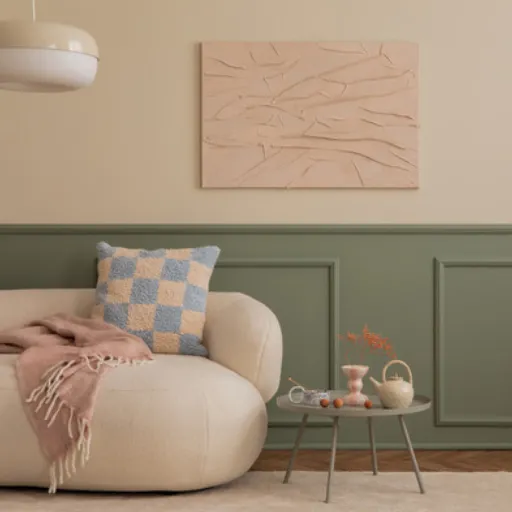
Paint is cheaper the day you buy it and more expensive over ten years, and the crossover arrives sooner than most people expect.
Painting a room costs roughly £400 in the UK, or $4-7 per sq ft installed in the US, and that cost recurs every three to five years as the finish dulls, scuffs and needs a refresh. Panelling costs more upfront and needs nothing beyond a wipe. WPC runs 15-25 years indoors with no repainting, no sanding and no resealing.
Owen, a homeowner in Dublin, learned the difference between cheap and expensive the hard way. He panelled a chimney breast in MDF because it was half the price of WPC, and it looked superb for one season. The following winter, the wall behind the fireplace drew damp, the MDF edges swelled and lifted, and the panels had to come down. The replacement cost more than the WPC quote he had declined, and he lost a fortnight to doing the job twice.
Add up paint, primer, brushes, masking and your own weekends over a decade, and the break-even against a mid-range WPC wall typically lands in the five to seven year window. On a high-traffic or humid wall it arrives sooner, because the recurrence is faster.
There’s a resale angle too. A well-built feature wall in a durable finish reads as a selling point. A swollen MDF wall reads as a defect a surveyor will flag. For the long-term care side, see our guide to WPC wall panel maintenance and long-term care.
If you’re still deciding between panels and a straight finish, our comparison of wall panels vs wallpaper vs paint takes the decision apart properly.
How to Save Money Without Buying Junk
You can cut a wall panelling budget by a third without compromising the result, as long as you know which lines to trim and which to protect.
Match the material to the wall, not the trend. A dry, painted, low-traffic wall is the one place MDF is genuinely fine. Anywhere moisture, steam or regular cleaning is involved, WPC or PVC is the only sensible choice, and paying less for a panel that fails inside a decade is a false economy.
Buy the full quantity in one batch. Colour varies slightly between production runs, and a mismatch is most visible under LED lighting and on two-tone walls. Order everything at once with a colour tolerance of dE 1.5 or better. Our WPC wall panel colours guide covers how to request this.
Choose standard sizes and profiles. Standard lengths and flat profiles cost 15-25% less than custom cuts and narrow fluted geometry, and they cut to size on site anyway.
DIY the simple walls and hire out the hard ones. A flat, square, single wall is a realistic first-timer job. Out-of-plumb corners, full-room runs, wet areas and any electrical work are not. Our step-by-step guide to how to install WPC wall panels on a wall sets out the sequence, and the general methods live in our WPC wall panel installation guide.
Buy factory-direct for multi-wall projects. Volume is where the 40-75% saving lives. Not on a single wall.
Never sample by screen. Monitors misrepresent wood tones, and the error shows up under your own lighting. Request physical samples.
Protect four lines. Adhesive, battens, edge sealing on MDF, and any moisture barrier. These are the cheap items that decide whether an expensive panel survives.
Panelling Costs for Developers, Hotels and Wholesale Buyers
At scale, the per-square-metre rate stops being a retail question and becomes a specification question.
Volume changes the economics in three ways. MOQ tiers drop the panel rate as the order grows, filling a container amortises the freight across more square metres, and one production run spreads the tooling and setup across the whole order. On a 60-unit apartment fit-out or a hotel rollout, that combination moves the landed cost well below any retail figure.
The specification package is what gets a project approved. For sleeping areas and commercial interiors, buyers ask for fire performance (B1, or EN 13501-1 Class B-s1,d0 for European projects), low-VOC or E0 emission data, and water absorption at 0.5-1% or better. Colour tolerance of dE 1.5 or better with batch traceability is what keeps a multi-floor rollout matching from floor one to floor twelve, and a stock of matching replacement panels matters because guest-room and corridor walls take impact.
Plan lead times into the programme. Standard colours ship faster, while custom colours add roughly 7-15 days, and the inland leg from port to site belongs in the programme too.
For the compliance detail, see our fire-rated WPC panel compliance guide, and for the hospitality specification context see WPC wall panels for hotels.
Sofia, a procurement lead for a 90-apartment development in Dubai, modelled her panel cost three ways: local retail, a regional distributor, and factory-direct with a single-batch commitment. Retail priced the project out of budget. Factory-direct landed 43% below the distributor once freight was amortised across the full order, and the single-batch clause removed the colour-matching risk that had derailed an earlier phase. The saving went into the fire-rating documentation the client wanted.
To vet a supplier before you commit a project, see how to evaluate WPC manufacturers in China, or browse our interior WPC panel range to see what we produce.
Frequently Asked Questions
How much does wall panelling cost for a living room?
A feature wall typically costs £765-1,350 or $900-2,400 installed. Materials alone run £15-140/m². A full room costs roughly five times a feature wall: about £3,600 for 40 m² in the UK.
Is wall panelling cheaper than painting?
Upfront, no. Paint costs 4−7/sqftinstalledandpanellingcosts4−7/sqftinstalledandpanellingcosts9-25/sq ft. Over ten years the picture reverses, because panelling needs no repainting and the break-even lands at five to seven years.
How much does wall panelling cost per square metre?
£50-400/m² with an average of £225/m² in the UK for supply and fit. Supply-only materials run £15-60/m² for MDF, PVC and WPC, and £100-450/m² for solid oak.
How much is wall panelling per square foot?
About £4.65-37/sq ft in the UK installed, averaging £20.90/sq ft, or $7-25/sq ft in the US with a national average of $7.78-11.55/sq ft.
Can I panel a living room wall myself to save money?
Yes, on a flat, square, single wall. DIY saves 30-50% on labour and materials can start near £15/m² for basic MDF. Out-of-plumb corners, full rooms and electrical work are worth hiring out.
Which is cheaper, MDF, PVC or WPC?
MDF is cheapest at £15-30/m², PVC £20-45/m², and WPC £25-60/m². The gap narrows once you count MDF’s 8-12 year life against WPC’s 15-25 years, especially anywhere moisture reaches the wall.
Why was my quote higher than the online panel price?
Because online prices are panels only. Battens, adhesive, trims at 12-18%, waste at 10-15%, wall prep, paint, electrical, LED and labour together add 20-35% and often more.
How much panelling do I need for a feature wall?
Measure the wall area, divide by the panel coverage, round up, then add 10% for flat panels or 15% for fluted profiles. A 108 sq ft wall with 10 sq ft panels needs 11 panels, not 10.8.
Do I need to plaster before installing wall panelling?
Not always, but the substrate must be flat within tolerance and dry. Battens can bridge minor unevenness, and wall prep where needed adds $1-3/sq ft.
Are cheap WPC panels worth it?
Sometimes. Filler-heavy budget boards can bow or fade, so check density, water absorption and the finish type. A co-extruded panel costs more and holds its colour far longer.
Does wall panelling add value to a house?
A well-built feature wall in a durable finish is a selling point. A swollen or mismatched MDF wall reads as a defect, which is why material choice matters as much as the design.
Is factory-direct panelling cheaper than retail?
At volume, yes, by 40-75%. Factory-direct interior WPC runs $0.70-8/m² in bulk against retail rates several times higher. On a single feature wall, buying locally is usually cheaper once freight is counted.
Conclusion and Next Steps
Living room wall panelling cost comes down to three numbers stacked on top of each other. Materials run £15-140/m² depending on finish. Labour adds 30-50% and makes the installed figure £100-275/m². Hidden costs add a further 20-35% on top of the panel price, and that final layer is the one every online price leaves out.
Carry five things into your project. Budget materials, hidden costs and labour separately rather than pricing panels alone. Match the material to the wall’s moisture, because MDF is fine on a dry painted wall and a false economy anywhere damp. Choose one feature wall over a full room for the best return per pound. Order the full quantity in a single batch with 10-15% waste. And buy factory-direct when volume justifies it, or locally when a single wall doesn’t.
The best way to pin your own number down is to hold the finish in your hand first. Tones shift under your lighting and under LED, and comparing samples takes minutes. Request a sample kit and send us your wall dimensions, chosen finish and destination, and we’ll come back with a clear itemised quote, single wall or full container.
Categories:
Blog
Related Articles