Office Acoustic Ceiling Panels: The Complete Guide to Ceiling Sound Treatment
Office acoustic ceiling panels are the most effective way to control noise in open-plan offices because they intercept sound before it reflects off hard ceiling surfaces. Baffles, clouds, tiles, and hanging panels each serve different ceiling heights and room layouts, with NRC ratings from 0.55 to 1.00 and coverage requirements of 50-60% for open workspaces.
When the operations director at a 200-person tech company in Austin walked onto her renovated floor, she heard something she had never heard before: silence. The open plan had been an echo chamber for months. Conversations from one end of the floor carried to the other. Phone calls disrupted focus on work. The company had spent $12,000 on wall panels that helped marginally. Then they installed ceiling baffles covering 55% of the ceiling. Noise levels dropped by 8 dB. Employees stopped wearing noise-canceling headphones. The director now recommends ceiling treatment first, wall panels second.
This guide explains the four types of office acoustic ceiling panels, how to choose between them, and how to calculate coverage for your space. You will learn installation methods, cost comparisons, fire ratings, and design options that help you make the right decision for your office.
For a complete overview of all office acoustic solutions, see our office acoustic panels buyer’s guide.
Key Takeaways
- Ceiling acoustic panels address sound reflection that wall panels miss in open offices with hard ceilings
- Four main types: baffles (vertical), clouds (horizontal), tiles (grid-mounted), and hanging panels (decorative) — each for different ceiling heights
- Ceiling coverage should be 50-60% for open plans, 30-40% for enclosed meeting rooms
- NRC 0.70+ ceiling panels reduce ambient noise by 6-10 dB in typical offices
- Class A fire-rated ceiling panels (ASTM E84) are required for commercial installations and must maintain sprinkler clearances
Why Ceiling Acoustic Treatment Matters for Offices
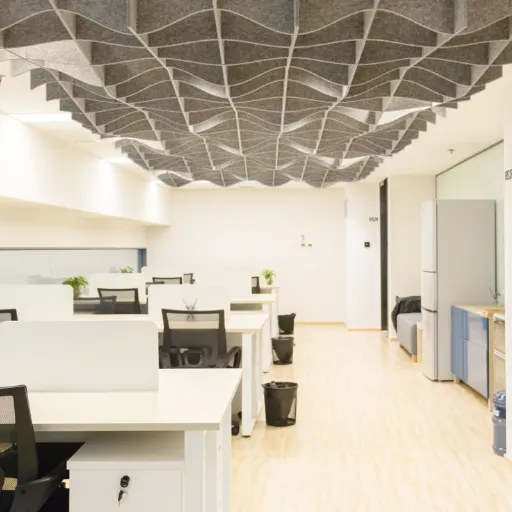
Hard ceilings reflect over 90% of sound energy that hits them. In an open office with concrete or gypsum ceilings, the reflected sound creates a buildup of ambient noise that wall panels alone cannot control. Wall panels absorb lateral sound, but they do not intercept the vertical sound path that bounces from ceiling to floor and back again.
The Ceiling Reflection Problem
Open offices have large, uninterrupted ceiling areas. Every conversation, phone call, and keyboard click sends sound upward. Without ceiling treatment, that sound reflects down and mixes with the new sound being generated. The result is a cumulative noise buildup that raises the ambient level and makes focused work difficult.
Ceiling vs Wall Treatment
Wall panels improve speech clarity and reduce echo in enclosed rooms. Ceiling panels reduce ambient noise in open spaces by absorbing sound at its highest reflection point. The best acoustic strategy combines both: ceiling panels for ambient noise control and wall panels for targeted echo reduction.
Types of Office Acoustic Ceiling Panels
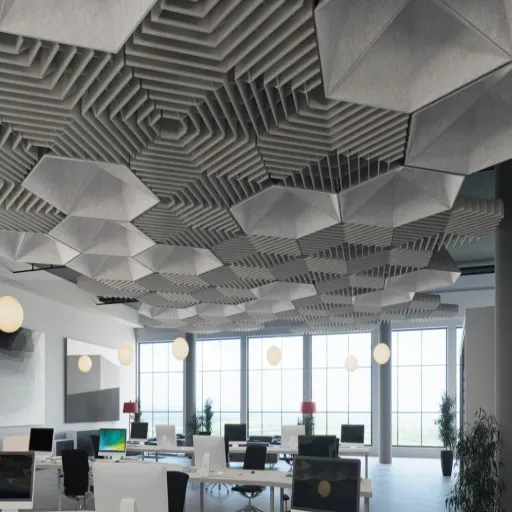
Not all ceiling panels work the same way. The four main types differ in orientation, installation method, acoustic performance, and visual impact.
Acoustic Ceiling Baffles
Baffles are vertical panels suspended from the ceiling in rows. Because they absorb sound from both faces, they achieve the highest NRC ratings of any ceiling treatment.
- Best for: High ceilings (3 meters and above), exposed structural ceilings, warehouses converted to offices
- NRC range: 0.80-1.00 (dual-sided absorption)
- Coverage needed: 40-50% of ceiling area
- Key advantage: Maximum absorption per panel due to exposure on both sides
Acoustic Ceiling Clouds
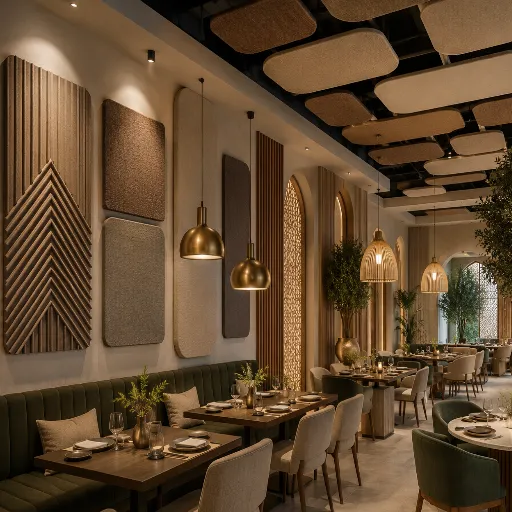
Clouds are horizontal panels suspended below the ceiling plane, typically over specific zones like meeting areas or reception desks.
- Best for: Focused treatment zones, standard ceiling heights (2.7-3.5 meters)
- NRC range: 0.70-0.90
- Coverage needed: 30-40% of the treated zone
- Key advantage: Defines spaces visually while targeting specific areas
Acoustic Ceiling Tiles
Tiles replace or overlay standard ceiling panels in suspended T-bar grid systems. They are the most common retrofit option.
- Best for: Drop ceilings, cost-sensitive projects, spaces with existing grid systems
- NRC range: 0.55-0.75
- Coverage needed: 50-60% of ceiling area (typically full grid replacement)
- Key advantage: Easy installation using existing grid infrastructure
Hanging Acoustic Panels
Hanging panels are decorative elements suspended at varying heights, often in custom shapes and colors.
- Best for: Design-forward offices, reception areas, architectural statements
- NRC range: 0.65-0.85
- Coverage needed: 35-45% of ceiling area
- Key advantage: Combines acoustic function with strong visual identity
| Type | Best For | NRC | Coverage Needed | Cost/sq ft |
|---|---|---|---|---|
| Baffles | High ceilings, open structure | 0.80-1.00 | 40-50% | $12-25 |
| Clouds | Focused zones, meeting areas | 0.70-0.90 | 30-40% | $15-30 |
| Tiles | Drop ceilings, retrofits | 0.55-0.75 | 50-60% | $8-15 |
| Hanging panels | Design-forward spaces | 0.65-0.85 | 35-45% | $18-35 |
How Ceiling Acoustic Panels Work
Ceiling panels work by intercepting sound before it reflects off hard ceiling surfaces. The porous material inside the panel converts sound energy into heat through friction, reducing the amount of sound that returns to the room.
Sound Absorption from Above
When sound travels upward and hits an acoustic ceiling panel, the panel’s face allows sound waves to pass through to the absorbent core. The core material, typically fiberglass or mineral wool, traps the sound energy. Without the panel, that same sound would reflect off the ceiling and return to the workspace.
NRC and Ceiling Performance
NRC (Noise Reduction Coefficient) measures how much sound a material absorbs across the speech frequency range. ASTM C423 testing standards determine NRC ratings. A ceiling NRC of 0.70 or higher reduces reverberation time by 40-60% in a typical office. This translates to a measurable reduction in ambient noise of 6-10 dB.
The Coverage Rule
Coverage percentage matters more than panel quality alone. Open offices need 50-60% ceiling coverage to achieve meaningful noise reduction. Meeting rooms need 30-40%. Corridors need 25-35%. Spreading panels too thinly reduces effectiveness because sound finds paths around the treatment.
Installation Methods and Considerations
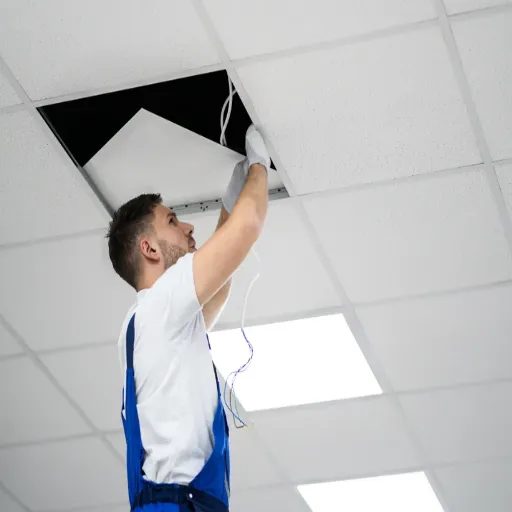
Installation complexity varies by panel type and ceiling structure. Understanding your ceiling type is the first step in choosing the right product.
Suspended Grid Systems
Acoustic ceiling tiles are installed in standard T-bar grid systems. The grid uses 600x600mm or 600x1200mm modules, which are universal standards. Installation involves lifting tiles into the grid and dropping them into place. This is the simplest installation method and requires no structural ceiling access.
Direct-Mount Ceiling Panels
Direct-mount panels attach to existing ceilings with adhesive or mechanical fasteners. This method works for lower ceilings where suspension systems would reduce headroom. The ceiling surface must be flat and structurally sound. Direct-mount is common in retrofit projects where the existing ceiling is in good condition.
Cable-Suspended Baffles and Clouds
Baffles and clouds hang from the structural ceiling using cables or rods. Typical drop distances range from 300 to 600mm below the ceiling plane. Installation requires anchor points in the structural ceiling and level adjustment for even alignment. This method offers the most flexibility in height and positioning.
Integration with Building Systems
Ceiling panels must coexist with lights, HVAC diffusers, and fire sprinklers.
- Lighting: Leave clearance for fixtures. Avoid placing panels directly below lights where they create shadows.
- HVAC: Do not block supply or return air diffusers. Maintain airflow paths.
- Sprinklers: Most building codes require 450mm clearance below sprinkler heads. Panels must not obstruct spray patterns.
- Fire alarms: Smoke detectors must remain exposed to function properly.
Installation Height Guidelines
| Ceiling Height | Recommended Panel Types | Notes |
|---|---|---|
| Under 2.7m | Direct-mount, tiles only | Suspension reduces headroom too much |
| 2.7-3.5m | Clouds, short baffles | Standard office heights |
| 3.5m+ | Full baffles, hanging panels | High ceilings need vertical treatment |
Office Applications by Space Type
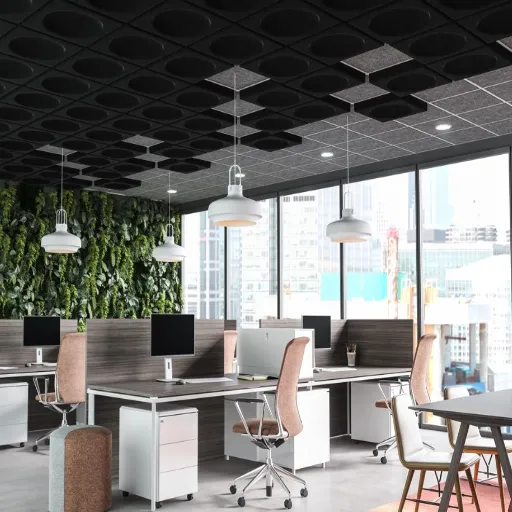
Different office spaces have different acoustic needs. Ceiling panel type and coverage should match the activity in each zone.
Open Plan Workspaces
Open plans benefit most from ceiling treatment. Baffles or clouds covering 50-60% of the ceiling area reduce ambient noise that distracts workers. High-NRC baffles work best for ceilings over 3 meters. Clouds work well for standard ceiling heights. For a complete guide to open-plan acoustic solutions, see our article on the best acoustic panels for open plan offices.
Conference and Meeting Rooms
Meeting rooms need focused treatment over the table area. A single cloud or cluster of clouds above the meeting table absorbs sound where it matters most. For rooms with drop ceilings, acoustic tiles replacing standard ceiling panels provide even coverage.
Reception and Lobby Areas
Reception areas combine high traffic with hard surfaces like glass and stone. Decorative hanging panels add visual interest while controlling echo. Clouds work well over reception desks for targeted acoustic treatment.
Corridors and Hallways
Corridors are narrow spaces where sound reflects between parallel walls. Ceiling baffles or tiles break up these reflections. For standard ceiling heights, tiles are practical. For high-ceiling corridors, baffles add absorption without consuming wall space.
Call Centers and Phone Rooms
These spaces need maximum acoustic control. Ceiling coverage of 60-70% with high-NRC baffles or tiles reduces sound propagation between workstations. Combining ceiling treatment with partial height partitions creates effective acoustic zones.
Fire Ratings and Building Code Compliance
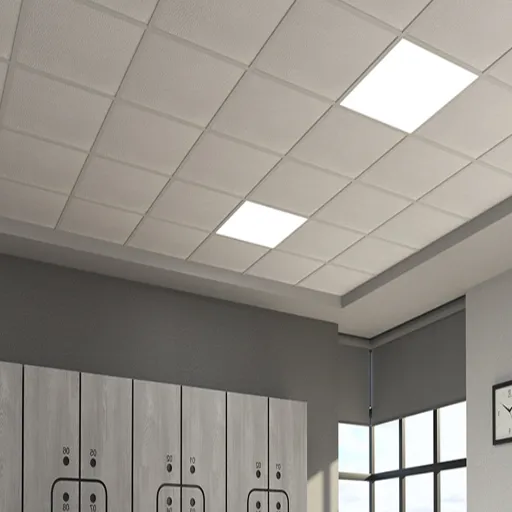
Ceiling-mounted acoustic materials face stricter fire safety requirements than wall panels because they can affect sprinkler performance and smoke movement.
ASTM E84 for Ceiling Materials
ASTM E84 testing standards measure surface burning characteristics. Class A requires a flame spread index of 25 or less. Most commercial office buildings require Class A ceiling materials. Check your local building code before specifying.
Suspended System Load Limits
Ceiling grid and suspension systems have weight limits per square meter. Acoustic panels must not exceed the capacity of the grid or hanging hardware. For custom suspension systems, a structural engineer should review the load calculations.
Sprinkler and HVAC Clearance
Building codes typically require 450mm clearance below sprinkler heads. Acoustic panels must maintain this distance. HVAC diffusers need unobstructed airflow. Plan panel placement around these requirements before installation.
Cost Analysis by Ceiling Panel Type
Ceiling panel costs vary by type, material, and installation complexity.
| Cost Factor | Baffles | Clouds | Tiles | Hanging Panels |
|---|---|---|---|---|
| Material | $12-25/sq ft | $15-30/sq ft | $8-15/sq ft | $18-35/sq ft |
| Installation | $3-8/sq ft | $5-10/sq ft | $2-5/sq ft | $8-15/sq ft |
| Hardware | $2-5/linear ft | $3-6/sq ft | Included | $5-12/panel |
| Total | $18-38/sq ft | $23-46/sq ft | $10-20/sq ft | $31-62/sq ft |
Budget Planning
- Tiles: Most cost-effective for large areas with existing grid systems. Full replacement of a standard office ceiling runs $10-20 per square foot installed.
- Baffles: Best performance per dollar for high ceilings. Material and installation costs are moderate, but NRC values are the highest.
- Clouds: Premium option for targeted zones. Costs run higher due to suspension hardware and individual mounting.
- Hanging panels: Highest cost but maximum design impact. Best for reception areas and spaces where aesthetics drive decisions.
A facilities manager in Denver planned a 5,000 square foot open office renovation. The existing T-bar grid was in good condition. Replacing standard tiles with acoustic tiles costs $55,000 total. The same coverage with baffles would have cost $95,000 but provided 30% more absorption. She chose tiles for budget reasons and added wall panels for supplementary treatment.
Design and Aesthetic Options
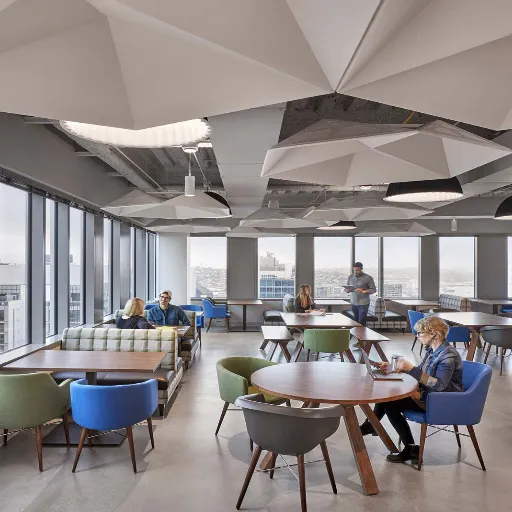
Acoustic ceiling panels no longer mean boring white rectangles. Modern options integrate with office design in multiple ways.
Colors and Finishes
Standard options include white, gray, and black. Custom colors match corporate branding. Fabric-wrapped panels add texture. Wood veneer finishes create warmth. The finish choice affects both aesthetics and acoustic performance — fabric wraps typically offer higher NRC than hard surfaces.
Shapes and Configurations
- Baffles: Rectangular, wave-shaped, blade-style
- Clouds: Square, rectangular, circular, organic forms
- Hanging panels: Custom geometric shapes, layered compositions
Lighting Integration
Some acoustic panels integrate LED lighting. Backlit clouds create ambient lighting while absorbing sound. Panels can be spaced around existing fixtures or designed with cutouts for light penetration. Plan acoustic and lighting layouts together for the best results.
Frequently Asked Questions
Are acoustic ceiling panels better than wall panels?
Ceiling and wall panels serve different purposes. Ceiling panels reduce ambient noise in open spaces by intercepting vertical sound reflections. Wall panels improve speech clarity and reduce echo in enclosed rooms. For best results, use both.
How many acoustic ceiling panels do I need?
Calculate your ceiling area, then apply the coverage percentage for your space type. Open offices need 50-60% coverage. Meeting rooms need 30-40%. A 1,000 square foot open office needs 500-600 square feet of ceiling panels.
Can I install acoustic ceiling panels myself?
Acoustic tiles in existing T-bar grids are a straightforward DIY project. Baffles, clouds, and hanging panels require structural anchoring and level alignment. Professional installation is recommended for suspended systems.
Do ceiling panels block sound between floors?
No. Ceiling panels absorb sound within a room. They do not block sound transmission through the floor-ceiling assembly. For floor-to-floor sound blocking, you need mass-loaded barriers and decoupled construction.
What is the best ceiling panel for an open office?
For ceilings over 3 meters, baffles provide the highest NRC and best coverage. For standard ceiling heights, clouds or tiles work well. Tiles are the most cost-effective option for spaces with existing grid systems.
How do ceiling baffles differ from ceiling clouds?
Baffles hang vertically and absorb sound from both sides. Clouds hang horizontally and absorb sound from the underside. Baffles work best in high ceilings. Clouds work best for targeted zones at standard heights.
Do acoustic ceiling panels affect lighting?
Panels placed too close to lights can create shadows. Plan panel placement to maintain clearance around fixtures. Some panels integrate lighting directly. Coordinate acoustic and lighting layouts during design.
Are ceiling acoustic panels fire rated?
Commercial installations require Class A fire-rated materials per ASTM E84. Check that your panels carry this rating. Maintain required clearances below sprinklers as specified by local building codes.
Conclusion
Ceiling acoustic panels are not an afterthought. They are the foundation of office acoustic design. Wall panels help, but they cannot address the vertical sound path that dominates open office noise. The right ceiling treatment reduces ambient noise, improves speech intelligibility, and creates a workspace where people can focus.
Start by measuring your ceiling height and calculating your ceiling area. Then choose the panel type that matches your height and budget. Baffles for high ceilings. Tiles for drop ceilings. Clouds for targeted zones. Combine ceiling treatment with wall panels for complete acoustic control.
We manufacture acoustic ceiling panels, baffles, and clouds for commercial office projects worldwide. Send us your floor plan and ceiling height, and we will calculate coverage, recommend panel types, and provide a factory-direct quote.
For a complete overview of all office acoustic solutions, see our office acoustic panels buyer’s guide.
Categories:
Blog
Related Articles