WPC Acoustic Panels for Offices: The Complete Material Guide
WPC acoustic panels combine recycled wood fiber with thermoplastic resin to create durable, moisture-resistant acoustic panels that outperform traditional MDF in humid or high-traffic office environments. They achieve NRC ratings of 0.55 to 0.85 while resisting water damage, mold growth, and impact wear that ruins standard fiberboard panels within five years.
When the facilities team at a Miami co-working space installed MDF acoustic panels in their reception area, the panels looked pristine for three months. Then summer humidity arrived. The fiberboard backing swelled at the edges. The veneer face began to bubble. Within eight months, panels that cost $6,000 to install were warping away from the walls. The facilities manager faced a choice: replace everything with more MDF, or find a material that could survive Florida’s humidity. He chose WPC. Four years later, those panels still look new.
This guide explains what WPC acoustic panels are, how they compare to MDF and fiberglass alternatives, and why facilities managers and architects increasingly specify them for commercial office projects. You will learn the acoustic performance data, fire ratings, cost factors, and design options that matter for your space.
For a complete overview of office acoustic solutions, see our office acoustic panels buyer’s guide. For a deeper look at wood slat configurations specifically, see our guide to wood slat acoustic panels for offices.
Key Takeaways
- WPC (Wood Plastic Composite) combines 40-70% recycled wood fiber with thermoplastic for durability plus acoustic performance
- WPC panels achieve NRC 0.55-0.85 while resisting moisture, mold, and impact damage
- Unlike MDF, WPC does not swell or warp in humid office environments
- Class A fire rating (ASTM E84) and low VOC emissions meet commercial building codes
- Total cost of ownership runs 30-40% lower than MDF over a 15-year lifespan
What Are WPC Acoustic Panels?
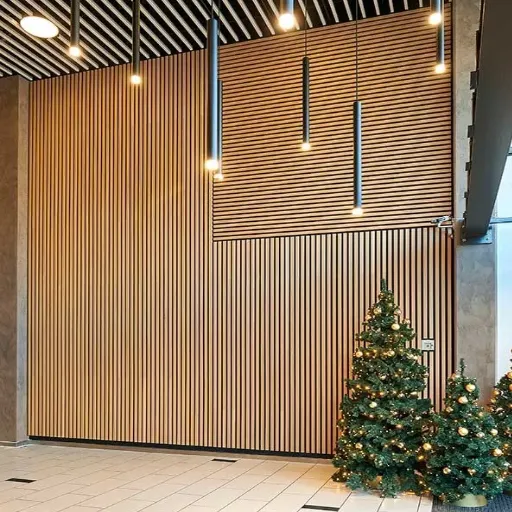
WPC stands for Wood Plastic Composite. It is a hybrid material made by combining wood fiber or flour with thermoplastic resins — typically PVC or polyethylene — and extruding the mixture into rigid panel forms. The result is a material that has the look and workability of wood with the moisture resistance and durability of plastic.
For acoustic applications, WPC panels are manufactured with perforated faces or slat configurations that allow sound waves to pass through to an acoustic backing layer. That backing is usually PET felt or fiberglass, which traps sound energy through porous absorption. The rigid WPC core provides structural stability so panels do not sag or deform over time.
The manufacturing process matters. Quality WPC acoustic panels use 40-70% recycled wood fiber content, which reduces environmental impact while maintaining the density needed for acoustic performance. The thermoplastic component creates a waterproof barrier that prevents the core from absorbing moisture — the single biggest failure mode for traditional fiberboard panels.
WPC vs MDF Acoustic Panels: Office Comparison
MDF (Medium-Density Fiberboard) has been the standard core material for acoustic panels for decades. It is inexpensive, easy to fabricate, and provides a smooth surface for veneering. But MDF has a critical weakness in commercial environments: it is essentially compressed wood fibers held together with resin, and it acts like a sponge when exposed to moisture.
| Feature | WPC Acoustic Panels | MDF Acoustic Panels |
|---|---|---|
| Moisture resistance | Excellent — waterproof core | Poor — swells 10-15% when wet |
| Impact resistance | High dent and chip resistant | Low — dents and chips easily |
| Fire rating | Class A (ASTM E84) available | Class B or C typical |
| NRC range | 0.55-0.85 | 0.70-0.95 |
| Weight | Lighter — easier to install | Heavier — more labor-intensive |
| Lifespan in offices | 15-20 years | 5-10 years in humid conditions |
| VOC emissions | Very low | Higher formaldehyde risk |
| Cost per sq ft | $8-18 | $5-12 |
| Maintenance | Wipe clean, no refinishing | May need replacement if damaged |
When WPC Wins
WPC is the better choice for any office where moisture, impact, or hygiene are a concern. This includes buildings in humid climates, spaces near kitchens or restrooms, healthcare-adjacent offices, and high-traffic corridors where luggage and equipment bump against walls.
When MDF Wins
MDF still makes sense in dry, controlled environments where maximum NRC is the priority and budget is tight. Recording studios, broadcast rooms, and climate-controlled executive suites in arid regions can use MDF successfully if humidity never fluctuates.
Acoustic Performance: NRC and Frequency Response
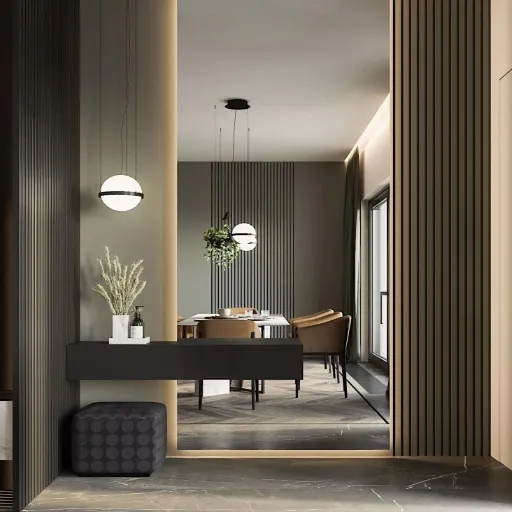
Acoustic performance for WPC panels depends on three variables: the front face configuration (perforated or slat), the backing material type and density, and the air gap behind the panel. Understanding these variables helps you specify the right product for your office noise problem.
NRC Ratings by WPC Panel Type
- Solid WPC with micro-perforated face and PET backing: NRC 0.55-0.70
- WPC slat with 13-19mm spacing and PET backing: NRC 0.60-0.80
- WPC with high-density fiberglass backing: NRC 0.75-0.85
These ratings are determined by ASTM C423 testing standards, which measure sound absorption across the speech frequency range. For most office applications, NRC 0.60+ provides meaningful echo reduction. NRC 0.75+ delivers a dramatic improvement in speech clarity.
Speech Frequency Performance
Offices care most about the 500-2,000 Hz range because that is where human speech lives. WPC slat panels with proper backing perform strongly in this range. The slat spacing determines where the panel is most effective: narrower spacing (10-13mm) improves high-frequency absorption, while wider spacing (19-25mm) lets more mid-frequency energy reach the backing material.
Coverage Requirements
WPC panels follow the same coverage rules as other acoustic treatments. Wall-mounted panels should cover 25-40% of the total wall area. Ceiling installations in open-plan spaces require 50-60% coverage.
Durability and Environmental Resistance
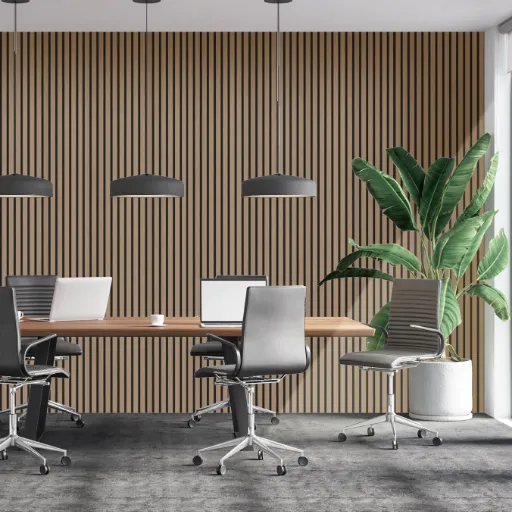
The durability advantage of WPC is not theoretical. It is the primary reason facilities managers switch after their first MDF failure.
Moisture and Humidity
WPC cores absorb less than 1% moisture even when submerged. MDF, by contrast, can swell 10-15% at the edges when exposed to sustained humidity above 60%. In commercial buildings with older HVAC systems, humidity swings are common. Condensation forms on exterior walls in winter. Cooling systems create damp zones near air handlers. WPC panels handle these conditions without degradation.
Impact and Wear Resistance
Office corridors take abuse. Delivery carts, luggage, moving furniture, and cleaning equipment all contact wall surfaces. WPC’s thermoplastic surface resists denting and chipping better than MDF’s fiber composite. When MDF veneer chips, the exposed fiber core absorbs stains and looks damaged. WPC surface damage is rare, and minor scuffs clean off with standard surface cleaners.
UV Stability
Quality WPC formulations include UV stabilizers that prevent fading and chalking in window-adjacent installations. This matters for offices with floor-to-ceiling glass where the afternoon sun hits the wall panels directly. MDF veneers fade unevenly and can delaminate with heat cycling.
When a Chicago marketing agency moved into a converted warehouse, they specified WPC slat panels for all corridor and reception walls. The building’s aging HVAC system created humidity spikes every Monday morning when the system cycled back on after the weekend. Previous tenants had replaced MDF panels twice in six years. The WPC panels have now been in place for three years with zero moisture-related issues.
Fire Ratings and Commercial Compliance
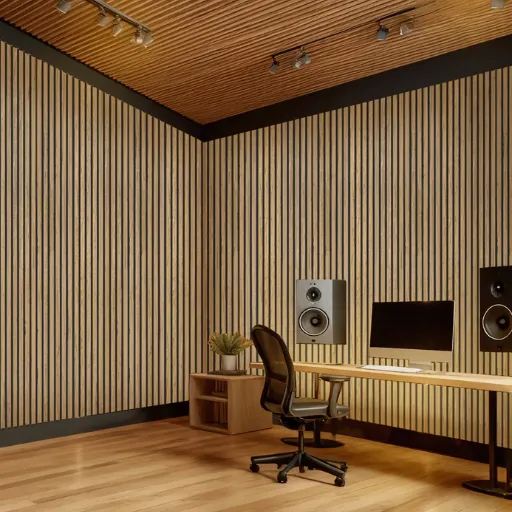
Fire safety is non-negotiable in commercial office construction. WPC panels with proper formulations meet the same fire ratings as other commercial wall finishes.
ASTM E84 Class A
ASTM E84 measures surface burning characteristics. Class A requires a flame spread index of 25 or less and a smoke developed index of 450 or less. WPC panels achieve Class A through mineral filler additives (typically calcium carbonate or magnesium hydroxide) that interrupt combustion. ASTM E84 testing standards determine this classification.
EN 13501-1 B1 Classification
For international projects or buildings following European standards, WPC panels can achieve B1 classification under EN 13501-1. B1 means “difficult to burn” — suitable for commercial office occupancy without additional fire protection measures.
Building Code Context
The International Building Code (IBC) requires Class A or B interior wall finishes for most office occupancies. WPC Class A panels satisfy this requirement without additional intumescent coatings or fire-resistant backer boards. This simplifies specification and reduces installation cost compared to lower-rated materials that need supplemental fire treatment.
Office Applications and Use Cases
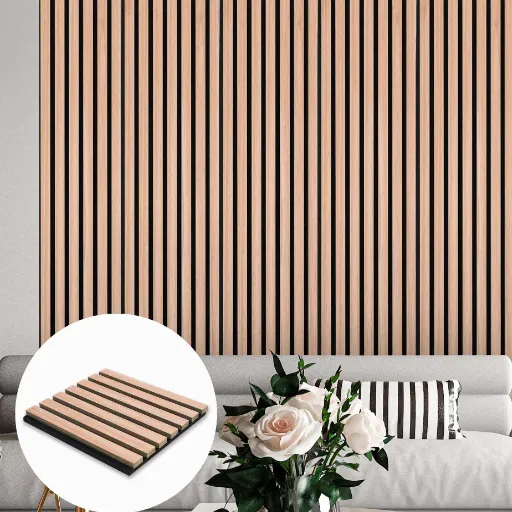
WPC acoustic panels work anywhere traditional panels do, but they excel in environments where traditional panels fail.
Reception and Lobby Areas
First impression spaces demand both aesthetics and durability. Reception areas see luggage, umbrellas, delivery boxes, and constant foot traffic. WPC panels withstand this abuse while providing the acoustic control needed to prevent echo in spaces with hard flooring and glass.
Open Plan Workspaces
Open offices need broad-area acoustic treatment. WPC ceiling baffles and wall panels reduce ambient noise buildup without introducing a maintenance liability. If HVAC condensation is an issue in your open plan, WPC eliminates the risk of water-damaged panels dripping or staining.
Corridors and Circulation
Corridors are the most abused walls in any office building. WPC panels resist the cart impacts and scuffs that destroy standard panels within months. Their wipe-clean surface also simplifies maintenance — no special cleaning products required.
Breakout and Collaboration Zones
These spaces need acoustic control for productive conversation, but they also need to survive flexible furniture arrangements and high activity levels. WPC panels handle both requirements.
Design Options and Customization
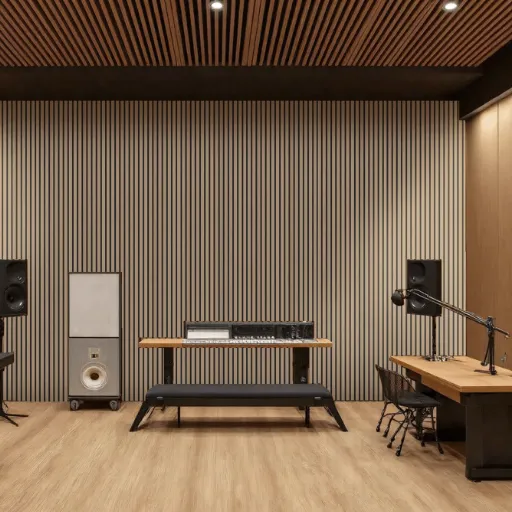
WPC panels offer design flexibility that rivals or exceeds traditional materials.
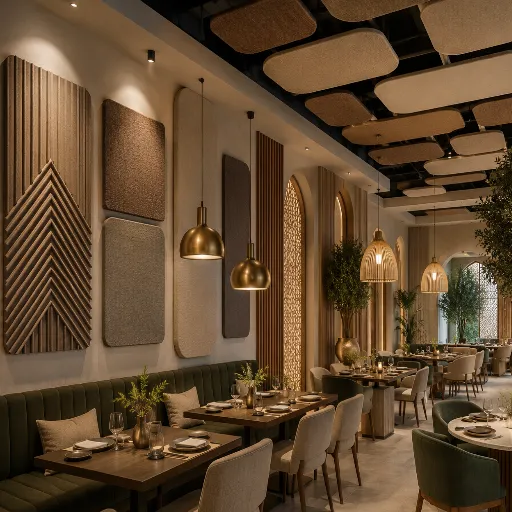
Slat Configurations
- Slat widths: 15mm, 20mm, 27mm standard
- Slat spacing: 10-25mm (affects both NRC and visual density)
- Panel thickness: 15mm, 18mm, 22mm
Wider slat spacing creates a more open, modern look but slightly reduces NRC. Narrower spacing increases visual density and acoustic performance. Most office installations use 15-20mm spacing for the best balance.
Colors and Finishes
WPC accepts wood grain embossing that mimics oak, walnut, teak, and other species. Solid color options include white, gray, black, and custom colors to match corporate branding. Matte and lightly textured finishes hide minor scuffs better than high-gloss surfaces.
Custom Sizing
Standard panel sizes include 600x600mm, 600x1200mm, and 1200x2400mm. Custom lengths are available for full-wall installations that eliminate visible joints.
Cost Analysis: WPC Total Cost of Ownership
The upfront cost of WPC panels runs higher than that of MDF. The long-term cost does not.
| Cost Factor | WPC | MDF |
|---|---|---|
| Initial material cost | $8-18/sq ft | $5-12/sq ft |
| Installation labor | Similar | Similar |
| Maintenance (15 years) | Minimal ($0.50/sq ft) | Replacement in humid areas ($8-15/sq ft) |
| Total 15-year cost | $10-20/sq ft | $15-30/sq ft |
The Hidden Cost of MDF in Humid Offices
MDF panels in offices with humidity above 60% often require edge sealing, replacement of damaged sections, or full reinstallation within 5-7 years. Each replacement cycle costs material, labor plus disruption. WPC panels installed at the same time typically last 15-20 years with no degradation.
A facilities director in Austin learned this the hard way. He installed MDF panels in a ground-floor office suite to save $4,000 on a $20,000 project. Within 18 months, humidity from the building’s concrete slab caused the bottom edges of every panel to swell and delaminate. The repair cost $7,500 — more than the original savings. His next two buildings got WPC panels from the start.
Frequently Asked Questions
What does WPC stand for in acoustic panels?
WPC stands for Wood Plastic Composite. It is a material made by combining wood fiber with thermoplastic resin (usually PVC or polyethylene) to create a rigid, moisture-resistant panel with the appearance of wood.
Are WPC acoustic panels as good as fiberglass for sound absorption?
Fiberglass panels typically achieve higher NRC ratings (0.85-1.00) than WPC (0.55-0.85). However, fiberglass is fragile, irritating to install, and unsuitable for high-traffic areas. WPC trades some absorption performance for massive durability gains. For most office noise problems, WPC’s NRC is sufficient.
Can WPC panels be used in kitchens or restrooms?
Yes. WPC’s waterproof core makes it suitable for areas with occasional water exposure. While not designed for direct shower spray, WPC panels handle the humidity and cleaning requirements of office kitchens and restrooms better than any fiberboard alternative.
Do WPC acoustic panels contain formaldehyde?
Quality WPC panels use very low or zero formaldehyde in their binding resins. They typically emit fewer VOCs than MDF, which uses urea-formaldehyde binders. Look for Greenguard or similar low-emission certifications when specifying for sensitive environments.
How do you clean WPC acoustic panels?
Wipe with a damp cloth and mild detergent. The thermoplastic surface does not absorb stains and resists most cleaning chemicals. Avoid abrasive pads that could scratch the finish.
What is the lifespan of WPC acoustic panels in an office?
Properly manufactured WPC panels last 15-20 years in commercial office environments. This compares to 5-10 years for MDF in humid conditions or 10-15 years for MDF in ideal dry conditions.
Conclusion
WPC acoustic panels solve a problem that traditional materials ignore: the mismatch between office environments and the materials we put in them. Offices have humidity swings, impact damage, cleaning requirements, and fire codes. MDF absorbs sound beautifully until reality damages it. WPC absorbs sound and survives reality.
The decision framework is simple. If your office is dry, low-traffic, and climate-controlled forever, MDF works fine. If your office has humidity, traffic, or any chance of water contact, WPC is the lower-cost choice over time.
Start by assessing your space for moisture risk and traffic levels. Then request WPC samples with the acoustic backing configuration that matches your NRC target. We manufacture WPC acoustic panels in multiple slat configurations, colors, and fire ratings for commercial office projects worldwide.
Categories:
Blog
Related Articles