How Many Acoustic Panels Do I Need for an Office? A Room-by-Room Calculator (2026)
If you are asking “how many acoustic panels do I need for an office,” the answer is typically 10 to 40 panels, depending on room size, ceiling height, and how the space is used. An open-plan office with 2,000 square feet and 10-foot ceilings typically needs 24 to 32 ceiling baffles plus 8 to 12 wall panels for standard coverage.
But that number changes dramatically based on what you are treating. A 200-square-foot conference room needs fewer total panels than a 1,200-square-foot open floor plan, yet the conference room often demands higher wall coverage for speech clarity. Get the calculation wrong, and you either waste budget on excess panels or leave your team working in a noisy, echo-filled environment.
When Raj, a facilities manager in Bangalore, ordered acoustic panels for his company’s new 3,500-square-foot open office, he followed a generic online calculator. The tool told him to cover 20% of all wall surfaces. He ordered 42 wall panels and installed them evenly across every wall. Three months later, noise complaints continued. The problem was not the quantity. It was that he had ignored the ceiling, which in an open plan carries 60% of the acoustic workload. He needed 28 ceiling baffles, not more wall panels.
By the end of this guide, you will know exactly how many acoustic panels your office needs. Think of this as your office acoustic panel calculator: plug in your room type and size, and get your number. We will cover the three-step calculation formula, room-specific quantities for six office types, how panel material changes your count, and a three-tier coverage framework that lets you phase your investment. Whether you are treating one conference room or an entire floor, these numbers give you a clear starting point.
Key Takeaways
- Most offices need 10-40 panels total, but open plans need more ceiling treatment while conference rooms need more wall coverage.
- The three-step formula is: measure surface area, apply coverage percentage by room type, divide by panel square footage.
- WPC and wood slat panels need 20-30% more units than fiberglass to achieve the same absorption because of lower NRC ratings.
- Our three-tier framework lets you start with minimum viable coverage and expand later without wasting your first investment.
- Ceiling height matters more than floor area. A room with 12-foot ceilings needs significantly more panels than the same footprint with 8-foot ceilings.
How Many Acoustic Panels Do I Need for an Office? The Simple Formula
Calculating how many acoustic panels you need for your office comes down to three steps. No advanced math required. This acoustic panel coverage calculator method works for any office: measure your room, pick your coverage percentage, and divide by the size of your panels.
Step 1: Calculate total treatable surface area. Add the square footage of all four walls plus the ceiling. Do not include the floor. For a room 20 feet by 30 feet with 10-foot ceilings, the wall area is 1,000 square feet, and the ceiling is 600 square feet. Total treatable surface: 1,600 square feet.
Step 2: Apply the coverage percentage for your room type. Different office spaces need different coverage levels. Open plans need heavy ceiling treatment. Conference rooms need balanced wall and ceiling coverage.
Private offices need modest treatment. We will detail exact percentages for each room type in the next section.
Step 3: Divide by the square footage of one panel. A standard 2-foot by 4-foot panel covers 8 square feet. If your target coverage area is 240 square feet, you need 30 panels. If you use 2-foot by 2-foot panels covering 4 square feet each, you need 60 panels.
This formula gives you a baseline. The actual number shifts based on three factors: your room’s current surfaces (glass and concrete reflect more sound than carpet and fabric), your panel material’s NRC rating (higher NRC means fewer panels), and whether you are treating for speech clarity or full acoustic control.
For a quick sanity check, the Sabine equation estimates that basic acoustic control requires absorption equal to 0.05 times the room volume in cubic feet. A 20-by-30-foot room with 10-foot ceilings has 6,000 cubic feet. At 0.05, you need 300 SABINs of absorption.
A panel with NRC 0.85 provides 6.8 sabins. That suggests roughly 44 panels for comprehensive control. Most offices do not need full Sabine-level treatment, which is why the percentage method is more practical for real-world budgeting.
How Many Acoustic Panels per Room: Office Room Type Breakdown
Not every office space is treated the same way. An open plan, a conference room, and a private office each have different acoustic challenges. Below are specific panel counts for six common office spaces, showing how many acoustic panels per room you will need. All calculations use the three-step formula with standard 2-foot by 4-foot panels.
Open-Plan Offices
Open-plan offices are the most common commercial workspace and the most acoustically challenging. With dozens of employees sharing one large space, sound reflects off hard surfaces and travels long distances.
Coverage targets: 10-20% of wall area, 50-60% of ceiling area.
Example: A 2,000-square-foot open plan with 10-foot ceilings.
- Wall area: 1,000 sq ft (perimeter walls only)
- Ceiling area: 2,000 sq ft
- Wall coverage at 15%: 150 sq ft = 19 panels
- Ceiling coverage at 55%: 1,100 sq ft = 138 panels (or equivalent baffles/clouds)
That ceiling number sounds high, but ceiling baffles are smaller units. A standard 2-foot by 4-foot ceiling baffle covers 8 square feet. In practice, most open plans use a mix of ceiling clouds above workstations and baffles in rows across the open area. The ceiling carries the acoustic load in open plans because wall space is limited and conversation travels horizontally.
Panel count summary: 16-20 wall panels, 24-32 ceiling baffles (standard tier).
Conference Rooms
Conference rooms need precise acoustic control because video calls, presentations, and discussions all depend on speech intelligibility. The goal is to reduce echo without making the room sound dead.
Coverage targets: 25-35% of wall area, 25-35% of ceiling area.
Example: A 200-square-foot conference room with 9-foot ceilings.
- Wall area: 168 sq ft
- Ceiling area: 200 sq ft
- Wall coverage at 30%: 50 sq ft = 7 panels
- Ceiling coverage at 30%: 60 sq ft = 8 panels
In conference rooms, prioritize the rear wall behind the seating and the wall opposite the display. These surfaces create the slap echo that makes remote participants sound like they are in a tunnel. The ceiling above the table is equally important. A single ceiling cloud 4 feet by 4 feet directly above the conference table often provides more noticeable improvement than spreading the same panel area across the walls.
Panel count summary: 6-8 wall panels, 6-10 ceiling panels (standard tier).
Private Offices
Private offices are smaller and usually easier to treat. One or two people share the space, and the goal is reducing echo for phone calls and video conferences.
Coverage targets: 15-20% of wall area, 20-30% of ceiling area.
Example: A 120-square-foot private office with 9-foot ceilings.
- Wall area: 132 sq ft
- Ceiling area: 120 sq ft
- Wall coverage at 18%: 24 sq ft = 3 panels
- Ceiling coverage at 25%: 30 sq ft = 4 panels
In private offices, the wall behind the desk is the highest priority. Sound reflects off that surface and bounces back into your microphone during video calls. Add one panel there first.
The ceiling above the desk is the second priority. Many private offices achieve adequate treatment with just 4 to 6 panels total.
Panel count summary: 3-4 wall panels, 3-5 ceiling panels (standard tier).
Call Centers
Call centers have unique acoustic needs. Dozens of agents are on the phone simultaneously, and the ambient noise level is consistently high. The goal is to reduce overall reverberation so agents can hear customers clearly.
Coverage targets: 15-20% of wall area, 50-60% of ceiling area.
Example: A 3,000-square-foot call center with 10-foot ceilings.
- Wall area: 1,400 sq ft (perimeter only; desk dividers treated separately)
- Ceiling area: 3,000 sq ft
- Wall coverage at 18%: 252 sq ft = 32 panels
- Ceiling coverage at 55%: 1,650 sq ft = 207 baffles
Call centers rely heavily on ceiling treatment because wall space is occupied by workstations. Ceiling baffles hung in rows between lighting fixtures are the standard approach. Desk-mounted dividers with acoustic fabric can supplement the ceiling treatment without consuming wall space.
Panel count summary: 28-36 wall panels, 48-64 ceiling baffles (standard tier).
Reception and Lobby Areas
Reception areas need a balance of acoustic control and visual design. These spaces create first impressions, so panels must look intentional, not clinical.
Coverage targets: 30-40% of wall area, 20-30% of ceiling area.
Example: A 400-square-foot reception with 12-foot ceilings.
- Wall area: 336 sq ft
- Ceiling area: 400 sq ft
- Wall coverage at 35%: 118 sq ft = 15 panels
- Ceiling coverage at 25%: 100 sq ft = 13 panels
Reception areas often use decorative wood slats or WPC panels that serve as feature walls while absorbing sound. The higher wall coverage percentage reflects the need to control echo in spaces with hard flooring, glass doors, and minimal furniture.
Panel count summary: 12-16 wall panels, 10-14 ceiling panels (standard tier).
Huddle and Breakout Rooms
Huddle rooms are small, informal meeting spaces. They need enough treatment for clear conversation but not the precision of a conference room.
Coverage targets: 20-30% of wall area, 20-30% of ceiling area.
Example: An 80-square-foot huddle room with 9-foot ceilings.
- Wall area: 108 sq ft
- Ceiling area: 80 sq ft
- Wall coverage at 25%: 27 sq ft = 4 panels
- Ceiling coverage at 25%: 20 sq ft = 3 panels
Huddle rooms are small enough that 6 to 8 panels often provide complete treatment. The wall behind the door and the wall opposite the seating are the two highest-priority surfaces.
Panel count summary: 3-5 wall panels, 2-4 ceiling panels (standard tier).
The Three-Tier Coverage Framework
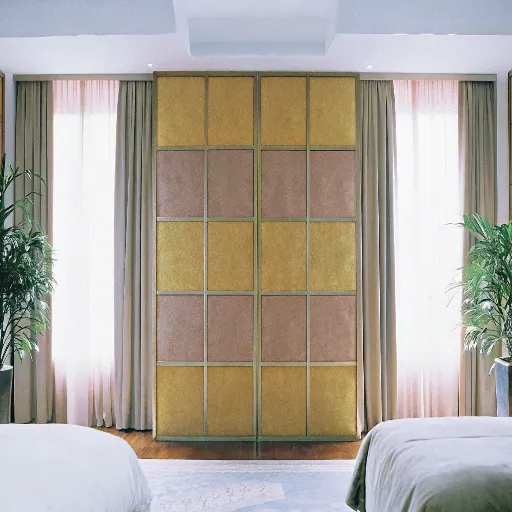
Not every office has the budget for full acoustic treatment on day one. If you are still calculating how many acoustic panels you need for your office, our three-tier framework lets you phase your investment while ensuring each phase delivers measurable improvement.
| Room Type | Minimum Tier | Standard Tier | Comprehensive Tier |
|---|---|---|---|
| Open-Plan (2,000 sq ft) | 12 wall + 16 ceiling | 18 wall + 28 ceiling | 24 wall + 40 ceiling |
| Conference (200 sq ft) | 4 wall + 4 ceiling | 7 wall + 8 ceiling | 10 wall + 12 ceiling |
| Private Office (120 sq ft) | 2 wall + 2 ceiling | 4 wall + 4 ceiling | 6 wall + 6 ceiling |
| Call Center (3,000 sq ft) | 20 wall + 32 ceiling | 32 wall + 56 ceiling | 44 wall + 80 ceiling |
| Reception (400 sq ft) | 8 wall + 6 ceiling | 14 wall + 12 ceiling | 20 wall + 18 ceiling |
| Huddle Room (80 sq ft) | 2 wall + 1 ceiling | 4 wall + 3 ceiling | 6 wall + 5 ceiling |
Minimum tier covers the highest-priority surfaces only. In an open plan, that means ceiling baffles above the noisiest zones and wall panels at first reflection points. You will notice improvement, but the space will not be fully treated.
The standard tier provides balanced coverage across all priority zones. This is the recommendation for most offices. It controls echo, improves speech intelligibility, and stays within typical renovation budgets.
Comprehensive tier treats every priority zone with full coverage. This level is ideal for conference rooms where video call quality matters, call centers where noise reduction affects productivity metrics, and executive offices where presentation clarity is critical.
When Elena, an office manager in Mexico City, renovated her 1,500-square-foot co-working space, she started with the minimum tier: 10 ceiling baffles and 8 wall panels. Employee feedback was positive, but the kitchen area remained noisy. Six months later, she added 6 more ceiling baffles and 4 wall panels, bringing the space to the standard tier. The phased approach lets her spread the cost across two budget cycles without losing the benefit of the first phase.
How Panel Material Affects Your Quantity
The material you choose changes how many panels you need. When calculating how many acoustic panels you need for your office, remember that a panel’s NRC rating directly affects the count. Higher NRC means fewer panels.
| Material | NRC Rating | Quantity vs. Fiberglass | Best For |
|---|---|---|---|
| Fiberglass / Mineral Wool | 0.85-0.95 | Baseline (1.0x) | Studios, critical listening |
| PET Felt | 0.75-0.85 | +10-15% | Offices, modern designs |
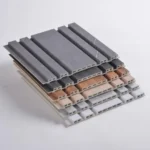
| WPC / Wood Slat | 0.50-0.80 | +20-30% | Commercial, high-traffic |
| Acoustic Foam | 0.40-0.70 | +40-60% | Budget setups, temporary |
If a conference room needs 15 fiberglass panels at NRC 0.90, the same room needs 18 to 20 WPC panels at NRC 0.75. That difference matters when you are ordering for a 50-room hotel or a multi-floor office building.
However, the quantity difference is not the whole story. WPC panels offer durability that fiberglass cannot match.
In a high-traffic commercial space, fiberglass panels stain, tear, and degrade within 18 to 24 months. WPC panels with sealed surfaces last 5 to 7 years with minimal maintenance. The higher panel count is offset by longer replacement cycles and lower lifetime costs.
For offices where aesthetics matter as much as acoustics, wood slat panels with PET felt backing offer a compromise. The visible wood slats create a premium architectural look while the backing fabric handles absorption. You need slightly more panels than pure fiberglass, but the visual impact reduces the psychological need for full coverage. A well-designed feature wall at 25% coverage often feels more complete than a fully covered wall with plain fabric panels.
Wondering whether to treat your ceiling or walls first? Our ceiling vs wall acoustic panels guide explains which surface to prioritize by room type and acoustic problem.
Spacing and Distribution: Where to Put Your Panels
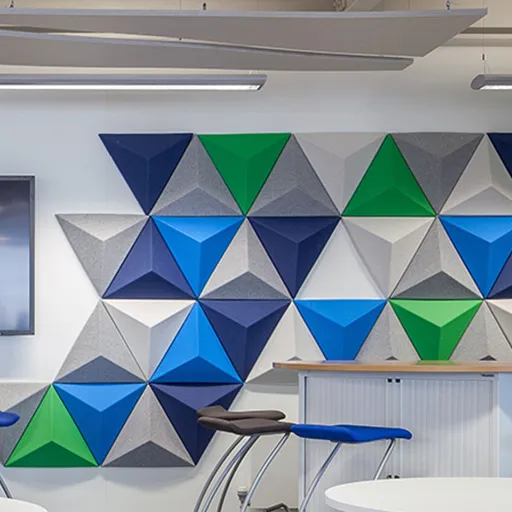
Knowing how many acoustic panels you need for your office is only half the answer. Where you put them determines whether they work.
Wall panels: Space them one to two panel widths apart. For 2-foot by 4-foot panels, leave 2 to 4 feet between edges. Do not cluster them on one wall. Sound reflects off every hard surface, so distribute panels across all treatable walls. For detailed spacing rules, including air gaps and symmetry, see our acoustic panel spacing guide.
Ceiling baffles: Hang them in parallel rows, 2 to 3 feet apart. In open plans, run rows perpendicular to the main traffic flow. This creates absorption corridors that catch sound as it travels across the space.
First reflection points: In conference rooms and private offices, the wall behind the primary speaker and the ceiling above the main work position are the highest-priority zones. Treat these first, then fill in the remaining coverage. Our acoustic panel placement guide explains how to find first reflection points using the mirror trick.
Avoid these distribution mistakes: Do not place all panels on the wall behind the door where no one sits. Do not mount panels near the ceiling in rooms where people sit most of the time. Center wall panels at 42 to 52 inches from the floor for seated occupants.
Common Mistakes When Calculating Panel Quantities
Even experienced facilities managers make these errors. Avoid them to get the most from your budget.
- Ignoring ceiling height. A room with 12-foot ceilings has 50% more volume than the same footprint with 8-foot ceilings. That extra volume needs more absorption. When figuring out how many acoustic panels you need for your office, always factor ceiling height into your calculations, not just floor area.
- Treating WPC like fiberglass. If you calculate quantities based on fiberglass NRC ratings but order WPC panels, you will under-treat the space by 20 to 30%. Adjust your panel counts upward when using lower-NRC materials.
- Forgetting doors, windows, and fixtures. Subtract the area of doors, windows, whiteboards, and built-in cabinets from your wall surface area before calculating coverage. A conference room with a full glass wall has far less treatable surface than a room with drywall.
- Ordering without accounting for panel size. A wall that is 14 feet wide fits three 2-foot by 4-foot panels with 6 inches between them, or four panels with 2-inch gaps. But a 14-foot wall with four panels leaves a 4-inch strip uncovered at one end. Plan your layout before ordering to avoid awkward gaps or unnecessary cuts.
- Over-covering one wall while ignoring others. A full wall of panels on the back wall does nothing for side-wall flutter echo or ceiling bounce. Distribute panels across priority zones for even absorption.
Frequently Asked Questions
How many acoustic panels do I need for my office?
Most offices need between 10 and 40 panels total, depending on room size and type. An open-plan office of 2,000 square feet needs 18 to 24 wall panels plus 28 to 32 ceiling baffles. A private office of 120 square feet needs 3 to 4 wall panels and 3 to 5 ceiling panels.
What acoustic panel coverage percentage is right for my office?
Conference rooms need 25-35% of the wall and ceiling area covered. Open-plan offices need 10-20% of wall area and 50-60% of ceiling area. Private offices need 15-20% of walls and 20-30% of ceilings.
How far apart should acoustic panels be spaced?
Space wall panels one to two panel widths apart. For standard 2-foot by 4-foot panels, maintain 2 to 4 feet between edges. Ceiling baffles should hang 2 to 3 feet apart in parallel rows.
Do I need panels on the ceiling or just walls?
Both surfaces matter. In open-plan offices, the ceiling carries most of the acoustic workload. In conference rooms, walls and ceilings need balanced treatment. In private offices, start with the wall behind the desk, then add ceiling treatment.
Can you have too many acoustic panels?
Yes. Over-treating a room absorbs too much high-frequency energy and leaves the space sounding muffled and unnatural. Most experts recommend covering no more than 50% of the total wall and ceiling surface area.
How many ceiling baffles per square foot?
For open-plan offices, plan one ceiling baffle for every 30 to 40 square feet of floor area. A 2,000-square-foot open plan needs 50 to 67 ceiling baffles at standard coverage. This assumes 2-foot by 4-foot baffles covering 8 square feet each.
Do I need fewer panels if I choose higher-NRC materials?
Yes. A panel with NRC 0.90 absorbs 20% more sound than a panel with NRC 0.75. For equivalent performance, you need fewer high-NRC panels. Fiberglass typically requires the fewest panels; WPC and wood slats need 20-30% more.
How do I calculate panels for an irregular-shaped office?
Break the space into rectangles. Calculate the wall and ceiling area for each rectangle separately, then add them together. Subtract the area of doors, windows, and fixed fixtures. Apply the coverage percentage for the room’s primary use.
Conclusion
Calculating how many acoustic panels you need for your office is not guesswork. If you have been asking “how many acoustic panels do I need for an office,” the answer is a three-step process: measure your treatable surface area, apply the coverage percentage for your room type, and divide by the square footage of your chosen panel size.
The numbers change based on your room type, ceiling height, and panel material. Open plans need heavy ceiling treatment. Conference rooms need balanced wall and ceiling coverage. WPC panels need 20-30% more units than fiberglass but last years longer in commercial environments.
Raj learned this the hard way when he covered his office walls and ignored the ceiling. Elena took a smarter approach, phasing her investment from minimum to standard tier over six months. Both reached the right answer eventually, but starting with the right calculation saves time, budget, and employee patience.
At Linyi Yuheng International Trading Co., Ltd., we manufacture WPC acoustic panels in custom sizes for commercial offices worldwide. Our standard panels ship in 2-foot by 4-foot and 2-foot by 2-foot formats, with NRC ratings up to 0.85 and fire-rated cores for code compliance. We also supply wood slat acoustic panels and ceiling baffles for complete office treatment.
Request a Free Office Layout Consultation. Send us your floor plan and ceiling height, and our team will calculate your exact panel quantities with a three-tier option breakdown within one business day.
If you are ready to move from calculation to installation, read our guide on where to place acoustic panels for maximum impact. For offices specifically, our office acoustic panel placement strategy covers B2B-specific guidance.
Categories:
Blog
Related Articles