A Comprehensive Guide to Sustainable Outdoor Decking Options for Every Climate
The process of creating an ideal outdoor area requires builders to determine which decking material best meets their requirements. Current trends in sustainable design enable people to create fashionable yet environmentally friendly decks which will endure for many years. People face difficulties in selecting the best material because they need to consider how their choice will perform in different weather conditions and how long their choice will last. The guide provides readers with sustainable decking solutions which demonstrate the most suitable materials for different climatic conditions. The section provides solutions that will help you design an outdoor space which remains beautiful while respecting environmental standards throughout all your climate conditions. The upcoming section will present environmentally friendly decking solutions together with design recommendations, which will enhance both the performance and visual appeal of your decking space.
Understanding Sustainable Decking
What is Sustainable Decking?
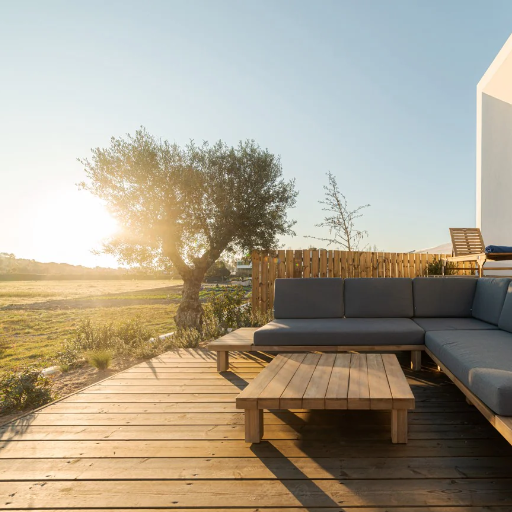
Sustainable decking involves using eco-friendly materials together with construction methods that create minimal environmental damage while providing long-lasting attractive results. The decking options are constructed using materials which include responsibly sourced wood and recycled composites and modern alternatives that feature bamboo and PVC-free components. The materials achieve sustainability through their ability to decrease both deforestation and carbon emissions while reducing waste generation. Sustainable decking meets green building standards because it enhances energy efficiency and extends product lifespan which benefits both home owners and the natural world.
Benefits of Sustainable Decks
The sustainable decks provide multiple benefits which extend beyond their environmental-friendly properties. The materials have better durability which protects against various weather conditions, thus extending their useful life while decreasing replacement needs. Homeowners experience long-term financial benefits because of the lasting power of this material. The sustainable materials require minimal maintenance because they resist warping and rotting and insect damage, which results in reduced maintenance work compared to regular materials. The use of sustainable materials enables natural resource preservation because these materials contain renewable resources and recycled materials. The decking solutions create better environmental conditions through their ability to reduce carbon emissions and decrease waste production, which makes them perfect for building a sustainable future.
Importance of Sustainability in Decking Projects
Decking projects need sustainability because it helps protect the environment and results in permanent eco-friendly outdoor areas. Sustainable practices enable professionals and homeowners to decrease deforestation while decreasing their need for non-renewable resources. The contemporary sustainable decking solutions use composite materials which combine recycled plastics and wood fibers to produce durable products that have decreased environmental effects. The development of solar-powered lighting systems, which designers use to create energy-efficient decking systems, results in new energy-saving solutions that improve deck performance. Sustainable decking requires proper material selection but also needs responsible material sourcing and construction waste reduction practices to achieve substantial environmental impact decreases. Decking projects that implement these measures will achieve contemporary environmental responsibility objectives while creating attractive outdoor areas that perform well.
Types of Sustainable Decking Materials
Wood Deck Options: Choosing Sustainable Wood
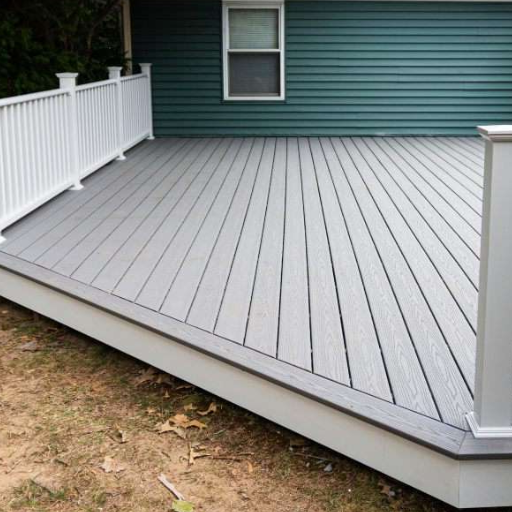
The selection process for sustainable wood decking requires assessment of three key elements which include durability and sourcing and environmental impact. Certified woods, like those approved by the Forest Stewardship Council (FSC) or the Sustainable Forestry Initiative (SFI), ensure that the timber has been responsibly harvested. The certifications establish operational standards which protect biodiversity and sustain forest ecosystem health. The use of naturally durable woods such as cedar redwood and teak decreases the need for chemical treatments that provide rot resistance. The second option which needs assessment is reclaimed wood because it uses existing materials to create new products while reducing waste and decreasing the need for newly harvested lumber. The implementation of sustainable options enables the construction of environmentally friendly decks which achieve functional performance and environmental sustainability.
Composite Decking: A Blend of Materials
The innovative composite decking system uses wood fibers and recycled plastics to produce a strong yet easy-to-maintain product. The material combination produces a wood-like appearance which eliminates the maintenance issues that come with regular wood because it prevents warping and splintering and does not require constant staining and sealing. The modern composite deck system protects against water damage and insect infestations and UV radiation which enables it to function effectively during extreme weather conditions. The manufacturing process includes eco-conscious practices because companies use recycled materials and create products which have reduced environmental impact. The development of new technologies enables composite decking products to offer various color and texture options which customers can use to achieve their desired appearance. The combination of sustainable environmental practices and strong durability and multiple design options makes composite decking an appealing choice for homeowners who focus on environmental protection.
Ecology and Technology; Bamboo Decking as an Example
This ecological and eco-friendly decking material has grown to be very famous for its popular sustainable features as well as its tough resilience and endurance. Bamboo is a type of grass and is easily regenerated as opposed to most typical hardwoods. This makes it a good green option. Owing to its high strength, bamboo can usually tolerate high levels of activities and extreme weather, making it good for outdoor uses. That said, it is an obvious fact that due to the innovative protective practices in use today, extreme conditions no longer have catastrophic effects on the bamboos. This is because such modern practices make the bamboo impervious to all the common problems that decline the useful life of the materials. Finally, bamboo decking has the distinct advantage of an inconsistent and natural look which will be perfect for the design of a contemporary or even a country house. Due to this, its growth in terms of production and utilization is neither here nor there. Here, modern realities dictate the consumer demand for eco-friendly products that also do not take any heavy investment on installations in homes among other user experiences.
Durability and Lifespan of Decking Materials
Comparing Durability in Sustainable Decks
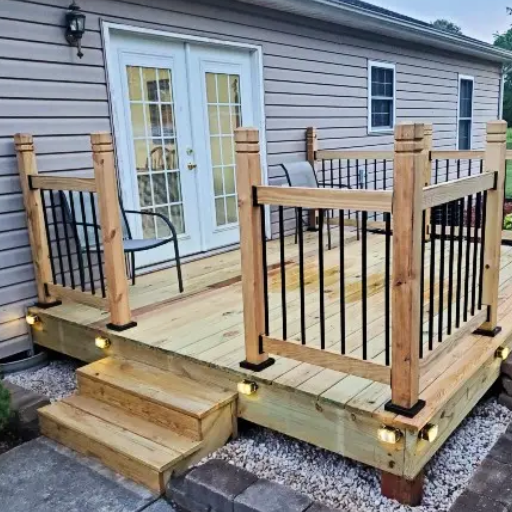
I have discovered upon research and evaluation that bamboo, composite, and recycled wood decking tend to be the most durable out of the Eco-friendly decking materials. For example, it is less susceptible to wear and tear as a result of the robust cell wall structure of bamboo decking. This type of decking is favorable and can be treated surface water, wood destroyers, and sun in order not to be predisposed cracking or distortion. Furthermore, decks made from engineered bamboo, e.g., strand-woven bamboo, are more durable, and thus promise an extended service life in sustainable decking applications.
Composite decking is a really sturdy solution to install in your house. They are made from plastics and wood which have been recycled – a great invention if you seriously do not want get any mildew on it, swelling or cracking. These materials require very little care compared to natural wood decks, and some of them even have a guarantee of a certain lifespan. Many of the currently available composite boards take into consideration the environment in that they are developed, incorporating green technologies along with the use of recycled content.
I was going to discuss another strong and long-lasting material in this post. And the option is called reclaimed wood, the wood that involves recovering material from a used structure such as a barn or warehouse, and making it into elegant looking decking boards. Given its age and tight grain, reclaimed wood tends to outperform in strength and endure in the process of erosion. On the other hand, the restorative functions including high pressure painting and staining are clearly needed to sustain that as well as its tenderness against adverse weather conditions. As such, I do think that anybody who chooses for getting those materials in their home either in its complete form or as a counter is going to get the ultimate satisfaction in terms of durable and stylish equipment.
Evaluation of Manufacturing Decking Products
In the course of examining the sustainability of goods, I always consider various stages of material life cycle, starting from its extraction and ending with its recycling or disposal. As for the wooden decking, there is a vast scope for the carbon footprint depending on the felling of the standing trees and the subsequent transport. Use of responsibly harvested trees certified by various organizations such as FSC, helps in curbing excessive environmental damage, which can be achieved through the encouragement of sustainable forest use and by avoiding any acts of deforestation. Besides, wood is a renewable raw material and its decomposition does not pose much of a problem in terms of the environmental impact at the end of its life as opposed to some synthetic materials. Nevertheless, there exists the drawback that due to its low resistance to UV radiation, the wood may require toxic antifungal or preventive applications which may have a potential negative effect on the whole ecosystem of the manufactured products, if they are applied often enough.
On the converse, a lower-maintenance alternative that is less time-consuming and more durable than the standard lumber is ready-made of composite decking. Waste decreases and the use of new plastic or wood is lessened in balms due to reusing the material. And yet, composite manufacturing has drawbacks in terms of the environment’s versatility. When their lifetime expires, such composites usually would not degrade as much, if even at all, compared to wood. The disposal of these goods may therefore create recycling purposes that will have to be organized into another specialized form. Having compared these issues, I realize that in most cases, the best solution to take will be the one that concerns the specific product, its origin, and how it should be cared for from the time it is brought into the home until it is no longer needed.
How To Prolong The Life of Composite And Wood
Composite or wood does not last forever unless regular and conscious effort is devoted in their care over time, a factor that makes them longevity-prone. The first line of action is to use soapy water to scrub the surface as a prevention strategy to remove dirt, dust and even mould spores. And even avoid the use of strong chemicals likely to harm the material. As for wooden products. In this regard, examine the item for any wear and tear, or give their attention to minor issues immediately to prevent them from becoming theres is any speeding up of such deterioration. Then protect the surface from extended exposure to dampness by providing for drainage well minimizing direct water contact. Moreover, application of sealants or paints that are resistant to moisture, like ones for wooden surfaces, enables the product to last longer, while composites require ultraviolet absorbers in order to protect it from the sun damage and subsequently, there is less fading and yellowing. If you stick to daily basis of maintaining these components, the latter will serve you for a large time and still remain good-looking.
Environmental Impact and Carbon Footprint
Reducing Your Carbon Footprint with Sustainable Decking
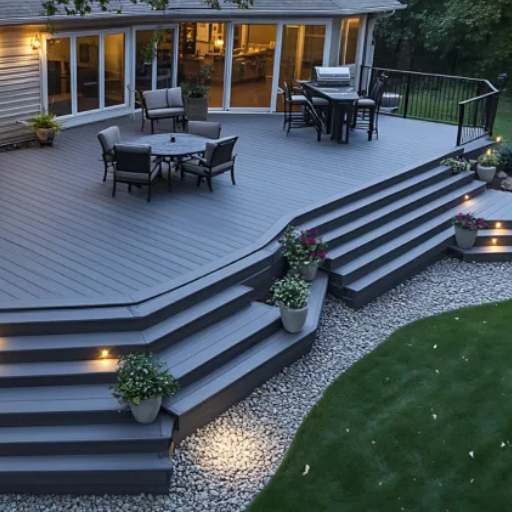
The carbon footprint of outdoor construction is significantly cut with innovative building materials. This is because the use of composite materials, lumber, or bamboo saves the environment for some time, unlike the former. These materials are able to recollect some form of horse energy togesher resulting into reduction of waste and energy usage. Also, some of them are produced with very friendly ways that do not pollute the environment, such as use of renewable sources of energy or by cutting down on emission of green houses gases. The use of materials which are durable, also reduces the extent of changing the materials, which is good in terms of environmental protection.aalsooreover, Sustainable decking is not just an efficient and visually appealing product, but also fully complies with the outlook that proposes the people the choice of eco-balanced materials.mmmmm− or as future leaders have green ideas.posjolajuće, There are a number of other reasons as well.
Reusing and Recycling Aged Deck Components
Recycling and domestiсation of old deck structures contributes positively to waste management by recycling old construction materials and increasing their useful life. It is possible that used wood could be stripped, preserved, and got ready for employment in small ventures like flower box, benches, or an accenting wall. Moreover, composite decking, being a tough product, can usually be reclaimed by the manufacturer or a specific recycling enterprise, and in certain cases even turned into something new. Elements of metal, like railings or fastening devices, for instance, can be dropped off for recycling operations, or combined with other design ideas in decorative applications. By using resources that have already served their initial purpose, house owners can not only minimize their environmental impact but also trim the otherwise involved expenses on new item procurement. In the best tradition of the environmental movement, such interventions aim to sow green technologies and ecoconscious strategies into non-recyclable waste materials.
Green Decking Solutions
I have found out that when engaging in constructing a new or renewing an existing indoor or outdoor deck, the choice of materials that should be green has also helped reduce the cost. Composite decking is made of wood fibers and waste plastic, which is very good for use in these projects. It should be mentioned that unlike natural wood, it can be reused, making it a less burnable and more durable option. Bamboo is another attractive option, the fast growth of which is even faster compared to that of hard wood trees yet it is renewable. In addition, the promotion of sales of lumber that is scribed under the Forest Stewardship Council (FSC) ensures that material is drawn out properly from their sites on all forests that are properly managed.
Whenever it’s possible, however, I try to utilize reclaimed wood in my designs. This is because reusing wood from old barns, and other structures not only gives the patio a more appealing and unique, rustic look, but also helps in avoiding the wastage of this useful material, a lot of which ends up in landfills. In addition to the use of low-VOC (volatile organic compound) stains and sealants, this aids in the needful reduction of emissions that goes a long way into cleaning the air for healthy living.
Another equally important aspect is the use of energy efficacious tools and the strategies of waste reduction during the operation. After all, I am very meticulous about my approach to cutting in order to avoid the production of unusable material and not to throw them away any pieces of work. Moreover, I do my best to spend most of my money on purchasing materials that do not require them to be transported to me thus reducing transport emissions to the applicable levels of the environment. Thus, I see to it that no self-respecting lodge should be accompanied by any chance of calling my decks anything else except sustainability in its truest form, this is achieved through both building appealing outdoor areas and that take care of the environment.
Choosing the Best Sustainable Deck for Your Climate
Factors to Consider Based on Climate
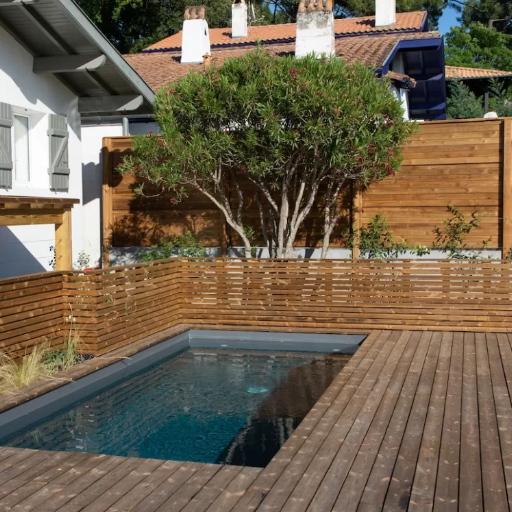
In the choice of a suitable deck depending on the climate of a certain area, the degree of the environmental conditions it is exposed and the strength of the materials come in handy in the decision. In winter, summer, spring or autumn, selection of a suitable deck apt for the prevailing climatic condition is very critical. For instance, choosing the appropriate decking for a region with high temperatures and minimal rain is a necessity as there is a material strain under these conditions, and any high quality remodeling composite or a properly treated one won’t warp, nor will it crack. Since the poles of the earth lie to the northern parts of the equator, it will be useful for the construction of a structure made of north facing equator of the world due to the use of cold resistant material for the construction work even though the structure has the south facing equator of the world. The planar orientation of the structure made of reinforcement includes the design of the renewable reinforcements of the structure. Calm and arid environed areas are for bases for the structure made of reinforcement due to the structure being non-tillable. At the end of each life cycle, the decking can be incorporated into another environment in accordance with the principles of recycling.
Sustainable Decking: Options for Different Environmental Concerns
Recycled Wood Decking: Wood salvaging is ecologically friendly since it is salvaged from broken, damaged or exhausted sources and not obtained from virgin land. It is beautiful and deserves to be used in areas with a cooler climate. It stands well with the right touch of finishing and maintenance, therefore there is also a good resistance against prolonged rains.
Bamboo deck option: Fresh bamboo is harvesteable in a short span of time due to rising demand so is considered highly sustainable. For moderate climate it is feasible to plant bamboo and build bamboo decks. Bamboo is properly modified, it can be use as such without apprehension in a garden.
Thermally modified wood: Thermally modified wood is made with the use of heating that is friendly to the environment on a sustainable basis and is very tough and weather-resistant. On the one hand, the material can be suitable for conditions where there are huge temperature changes and withstands such adversities without expanding or cracking. This option will provide a the appearance of carbon reduction as much as possible from its use.
Aluminium Decking: Now it may not be the most common material to use for decking purposes, but aluminum is light weight, strong, and can be 100% recycled. It being resistent to any corrosion makes it suitable for such conditions as wet coasts, where salt can cause deterioration of other building materials. And besides it has a reflecting surface, so the deck remains fresher in direct sunlight.
The attribute of selection a material for the outdoor deck should revolve around the weather conditions of the particular area where the deck is to be constructed, how environmentally sustainable the process of producing the materials is, and how much burden such materials will be to service. In other words, you will know which tactic to use when you can appreciate the advantages and disadvantages of each type and minimize or do away with all disadvantages and thus create the living area which is green and at the same time fully functional.
Successful Sustainability’s Monetary Value
Personally, research in sustainable construction material deck systems has been eye-opening. For example, a home along the California coast was designed and included recycled composite plastic and wood fiber decking. This specific material incorporated in many such coastal decks successfully resisted coastal weather condi-tions, including the strong UV radiation, without distorting or discolouring. As well, these composite decking material did not need a lot of regular upkeeps. This showed that among other things, extensive weather conditions can also be catered to.
Besides this high-priced garden that has also used a hardwood deck in New York City, where materials were legally and ethically procured, such as globally-certified rainforest timbers that were imported into the US in compliance with the LACEY Act and consisted of U. S Food and Drug Administration and the U. S Department of Agriculture. Even though these high-end materials and building methods require numerous, specific, and sustainable structural components, choices such as these also add an authentic and aesthetic appeal to places that would grossly contradict several standard principles of city planning. The case showed how practical and sustainable options could fit well into a modern interior concept, and be even prospected for eco-friendly uses.
The information provided, especially the practical example of Balau wood, assures us that the purchase and installation of such finishing and facings does not always have to be dismissed due to expensiveness, or implied lack of aesthetics, or poor longevity. Most installations can be brought into perspective through discussing their inherent principals coupled with the prerequisites of such a design based on the environment that surrounds the works. The schemes formed in these studios can be useful for any professional who wishes to get reliable information about the use of sustainable environment-friendly outdoor materials, as quite many of the topics that lean on general description of the problem are covered here.
Reference Sources
Evolving Consumer Preferences for Residential Decking Materials
Source: Canadian Institute of Forestry
Link: https://pubs.cif-ifc.org/doi/abs/10.5558/tfc82253-2
Relevance: This study examines consumer preferences for durable and sustainable wood decking materials in outdoor construction.
Consumer Perceptions of Decking Material
Source: informit
Link: https://search.informit.org/doi/abs/10.3316/informit.727965886057272
Relevance: A detailed exploration of sustainable decking options, including recycled and salvaged materials, for eco-conscious designs.
WPC Wall Panel Installation Manual
Source: ScholarsArchive@OSU
Link: https://ir.library.oregonstate.edu/concern/graduate_thesis_or_dissertations/3b591c396
Relevance: This research focuses on consumer perceptions and strategies for promoting sustainable decking materials.
Frequently Asked Questions (FAQs)
What are the best eco friendly resources for making a deck?
The most eco-friendly deck materials in the market today are sustainably harvested natural wood, Kebony thermal wood, bamboo composites and high end plastic-wood composite decking. Teak, ipe or any other wood taken from sustainable forests can be classified as eco-friendly provided the materials are stored and used in the right manner. The material which is commonly used in decking is the plastic with the embedded fiberfill of wood or similar plastic fibers. The most notable thing about such composite decks is the fact that they are made from a high content of recycled materials. Decks made of recycled plastic (r) wood (dura) blend usually have some proportion of recycled plastic polyethylene blended with wood fibers to make timber-like floor boards which are durable and in addition recyclable good sticks. Keep in mind that using timber already dead and timber that has been thrown away for free, minimizes the use of materials and stops materials from reaching the disposal sites instead of being used as timber decking. The beneficial use of materials ending in wood is the energy efficient way of building any kind of structures.
In what ways do reclaimed wood differ from recycled decking in order to evaluate sustainability?
Reclaimed wood and usable lumber, or recycled decking, both solve problems of both materials and materials probably play a different part in sustainability. Reclaimed wood, sourced from old buildings, often consists of actual wood and out of and uses less materials owing to Renovation one doesn’t resort to fresh growth cutting and processing enabling to add value to it once again and managing wastes instead of making landfill sites. Recycled decking that’s plastic based or wood/plastic composite which automates the process of keeping the deadweight of the landscape litter in check is normally strong and not hard to maintain. While these adjustments appear eco-friendly, the former might be favored by eco-enthusiasts, especially those who prefer the beauty of pure timber, and the latter, mainly due to its longevity, might be fixed for those who value less hassle with their outdoor wooden finishes. Check the certification of materials and the way they are derived from the given source so that no more harm is brought to the environment such as deforestation and overconsumption of resources.
Is using tropical hardwoods like ipe an appropriate application for sustainable equipment associate with outdoors?
Tropical hardwoods such as ipe are very strong lumbers as they are resistance to decay and pest damages naturally. This warm weather type of wood is popularly used in furniture and decking due to its inherent insect and rot resistance. However, the use of tropical hardwoods can be also classified as environmentally friendly or not purely depending on whether it was legally and responsibly derived from certified wood trade or from protected areas managed to contain deforestation. For an example of an earth friendly approach select ipe that is certified, and is also from a sustainably managed source rather than aid in deforestation and the depletion of the earth’s non-renewable resources. Alternatives such as heat-treated wood, responsibly sourced wood, or avidly composite decks can help increase the levels of service without increasing the adverse environmental effects. Have nothing but the best practiced in your adherence to clean technology and other sustainability principles- scrutinize available documentation for proof of closure to green building requirements that we aspire to achieve always.
When comparing ecofriendly composite decks to pressure treated decks, which has a better performance?
In most cases, the decks that are known to be the ecofriendly composite decks, made out of waste and a mix of wood and plastic, are usually easier to protect and recent information indicates which could be a good life expectancy than most types of pressure treated wood choices. Most composites perform better than untreated wood for durability against fungi, wood boring insects and even the sun which can save them replacements and chemical treatment in the future. Pressure treated wood has an advantage on the cost side because it is less pricey when first bought, however over time the repair costs and treatment may not be cost effective when considering environmental impact unless wood is recovered or find another use. One of the best ways of reducing the ecological footprints of buildings is to use building materials that contain high level of recycled content, and whose primary components such as polyethylene are recyclable. However, in determining the besting building material, life cycle analysis – sourcing, maintenance and disposal of the materials- is important and so the composite decking is also not included.
Is it possible for waste from dumps to see a better use and can the construction industry ever go waste-free?
Yes, more eco-friendly decking products i.e. ones like timbre decking, cedar decking as well as composite decking have lessened this problem with more wastage every year as they are incorporating waste materials such as carrier bags and even available pieces of furniture. Furthermore, elements such as boards of recycled plastic and with some level of recycled content are preferred from an environmental perspective and are encouraged under the many available program such as the LEED certification. Fairly well, old/vintage timber and responsibly sourced timber help curtail the harvest of new wood and are also forgiving in their impact on the environment such as lessening the instances of deforestation. Building should also be done in such a way that no or few new products need to be purchased, and those that are availble should be those of which the organization provides the necessary proof that they were not made from irresponsible sources. There are materials which are ideal for particular purposes such as how a certain material should not be needed for a particular exhibit. Said materials are known to be environmentally friendly and are good for construction of equipment and in other activities.
Which things should I keep in mind when looking for the right decking materials in terms of their ethicalness?
Consider looking for products that are labeled as sustainably or ethically made and which come with certificates because such decks are much likely to be made from forests that are managed responsibly as well supplied by sources that acknowledges and practices green practices. in another approved source and thereby does not or at least minimally adds to deforestation. How much waste is contained when materials are produced by manufacturers, whether a deck building is produced from recycled or recovered materials and whether after completing a buildings, containing parts of decking with polyethylene can be reduced to scrap. Also, it is critical to determine a comprehensive understanding of the environmental loads imposed by manufacturing, inbound & outbound materials transport, maintenance and finally disposal in order to enable a comparison of available decking materials and adopt one that is truly friendly to the environment. Rather use materials that are inherently bug and mold resistant or are treated with methods that contain very little toxic substance use and may extend the usability of the material. And finally, as much as possible go for the materials which are close to where the project is being carried out so that less emissions would be made and as well to encourage the uptake of more friendly neighborhood projects.
Categories:
Blog
Related Articles