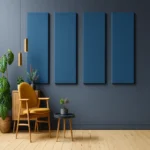
WPC Wall Panels Vs Tiles For Bathroom: Which Is Better? (Honest 2026 Guide)
WPC wall panels vs tiles for bathroom: WPC panels win on installation speed, total cost, and maintenance, while tile wins on lifespan, design flexibility, and resale prestige. The right choice is a total-cost-of-ownership decision, made zone by zone. This guide gives you the real numbers from a manufacturer that produces WPC panels, not a one-sided sales pitch.
Last spring, James spent two weekends and roughly £2,800 tiling his small bathroom. Within a year, the grout in the shower darkened with mold no matter how often he scrubbed it. Across town, his neighbor Helen installed WPC wall panels in a single weekend for about a third of the cost. Five years later, she still wipes them clean with a cloth.
James’s bathroom will probably outlast Helen’s. That is the honest trade-off this guide keeps front and center.
Most articles compare panels vs tiles in the abstract. They offer no real numbers, no WPC-grade nuance, and no maintenance-cost data. By the end of this guide, you will know exactly what each option costs over a full project and over 10 years, how long each lasts in a humid bathroom, where each belongs in the wet zones, and when a hybrid approach gives you the best of both. This is the deep dive that builds on our complete guide to WPC wall panels for bathroom.
Key Takeaways
- WPC wall panels install in hours to a day; tiling takes 2-3 days to 2+ weeks including grouting and curing.
- A typical paneled bathroom costs $780-1,380 installed versus $1,850-3,100 for mid-range ceramic tile, a 30-50% total-cost advantage.
- Grout is tile’s hidden cost: reseal every 6-12 months, re-grout every 5-10 years, and budget $500-4,000 for professional mold remediation if grout fails.
- Tile genuinely outlasts panels: 25-50+ years properly installed versus 15-25 years for premium wet-grade WPC.
- Use co-extruded WPC panels in splash zones (Zones 1-2) with sealed edges, and keep standard WPC in dry zones; tile is safe anywhere with a membrane and sealed grout.
WPC Wall Panels vs Tiles at a Glance
What Are WPC Wall Panels?
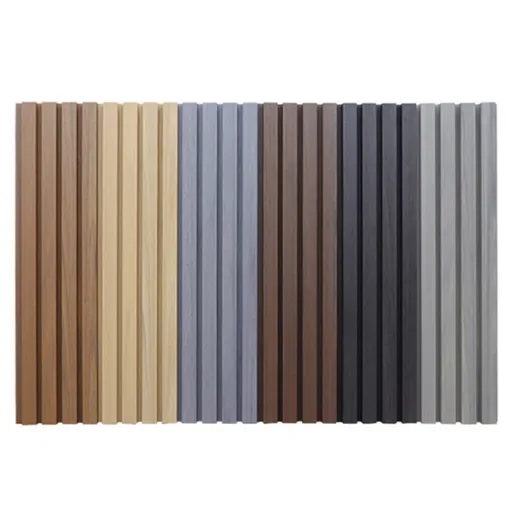
WPC (wood-plastic composite) wall panels are extruded from 55-65% wood or bamboo fiber, 30-35% HDPE or PP polymer, and additives like coupling agents, UV stabilizers, and waterproofing agents. They arrive as large-format boards that lock together with a tongue-and-groove or clip system, so there is no grout and no adhesive-cured seams. The wood fiber gives them a warm, matte, timber-like feel; the polymer gives them moisture resistance. For the full breakdown of materials and grades, see our complete buyer’s guide to WPC wall panels.
What Are Ceramic and Porcelain Tiles?
Ceramic and porcelain tiles are clay fired at high temperatures and installed in a bed of adhesive with grout lines between each piece. Grout, not the tile, is the material’s weak link in a bathroom. Tiles themselves are water-resistant and hard, but grout is porous: it stains, cracks, absorbs moisture, and gives mold a place to colonize. A tiled bathroom done well can last generations, but it asks for maintenance the whole way.
Master Comparison Table
This table is the quick answer to wpc wall panels vs ceramic tiles in a bathroom. Bookmark it, then read the sections below for the reasoning and the numbers.
| Factor | WPC Wall Panels | Ceramic/Porcelain Tiles |
|---|---|---|
| Install time | Hours to a day (DIY-friendly) | 2-3 days to 2+ weeks (skilled pro) |
| Installed cost (typical bathroom) | $780-1,380 | $1,850-3,100 |
| Lifespan | 15-25 yrs (premium wet grade) / 20-30 yrs dry | 25-50+ yrs properly installed |
| Waterproofing | Water-resistant; 0.3-3% absorption by grade | Water-resistant; grout is the weak point |
| Maintenance | Wipe-clean, no grout | Grout reseal every 6-12 mo; mold risk |
| Design flexibility | Seamless wood/stone-effect; large format | Infinite colors, shapes, patterns |
| Repair | Replace a single panel | Replace single tiles or re-grout |
| Resale/perceived value | Modern; can read premium | Traditional “gold standard” signal |
| Weight | Light (~6-9 kg/m²) | Heavy |
Both materials have a place, often in the same bathroom. The skill is knowing which zone belongs to which.
Installation Speed: Hours vs Days
This is where the two materials diverge most dramatically.
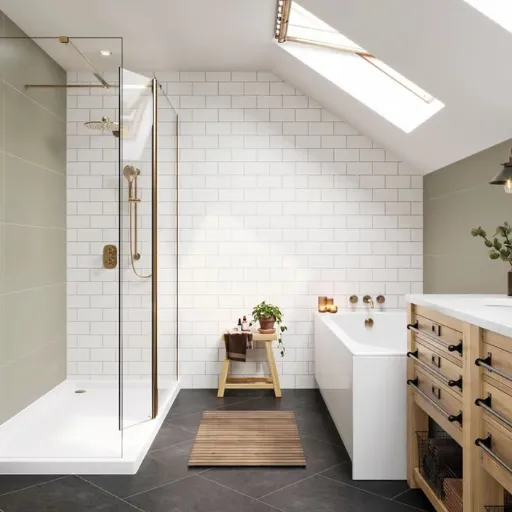
WPC panels fit a typical shower enclosure in 4-6 hours. Experienced installers can cover 20-50 m² per day. A confident DIYer can panel a small bathroom over a weekend with basic tools, and the room is usable the same day because there is no curing time. Panels can even go directly over existing tiles, which we cover below.
Tiling is a different beast. A typical bathroom takes 2-3 days to 2+ weeks when you count surface prep, adhesive, grouting, and curing time. It needs a skilled tradesperson for anything beyond a basic grid.
If you are replacing old tiles, add demolition and disposal to the timeline. Plumbworld’s panels vs tiles guide reaches the same conclusion: the speed gap is not marginal, it is an order of magnitude.
The knock-on effect is labor cost. Fewer skilled hours means a lower project bill, which drives most of the total-cost advantage below.
How long does it take to install wall panels vs tiles? WPC wall panels install in 4-6 hours for a typical shower enclosure and cover 20-50 m² per day, usable the same day. Tiling the same bathroom takes 2-3 days to 2+ weeks including grouting and curing, with professional labor.
WPC Panels vs Tiles Bathroom Cost: The Real Total-Cost Difference
Sticker price is only half the story. Here is the full math.
Upfront Material and Labor
WPC panels run roughly $35-90 per m² depending on grade, from standard to co-extruded bathroom versions. Panel labor is modest, and DIY removes it entirely.
Tile is priced per square foot. Mid-range ceramic runs $4-9/sq ft installed; porcelain $6-12/sq ft; natural stone, glass, and mosaic climb to $15-30+ per sq ft.
Wall-tile labor alone lands at $10-30 per sq ft in many regions, before you add waterproofing membrane, grout, and sealer. One and Done Prep’s tile cost breakdown gives the granular figures.
The bottom line: a typical paneled bathroom costs $780-1,380 installed versus $1,850-3,100 for mid-range ceramic tile. That is a 30-50% advantage for panels before maintenance is even considered.
The Hidden Cost of Grout (10-Year View)
Tile’s real cost arrives after installation. Grout needs resealing every 6-12 months, or every 6 months in shared bathrooms. Re-grouting a shower becomes necessary every 5-10 years.
And when grout fails, black mold follows. Professional mold remediation runs $500-4,000, while recurring grout mold within 2-4 weeks usually signals that moisture has colonized behind the tile.
WPC panels have no grout lines. There is nothing for mold to colonize, nothing to reseal, and no scheduled re-grouting. Maintenance is a cloth and a mild cleaner.
10-Year Total Cost of Ownership
| Cost Driver | WPC Panels | Ceramic Tile |
|---|---|---|
| Material (per m²) | $35-90 | $4-9/sq ft + waterproofing |
| Install labor | Low / DIY | $10-30/sq ft wall |
| Annual maintenance | ~$0-20 | Grout sealer + cleaning products |
| Periodic upkeep | None | Re-seal 6-12 mo; re-grout 5-10 yrs |
| Repair/replace | Single panel | Cracked tile or grout repair |
Over a decade, panels pull further ahead on cost. Tile’s advantage only shows up on lifespan, which we address in a moment.
For the complete project estimate across all bathroom sizes and materials, read our full WPC bathroom cost guide vs tiling, or compare pricing across every application in our 2026 WPC wall panel pricing guide.
Ready to see the cost difference on your own bathroom size? Request a bulk quote with your dimensions and we will price both panel grades for you.
Waterproofing & Mold: Grout Is the Weak Point
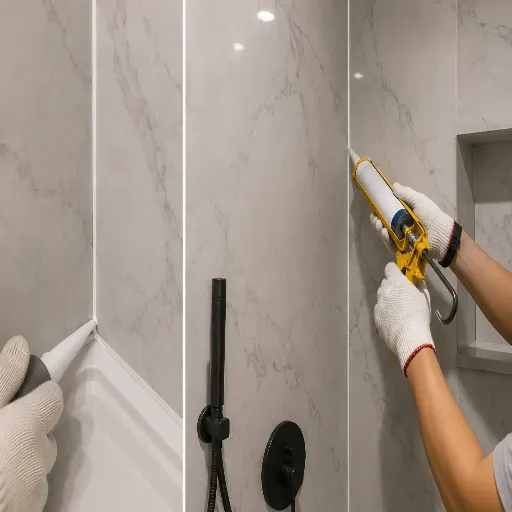
Tile is water-resistant, not waterproof. The tile itself handles moisture fine, but grout is porous. It absorbs water, stains, cracks under thermal movement, and gives mold a permanent foothold. Squeegeeing after every shower cuts surface moisture on tile by roughly 75%, but grout still demands regular sealing.
WPC panels present a sealed, grout-free surface. With no joints for water to penetrate, there are no grout lines for mold to colonize. That is the core of the “panels are more hygienic than tile” argument, and it holds up in practice.
The honest WPC caveat is grade science. Standard WPC absorbs 1.5-3% water by weight under ASTM D570 immersion testing. High-density grades run 0.5-1.5%. Co-extruded (capped) WPC drops below 0.5%, and nano-treated grades under 0.3%.
Only co-extruded or nano-treated WPC with fully sealed edges belongs in splash zones. Tile, by contrast, is safe anywhere when it sits on a proper membrane with sealed grout.
This is exactly why zone matters more than material preference.
Are WPC Wall Panels Better Than Tiles? Durability & Lifespan
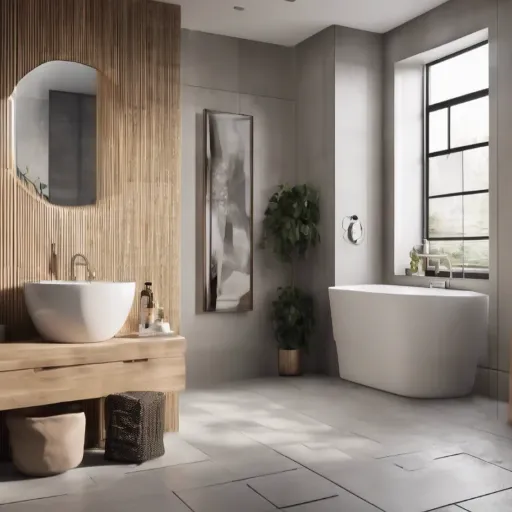
Let me be direct about the one area tile wins outright.
Properly installed tile lasts 25-50+ years. It shrugs off scratches and everyday impact. Individual tiles can be replaced, though removing one without disturbing its neighbors takes skill. Its main failure modes are cracked grout, chips from point impact, and thermal stress cracks.
WPC panels last 20-30 years in dry zones and 15-25 years with premium waterproof grades in wet areas. They absorb roughly 30% more impact than PVC panels and resist scratches better, and a scratch on solid-core WPC can often be sanded out.
But no honest manufacturer will claim WPC outlives tile. Gill Construction’s panels vs tiles analysis makes the same point from a contractor’s chair.
So why choose panels at all? Because the trade-off is not lifespan vs lifespan. It is lifespan vs total cost and maintenance.
Helen’s paneled bathroom may need redoing in 20 years. It cost a third as much, installed in a weekend, and asked for nothing in between. James’s tiled bathroom will outlast his mortgage, but it demanded ongoing grout care and a $1,200 mold remediation along the way.
When a single panel is damaged, you replace one board. When a tile is damaged, you remove and replace one tile, carefully, so you do not crack the neighbors.
Design & Aesthetics: Tradition vs 2026 Trends
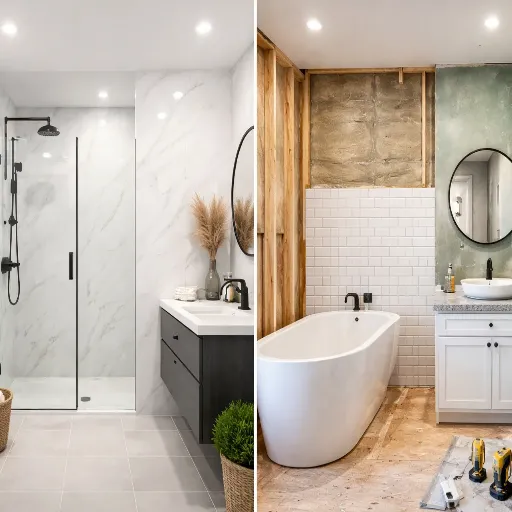
Tile offers unmatched design flexibility. Infinite colors, shapes, mosaics, herringbone layouts, and genuine natural-stone looks. It wraps curves, fills niches, and has a timeless premium feel that has defined bathrooms for decades.
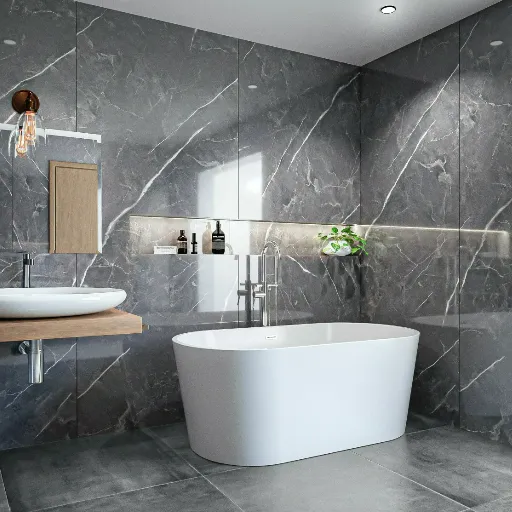
WPC panels deliver seamless large-format boards with realistic wood grain, fluted and slat textures, stone effects, and moody matte colors. There are no grout lines to break up the surface, which reads as clean and modern. The 2026 trend cycle favors exactly this: fine-pitch fluting, stone drenching, biophilic wood looks, and seamless large-format surfaces.
The strongest play in a bathroom is often a hybrid:
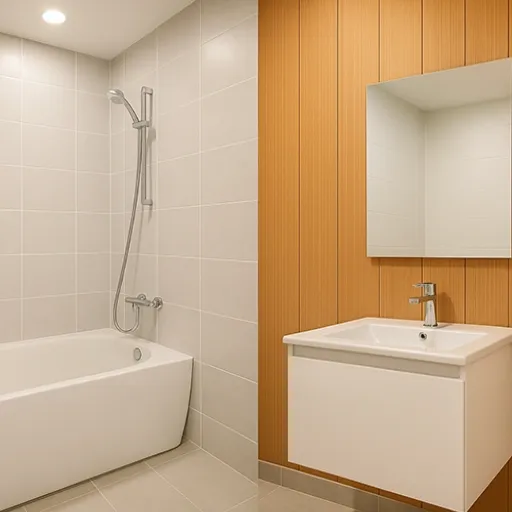
- Shower and bath surround: Seamless co-extruded WPC panels for low maintenance and no grout.
- Feature wall and floor: Tile for design personality, pattern, and a premium signal.
- Vanity wall: WPC for a warm wood-look finish.
- Niches and curves: Tile, which handles complex geometry better.
A designer we work with, Priya, used marble-look tile on the floor and a feature wall, then installed seamless co-extruded WPC on the shower and bath surround. The result: premium where it is seen, practical where water hits. That pattern keeps winning projects.
Resale Value & Perceived Quality
This is the topic most panel guides dodge, so we will cover it head-on.
Quality tiling is a well-known premium signal that can support resale value. Cheap or poorly installed panels can read rental-grade to a picky buyer. That is a real risk, and it is why install quality and grade selection matter.
But the picture is shifting. Premium co-extruded WPC with realistic wood and stone effects is increasingly accepted in modern and mid-to-high-end renovations. Buyers in 2026 have seen seamless panel bathrooms and many prefer them to outdated grout lines.
To protect resale value with panels: choose co-extruded grades, hire a pro for complex areas and corners, and use panels in showers while tiling floors and feature walls. This hybrid pattern gives you the low-maintenance wet zones buyers want and the classic finishes they expect.
Bathroom Zones: Where Panels Beat Tile and Vice Versa
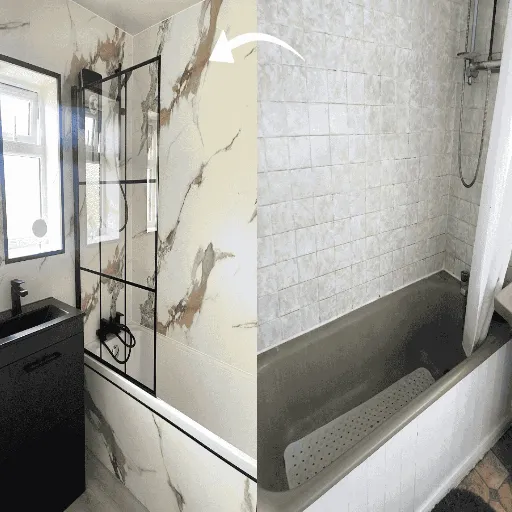
The UK/EU wet-zone framework turns the wpc vs tile shower walls debate into a simple placement question.
The Wet-Zone Framework Explained
- Zone 0: Inside the shower tray or bath trough. Standing water. Use tile with a membrane, or PVC/SPC. Not standard WPC.
- Zone 1: Above the bath and within reach of the showerhead (direct spray). Tile, or co-extruded WPC with fully sealed edges.
- Zone 2: Within splash reach of Zone 1. Both materials work; standard WPC is acceptable if joints and cut edges are sealed.
- Outside zones: Vanity walls, feature walls, dry walls. Both work; WPC preferred for the warm wood-look finish.
When Panels Win
Speed, budget, DIY, seamless modern looks, low maintenance, and zero grout mold. For rental properties, Airbnb units, and hotel bathrooms where multiple rooms are renovated at once, the speed and cost advantage compounds fast. A 60-room hotel we supplied replaced failing tiled shower walls with co-extruded WPC panels. Install time per room dropped from 5 days to 1, grout maintenance disappeared, and re-tile callbacks stopped.
When Tile Wins
Longevity, design flexibility, premium and resale signal, impact and heat resistance, and complex corners and niches. If you want a bathroom that will look right for 30 years without rethinking it, tile is the defensible choice.
Which is better, wall panels or tiles for bathroom use? It depends on your priorities. Choose WPC panels for speed, lower total cost, and no grout maintenance. Choose tiles for a longer lifespan, wider design range, and stronger resale signal. Most bathrooms benefit from a hybrid: panels in wet zones, tile on feature walls and floors.
WPC Panels Over Existing Tiles: The Renovation Shortcut
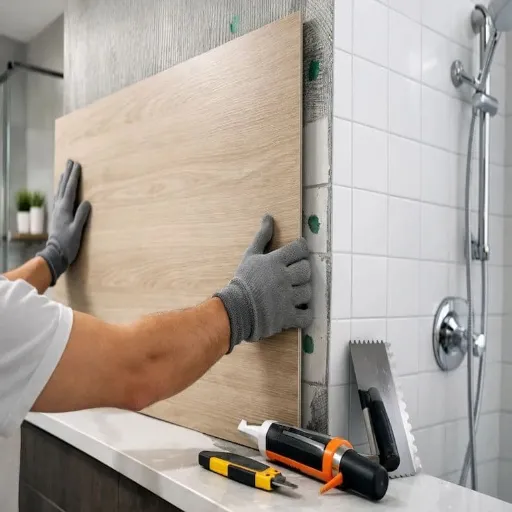
Can you install WPC panels over existing tiles? Yes, with conditions. If the existing tiles are sound, flat, clean, and dry, panels can go straight over them using a framework or an adhesive designed for over-tile installation. This skips demolition, disposal, and surface prep entirely.
Check total wall thickness before you start, so trim and fixtures still fit. And there are cases where you should not panel over tile: damp walls, loose tiles, failing grout, or a compromised substrate. In those situations, fix the underlying issue first.
This is the fastest way to modernize an ugly 1980s tiled bathroom without the mess of ripping it out.
When to Choose Which: A Decision Framework
Choose WPC wall panels if you are on a tight budget, a fast timeline, or a DIY install; you prioritize low maintenance; you want a seamless modern look; or you are renovating multiple units like rentals or hotel rooms.
Choose tiles if you want a 25+ year lifespan, bespoke design and patterns, a premium resale signal, high-end natural stone, or complex corners and niches.
Choose both if you want tile’s design personality and panels’ practicality. Use the zone-by-zone guide above to place each.
A five-point quick checklist:
- Budget: Panels win 30-50% on total installed cost.
- Timeline: Panels install in hours to a day; tile takes days to weeks.
- Maintenance tolerance: No grout to reseal and scrub, or fine with a 6-12 month grout schedule?
- Lifespan target: 15-25 years is enough, or do you need 25-50+?
- Resale: Are you optimizing for a future sale? If so, favor premium co-extruded panels and hybrid layouts.
Frequently Asked Questions
Are WPC wall panels better than tiles for a bathroom?
WPC panels are better when you value speed, lower total cost, and no grout maintenance. Tiles are better when you want a 25-50+ year lifespan, wider design options, and a stronger resale signal. Most bathrooms benefit from using both, with panels in wet zones and tile on feature walls and floors.
Can you install WPC panels over existing tiles?
Yes, if the existing tiles are sound, flat, clean, and dry. Panels go over them with a framework or over-tile adhesive, skipping demolition and disposal. Do not panel over damp walls, loose tiles, or failing grout, because those problems will resurface.
How long do WPC wall panels last vs tiles?
WPC panels last 20-30 years in dry zones and 15-25 years with premium waterproof grades in wet areas. Properly installed tile lasts 25-50+ years. Tile genuinely outlasts panels; the trade-off is that panels cost less, install faster, and need far less maintenance.
Are wall panels cheaper than tiling a bathroom?
Yes. A typical paneled bathroom costs $780-1,380 installed versus $1,850-3,100 for mid-range ceramic tile, a 30-50% advantage. Tile’s hidden costs include grout resealing every 6-12 months, re-grouting every 5-10 years, and potential mold remediation of $500-4,000.
Do WPC panels look as good as tile?
Premium co-extruded WPC with realistic wood and stone effects looks modern and seamless, and many buyers prefer it to dated grout lines. Tile still wins on infinite colors, patterns, and authentic natural-stone looks. For high-end or heritage designs, tile offers flexibility panels cannot match.
Are wall panels more hygienic than tiles?
Generally yes. Panels have no grout lines for mold to colonize, so they are easier to keep clean in a humid bathroom. Tile surfaces are fine, but grout is porous, absorbs moisture, and requires regular sealing to prevent mold.
Do wall panels or tiles add more value to a house?
Quality tiling is the traditional premium signal and can support resale value. Premium co-extruded panels are increasingly accepted in modern renovations, especially in hybrid layouts with tile on feature walls and floors. Cheap or poorly installed panels can read rental-grade, so grade and install quality matter.
Can you use WPC panels in a shower instead of tile?
Co-extruded WPC with fully sealed edges can be used in shower splash zones (Zones 1-2). Standard WPC should not go where water continuously hits the surface. Tile with a proper membrane remains the safest choice for standing water in the shower tray itself.
Are wall panels as waterproof as tiles?
WPC panels are water-resistant, not fully waterproof. Standard grades absorb 1.5-3% water; co-extruded grades under 0.5%. Tile is also water-resistant, with grout as its weak point. The practical difference is that panels have no grout lines, while tile relies on sealed grout.
Do WPC panels crack or chip like tiles?
WPC panels absorb roughly 30% more impact than PVC and resist scratches better, and surface scratches on solid-core WPC can often be sanded out. Tiles crack or chip under point impact and typically need replacement. Neither material is indestructible, but panels are more forgiving in daily use.
Conclusion: Choose by Cost, Lifespan, and Zone
The honest answer to WPC wall panels vs tiles for bathroom is not a winner, it is a map. Panels win on installation speed, total cost, and maintenance; tile wins on lifespan, design flexibility, and resale prestige; grout is tile’s hidden cost; and a hybrid approach gives you both.
Use co-extruded WPC in splash zones with sealed edges, standard WPC in dry zones, and tile anywhere you want longevity, complex design, or a premium signal. Before you buy, check the grade you are getting, verify the wet-zone rating, and plan your sealing. Compare how WPC and PVC stack up for bathrooms in our WPC vs PVC wall panel comparison if you are also weighing other panel materials.
Ready to test the difference yourself? Request bathroom-grade samples of WPC panels and run your own wet-zone test against your tile, or get a bulk quote if you are sourcing for a renovation, hotel, or apartment project. We will help you match the right panel to every zone of your WPC wall panels vs tiles for bathroom project.
Categories:
Blog
Related Articles