Fire Rated WPC Wall Panels: A Wholesale Buyer’s Guide to Safety and Compliance
When buying fire rated WPC wall panels, start with the report behind the description. A useful fire classification identifies a test standard, a result, and the product and installation covered. A phrase such as “B1 panel” or “Class A finish” leaves important purchasing questions unanswered.
Your task is to match three things: the project’s requirement, the supporting documents, and the panel being quoted. This guide explains how to make that comparison before placing a wholesale order. For a broader introduction to materials and panel selection, see our WPC wall panel buyer’s guide.
Keep these checks beside your quotation:
- Identify the standard and edition, rather than comparing class letters alone.
- Read the complete result, including relevant smoke and droplet classifications.
- Match the offered profile, finish, and mounting arrangement to the report’s scope.
- Verify the issuing laboratory and its relevant accreditation scope.
- Have the project’s responsible designer confirm suitability for the intended use.
What a WPC wall panel fire rating establishes
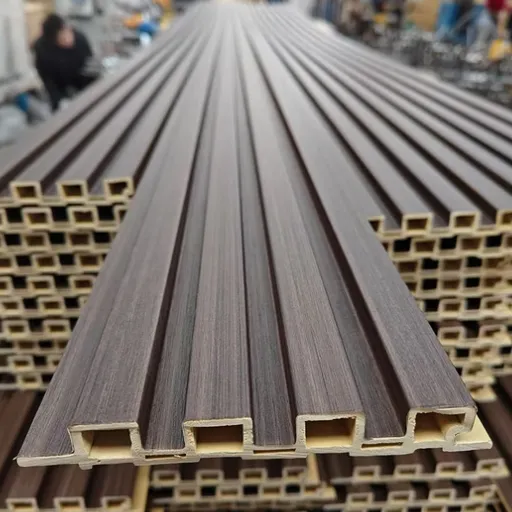
WPC means wood-plastic composite. For purchasing purposes, the material name is only a starting point: it does not identify a fire classification for the panel in your order. Ask for evidence tied to the selected product.
Distinguish these three questions:
| Question | Evidence to examine | Limit to remember |
|---|---|---|
| How does the product behave under specified fire exposure? | Relevant reaction-to-fire or surface-burning test and classification documents | Results apply within the documented test and application scope |
| How long does a wall assembly meet specified fire-resistance criteria? | Evidence for the relevant assembly and fire-resistance test | A surface-burning class does not supply a timed wall rating |
| Is the proposed installation acceptable for this project? | Applicable project requirements and supporting product/system documents | A material report alone does not approve a building |
Intertek’s fire-testing overview distinguishes surface-burning tests from fire-resistance testing of assemblies. Keep that distinction in specifications and purchase orders. “Fire-retardant,” “Class A,” and “60-minute wall” describe different things and should not be substituted for one another.
The illustrations in this guide explain purchasing topics. They do not establish a test result or certification for a Yuheng product.
Read the standard, edition, and complete classification
EN 13501-1: read the full wall-product designation
For products other than flooring, the reaction-to-fire classes are A1, A2, B, C, D, E, and F. Additional smoke and flaming-droplet classifications accompany relevant classes. England’s Approved Document B, Appendix B explains this notation on printed page 147.
If a report gives B-s1,d0, read the complete designation. The s1 subclass indicates the lowest smoke production among the smoke subclasses; d0 addresses flaming droplets or particles under the classification conditions. Neither establishes smoke toxicity, smoke-free performance, or immunity to fire.
Do not shorten the designation to “B1.” Ask for the classification document and its field of application, including the mounting and substrate conditions. The cited guidance applies to England; it is an explanation of the notation, not approval of your panel for every market.
ASTM E84: check both reported indices
ASTM E84 reports a Flame Spread Index (FSI) and Smoke Developed Index (SDI). These are test indices, not a duration of fire resistance. Intertek’s ASTM E84 explanation summarises the following interior-finish classes:
| Interior-finish class | Flame Spread Index | Smoke Developed Index |
|---|---|---|
| Class A | 0-25 | 450 maximum |
| Class B | 26-75 | 450 maximum |
| Class C | 76-200 | 450 maximum |
Check both numbers in the report. A quotation stating only “Class A” does not let you inspect the underlying values, specimen description, or mounting conditions.
ASTM’s E84-26a public scope also makes clear that the Flame Spread Index alone does not establish noncombustibility. An E84 result does not demonstrate the heat-transmission performance of a wall or determine acceptance of an exterior facade. Ask which standard edition the project requires; a newer catalogue edition alone is not a reason to declare an older report unusable.
B1: ask which classification system is meant
A B1 label needs its named standard and edition. Do not treat it as an automatic equivalent to EN 13501-1 B-s1,d0 or ASTM E84 Class A. Compare evidence against the specified system instead of using an assumed conversion table.
Edition note, October 2026: the official catalogue lists GB 8624-2025 as published on 31 December 2025, with implementation on 1 January 2027, replacing GB 8624-2012. At the time of checking, the 2012 edition’s catalogue entry still marks it current. If your specification names GB 8624, confirm the edition and its applicability with the project team. These catalogue dates do not, by themselves, establish an expiry date for an individual report.
Match the report to the panel and installation
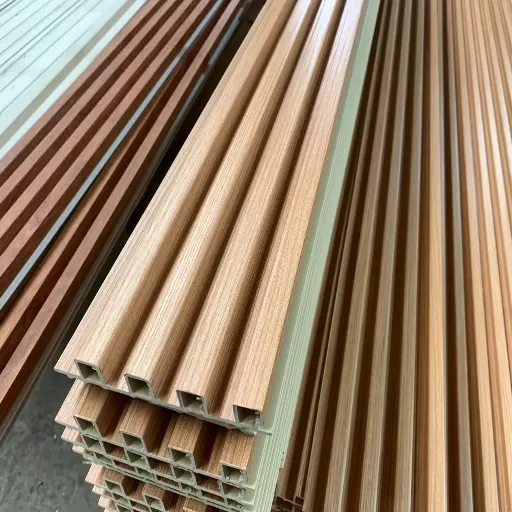
Before asking which panel to buy, ask the responsible designer what evidence the installation needs. Provide the destination country, building use, height, location within the building, and whether the panel is an interior finish or exterior cladding. Do not assume that a class suitable for one interior application authorises a facade or an escape-route installation.
The product name must also connect to the actual order. Use a comparison sheet:
| Compare | In the report or classification document | In the quotation and installation proposal |
|---|---|---|
| Product identity | Manufacturer, product code, specimen description | Selected manufacturer and profile code |
| Panel construction | Thickness, profile, layers, finish or coating | Offered dimensions and construction |
| Mounting | Substrate, fixing or adhesive arrangement, joints, orientation, cavities where specified | Proposed backing and installation details |
| Permitted scope | Field of application and documented variations | Every departure requiring confirmation |
England’s Approved Document B FAQ 18 highlights the importance of configuration and field of application. Use that principle when reviewing documents: inspect the conditions behind the classification, rather than extracting only the result line.
A different thickness or finish is not automatically covered, and a difference is not automatically proof that the report is unusable. Ask whether a documented field of application or authorised assessment covers the proposed variation. Refer unresolved scope questions to the issuing laboratory and the project’s responsible designer.
Illustrative document mismatch: a quotation identifies profile A, but the attached report identifies profile B. The buyer should request a documented connection between the two before relying on the classification. Similar appearance and a shared supplier name do not resolve that mismatch.
For wider facade purchasing considerations, see our exterior WPC wall cladding guide. Keep the facade’s required evidence separate from an interior-finish class.
Manufacturing descriptions are not fire-test evidence
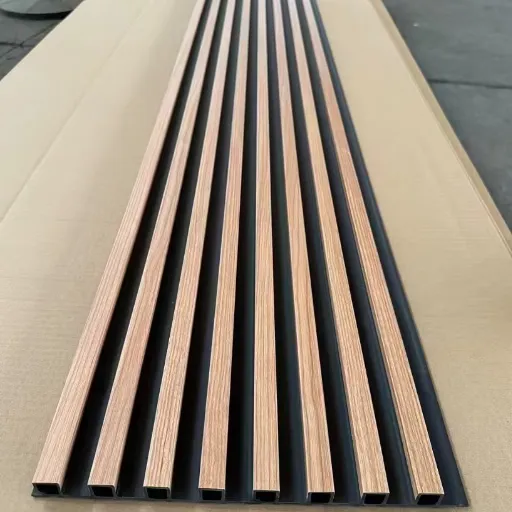
A supplier may describe a panel as flame-retardant, coated, capped, or co-extruded. Ask which construction was tested and whether that description matches the quoted version. A process name does not supply a classification or establish that a different finish is covered.
Useful questions include:
- What product code and construction identify the tested specimen?
- Does the offered panel have the same layers, surface treatment, and dimensions?
- What documentation covers any proposed variation?
- How will the supplier identify the agreed product on order documents and shipment labels?
- What inspection and traceability arrangements can be agreed in writing?
Treat these as procurement questions. Do not infer a manufacturer’s testing frequency, batch controls, or warranty coverage from its marketing description.
How to verify WPC fire-test reports before ordering
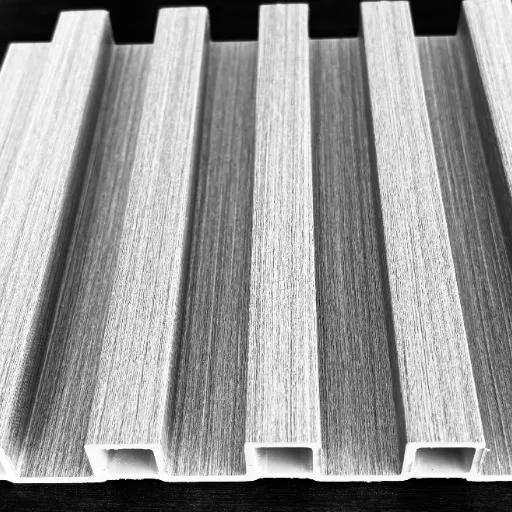
1. Obtain complete documents
Ask for the full test report and the relevant classification document, where applicable. A cropped result page cannot show all specimen details, limitations, revisions, or mounting conditions. Record the document number, issuer, issue date, and any amendments.
Our building material test report library provides document-request guidance. Naming a standard in a library does not establish that a matching report is available for every product; ask about the selected profile specifically.
2. Check the issuer and accreditation scope
Verify the laboratory’s identity through the relevant accreditation body’s directory. Check that its scope covers the relevant testing activity. A familiar logo alone does not complete this check.
ILAC’s guidance on accredited bodies and reports explains how to find accreditation-body information and check status and scope. If a report’s authenticity is unclear, seek confirmation through independently obtained laboratory or accreditation-body contact details.
3. Resolve scope and identification gaps
Compare the report against the selected panel and installation using the table above. If the quotation uses a distributor’s code, ask how it connects to the manufacturer’s tested product. Keep the written explanation with the order records.
Check the issue and revision details and ask about continued applicability. Avoid assuming that all reports share a universal expiry period. A date check cannot replace product matching, and accreditation does not establish suitability for every project.
4. Keep acceptance separate from document availability
A supplier can provide documents; the responsible project team must determine whether those documents meet the intended use. Resolve that question before relying on a fire-performance claim in a purchase order.
UK documentation context: the government’s 14 October 2026 guide to the Building Safety (Remediation of Unsafe Cladding etc) Bill describes proposed remediation measures. It is a reminder to keep clear product and responsibility records, rather than a new WPC fire classification. Check the requirements applicable to your project with its responsible advisers.
Compare quotations on documented scope
Compare like-for-like offers using the selected profile, quantity, required evidence, installation documents, inspection arrangements, and delivery terms. Do not use a generic percentage premium for a “fire-rated” label as a substitute for a product-specific quotation.
Before committing, ask for written answers on:
- The product code, dimensions, finish, and quantity being supplied.
- Which fire-performance documents are available for that exact selection.
- How shipment labels and order records will identify the agreed product.
- Which installation instructions accompany the panel.
- What sample evaluation and independent inspection arrangements are available.
- The warranty’s written coverage, exclusions, and claim procedure.
Use samples to review appearance, dimensions, and fit. Do not use an improvised flame demonstration to establish a classification or approve a project installation. Where further fire evidence is needed, have the project team specify the appropriate testing or assessment.
Choose the next purchasing step
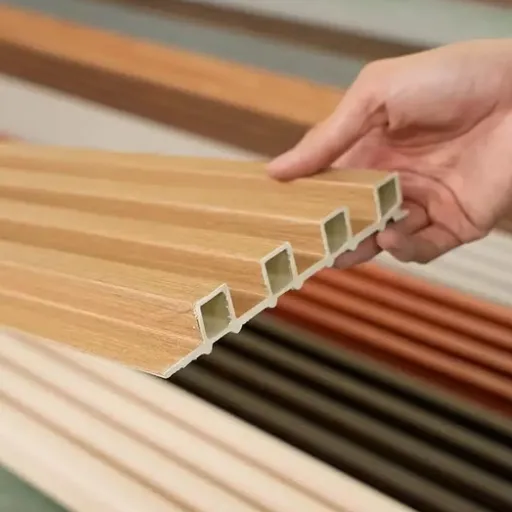
Prepare a short enquiry with the destination market, building use, interior or exterior location, required standard and classification, selected panel profile, finish, and proposed mounting arrangement. Attach the relevant project specification if available. If the requirement has not been set, ask the responsible designer to define it before selecting a claimed class.
Ask Yuheng about documentation for your selected WPC profile. Request confirmation of which reports and installation documents are available for that selection. Keep the enquiry specific so that a quotation and its supporting documents can be compared directly.
Frequently asked questions
Are fire rated WPC wall panels fireproof?
A fire classification describes performance under specified conditions. It does not establish that a panel is unaffected by fire or that a complete building is safe. Ask what the claimed classification measures and which product and installation it covers.
Does B1 equal EN class B or ASTM Class A?
Do not assume equivalence. Ask for the standard, edition, and full result behind B1, then check the evidence against the system named in the project specification.
Does ASTM Class A mean a fire-resistant wall?
An ASTM E84 Class A interior-finish result is a surface-burning classification. It does not provide a timed fire-resistance rating for the wall assembly. Review assembly evidence separately when the specification requires it.
Can another thickness, colour, or finish use the same report?
Only rely on it where the documented scope covers the proposed variant. Ask for the relevant field of application or supporting assessment; do not decide from appearance or product-family names alone.
Can a panel report approve a complete facade?
A panel report alone does not determine acceptance of the complete facade. Have the responsible designer review the proposed system, installation, and applicable requirements.
Before ordering fire rated WPC wall panels, keep the agreed requirement, complete reports, product comparison, and installation documents together. Resolve any gaps between those records and the quotation before committing to the selected product.
Categories:
Blog
Related Articles