PET Acoustic Panels: The Sustainable Choice for Office Soundproofing
It is no secret that today, offices have embraced a new culture that fosters change, exchange of information, ideas and communication. Conversely, this culture is usually the culprit of a big percentage of the received complaints—excessive noise levels thus rendering people inefficient when trying to carry out some duties. The good news is that, looking at PET acoustic panels, not only does the relief come due to soundproofing, but some other important aspect is also covered-namely the care and maintenance of the owning environment. The panels are not only acoustic engineering wonders, but provide stylish and even handcrafted noise management schemes. The said panels are easy to work with whenever less noise and more coolness are needed in an environment. That is how the designers were able to incorporate acoustical treatment within usual interior design without committing much of a green practice. This article analyzes the benefits of using PET acoustic panels and practices of the term green office soundproofing to more effectively structure warm office comfort sound implications. Stick around for in-depth research as we expose the reasons beyond the doubt of the centrality of these panels and one of their applications- office building sound absorption.
Introduction to PET Acoustic Panels
What are PET Acoustic Panels?
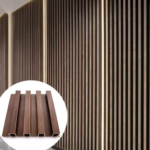
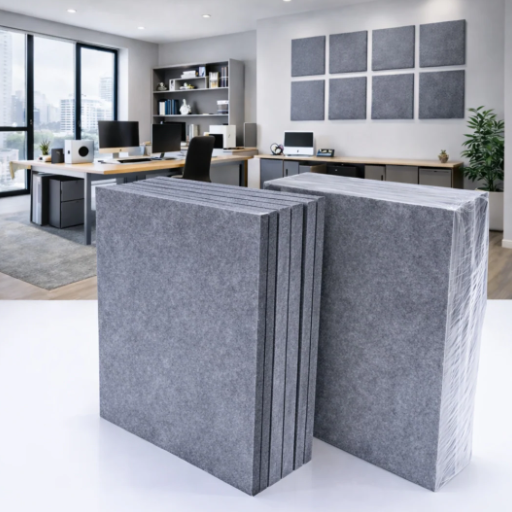
PET acoustic panels are sound-absorbing materials fabricated from polyethylene terephthalate, which are specially designed to improve acoustic conditions in different types of premises. This product is mostly produced from waste, primarily used plastic bottles, making them easy to carry due to their reduced weight, as well as enduring for long periods, hence giving their purchase an environment friendliness feature. Their sound-insulating structures reduce sound by absorbing sound energy, and thus their usage is essential in office, recording booth and other noised spaces. Being manufactured in various shades, patterns and dimensions, PET acoustic panels meet different customer tastes and are able to create a noiseless and working environment. Climate change issues and need for improved acoustic surrounding indicate that PET wall panels, even though they are not the only pet insulation panels, are the most appropriate solutions.
The Advantages of Using PET in the field of Active Sound Insulation
Out-of all, one of the principal reasons for that is the fact that they are made from cycled waste containers, more specifically, PET bottles, which make it a green incline in the product set. Since people turn rubbish into our rather effortless but quite effective tools, PET panels prevent the rise of unwanted items disposal and, therefore, lower the negative impact of the consumers on the planet. This is in line with the present green emerging trend for both architectural and design aspects of environment consulting and construction.
Besides, PET panels are pretty flexible in terms of shape or decorative elements. Their main function is excellent sound proof, which can be especially useful in a classroom or a residential building, since this relevance is due to the fact that echo is minimized by reflection. I find it difficult not to admire their adjustability which encompasses several hues and dimensions to suit oneself with beauty without violating the acoustic advantage. This means that even in an office workplace, educational institutions, or even homes designed for the utilization of artistic endeavors, the facades of PET panels will not cause discomfort to the environment.
To conclude, PET acoustic solutions are durable and easy to clean and maintain. This is because the materials used in making the panels are not SOAKED and are quite light in weight hence making it easier to handle them. It is also impossible for them to require much maintenance over the years. And thus even in terms of maintenance, they need a little of it meaning better value for money. As for PET acoustic panels, such provide sustainability, functionality and design aesthetics in one package which is why they will be the most preferred by the environment conscious noise control systems users among others.
Overview of Sound Absorption Properties
Pet acoustic panels developed for sound absorption, help in the control and moderation of the effect of the mid to higher pitches of the sound waves. These systems are highly efficient thanks to the presence of the air-filled cavities that occupies the bulk of the volume in the material. As a result, there are reduction in echo and room noise in the interiors. One of the most common ways of assessing the performance of these systems is by examining the Noise Reduction Coefficient (NRC). They are usually of the NRC value of 0.8 or more. This is a major indication of their sound control excellence. They also have the capability of being modified in thickness or even in thickness and density to suit the needs of any acoustic setup required in areas such as offices, learning institutions, recording booths and any other area where sound is a major concern. This ratio of effectiveness and malleability highlights the importance of these materials in contemporary interiors.
3D Acoustic Panel Designs
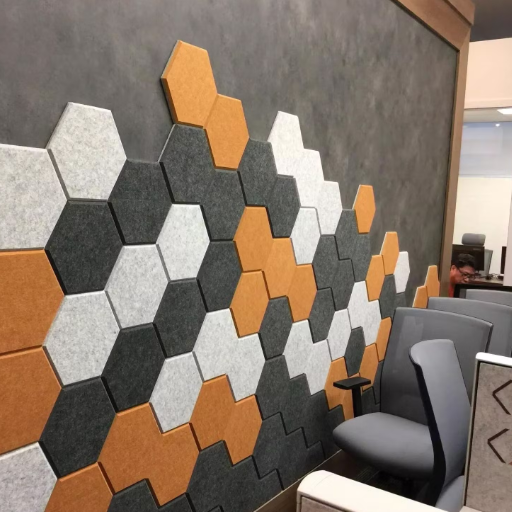
Consideration of Diverse Types of Three-Dimensional Acoustic Panels
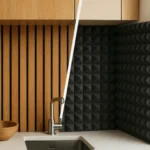
Various forms of three-dimensional acoustic panels are sold, with every structure meant to help enhance the beauty as well as audio qualities of a particular room. Such instruments usually have designs with geometric shapes, wave textures or some other form of art that causes sound to be dispersed and absorbed making it quiet without any reverberation. Moreover, the 3D design of these panels enables the ease of sound absorption since there is a cavum between the rear and the front; in contrast to the plain panel. In addition to this, plethoric materials such as lower grade timber and PET felt have been increasingly used to advance to the acoustic performance of these designs and in optimizing the designs. Such design almost meets all requirements outlined in the above since it caters for the beautification and acoustic needs of the room. This enables many other aspects of the furnishings to be customized. Such high flexibility in terms of installation is generally seen as favorable, and many people recommend using suspended ceiling in such cases.
How 3D Polyester Panels Proliferate Better Sound Detraction
3D polyester panels have been manufactured for the purposes of being good sound absorption by the means of their form and building material. The product is made up of light weight and breathable polyester fiber which serves great acoustic performance. As the fibers trap sound so well, they actually reel sound in and do not allow it to ricochet or carry on in the environment. The 3D shape of these panels works in advantage for a bigger sound absorption area that flat panels possess. It comes also with different densities and thicknesses for the materials which help to cover a wide frequency range from low bass to high sounds. Such panel type variations make it much easier to cope with sound effect in the environments of the office or home and that of the studio. It also enhances the creativity and aesthetic value of more industrial interior designs as this furnishing effectively eradicates disturbing sounds and coatings in the space of your choice.
Applications of 3D Acoustic Panels to Office Environments
Three-dimensional acoustical solutions are the preferred choice when it comes to introducing remarkable changes within the office dynamics. Not only do these panels bring down the noise, they also helps in creating a silent and more focused place for people to work in which is necessary for enhancing the employees efficiency and their general health. Open plan configurations for office performances have sound problem as an approach. That is, people are most likely to benefit from installation of 3D panels in those office spaces. This is because they help to reduce the noise that can cause unnecessary interruptions but they still allow the space to function in a collaborative way. Moreover, these panels are flexible enough to be made to complement the overall style of the office while upholding the desired functions. Various inner spaces, including conference rooms, executive rooms and advanced office rooms are filled with the functional and decorative 3D acoustic panels. This means that moreover traditional offices are replaced by the more interesting solutions. Overall, both technical ang with the architectural requirements may be individual. Indeed, these systems are able to synthesize a high-quality space, effective in terms of acoustics and with certain pleasing features relating to the physical look of the room.
Installation of PET Acoustic Panels
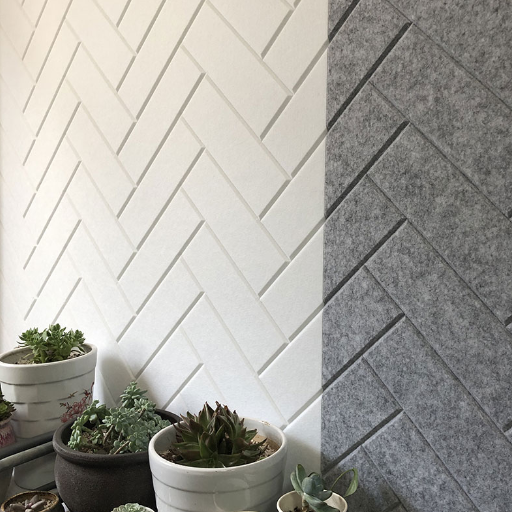
Step-by-Step Installation Guide
- Typesetting: First, one should ensure that the location for assembling is devoid of dirt and dust so that the adhesive on the sound-absorbing panels is effective. Gather all needed materials and equipment before measuring taping, spirit level, fixing strips, bonding agents or any other mounting elements depending on the sound-absorbing panel and the mounting area. Otherwise, use tools and glues provided by the manufacturer.
- Measurement and Layout: Before proceeding, accurately measure and determine the dimensions of the wall or ceiling area where the panels will be fitted. Use a spirit level and a pencil to outline the correct position of the art either directly or by dividing the chalk line into the places where the panels should be put focus on equal spacing and adjustment. It is essential for considering the feasible panel shapes and sizes especially when putting up more than one traditionally obvious rectangular or square panel as follows rectangular or square panels too.
- Fixing: Hence, directions and layouts such as this one can help reduce or eliminate missteps while aiding in giving the picture a more polished professional look since in some instances different panel designs, concepts, dimensions or colors may have to be incorporated— these will be useful in situations where the usual rectangular or square panels fit more than one.
- Secure and Check Alignment: Complete the attachment of the whole unit of panels, and make sure the units are aligned with each other. Also suitable a level have to be used to straighten all the panels ensuring that there are no bent panel which may need replacement or need adjustment. This guarantees the evenness and the aesthetics of the installation.
- Final Touches: Make sure you do not cast any load on the panels or disturb the structure of the glued backing until the glue can dry properly. Gently, dry or slightly wet cloth can be used to clean the surface from any marks or contaminants that come by during the installation. Stand back and check the final installation to see if you are satisfied with it. In this way with the own hands and this performance, the guide will help you to properly and effectively install acoustic panels of PET, meeting the functionality required and at the same time preserving the design essence of the air of the room.
DIY tricks that would make the process of installing acoustic wall panels easy
Installation challenges never all end with installing the panels. When it comes to the acoustic wall panels, a smooth and careful enough work also includes planning and preparation. It starts with measuring the wall so that it is clear how many panels will be needed, here, remember obstructions such as windows, outlets etc. Also, make sure that you pick panels that correspond with the rooms interior decoration, taking or not taking considerations on textures and only focusing on colors and sound proof capabilities, they should indeed match.
One of the most essential prerequisites for the installation of any wall is the presence of a dirt-free and flat background which the panels can be attached to without any disturbance. It is advisable that construction elements are cleared from oils, dirt which helps adhesives and mounting hardware to stick to the wall. For easy of installation and avoiding crooked lines once installed, use a straight edge and measure up on the wall to indicated where the edges of the panels will be. When it comes to attaching panels to your wall, it is recommended to use double sided mounting tapes, wall clips, or adhesive sprays without any drill holes.
On the other hand, the panels can be aligned so as to edge over each other or placed in a staggered design for the purpose of noise reduction and aesthetic appeal. To achieve optimum sound insulation, focus on placing wall panels at the opposite walls from where the voice is coming from, or rather, on walls that are reflective enough to contain the noise. At this point, one should not be in a hurry – take time to confirm that each panel is sitting securely to prevent hefty repositioning efforts as well as damage to the item itself.
The procedure should be packed up by adding details which will not only contribute to a complete look of panels or make them independent elements. Knowing where or where not to do it, one can recognize the space that they are in as the place fulfilling all the sound requirements without making any sacrifices in the terms of interior look.
The mistakes at installations that are done excessively
His opinion on the most common error of human beings in the process of installation is the one who is carrying out measurent and plabning lay out accordingly without having to figure out exactly what is going to be done prior to actual implementation. To take this view is that it leads to improper placement with spaces in between such that the structure is odd. Needless to say, extra care should be taken in taking the wall measurement, identifying switches or power outlets or any other obstructions as well as arrangement of panels in the position of gantry walls. Besides, While positioning the inside Radio Frequency Controlled captive zone will also be critical in deployment and walkthrough kind of installation practice.
Another issue I confront while setting up my home is the incorrect materials being prepared for installation. Dust, dirt, or an uneven surface can prevent adhesive strips or hooks to sit properly which leads to walls falling over time. This is why a wall must be clean and smooth in order to function for its intended lifetime. Cleaning mild soap or water or proper cleaner does not require much energy, especially when a little patience is involved to help aid dry wall up.
Don’t skip the installation recommendations provided by the manufacturer either. Depending on the paneling used, there may be specific measures provided for proper function, like the recommended adhesives, surface centering or even the direction of installation. Believe me, they will help prevent tons of headaches. Also taking shortcuts and using materials that are not compatible can also decrease effectiveness of soundproofing as well as make future removal or relocation complete nightmare. As long as it all makes sense to you do not attempt anything out of an assembly instruction and instead lessons would come to you.
Comparing Acoustic Panel Options
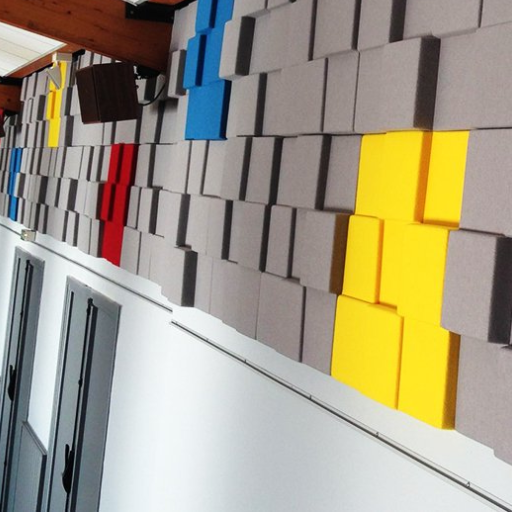
PET Acoustic Panels and Their Differences From Traditional Materials
When comparing PET acoustic panels with traditional types of sound absorbing materials made from foams and glass fibers for instance, it is clear through the well pronounced distinctions that PET acoustic panels are more advantageous and future-friendly. These rectangular panels, consisting mostly of plastic waste, are suitable for the development of conventional and new building practices. In a variety of styles that fit different structures, they can be permanently or temporarily affixed. The factors affecting the suitability of properties of these panels include the toxicity, which is little or none as compared to most of the other elements with the added contingency effect of little or no mineral wool contamination in the presence of phenolic foam.
On the contrary, ordinary materials such as fiberglass frequently perform much better in advanced sound absorption; however, they have some restrictions. Typically during installation, fiberglass may give off some diffuse harmful particles and may demand extra careful treatment and upkeep. The installed foam which is graceful and low-priced can be used satisfactorily but usually the problem is with the wear off as the built-up PET Panels with extreme range of options remain the best. Ultimately, the choice rests on the requirements for particular project, taking into account such considerations as the shortcomings of the materials used, the costs, the likely sound persistency of the materials, and the ease of installation.
3D Acoustic Solutions: How to Save Money
Generally, 3D acoustic treatments translate to making the room sound better often professional staples, there is a cheaper way to provide them for example the office users. Even with the initial capital outlay, one can be sure that the reward in upfront cost investment will be present comes in the form of better sound absorption and minority noise, further enhancing the level of output achievable as well as aiding in health and comfort. Today’s material science especially computerized precision factory based production methods has made materials like PET panels inexpensive to the low end of the scale by including methods of designing them with old plastic. Even after people have managed to purchase these materials, it will be another incentive as the materials do not require cleaning every other day for them to last long, which saves a lot of money when they are used over time. What other people often neglect to examine is the function of the prevalent building and the provisions in its construction and how long even comfort is achievable as we look at value for money.
Choosing the Right Acoustic Panels for Different Spaces
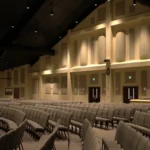
It is important to pay attention to the distinct characteristics of every region when it comes to picking sound-absorbing panels, in order to get the best value out of it design-wise. In case of offices or open spaces, people will be more productive when the panels are put within focus, cutting off the unnecessary noise. The opposite gear shift should be applied to an apartment, studio or wardrobe turned into a home music studio because absorption of lower frequency or bass sounds is crucial and in this case thicker and deeper panels are necessary. In case of larger spaces such as those of auditoriums or conference partitions, the preoccupation is often with the provision of a better and prefect sound to the listeners through various wall and ceiling panels. In this context, however, it is important to reiterate that sound diffusion and sound absorption materials should be appropriate to the specific aspects of the particular area without encumbering the room’s beauty. It is just inevitable to consider size and shape, and note that within the available spacetimes, one can proficiently choose panels that will meet the required objective and at the same time they will add to the vastness of the room.
Conclusion: The Future of Office Soundproofing
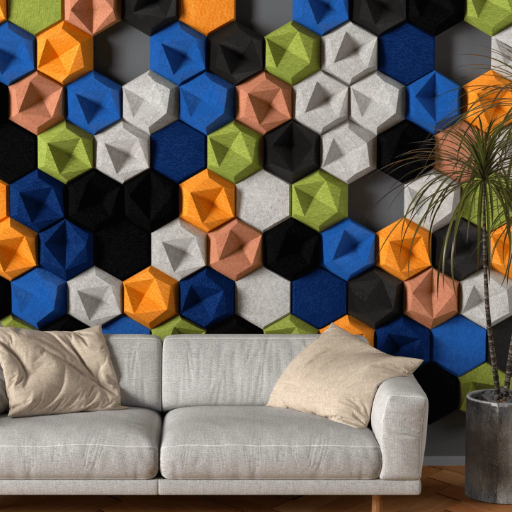
Trends in Acoustic Panel Technology
There has been a remarkable surge of acoustic panel technology in sustainability and advancements in the materials towards biocomposites. Product producers have even shifted from unsustainable sources of fibres and textiles to bio-composites from recycled materials or societies such as post-consumers fabric, PET technology and bio-material like bamboos to produce panels which have minimal contribution to the environmental degradation. Autonomous acoustic panels are on the rise and other systems with additional functionalities, which come embedded with IoT technology are being developed to allow the end-users controls the acoustics through different utilities such as mobile applications or home sound system. Improvements in acoustic performance now rely on technology such as nanotechnology, and the modern additive manufacturing technology where sound barriers become possible due to the creation of thin film and coatings without compromising the sound quality. As the workplace becomes more polarized with remote work and traditional office settings making a come back, there is also an increase in use of modular and easy to install sound absorbing panels which provide the necessary acoustic solutions depending on the volume and arrangement of work. Both of these features also represent a significant advancement in the efforts of making the modern office landscape more sound and convenient.
Sound Management that Lasts and is Gentler on the Environment
Schemes concerned with echo and noise management contribute immensely in the quest to improve health and productivity of individuals. Such solutions would, for instance, make use of technology that is locally available, looking at components like recycled material, different types of modular systems, not to forget the recent strides made as far as nanotechnology and 3-D printing are concerned. Most of these acoustic environments discourages fusion of such systems given that most if them are made to spacially fit also environmental concerns. The course of development of such technologies attempts to bridge the gap between designing buildings for their use and designing buildings for their function, thus supporting and promoting an ecologically sensitive interface for future development of spaces.
Encouraging the Use of PET Acoustic Panels in the Workspace
Installation of PET acoustic panels for the working environment, in my opinion, is beneficial and contributes to better working and healthier conditions. Such material as PET that is mixed with recycled plastic to make the panels, which also It’s quite effective in reducing noise and additional decoration in this generation of business to business fusion as an aspect of environmental protection which is increasingly becoming a concern for most businesses in the 21st century. These qualities render the panels as the perfect product for the contemporary office setting where the absence of enclosed rooms often makes disaster in terms of noise. These are some of the reasons which motivate businesses to install the above panels which in turn enhances concentration, reduces distractions and promotes better moods at work.
PET acoustic panels are also highly versatile and visually pleasing. A variety of design enhancements can be accommodated in the office and work environment. For their decorative use, they can be used in the form of paneling, ceiling suspensions or in the form of dividing units. It is a versatile collection with functional and visual qualities. The use of these panels can be justified to the listeners in the top management based on the consideration of cost effectiveness as, except for periodic cleaning, there are no costs associated with maintaining these panels and there is no difficulty or expense in redecorating the office space by using these sound absorbing panels. Companies that have the ESG agenda and value proposition would benefit from using PET since those panels aid in reducing the amount of virgin materials used as they are instead manufactured with recycled plastic.
It all boils down to making a convincing case in the abundant distribution of PET acoustic panels puts a more emphasis on their efficiency, flexibility and environmental friendliness. The performance benefits of these panels will become more tangible when representative case studies are presented, such as some successful companies with noticeable changes in noise pollution and administration satisfaction after installing the panels, to the users. The benefits of these systems surpass by far just being “green” or “trendy” as they also help in making the most of a work environment.
| Key Feature | PET Acoustic Solution Benefit |
|---|---|
| Eco-Sustainability | Manufactured from 100% recycled PET plastic bottles. |
| NRC Performance | Noise Reduction Coefficient values typically exceed 0.8. |
| Design Versatility | Available in flat, 3D, hexagonal, and modular patterns. |
| Maintenance | Durable, light-weight, non-toxic, and easy to clean. |
Reference Sources
Acoustic Performance of Panels Made from Recycled Polyester Fiber Derived from PET Bottles
Source: IOP Science
Link: https://iopscience.iop.org/article/10.1088/1755-1315/1474/1/012011/meta
Relevance: This study explores the acoustic properties of panels made from recycled PET fibers, highlighting their effectiveness in soundproofing.
A Comparative Study on the Performance of PLA and PET Acoustic Perforated Panels
Source: ProQuest
Link: https://wallpanelpvc.com/how-to-install-wpc-wall-panels-step-by-step-guide-tips/
Relevance: Research comparing the acoustic performance of PET and PLA panels, providing insights into their applications.
Objective and Subjective Assessment of PET Felt Recycled Panels as an Acoustic Treatment in Meeting Rooms
Source: INCE-USA
Link: https://ince.publisher.ingentaconnect.com/content/ince/incecp/2024/00000270/00000011/art00053
Relevance: A study assessing the acoustic treatment capabilities of PET felt panels in meeting room environments.
Frequently Asked Questions (FAQs)
Which materials are typically used for making 3d pet acoustic panels?
Many pet acoustic panels are prepared using polyester fiber padding or various polyester fiber panels that provide sound absorption and at the same time are very light in weight. In the manufacture of such products, it is common for producers to use pet acoustic panels of recycled plastic bottles to show as a standard feature while being eco friendly and not harmful in any way. Such panels make uses of tough polyester fiber based sound insulating layers combined with a tailored surface which makes them useful as acoustic boards and chic wall cladding as well. Most suppliers boast an environmentally friendly approach to production with an adherence to strict quality standards to reduce levels of poisonous gases, for instance, formaldehyde. On the whole, all of these materials address the problems of longevity, eco-friendliness and quality noise control in conditions such as studies and home cinemas.
Do 3D Panels of PET fabric With Acoustic Properties Decrease Noise and Echo?
3D panels of PET fabric and sound absorption panels are meant mainly to reduce the noise, as well as provide associated echo across a wide range of bandwidth. The decorative design present in their board such as hexagonal or tessellated tile forms, is that it introduces a certain degree of complexity which probably increases material effect. Over the plain felt wall options, the textured side of the panels enhances acoustical performance due to its more surface area. These panels have already prevented the hum from spreading in classroom settings, design studios, movies, auditoriums, and home theaters at almost all the frequencies throughout the literature. It can be used in the form of absorption, however acoustic wall panels are most widely used for soundproofing and no other form of panels than these are commercially successful. Those NRC (Noise Reduction Coefficient) ratings are often to hand and hence it makes it easy to compare sound absorption levels between different products. These panels when properly placed on walls and ceilings reduce the noise level as they are designed as they minimise the overall reverberation of a room making it more acoustic pleasant.
Is it possible to make customer pet acoustic products if I provide the sizes of a room or some sketch?
Many manufacturers offer pet acoustic frames plans and pet acoustic designs adjusting the size, color and pattern options with the environment. In this connection, custom acoustic panels can be used as wall tiles, room partitions or simple wall finishes modified with different layouts, shapes and finishes. The consumer has the ability to choose the rate of the recycled polyester fiber used in these panels, changing them to their preferred thickness and manner of fixing, this is for the validation of acoustic performance and aesthetics. Adjusted panels are well designed for environments commercially used by the public as well as small rooms such as home theaters, wherein sound absorption is necessary but stylish designs are needed on the walls. For these reasons, many designers like including this particular product in their designs since it combines functionality and beauty quite well.
When compared to polyester fiber acoustic panels, how do acoustic felt panels rate?
The acoustic felt is more often characterized by its softness and has a great variety of design textures, while the polyester fiber felt is less dense and has a very poor sound absorbing capacity. Of all the available acoustic materials, both are the best in soundproofing and improving acoustics in a room, but wall felts are more readily installed due to their alluring finishes and tactile quality. In addition to being renewable, these tend to be made of other waste materials because on the contrary to that of synthetic panels, they are capable of recycling and manufacturing a particular bind to obtain targeted NRC characteristics. There are various factors in choosing the two types of felts such as whether or not it is preferred as as an environmental friendly product, the likelihood of abrasion in the room where felts are to be installed, or the degree of aesthetic sense to be created within a particular space.
Can the acoustic panels in consideration be placed on the ceiling and utilized for partitioning?
Secondly, it may be noted that even Byte panels or 3d stretch panels can be used on ceilings and can be suspended or flush mounted to assist in adjusting for airborne noise and echoing. Within these parameters with the use of acoustic panels as elements of room partitions, it becomes possible to control both airborne sound transmission and visual aspect in the open spaces, thereby enhancing private and operational workplaces. In design space, fitting is installed in the control rooms and teaching spaces. It is also common for the large hard surfaces to have acoustic tiles on the walls and suspension walls in the office spaces and home cinema; supension partitions. Quite a number of Panels are comparatively light and are offered with clear individual assembly instructions. They can make couple of the suspension parts is please and to consider hanging on both the wall and the ceiling to support these measures of Hanging these items on several surfaces of the room at the same time would be the most effective when trying to capture and control sound.
Categories:
Blog
Tags:
Technical & Durability
Related Articles