How Much Do Office Acoustic Panels Cost? 2026 Pricing & ROI Guide
Office acoustic panels cost between $4 and $15 per square foot for commercial-grade materials, with complete projects typically running $6.50 to $20 per square foot installed. A 2,000-square-foot open-plan office needs roughly $13,000-$16,000 in total treatment. A 200-square-foot conference room runs closer to $2,000-$2,500.
Here’s what every facilities manager learns the hard way: the sticker price on the panel is only part of the story. Freight, hardware, installation labor, and hidden costs like MEP coordination can add 30-50% to your material budget. And the gap between distributor pricing and factory-direct sourcing can swing your total by 25-40% — a $20,000 difference on a large fitout.
This guide breaks down every cost component. You’ll see exact price ranges by material, real project budgets for five common office types, labor estimates by region, hidden costs that blow up budgets, and a clear ROI framework that shows when acoustic treatment pays for itself.
For the complete picture on materials, placement, NRC ratings, and installation, see our office acoustic panels buyer’s guide.
Key Takeaways
- Commercial acoustic panels run $4-15/sq ft for materials; installed projects average $6.50-20/sq ft
- Fiberglass ($4-8/sq ft) delivers the lowest material cost; WPC and wood slat ($8-15/sq ft) add durability and design value
- Installation labor adds $1.25-3.50/sq ft depending on region, ceiling height, and mounting system
- Factory-direct sourcing cuts material costs 25-40% versus distributor channels
- Most offices recover their acoustic investment in 8-14 months through productivity gains alone
Price Per Square Foot by Material
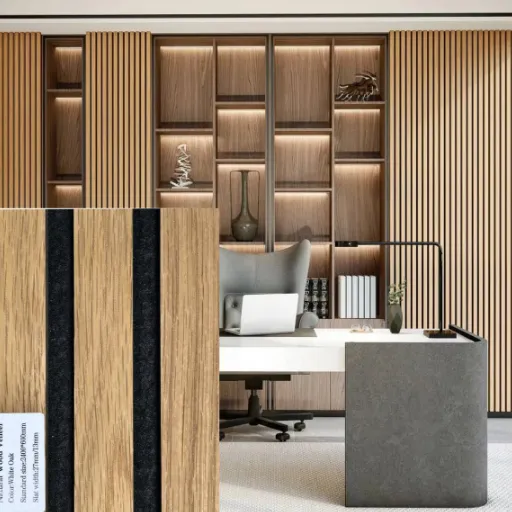
Not all acoustic panels are priced the same, and the material you choose is the single biggest driver of cost. Here’s what commercial buyers actually pay in 2026.
Fiberglass Panels: $4-8 per Square Foot
Fiberglass remains the performance-per-dollar leader. A standard 2-by-4-foot fabric-wrapped panel with a 2-inch fiberglass core costs $4-6 per square foot at moderate volumes (500-2,000 square feet). Premium fabrics, custom colors, or thicker 3-inch cores push the range to $6-8.
The low end of this range typically means standard-size panels in neutral colors with basic Guilford of Maine-type fabric. The high end covers custom sizes, premium acoustically transparent fabric, and reinforced edges for high-traffic installations.
Mineral Wool Panels: $5-9 per Square Foot
Mineral wool (rock wool) panels run slightly higher than fiberglass, at $5-7 per square foot for standard specifications and $7-9 for premium encapsulated or high-density variants. The price premium reflects superior moisture resistance and dimensional stability.
For basements, exterior soffits, or humid climates, the extra $1-2 per square foot is insurance against material degradation. In climate-controlled offices, fiberglass typically wins on cost.
PET Felt Panels: $5-10 per Square Foot
PET felt pricing varies widely based on thickness and design complexity. Standard 1-inch flat tiles in solid colors run $5-7 per square foot. Thicker 2-inch panels, CNC-cut geometric patterns, or dimensional designs push costs to $8-10.
The sustainability angle adds value for LEED projects. Many buyers accept the 20-30% premium over fiberglass because PET felt carries 50-60% post-consumer recycled content and qualifies for green building credits.
WPC Perforated Panels: $8-12 per Square Foot
WPC (wood plastic composite) acoustic panels occupy the mid-premium tier. Perforated or grooved WPC boards with acoustic fabric backing cost $8-10 per square foot in standard sizes. Custom perforation patterns, lengths, or fire-retardant formulations run $10-12.
The price reflects the dual-function value: WPC panels serve as finished wall surfaces and acoustic treatment simultaneously. For spaces where the panel must look intentional rather than utilitarian, the cost is competitive with traditional wallcovering plus separate acoustic treatment.
Wood Slat Systems: $10-15 per Square Foot
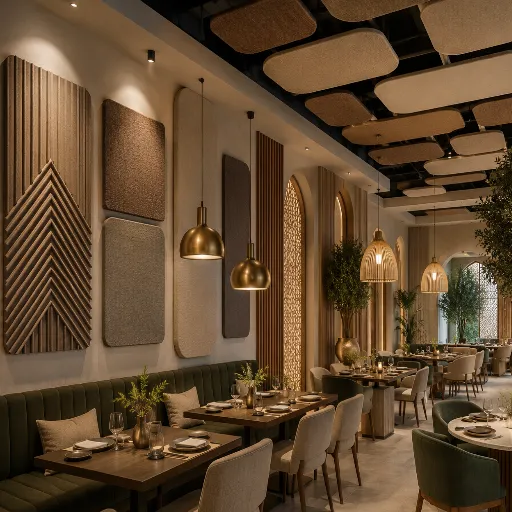
Wood slat acoustic panels with PET felt backing are the premium option. Standard oak or walnut slat systems run $10-12 per square foot. Exotic veneers, custom stains, painted finishes, or wider slat spacing for higher NRC push the range to $12-15.
These panels function as architectural features. In reception areas and boardrooms, they replace artwork and wallcoverings while adding acoustic performance — a two-for-one that justifies the price for many specifiers.
Acoustic Foam: $1-3 per Square Foot (Not Recommended)
Foam panels are cheap at $1-3 per square foot, but they fail most commercial fire codes and degrade within 2-3 years. For any office project requiring building inspection or lasting more than a few years, foam is a false economy.
| Material | Material Cost/sq ft | Installed Cost/sq ft | NRC (2-inch) | Best For |
|---|---|---|---|---|
| Fiberglass | $4-8 | $6-11 | 0.85-0.95 | Maximum absorption, budget-conscious projects |
| Mineral Wool | $5-9 | $7-12 | 0.80-0.90 | Humid environments, high-impact areas |
| PET Felt | $5-10 | $7-13 | 0.75-0.85 | Design-forward spaces, sustainability priorities |
| WPC Perforated | $8-12 | $10-16 | 0.50-0.75 | Moisture resistance, integrated design |
| Wood Slat + Felt | $10-15 | $12-18 | 0.50-0.80 | Client-facing spaces, architectural impact |
| Acoustic Foam | $1-3 | $3-5 | 0.40-0.60 | Home use only — not for commercial |
Need a material recommendation for your specific project? Request free samples of fiberglass, WPC, and wood slat panels to compare build quality and appearance before budgeting.
What Drives Acoustic Panel Pricing
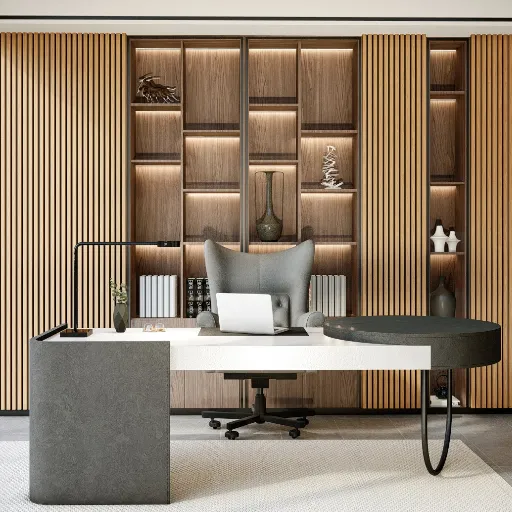
Understanding the cost levers helps you control the budget rather than being surprised by it.
Order Volume
Volume discounts are significant in acoustic panels. Orders below 500 square feet typically pay list price. Orders of 500-2,000 square feet qualify for 5-10% discounts. Orders above 5,000 square feet often receive 15-25% off standard pricing. For very large projects — 20,000+ square feet — factory-direct manufacturers may offer custom pricing agreements.
Panel Size and Customization
Standard 2-by-4-foot panels are the most economical because they optimize material yield and shipping density. Custom sizes, shapes, or cutouts add 15-30% to panel cost. CNC-routed PET felt patterns or custom WPC perforation designs add setup charges that amortize across the order quantity.
Fire Rating Requirements
Class A fire-rated panels cost 10-20% more than unrated or Class B equivalents. For commercial offices in high-rise buildings, healthcare facilities, or assembly occupancies, Class A is mandatory. The premium is non-negotiable, but it’s cheaper than a failed inspection.
Shipping and Freight
Acoustic panels are bulky and relatively light, which means freight costs scale with volume, not weight. A full truckload (roughly 20,000-25,000 square feet of panels) ships most economically at $0.15-0.30 per square foot. Less-than-truckload (LTL) shipments of 1,000-5,000 square feet run $0.40-0.80 per square foot. Small orders under 500 square feet can see freight costs of $1-2 per square foot — nearly as much as the panels themselves.
Project Budgeting by Office Type
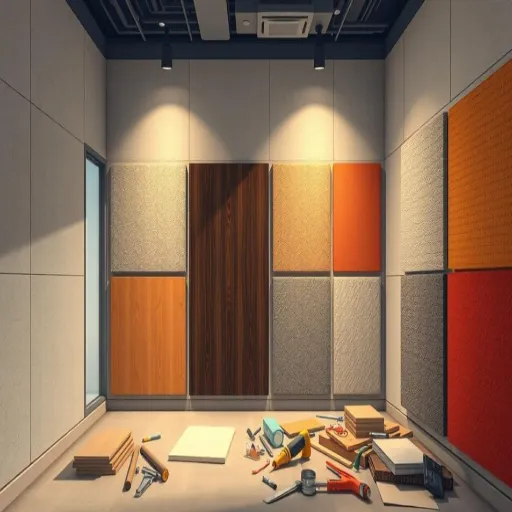
Real budgets depend on room type, coverage requirements, and material choice. Here are five common scenarios with line-item breakdowns.
Scenario 1: 2,000-Square-Foot Open Plan Office
This is the most common commercial request. Open plans need 50-60% ceiling coverage plus 10-20% wall coverage. For help calculating the exact number of panels for your floor plan, see our guide on how many acoustic panels you need for your office.
- Ceiling area: 2,000 sq ft
- Ceiling treatment (55% coverage): 1,100 sq ft of fiberglass baffles at $6/sq ft = $6,600
- Wall treatment (15% coverage): 300 sq ft of WPC panels at $10/sq ft = $3,000
- Hardware (impaling clips, cable, anchors): $1,200
- Freight (LTL, 1,500 miles): $800
- Installation labor (2-person crew, 3 days): $2,500
- Total project cost: $14,100
Scenario 2: 200-Square-Foot Conference Room
Conference rooms need balanced ceiling and wall treatment for speech clarity during hybrid meetings.
- Ceiling cloud (30% coverage): 60 sq ft at $7/sq ft = $420
- Rear wall panels (full coverage): 40 sq ft at $12/sq ft = $480
- Side wall panels (partial): 30 sq ft at $12/sq ft = $360
- Hardware and installation: $800
- Total project cost: $2,060
Scenario 3: 5,000-Square-Foot Call Center
Call centers are acoustically demanding due to high talk time and density. NRC 0.90+ ceiling coverage is essential.
- Ceiling treatment (60% coverage): 3,000 sq ft of mineral wool baffles at $7/sq ft = $21,000
- Wall treatment (20% coverage): 1,000 sq ft of fiberglass panels at $6/sq ft = $6,000
- Desk dividers (80 stations): 80 screens at $45 each = $3,600
- Hardware: $3,500
- Freight (partial truckload): $1,200
- Installation labor (4-person crew, 5 days): $6,000
- Total project cost: $41,300
Scenario 4: 800-Square-Foot Private Office Suite
A suite of 8 private offices needs less coverage per room but treatment across multiple spaces.
- Ceiling treatment (25% coverage per office, 8 offices): 200 sq ft at 6/sqft=6/sqft=1,200
- Wall treatment (rear wall per office): 160 sq ft at 8/sqft=8/sqft=1,280
- Hardware: $600
- Installation (1-person crew, 2 days): $1,200
- Total project cost: $4,280
Scenario 5: 1,500-Square-Foot Reception and Lobby
Reception areas demand visual impact. Wood slat panels or custom WPC systems replace traditional wall finishes.
- Feature wall (full coverage, 12 ft × 20 ft): 240 sq ft of wood slat at 12/sqft=12/sqft=2,880
- Ceiling treatment (30% coverage): 450 sq ft of PET felt clouds at 8/sqft=8/sqft=3,600
- Hardware and specialty mounting: $1,500
- Installation (skilled finish carpentry): $3,000
- Total project cost: $10,980
When Maria, a facilities director in Miami, priced acoustic treatment for her 12,000-square-foot law firm, three quotes came back: $68,000 from a national distributor, $52,000 from a regional contractor, and $41,000 factory-direct from the manufacturer. The distributor’s quote included a 35% markup on materials and a 15% project management fee. The contractor’s quote was closer, but still added 22% to material costs. Maria chose factory-direct, used her own installation contractor, and saved $27,000 — enough to upgrade from fiberglass to wood slats in the client-facing conference rooms.
Hidden Costs Most Buyers Miss
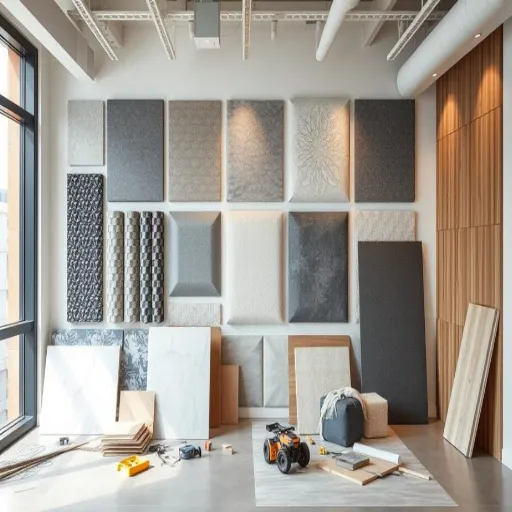
The material list is only the beginning. These line items catch first-time buyers off guard.
MEP Coordination and Ceiling Layout
Ceiling baffles and clouds must work around sprinklers, HVAC diffusers, smoke detectors, light fixtures, and speaker systems. In offices with exposed ceilings, acoustic layout drawings that coordinate with the MEP (mechanical, electrical, plumbing) plan prevent costly on-site modifications. Professional coordination costs $500-1,500 but prevents panel cutting, relocation, and wasted material.
Substrate Preparation
Not all walls are ready for panel mounting. Damaged drywall, uneven concrete, or deteriorating plaster need repair before installation. Substrate prep adds $0.50-2.00 per square foot of wall area, depending on condition.
Permits and Inspections
Some jurisdictions require permits for interior finish work in commercial buildings. Permit fees range from $200-800. Fire marshal inspections may be required for Class A-rated materials in high-rise or assembly occupancies. Factor $300-600 for inspection-related costs.
Disposal of Existing Materials
If the project involves removing old ceiling tiles, wall coverings, or previous acoustic treatment, disposal adds cost. Commercial waste disposal runs $150-400 per ton. A full office fitout might generate 2-5 tons of debris.
After-Hours Installation Premium
Contractors charge 15-30% more for after-hours or weekend work. For occupied offices that can’t shut down during business hours, this premium is often unavoidable. A standard 2,500laborbillbecomes2,500laborbillbecomes3,000-3,250 for night-shift installation.
Labor and Installation Costs
Installation is the second-largest cost component after materials. Understanding labor economics helps you budget accurately and decide between DIY and professional installation.
Cost Per Square Foot by Region
| Region | Labor Rate/sq ft | Notes |
|---|---|---|
| US Southeast | $1.25-1.75 | Competitive market, moderate union presence |
| US Northeast | $1.75-2.50 | Higher wages, union rates common |
| US Midwest | $1.50-2.00 | Moderate rates, good contractor availability |
| US West Coast | $2.00-3.50 | Highest labor costs, strict building codes |
| Canada | $1.75-2.75 | Similar to US Northeast |
| UK / Western Europe | $2.50-4.00 | Higher overall labor costs |
| Southeast Asia | $0.75-1.25 | Lower labor, increasing material costs |
Installation Speed by System
A two-person crew installs acoustic panels at roughly these rates:
- Wall panels with impaling clips: 150-200 sq ft per day
- Wall panels with Z-clips: 120-150 sq ft per day (more precise alignment)
- Ceiling clouds with cable suspension: 200-300 sq ft per day
- Ceiling baffles in rows: 300-400 sq ft per day
- WPC keel framework systems: 100-150 sq ft per day (more complex)
DIY vs. Professional Installation
For projects under 500 square feet with standard wall panels and accessible ceilings, experienced maintenance staff can handle installation. For anything larger, commercial-grade, or involving suspended ceiling systems, professional installation is strongly recommended. Improper mounting voids acoustic performance: a panel mounted flush to the wall absorbs 15-25% less sound than one with an air gap.
For a detailed walkthrough of mounting methods, air gap optimization, and after-hours installation strategies, see our office acoustic panels buyer’s guide.
Factory-Direct vs. Distributor vs. Retail Pricing
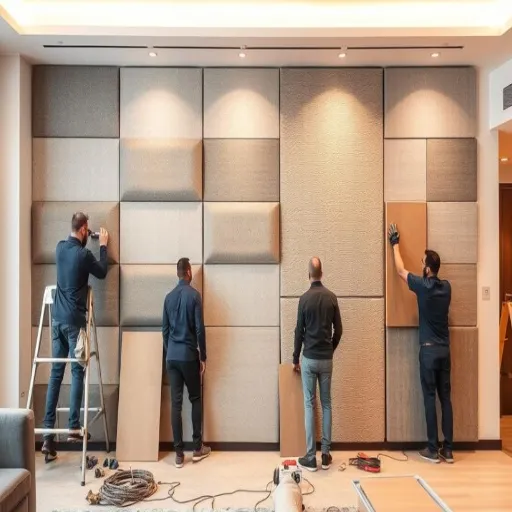
Where you buy matters as much as what you buy. The same fiberglass panel can cost 6persquarefootfromamanufacturer,6persquarefootfromamanufacturer,8.50 from a distributor, or $12 from a retail channel.
The Pricing Stack
| Channel | Typical Markup | Effective Price/sq ft (Fiberglass) | Best For |
|---|---|---|---|
| Factory-direct manufacturer | Baseline | $4-6 | Large projects (1,000+ sq ft), custom specs, repeat buyers |
| Regional distributor | 25-40% | $6-9 | Mid-size projects, standard specs, single-source convenience |
| National retailer / online | 60-100% | $7-12 | Small projects, quick turnaround, no relationship needed |
| Contractor-supplied | 20-35% + labor | $8-12 installed | Turnkey projects, single-point accountability |
When Factory-Direct Makes Sense
Factory-direct sourcing works best when:
- Your project exceeds 1,000 square feet
- You need custom sizes, colors, or perforation patterns
- You have your own installation contractor or crew
- You’re a repeat buyer with ongoing acoustic needs
- Price transparency matters for budget justification
When Distributors Add Value
Distributors earn their markup when they provide:
- Same-day availability from local stock
- Technical specification support
- Single-source procurement across multiple product categories
- Small-order handling without freight penalties
For most commercial office projects over 2,000 square feet, factory-direct savings of $5,000-20,000 outweigh distributor convenience. The key is planning: factory-direct orders typically require 2-4 weeks of production time versus 1-3 days from stock distributors.
The ROI Case for Office Acoustic Treatment
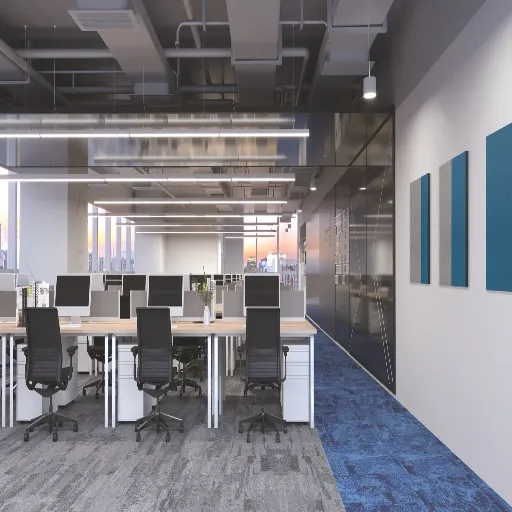
Acoustic panels are a capital expense, but they’re also a productivity investment. The return comes through three channels: recovered productivity, improved retention, and reduced error rates.
Productivity Recovery
Open-plan offices lose 86 minutes per employee per day to noise distraction, according to workplace acoustics research. At an average loaded labor cost of $45 per hour, that’s $64.50 per employee per day in lost productivity. For a 50-person office, noise costs $3,225 per day — or roughly $800,000 annually.
Proper acoustic treatment reduces ambient noise by 12-15 dB and cuts distraction recovery time by roughly 40%. A conservative estimate: treated offices recover 30-35 minutes of productive time per employee per day. For the same 50-person office, that’s $1,125 per day in recovered productivity, or $281,000 annually.
A $25,000 acoustic treatment investment pays for itself in 33 days at this rate. Even if the recovery is half that — 15 minutes per day — the payback period is under 70 days.
Employee Retention
Noise is consistently ranked among the top three workplace complaints. When Sarah renovated her Austin tech office, the number of employees working from home to escape noise dropped from 41% to 12%. Retention improved 18% in the year following treatment. With replacement costs of 50-150% of annual salary per employee, retention gains alone can justify the investment.
Error Rate Reduction
Call centers and data entry operations see measurable error rate improvements after acoustic treatment. One 120-agent call center reported a 14% reduction in call resolution errors and an 11% improvement in customer satisfaction scores six months after ceiling baffle installation. At an estimated $15 cost per error, the savings were $4,500 per month.
The Conservative ROI Formula
For budgeting presentations, use this conservative framework:
Annual ROI = (Recovered Productivity + Retention Savings + Error Reduction) - Treatment Cost

Example (50-person office):
- Treatment cost: $25,000
- Recovered productivity (20 min/day at $45/hr): $187,500/year
- Retention savings (2 fewer departures at $75k replacement): $150,000/year
- Error reduction (conservative): $15,000/year
- Year 1 net benefit: $327,500
- Payback period: 28 days
5-Year Total Cost of Ownership
Cheap panels aren’t always cheap over time. Here’s how different materials stack up across a 5-year horizon, including replacement and maintenance.
| Material | Initial Cost (2,000 sq ft) | Maintenance/Yr | Replacement/Yr | 5-Year TCO |
|---|---|---|---|---|
| Fiberglass | $14,000 | $200 | $0 | $15,000 |
| Mineral Wool | $16,000 | $150 | $0 | $16,750 |
| PET Felt | $17,000 | $100 | $0 | $17,500 |
| WPC | $22,000 | $50 | $0 | $22,250 |
| Wood Slat | $26,000 | $100 | $0 | $26,500 |
| Foam (commercial) | $8,000 | $300 | $2,000 | $19,500 |
The foam row tells the story: its low initial cost is erased by fire code failures, yellowing, edge crumbling, and eventual replacement. By year 3, foam has cost more than fiberglass while delivering inferior performance. WPC and wood slat panels carry higher upfront costs but require virtually no maintenance and outlast the building lease in most cases.
How to Get an Accurate Quote
Vague quotes lead to budget overruns. Here’s how to request pricing that reflects your actual project.
Information to Provide
- Floor plan or dimensions for each treated room
- Ceiling type (exposed, T-bar, plaster, concrete)
- Wall condition (drywall, concrete, existing paneling)
- Room use (open plan, conference, private office, call center)
- Fire rating requirements (Class A, Class B, or EN 13501-1 B1)
- Aesthetic requirements (neutral/utilitarian vs. architectural feature)
- Budget range (helps recommend the right material tier)
- Installation timeline and occupancy constraints
Red Flags in Quotes
- No line-item breakdown (materials, hardware, labor, freight)
- Pricing that doesn’t specify the exact product name and thickness
- Missing fire rating documentation
- No volume discount tier shown
- Labor estimate without crew size or days specified
The Quote Comparison Checklist
When comparing two or more quotes:
- Same material type and thickness
- Same NRC rating
- Same fire rating classification
- Freight included or clearly itemized
- Hardware included (clips, cable, anchors)
- Installation scope defined
- Warranty terms stated
- Production/delivery timeline provided
Frequently Asked Questions
How much do office acoustic panels cost per square foot?
Commercial acoustic panels cost $4-15 per square foot, depending on material. Fiberglass runs $4-8, mineral wool $5-9, PET felt $5-10, WPC $8-12, and wood slat systems $10-15. Installed costs, including labor, range from $6.50 to $20 per square foot.
What is the cheapest acoustic panel material for offices?
Fiberglass is the cheapest commercial-grade option at $4-8 per square foot. Acoustic foam costs less at $1-3 per square foot but fails fire codes and degrades quickly, making it unsuitable for commercial use.
How much does installation cost for office acoustic panels?
Installation labor costs $1.25-3.50 per square foot, depending on region, ceiling height, and mounting system complexity. Wall panels with simple clip systems are the fastest; suspended ceiling clouds and WPC keel frameworks require more labor.
Do acoustic panels save money long term?
Yes. Most offices recover their acoustic treatment investment in 8-14 months through productivity gains alone. A 50-person office treating noise distraction can recover $250,000-350,000 annually in productive time, far exceeding the $15,000-30,000 treatment cost.
How much can I save buying factory-direct?
Factory-direct sourcing typically saves 25-40% on material costs compared to distributor or retail channels. For a $50,000 material order, that’s $12,500-20,000 in savings. The trade-off is 2-4 weeks production lead time versus 1-3 days from stock.
What hidden costs should I budget for?
Beyond panels and labor, budget for MEP coordination drawings ($500-1,500), substrate preparation ($0.50-2.00/sq ft), freight ($0.15-0.80/sq ft depending on volume), permits ($200-800), and potential after-hours labor premiums (15-30%).
Conclusion
Office acoustic panel costs are more predictable than most facilities investments once you understand the components. Material drives 40-60% of the budget. Installation drives 20-35%. Everything else — freight, hardware, coordination, permits — fills the gap.
The key decisions that control your cost are: choosing the right material for your environment, buying at the right volume tier, sourcing factory-direct when project size justifies it, and planning for hidden costs before they appear.
The ROI math is compelling. Even conservative estimates show payback in under three months for most commercial offices. And the 5-year total cost of ownership favors durable materials like WPC and wood slats over seemingly cheaper options that need replacement.
For your next project, start with a detailed quote that breaks every cost into line items. Compare material specifications, not just price per square foot. And consider the full lifecycle — not just today’s invoice.
Ready to price your office acoustic project? Request a detailed wholesale quote with line-item material costs, coverage calculations, and factory-direct pricing tailored to your floor plan.
Categories:
Blog
Related Articles