Acoustic Panel Guide: Choosing the Right Acoustic Material for Sound Absorption
Every detail is essential in creating an ideal auditory environment; whether designing a recording studio, home theater, or noisy office benefit a lot by sound absorption benefits clarity and comfort. But with all existing sound materials, how do you know which to settle on? This guide will take away any speculation by underscoring the key features of acoustic panels while examining their materials for the materials used in their making. Tuning the article from whence the target aimed at serving a scope of sounds created in different ways provides the tools necessary to make an informed decision. Get out there and make your transformed space into an acoustic haven!
Understanding Acoustic Panels

For example, acoustic panels have been developed with the main purpose of improving sound by way of absorption, reduction of reflected sound, and exclusion of excess sound. Materials common in the manufacture of such panels include foam, fiberglass cloth, and wood composites. The materials are all effective in dampening sound. The choice of acoustic panel will hinge on your particular need for these panels. Whether you are looking to suggest innovative clarity for a home entertainment room in desperate need, create a less rumbly yet very ambient place of concentration, or sound dampening around the room. Most of them come with SAC ratings ideal for any situation, giving up less echo and more overall acoustic improvement.
What is an Acoustic Panel?
With effort made to reach a noise reduction design feature while controlling sound reflections and providing improved sound quality inside the given perimeter, these saws or panels are in use in various settings like home theaters, recording studios, an office, and a conference room for the purpose of managing acoustics well enough.
The principle behind the functioning of the acoustic panel is to take into consideration the absorption of sound waves from the walls, ceiling, and floor, such that the formation of echo and distortion is kept to a minimum. Normally, these materials are rated low in the reflection of sound and the absorptions, in the range of foam, fiberglass, mineral wool, or pairs of the bonding configurations formed, with decorative fabrics used to cover them for safety and beauty purposes.
Types of Acoustic Panels
Fiberglass Panels
These are formed by bonding compressed fiberglass that effectively absorbs sound in the frequency spectrum. They are key to achieving good clarity in terms of sound in areas like recording studios and conference rooms.
Foam Panels
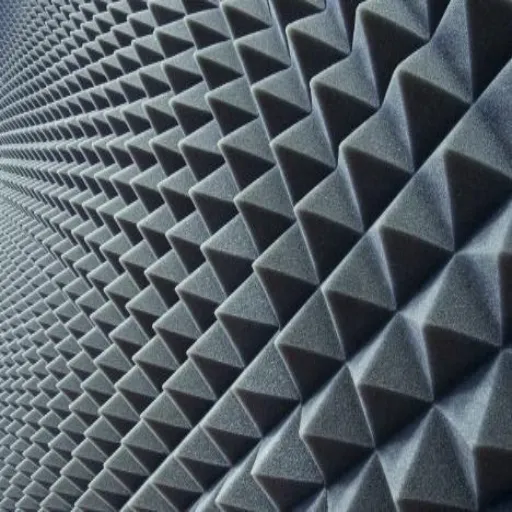
The lighter foam panels present an alternative to solving simple problems related to sound leaking. They are available in a variety of shapes, such as wedges or pyramids, with raised edges to improve sound absorption.
Perforated Wood Panels
When aesthetics meet utility, the result is perforated wood panels on their own. One typical variation of the panel thus includes an acoustic fabric lining on a wooden surface full of partially perforated holes, which imbues in the material a special aesthetic function, hence it can be used in some spaces like auditoriums and theaters.
Performance Data
Noise Reduction Coefficient (NRC):
The Noise Reduction Coefficient rating measures the efficiency of an acoustical panel in absorbing sound waves. The standard range of NRC values is from 0.6 to 1.0, wherein the high numbers depict that more sound could be absorbed. For example, NRC 0.9 panels would absorb 90% of the incoming sound waves.
Sound Transmission Class (STC):
Sound Transmission Class (STC) ratings declare the material’s use for blocking sound passage. A higher STC-rated panel has privacy-oriented environments, pedagogically sound for use in office cubicles or hospitals.
Applications and Benefits
Home Theaters: Increased sound clarity and decreased reverb create an immersive viewing experience.
Open Offices: The clearer and reduced ambient noise, the fewer distractions, and better communication among acquaintances.
Study Halls: Improved sound quality for speakers to be audible and understandable, and an equally improved set of sound quality for the audience to hear the subject(s) better.
A significant enhancement can be achieved to any space with better acoustics and comfort, besides investing in high-quality acoustic panels, specific to one’s needs.
Detailed Types of Acoustic Panels
Different types of acoustic panels are designed to alleviate given sound-related issues and to enrich the acoustic environment within the given space. Common types are given below:
Absorptive Panels
Absorptive panels help reduce the amount of echo and reverberation within a space. They make use of various materials, like foam, fabric-wrapped fiberglass, or wool. They have been installed with great success in office buildings, theaters, and recording studios.
Example Data: Manufacturers back fiberglass of high quality to consume up to 90% of sound in mid-high-frequency range (NRC 0.9).
Diffusive Panels
These transform excess sound into noise after scattering the sound energy across the room compared to the sound just killing the panel. It thus effect very balanced and even sound distribution and has been applied to music venues, high-class restaurants, and to certain home theater installations.
Key Feature: These panels are known for their geometric patterns and fractal designs, which can produce the effects of the reflection of the sound in a uniform manner.
Bass Traps
Bass traps are special panels that reduce the magnitude of low-frequency sound waves since dealing with long wavelengths is harder. Generally, they are set toward corners of rooms where bass frequencies can accumulate.
Insight: An appropriately placed bass trap can decrease the contribution of low-frequency reflections by 50%, hence improving the production quality of sound in music studios.
Fabric-Wrapped Panels
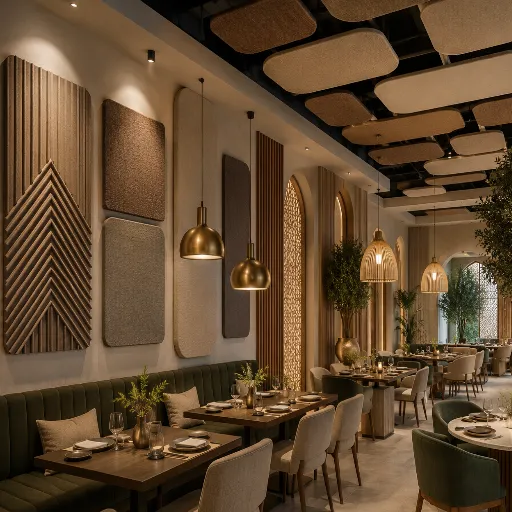
Several advantages, functional and aesthetic, may be derived from these panels as they come in a plethora of color and design options to complement the decor along with augmenting acoustics. In fact, they work within many settings-from corporate environments to entertainment zones and schools, being that they are highly popular.
Industry Standard: With many fabric-wrapped panels bearing high Noise Reduction Coefficient (NRC) ratings and certain fire-resistance certifications.
Acoustic Foam Panels
Foam wedge tiles– light, easy to install, environmental-friendly, and affordable. Common among house studios, gaming rooms, and podcasts because they are good sound splatters and their having low costs.
Popular Data: Actively being in the style of wedges or pyramids, in comparison to their regular large-side sound-absorbing capacity like 70%.
Perforated Wood Panels
These types of panels are a combination of both aesthetically pleasing and functional sound absorption tools. Micro-perforated wood panels sport a pattern of tiny holes or grooves that will let sound waves into them with a lot of ease while still maintaining an ordinary and visually pleasing appearance.
There are several acoustic panels from which the perfect one must be chosen, depending on the purpose of a room, design, and budget; with the use of appropriate materials and acoustical tint-inspired engineering features, you can retrofit for an acoustically balanced space that meets your requirements.
Benefits of Using Acoustic Panels
These are a few of those key advantages that help manufacture amazing sound and coziness of hearing:
Visual Improvement: There are a variety of features in the design and quality of these panels, improving the room’s appearance as the panels enhance acoustics.
Reduction in Sound: By reducing all unwanted noise, the panel is said to provide a good working/learning environment to lie back and watch movies in peace.
Enhanced Clarity: The “acoustical panels” enhance clarity in both speech and music, so a great option is to install them in public spaces like auditoriums with regard to study or work.
Types of Acoustic Materials

Fiberglass
Made of fibers, this is an appropriate sound absorbing material corresponding to its porosity and providing sound reflection and control in varying environments.
Foam
It is light and versatile and is extensively used for acoustics capability and to deaden sound in small-scale environments.
Mineral Wool
Rock wool is dense, durable, and provides a good sound absorbing effect for general purpose industrial or commercial settings.
Fabric-Wrapped Panels
These panels are composed of a core that absorbs sound, surrounded by excelling fabrics and offering both function and beauty.
Wood
Suitable for sound diffusion and absorption and therefore best for use in halls and auditoriums.
Polyester Fiber
Environment friendly and light, this is used commonly as a noise insulator on ceilings and wall panels.
Each of those materials is chosen based on the specific acoustic needs of those places.
Fiber Acoustic Panels
SilentShield uses the metal-clad technology; metal cladding between two polyester layers makes it a perfect substitute for fiberglass. Acoustic panels, being consistent, are treated with various decorative finishes: fabric, vinyl, or print or metal finishes. It is possible to isolate a SilentShield panel using plywood fixtures and joints by minimizing the panel’s impact sound-transmitting through the wall’s construction.
Features of Fiber Acoustic Panels
However, fiber acoustic panels have sound absorption with outstanding ratings on Noise Reduction Coefficient (NRC) from 0.85 to 1.0 and hence prove their efficacy in decaying sound over a wide range of frequencies.
Eco-Friendly: There is a good sustainable choice with some recycled material now in polyester fiber panels to consider acquiring for your acoustic treatment.
Lightweight and Versatile: Lightweight fiber panels are easy to install on walls, ceilings, or even suspended structures. They can be cut into any shape and size to cater to a diverse range of design needs.
Fire-Resistance: Premium fiber panels comply with fire protection codes, giving high assurance that they will not catch fire in public places.
Aesthetic Customization: Depending on the brand, these creative panels also come in different colors, patterns, and finishes for different seamless integrations in interior design.
Applications
An upward dimension of importance is attached to the use of cement particle board tiles in places pertaining to sound control.
Workspaces: Smoothening ambient noise further paves the way for a more productive and focused environment within office interiors, especially in the case of open-plan offices.
Theaters and Auditoriums: A high degree of clarity in speech, due to the absence of noise, allows music and conversation to shine in other contexts.
Educational Facilities: Two of the best methods to improve speech intelligibility are provided in classrooms and lecture halls.
Healthcare Centers: One viable solution for lowering stress on patients and providing a calm and serene life is limiting agonizing ideas with serene spaces.
Recent Data and Trends
Fiber Acoustic Panels are a powerful marketing material. A CAGR of around 6.5% will be also be available from 2023 to 2028, expecting to create significant interest and substantially increase the initial offering. These activities have been sparked by their fast increase in a proactive manner-application to their supposed end users’ profile. Not only do fiber acoustic panels form a connection between performance and environmental sustainability, but they also stimulate opportunities for sustainable enhancements to be put into place.
Polyester Fiber Acoustic Materials
It is one of the most popular ways for curtain decor to deal with noise. Among all of them is one that definitely incorporates in mind its soundproof characteristics. This curtain is designed as the linings over windows; therefore, this two-to-three-layer curtain is an informal entity on its own. The way they are hung or layered depends on the need or the order of the designer.
Privacy (that extra layer), do we have light? What kind of light? How does the light fall on the fabric?
Exceptional Sound Absorption
Polyester fiber panels can have a Noise Reduction Coefficient (NRC) of between 0.70 and 0.95, depending on the density and pattern, hence obliterating echo and enhancing the sound quality of the enclosed setup.
Sustainability and Environmental Benefits
Being one of the few materials made from 100% recycled PET (polyethylene-grade terephthalate) makes it feasible to extend a helping hand to the cause of sustainability. With one square meter of polyester acoustic board standing in place, about 60 PET bottles could be recycled, thereby greatly reducing the amount of PET that has to be rotting in landfills.
Lightweight and Durable
Polyester fiberboards are lightweight, making them very convenient and easy to install. In addition, their light weight does not compromise their resistance to moisture and wear from everyday traffic.
Customization Options
The uses of these materials are several, including that they come in variation in sizes, shapes, and colors to suit different interior designs. Their aspects make them unconfrontable for the spaces that have dual requirements of design and functionality.
Applications Across Industries
The global market for polyester fiber acoustical materials is set to grow slowly,y with applications in education, healthcare, retail, and even transportation. This adaptability is driving the demand and confirms their place in modern acoustical solutions.
Market Insights
Recent reports forecast the demand for polyester-fiber-based acoustic materials growing at a CAGR of 11.5% from 2023 to 2030. Analysts predict this will be mainly driven by the increasing acoustic optimization needs of green and energy-efficient buildings, a push from green building certifications such as LEED (Leadership in Energy and Environmental Design).
In fact, policymakers and design architects are favoring the acoustic solutions based on polyester because these are eco-friendly and provide good sound absorption levels.
Sound Absorption and Acoustics

Sound absorption is crucial for creating an acoustically comfortable and functional space, banishing an annoying echo and silencing unwanted noises. The media arranged for sound absorption, such as polyester-based sound absorbers, find better use in reducing sound wave reflections in a space, which enhances good sound communication and concentration. In particular, this technology for sound absorption is highly beneficial for venues such as offices, educational campuses, and theaters. The sound control results in a good customer experience, high productivity, and effective intercommunication.”
How Sound Absorption Works
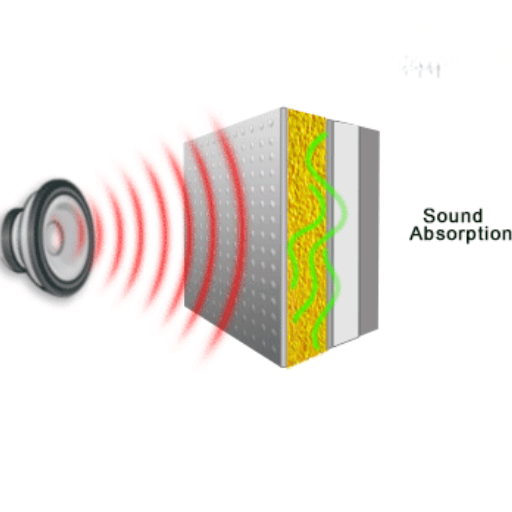
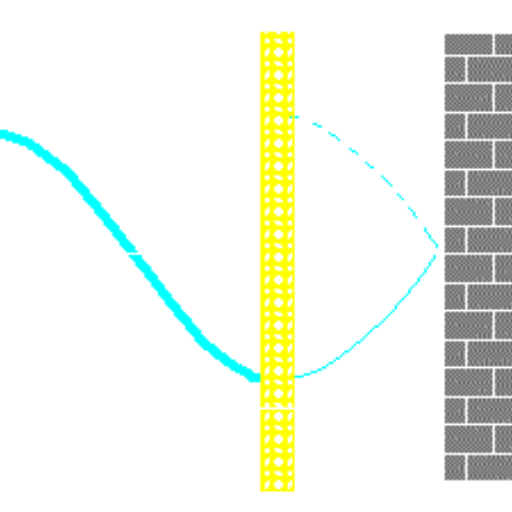
Now, when the sound waves impinge upon a porous material, the energy of the sound is dissipated by the material into small vibrations and absorbed with conversion to minute heat. The thickness, density, and construction of the material that absorbs the sound determine how effective the material will be in sound absorption. The materials commonly used in sound-absorbing constructions are porous, like the acoustic foams, panels of fibreglass, and polyester-based fabrics.
The physical mechanism of absorption is that the incident sound is taken up by the fibers or tiny pores of the material, with the sound waves losing energy as they rise into the material and travel through it with communication. Hence, most of the energy in such materials allows absorption of sound, thus reducing the waves’ bounce-back and limiting reverberation.
Per studies, materials having high NRC values are very effective for sound absorption. The NRC scale goes from 0 to 1, where 0 indicates no sound absorption at all and 1 constitutes perfect absorption. Acoustic foam, which is great for recording studios or theaters, typically has an NRC rating between 0.7 and 0.95.
The more recent examples posit the usage of biodegradable materials for sound absorption, such as recycled polyester and woody fiber. They have become quite popular for this reason in buildings and interiors due to their success rates and energy,y as well as useful provision in the know. Meanwhile, from the manufacturer’s point of view, recycled polyester boards are capable of achieving NRC ratings equivalent to several of the common traditional variations, ranging from 0.55 up to 0.9, of course,e depending upon thickness and weight.
Integration of a complete sound-absorbing material within a space, therefore, ensures a more balanced acoustic environment, fostering communication, focus, and comfort altogether.
Factors Affecting Sound Absorption

Several important factors are involved in the efficiency of sound absorption by the given material or space. Thus, in different cases, an understanding of these factors can help in optimizing acoustic performance.
Thickness of the Material
The intumescent being in the limelight of attention when it comes to sound absorption takes advantage of the geometry of cells in their intumescent material that forms a great length for the sound wave to diffuse within, multiple reflections then being hatched in the material. This ploy is generally called the long-pass behavior-for week noise waves-too long pass, diffractive, reflexive rounds through the porous limelight of his material.
Surface Area and Coverage
The exposed surface area of a noise control material affects its effectiveness. The more walls and other surfaces that get covered, the more absorption occurs from sound waves that are potentially reflected. In an investigation of the available data regarding the simple fact that only through reflection can suitable room conditions, where more than 60% of surfaces are covered with acoustic panels, the reverberation time in a room can be decreased by up to 70%.
Frequency of the Sound
Sound waves at varying frequencies find various absorption in different materials. The different materials react differently depending upon the frequency of sound waves. Bass traps, for instance, work mostly with low-frequency sound; the sound absorption panels are generally left to the mid to high frequencies. Often, the Noise Reduction Coefficient (NRC) rating helps us determine how the material performs over the various frequency ranges.
Installation and Placement
Sound-absorbing materials greatly rely on their placement to be effective; strategically placing some panels near noise sources or reflection points (like walls facing sound sources) gives the best results. For ceilings, suspended acoustic clouds are best for reducing vertical sound reflections.
Environmental Conditions
Certain conditions, such as air temperature, humidity, and air pressure,e may affect the performance of such sound-absorbing materials. Materials like fabric-covered panels may behave differently in humid environments when they have absorbed moisture, thereby affecting their acoustic properties.
The consideration of such matters on the part of designers and architects can therefore help the design rationalization of acoustical spaces better suited to the specific needs of either a media recording studio, office, or a public auditorium. The latest research continues to refine our knowledge about optimizing sound absorption performance under different environmental settings.
Measuring Sound Absorption Performance
The general susceptibility to sound is often quantitatively expressed by Noise Reduction Coefficient (NRC), or by Sabine absorption. Generalized, NRC is the fraction of sound energy that a material absorbs, bounded between 0 for complete reflection and 1 for full absorption. Larger NRC values mean higher levels of sound absorptivity, rendering the material very useful in applications like studio or large concert halls. An example of an NRC rating of 0.8 or higher for different kinds of sound-absorbing foam panels.
In between, the key factor to be considered is the coefficient of absorption that varies along a number of frequencies of the sound. The materials may be more absorbing of the higher frequencies than the lower frequencies. The coefficients related to the particular material types can be determined under standard test conditions by setting up the specific methods. Standard practice for determining these coefficients is carried out either in situ or preferably in a reverberating measurement room with high-frequency testing (ASTM C423 or ISO 354). Nowadays, the efficiency of porous absorbent material is witnessed at the frequency range of 250 Hz to 2000 Hz, thus advocating these materials as being practical for noise control.
Materials have made great advances in sound absorption techniques. This type of accelerated development is seen in such eco-friendly products as micro-perforated panels and composite recycled felt products, together with sustainable results of high aesthetic value. Designers are using new experimental methods and tailoring material performances to achieve optimum functionality for sound management.
Choosing the Right Acoustic Panel

When choosing the right acoustic panel, consider the following key factors:
Purpose
Anyone must know what they aim to attend, either to absorb sound, reduce exterior noise, or improve speech intelligibility.
Environment
Different areas call for different panels; keep in mind the specification of the place, such as an office, recording studio, or auditorium.
Material
The choice of material depends on the aesthetics and goals; panel materials range widely, from fabric-wrapped panels to wood or fully sustainable BFRs.
Performance
Bass-check the NRC rating of the panel to assess how it’s going to absorb sound.
Installation
Any panel you go with will have to be easy for the installer to install without trouble in that space.
Acoustic objectives are successfully attained when the right panel finds a balance among the attributes: effectiveness visual appearance, and cost.
Acoustic Panels vs. Soundproofing Materials
After contrasting the traits of soundproofing materials and acoustic panels, it is important to bear in mind that the functions of the two are very distinct from each other. In principal, the acoustic panel is there to swallow sound waves, reducing echoes, to enhance sound quality within the space. These are very commonly used in recording studios, offices, classrooms, auditoriums-to be of help in acoustic design tasks, controlling reverberation and the adverse reflection of unwanted noise. The main thing is that these should always prioritize the sound quality within the room so that, in that way, its function is in their best interests.
As a set, the soundproofing materials strive to block or minimize the sound transmission between two environments. Soundproofing materials are not absorptive; instead, they are normally used as blockers to hinder the passage of noise traveling through walls, floors, ceilings, or windows. The favored materials in construction to create phenomenal soundproofing effect are mass-loaded vinyl (MLV), acoustic insulation, and resilient channels. Soundproofing is distinguished in its purpose-for example, to minimize the intrusion of ambient sounds (traffic, noisy neighbors) or prevent the soundscape in a home theater or music studio from being experienced outside.
Key Differences in Data and Performance
Noise Reduction Coefficient (NRC):
Acoustic panels usually feature a high NRC range of 0.7 to 1.0, which shows that the panels are very absorptive in nature within a space.
Acoustic materials generally have a low NRC because they try to contain the passage of sound rather than absorb it.
Sound Transmission Class (STC):
STC ratings are given for soundproofing materials, with higher values providing an enhanced level of sound isolation abilities (e.g., 50 or higher). Acoustic panels are not tested with STC ratings since their job is not to obstruct sounds.
Material Composition:
Acoustic panels depending upon sound-absorption or sound-dissipation material, normally lightweight and porous.
To block sound vibration soundproofing has to work with a series of highly dense materials: MLV layers or concrete.
Applications:
Soundproofing materials are ideal for areas that require isolation from environmental noise, such as conference rooms or residential buildings on busy roads.
When taking those differences into account and levels of information, users can already make specific decisions as far as acoustic needs to meet those established by biochemical sensors, which also point out one paramount set of accessory requirements. A hypothetical case could be seen in the music studio. There hybrid recommendations can come only in the select field of acoustic panels and soundproofing material within that same setting. Likewise, advances in acoustic technology have borne forth hybrid solutions in addressing demanding respects with high efficiency.
Integrating Acoustic Panels into Your Space

Acoustic panels for soundproofing are a top-notch solution to enhance the sound quality while eliminating the not-so-pleasant noises. The primary function of acoustic panels is to absorb the sound waves that come into contact with them, diminishing the reflection and permitting a pure sound environment. Essentially, among the different materials used in the manufacture of acoustic panels, foam, fiberglass, and fabric-covered boards are the most popular ones; these come in different shades and patterns to match the diverse styles.
Placement Tips
The performance of acoustic panels significantly depends on their location is the primary purpose of them. The following are some guiding principles:
Wall Panels
Sound panels should be positioned in such a way that the sound does not travel simultaneously to and from the soundboards. This positioning can be either opposite to the speakers or at the back of the house, where the audience noise is near the seating areas.
Ceiling Panels
The suspended ceiling systems are perfect for very high-ceilinged buildings, and they help to eliminate echo pollution. These include big conference rooms or different halls, while ceiling treatments are probably going to deal with most of the high-reverberation areas, making the spoken words inaudible.
Corner Bass Traps
Put bass traps in every corner of the room to absorb sound, which in turn, must prevent other sounds from forming by mass accumulation in the lower bass frequencies.
Data-Driven Insights Into Acoustic Performance
Recent studies highlight the measurable benefits of acoustic panels:
Sound Reduction: From architectural acoustics research, important sound level reductions of 20-30 decibels can be accomplished with the proper installation of acoustic panels based on the material of a room and its configuration.
Reverberation Control: Experimenting with acoustic panels in which the walls are dissolved, at least in strongly reflective spaces, remained notably effective, where, in one study, an up to sixty percent reduction of the time of reverberation can be tied to a great improvement in human understanding.
Employee Productivity: ccording to a study conducted by the University of California, noise distraction minimization can lead to a 15% increase in productivity in the workplace.
Taking into account their purpose, the panels can be mounted to absorb undesirable sound waves, shield interiors, and for a variety of aesthetic effects.
Enhancing Sound Quality in Different Environments
To develop superior audio quality, the task at hand involves dealing with a wide variety of environments. To name a few: boardrooms, lecture theatres, home theaters… Each one poses its own acoustic issues and gives way to a broad scope of solutions and strategies.
1. Offices and Workspaces
Noise distractions remain a major nuisance to increasing open workspaces’ justly bad rap on employee focus and productivity. It has been found in one study that 70% of employees dislike the noise level in their open office layouts. Measures such as the use of acoustic ceiling tiles, wall panels, and sound-absorbing furniture can remarkably reduce ambient noise. “White noise” devices have been a blessing in similar situations where they are known to mask harsh noises, thereby creating a better auditory perspective on focus.
2. Classrooms and Educational Spaces
The acoustical design is a critical consideration in the design of classrooms, where sound quality intimately affects the students and their studies. Studies reveal that students in classrooms with high reverberation time showed 20% poorer comprehension and retention scores. Integrate underlying echo-disrupting materials such as acoustical paneling, carpeting, and insulation that constrain clear communication between teachers and students.
3. Home Theaters and Entertainment Areas
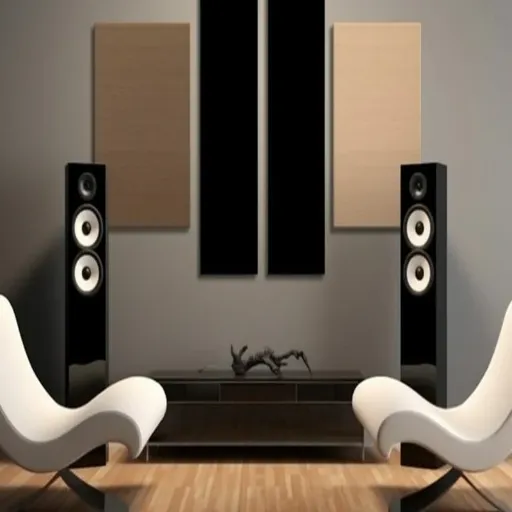
In a home cinema, the focus is on achieving perfect sound. By using bass traps, diffusers, and selected positions for acoustic panels, one can work on the acoustic attributes of the whole listening experience domain while sustaining good balance and precision. Studies indicate that a well-treated home theater can increase clarity of reproduction up to 50%, thus delivering a proper cinema experience within one’s own comfort zone.
4. Healthcare Facilities
Hospitals and clinics are affected by noise pollution that not only causes distress but also hinders the healing process. Medical studies have confirmed that if noise in patient rooms is maintained below 35 decibels, patients will recover more quickly and maintain better health. In healthcare establishments, soundproof partitions, a high-end ceiling system, and noise-absorbing floors are the quintessential environmental substances.
Revised result formulas, of putting together finely tuned acoustical solutions, improve the sound quality in differing environments, creating spaces that are far more enticing and efficient for their purposes.
Future Trends in Acoustic Materials
In this current industry culture, where various lines of technological advancements and environmental issues work in tandem, sustainability becomes the new norm in acoustic materials-oriented innovation. An example of this is the development of environment-compliant and eco-friendly acoustic solutions. Quite a number of manufacturers are opting for recycled and biodegradable materials for their sound absorption panels, made of recycled polyester fibers and nature-sounding materials like cork and hemp, which help reduce environmental liability.
Our eyes are drawn to smart acoustics, which possess quirks that make them modify according to their characteristics under different environmental settings. They have embedded sensors to measure the noise levels, using the feedback from sensors in order to provide an enhanced and improved noise elimination possibility in real-time. For one, “meta-materials” are being advanced to have a combination of properties found in nature, resulting in unprecedented control of sound waves that can improve privacy and comfort simultaneously in a diverse range of applications.
Data from recent industry reports suggest that the acoustic materials market has been experiencing consistent growth, with forecasts projecting that the amount for acoustics in 2030 would be more than $15 billion worldwide. The demand is growing from sectors such as construction, automotive, and electronics, as soundproofing for practical reasons and noise cancellation are now among essential design elements.
There is an increasing emphasis on aesthetics in combination with the functionality of solids. Additionally, the aesthetic potential of architectural and interior design is such that acoustic materials come in varying styles and colors, presenting architects and interior design professionals with flexible solutions that not only optimize the very best in sound quality, but also accompany a visual design.
These accomplishments indicate a shift to multifunctional, sustainable, and technology-driven acoustic innovations to fulfill constantly changing requirements for both commercial applications and the modern living environment.
Reference Sources
A Short Review of Recent Innovations in Acoustic Materials and Panel Design
Source: MDPI
Link: https://www.mdpi.com/2076-3417/15/9/4644
Relevance: This study explores recent advancements in acoustic panel materials, focusing on wood composites and natural fibers. It provides insights into innovative designs and their sound absorption performance, making it a reliable source for understanding material feasibility.
A Review of Sustainable Materials for Acoustic Applications
Source: SAGE Journals
Link: https://journals.sagepub.com/doi/abs/10.1260/1351-010x.19.4.283
Relevance: This review focuses on sustainable and natural materials for acoustic applications, comparing their performance with traditional materials. It highlights the environmental benefits and sound absorption properties, validating the feasibility of using eco-friendly materials.
Thermal and Acoustic Characterization of Innovative Panels Made of Reused Materials
Source: MDPI
Link: https://www.mdpi.com/2073-4433/13/11/1825
Relevance: This research investigates the acoustic and thermal properties of panels made from reused materials. It demonstrates the potential of repurposed materials for creating effective acoustic panels, supporting the feasibility of innovative and sustainable solutions.
Frequently Asked Questions (FAQs)
How do absorbent and sound-absorbing materials compare for acoustic panel materials?
Acoustic Foam and Fibreglass sound absorbing material differ in nature as well as the power of absorption; they are both very commonly seen sound absorption materials put inside acoustic panels. Acoustic-foam acoustic-panels could be the best choice, it should sound-absorption from open-cell polyurethane foam, which is lightweight and cheap; fiberglass panels or fabric-wrapped frames provide higher mass and excellent sound absorption, hence improving sound quality and ensuring high sound absorption. When selecting materials used for acoustic treatment, consider the measure of sound absorption you need to reduce (mid- and higher frequencies are often well controlled with foam; for low frequencies, typically, thicker fiberglass or bass-trapping solutions are needed). Fiberglass or mineral wool fabric panels often outperform plain foam acoustic panels for those spaces needing greater soundproofing and studio acoustic treatment.
Are acoustic foam and foam acoustic panels the best sound-absorbing material for studios?
Acoustic foam panels are the most popular choice in sound absorption material for studios. It’s utilized for treating reflections and flutter delays. Acoustic foam is actually used more for studio treatment as it improves sound only under mid-range and high frequencies. A material like fiberglass or a combination of foam and fiberglass sound panels will provide better sound absorption, covering a wider frequency band and offering much better sound absorption. Fabrics and other sound-absorbing materials can increase sound absorption at lower frequencies. The combination of foam and fiberglass panels with bass traps and acoustic baffles also works for acoustic treatment and proves to be good enough for sound-dampening in premium studios.
Which acoustic wall panels or acoustic wall treatments provide effective sound absorption?
The best sound absorption materials usually provide complete capability for absorbing sound and durability.
Some other materials for absorbing sound include open-cell foams, fiberglass boards, thick wool, and recycled PET foam. The latter doesn’t offer income from noise as wool does across the high and low frequency range, but is not as efficient as fiberglass as a sound absorber. These are chosen ports for fiberglass and wool in lots of instances. Panels using plastic mitigated PET and fabric-wrapped are long-standing and earth-friendly materials, still retaining the good sound absorbing power of many interiors. When considering the amount of absorbance required, some specifics of installation need full consideration, all kinds of extra properties like fire resistance, or moisture tolerance, and, in addition, the fact of being needed.
What types of materials are used for sound absorption that offer superior sound absorption and long-term performance?
Often, materials are exclusively picked for their sound-absorbing properties. Open-cell foams, rigid fiberglass, mineral wool (rock wool), and porous recycled PETs contribute to the sound-absorbing materials here. Fiberglass and mineral wool are by far the most sought-after sound-absorbing materials, suggesting that most properties contribute to absorbing sound on the middle and lower frequencies; hence, they are widely used in professional settings for the high levels of sound absorption. Similarly, PET and fabric panels promise prolonged service and the luxury of creating an eco-friendly option suitable for butting in sound equality in most spaces, fire resistance, or moisture resistance. These materials provide varying acoustic performance and toughness, among other things. The amount of sound absorption needed, fitting acoustic panels, and, if need be, adding additional qualities like fire resistance or moisture resistance should be thought of in the selection process.
How do acoustic baffles and absorbing panels improve the sound, and what should I consider forthe installation of acoustic panels?
Baffles and absorbent panels help improve sound by stopping sound waves that go back and forth between parallel surfaces. This helps to increase the absorptive surface area. Satisfactory results have been achieved with hanging baffles from ceilings and with panels mounted on walls for very large rooms, studios, and commercial spaces. Placement (such as reflection points and ceiling height) affects the absorption, combined with the density and thickness of the panel (to improve low-frequency absorption). The possibility of fabric-wrapped panels can further enhance sound absorption and add great beauty to the setting.